

10 Cocktail Ordering Habits That Could Be Secretly Annoying Your Bartender
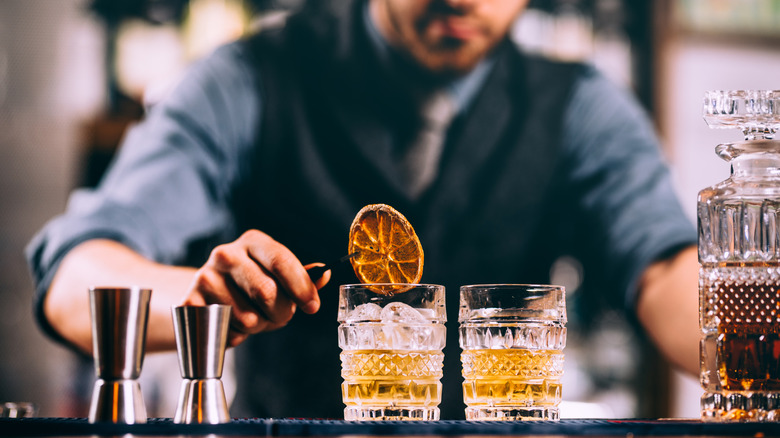
If you have a favorite dive bar in your state or frequent your neighborhood watering hole more than you (and your wallet) would like to admit, you probably know that the vibes of a bar are very different from those of a restaurant. Bars are often seen as less formal spaces; you can just slide onto a stool without the need for a reservation, make small talk with the bartender or the person sitting next to you, and really immerse yourself in the experience of a good cocktail and even better conversation.
However, since bars are so different from restaurants, etiquette and questions around how someone should conduct themselves often come into play. Would you flag down a bartender the same way you would a fine dining server if you were to drop your fork on the floor? And what's the deal with tipping? Understanding these nuances and the mistakes commonly made with them is important, as it ensures you, other patrons, and staff will all have a good time — and that those bar vibes are kept alive. To get some insight into the behaviors and etiquette faux pas that may be inadvertently (or not) irritating your bartender, we spoke to an expert: Curtis McMillan, bartender and creative director at The Down Low.
1. Snapping at your bartender to get their attention
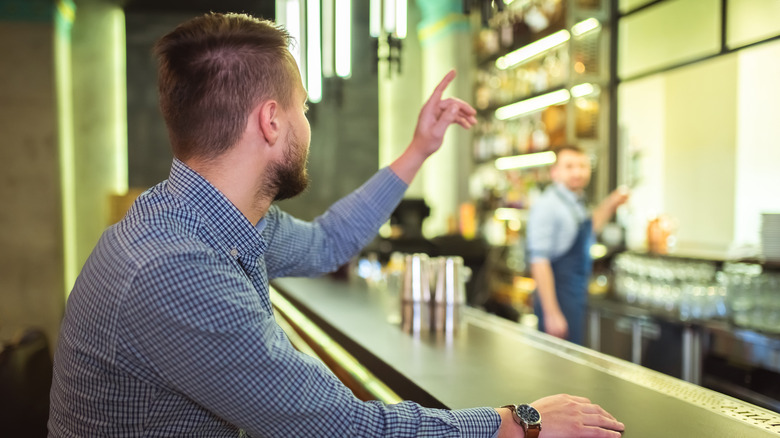
Let's get one thing clear: Your bartender is not a dog. Snapping, whistling, or otherwise making noises at them isn't going to get their attention — at least, not in a positive way. "Every bartender hates snapping and waving, but we understand you just want a drink. We see you, and we'll get to you," says Curtis McMillan.
McMillan notes the better way to get a bartender's attention is to make eye contact and wait a little bit. This is especially important if it's a busy service, the bar is understaffed, or if your bartender looks a bit overwhelmed. "If you're going to flag us down, please have your order and money ready," McMillan says. He also says that you can go to the host stand and ask for a manager's assistance should you feel as though you're being ignored.
2. Asking for 'bartender's choice' during a busy time
At first glance, it might seem like the right move to defer to your bartender for their picks on what to order. After all, they are the professional — so shouldn't they be able to make something up for you? This common move is what Curtis McMillan calls "bartender's choice," and, as he says, "It has a time and a place."
The last time that you should ask for this is when the bar is particularly busy, understaffed, or your bartender can barely get a sentence out before being pulled away for another task or by another customer. "However, if it's just the two of us in a quiet room, you're golden," he says. The easiest way to tell on whether this behavior is appropriate is to read the room first, taking note of traffic of activity. "We are here to make you happy, but we also have to keep the rest of the room happy, too," McMillan adds. It can also be helpful to know what kinds of popular cocktails you do like, or if there are some spirits you don't like the flavor of. This context will allow your bartender to make an informed recommendation instead of a random guess.
3. Requesting less ice in your drink
If you've ever tried to go to your favorite coffee shop and order your drink with "light ice" to get more coffee, you may think you're very slick. However, the same premise doesn't necessarily work at bars, and insisting that your drink should be made with less ice may be irritating to your bartender.
"It's not the 'cheat code' you think it is," says Curtis McMillan. He explains that drink prices usually revolve around specific pours. So, when you order your drink with less ice, you're not getting any more booze: You're just getting a tepid, sad drink that doesn't taste quite right. If you do want your cocktail to have a bit more alcohol in it, you can order it as a double; you'll just have to eat the extra cost. However, even this isn't a given, and it may even insult the bartender. "Due to safety standards and state laws, we often won't serve doubles. You get a standard [1-ounce] or [2-ounce] pour, and we'll happily take your next order once we've ensured you're still good for another round," McMillan notes. If a bar is shelling out doubles left and right, it might be a red flag worth paying attention to.
4. Sending a drink back just because you don't like it
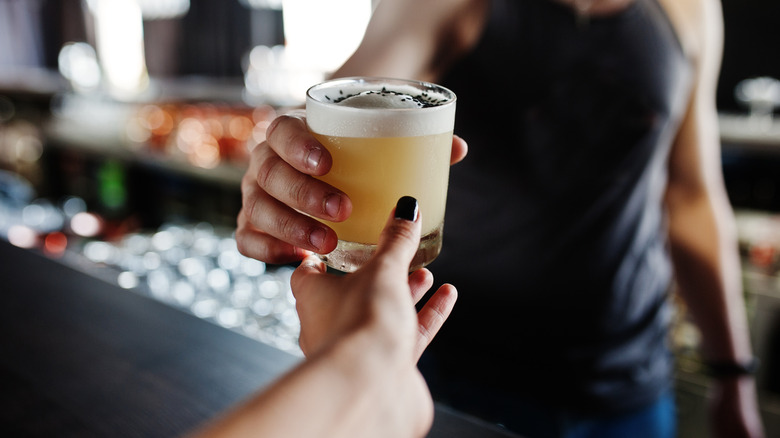
Sitting at the bar with someone who sends their drink (or food, or really anything) back can be awkward. However, answering "why" a drink is being sent back is important context, as Curtis McMillan claims that there are some occasions where sending back a drink is warranted. "It's acceptable to send a drink back if it's clearly incorrect (not what you ordered), has something in it that shouldn't be there, or tastes off in a way that suggests a mistake (like a soapy taste)," he says.
However, the implication of this is that there are reasons why you shouldn't be sending cocktails back to the bar. Chief among them? You just don't like it. "A poor reason is simply, 'It's not for me,' especially if you ordered it yourself from the menu. Personal preference isn't the bartender's error, so that typically shouldn't warrant sending it back," he says. You should never say this when ordering a drink because it can be seen as offensive — and, if anything, it reflects more poorly on you than it does your bartender.
Of course, you can circumvent ordering a drink you don't like by asking questions about what is in a drink before ordering it. In this day and age, most menus do a pretty good job of describing drink components and/or overall flavors. But if you have any questions, err on the side of caution and ask about it beforehand.
5. Ordering a super-complicated drink during rush hour
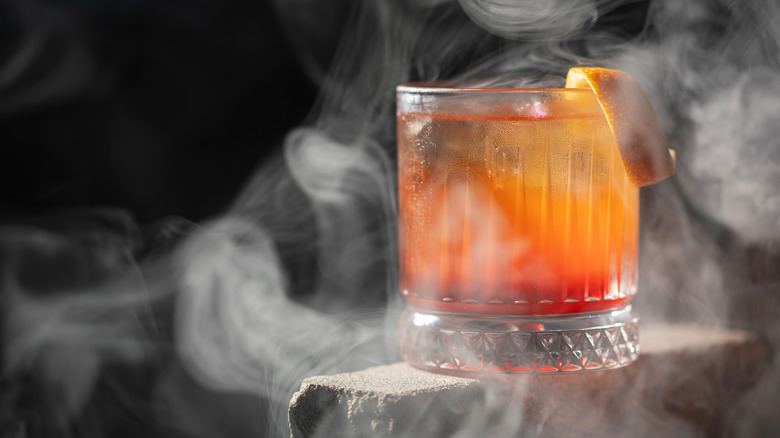
Read the room: We can't say it enough. On one hand, it's easy to understand that you should be able to get a fulfilling cocktail experience when you visit a bar and order whatever you want. However, you should also have the common sense to know that when you order something that's very time-consuming during rush hour, you may not only stress out the bartender, but also set yourself up for a sub-par pour. The staff is already trying to accommodate many other requests at that time.
Curtis McMillan acknowledges that most drinks are "safe" to order during a rush. "Most cocktails take roughly the same amount of time, especially when you're ordering off the menu — those are often pre-batched and the team knows them by heart, so they can be made quickly and efficiently," he says. He does call out a Ramos Gin Fizz, though, as being a particularly intensive drink to prepare due to its lengthy ingredient list and instructions. Maybe save this one for a Thursday night happy hour rather than peak Friday night.
6. Not tipping well
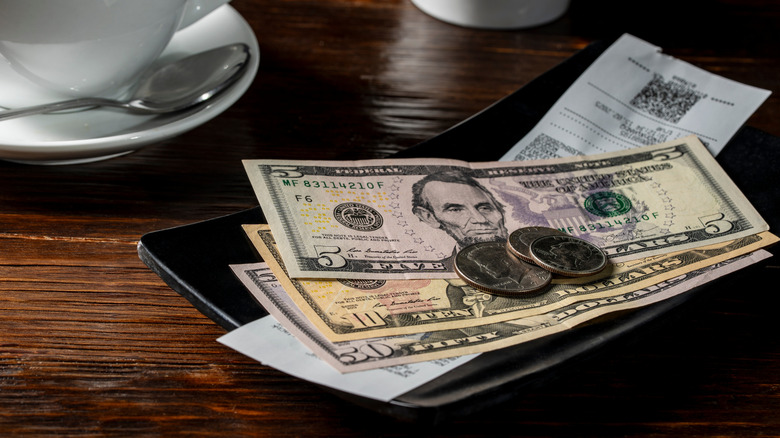
Ah, tipping; we would be remiss to write an article without mentioning the bane of both customers' and bartenders' existences. No one wants to be seen as cheap, but there are so many variables associated with tipping that it can be hard to definitively say how much is fair to tip.
For one, many service-industry jobs, including bartending, do not pay a high base wage, and many employees are dependent upon those extra earnings via tips. As such, there is an expected baseline for tipping, which Curtis McMillan says is 20%, regardless of whether you're ordering from a table with your meal or from the bar. "If the service is great, it's always appreciated to tip higher," he says. Tipping lower than that can be, admittedly, aggravating for service-industry staff, so be sure to factor tipping into your budget for an evening out at your favorite bar.
7. Trying to order something off-menu
We've probably all had the experience of going out to dinner or for drinks with someone who "knows the owner" and is somehow privy to a super-secret menu that the rest of us aren't (or that we aren't cool enough to order from). These secret menu creations, or menu items from a bygone era, can be fun to order and try — and they make the experience seem that much more exclusive — but it can be a pain for bartenders to accommodate. "Any bar worth its salt should be able to look up a recipe online, but the customer needs to understand that ordering a drink from 20 years ago is a big ask," says Curtis McMillan.
For one, the bar might not have the ingredients on hand to make your drink. "If a drink requires a niche ingredient that we don't stock, it's not a matter of us being lazy, we simply can't make it. I could try to sub that missing ingredient, but then the cocktail won't taste right and the customer will likely be disappointed. It is often a no-win situation," McMillan says. If you have a specific cocktail in mind, you can always try to explain it to your bartender and see if they can accommodate the request, but as we mentioned earlier, you may want to consider if your bartender has the bandwidth to prepare a DIY cocktail.
8. Haggling over drink prices
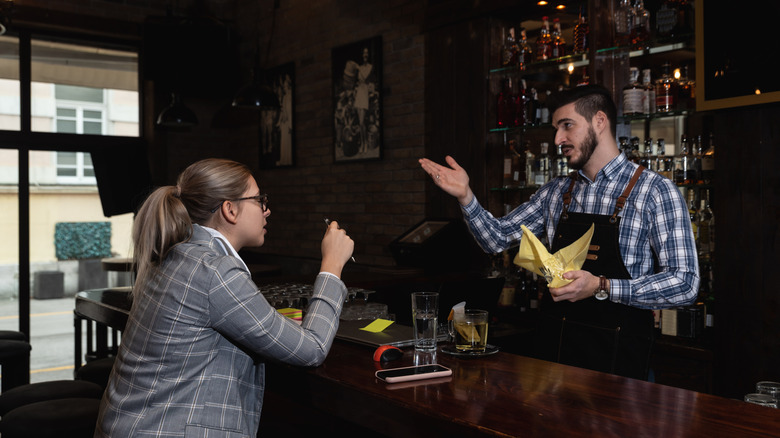
Let's be honest about one thing: You can probably make the same cocktail that you would get at a bar for much cheaper at home. However, the price on the menu doesn't just factor in the cost of your mixers, liquors, and garnishes, but also the time it takes to wash the glassware, the rent or mortgage for the bar, and the wages that pay the staff. As such, there's no sense in trying to haggle your bartender over the price of a drink — and it may only serve to piss them off.
"It's generally not appropriate for a customer to haggle over the price of a drink. Bar pricing is set, and unlike a market or negotiation-based setting, hospitality environments rely on consistent pricing for fairness and operations," says Curtis McMillan. If you're trying to avoid sticker shock, check out the menu before you cozy up at the bar and commit to a drink.
That said, if you feel like you've been unfairly charged, you do have options for what you can do — but you should still approach the matter with tact and respect. "If a guest has concerns, it's more appropriate to ask questions or provide feedback rather than negotiate," says McMillan.
9. Not systematically ordering for a group
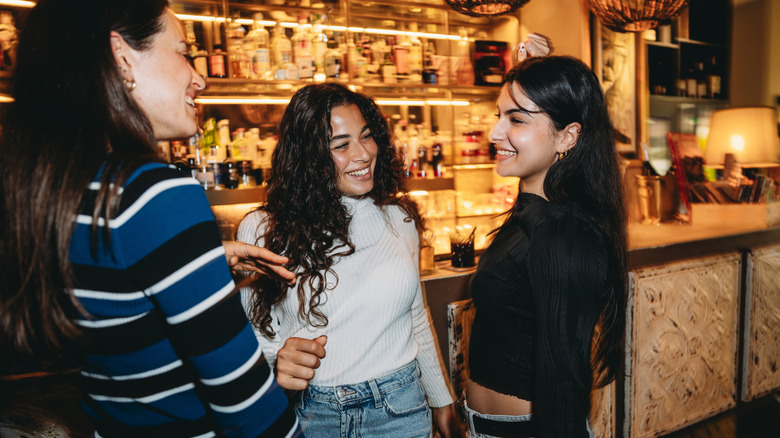
Service industry veterans will understand the panic that sets in when a party of 12 approaches the host stand during rush hour. Technically, the bar can accommodate them and churn out enough drinks to satisfy everyone, but the logistics associated with ordering for a very large party can be a challenge and cause undue stress on bar staff.
Luckily, there are some simple steps that you can take to order for a group that will increase the chance of everyone getting their orders right and not upsetting the staff. Curtis McMillan recommends that one person take responsibility for ordering and communicating with staff. That way, there's no risk of lines getting crossed, requests getting made that were already taken care of, and the like. He also suggests writing down your orders — presumably with any modifications — and ordering one at a time, confirming with the bartender in between.
"Be patient, be ready to repeat an item if the bar is loud, and work with the bartender to ensure every drink is made correctly," he says. You can also make it easier on staff when you're ready to cash out. Keep your payment method handy and ensure that everyone in your party takes their drink so that the bartop stays clean and business can keep moving.
10. Not learning basic bar terminology
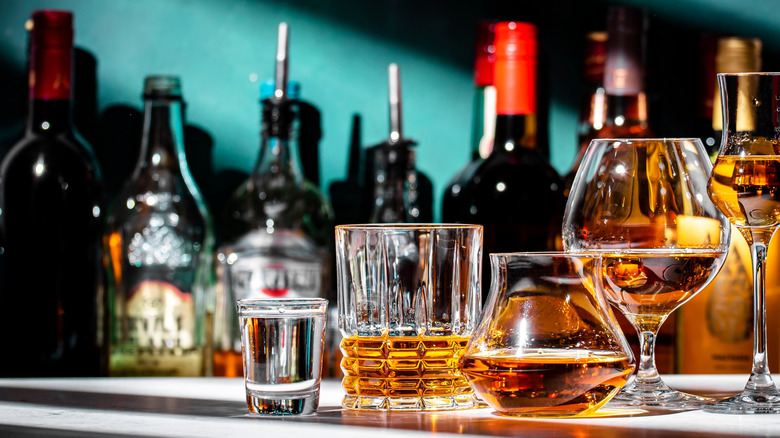
It would be unreasonable to request that every patron be a bar expert. However, brushing up on some basic bar terminology (like what it means to order a drink "neat"), and the difference between certain spirits before you head to your favorite local haunt can result in a happier bartender. "Mastery of bar terminology is the ultimate showcase of drinking etiquette," Curtis McMillan says.
For example, before you order a drink "strong," you should have an understanding of the base flavor of that cocktail (as well as what spirit you want to do the talking). If you know this, you're more likely to order a drink that you like and less likely to direct any dissatisfaction about your choice toward the bartender. This also applies to garnishes and mixers, as well. "If you're a martini drinker, know your preference (gin or vodka) and exactly how 'dirty' you like it," McMillan gives as an example. "There's nothing better than being the person who actually knows what they're doing," he says.