

The Best Way To Cook Eggs To Get Peak Vitamins From Your Yolks
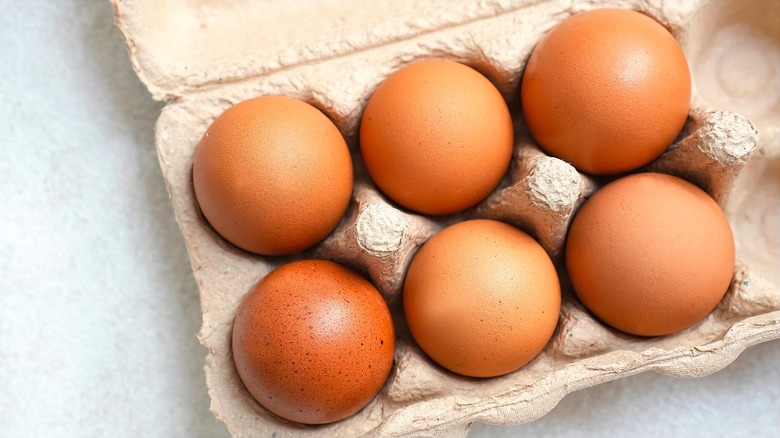
Aside from the fact that eggs contain a decent amount of protein and fat, they're also packed with vitamins and minerals, most of which lie in the yolk. Egg yolks contain omega-3 fatty acids, as well as many other nutrients such as vitamin A, D, B-12, and folate. Whether you enjoy making scrambled eggs or customizable egg bakes, there is (at least) a part of you that hopes you're consuming the most of these nutrients possible. That said, when it comes to egg yolks specifically, low-heat cooking methods are better at retaining this food's vitamins than others.
Overall, cooking eggs over low-to-medium heat for smaller amounts of time (such as steaming, soft-boiling, or poaching) ultimately results in better nutrient preservation and absorption. Conversely, high-heat cooking methods, such as microwaving or baking, may not only reduce the vitamin content of egg yolks, but also oxidize their cholesterol. Unfortunately, the oxidation of cholesterol creates oxysterol compounds, which may increase your risk of heart disease. Fortunately, there are protocols you can follow to minimize these potential risks and assure you're getting the most nutrients from your egg yolks as possible.
How to better retain the nutrients in egg yolks through everyday cooking
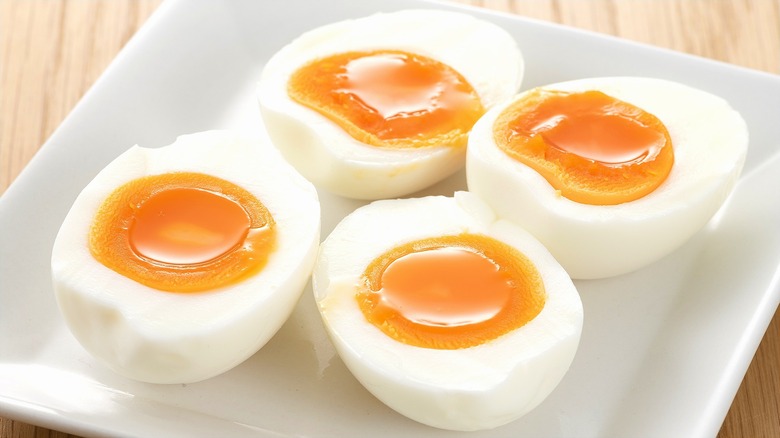
In terms of preparation, aim to cook your eggs until the whites are firm and the yolks remain runny. This way, you preserve your eggs' nutrients and avoid oxidizing cholesterol and fatty acids. Also, by fully cooking your egg whites, you increase the digestibility of protein and denature avidin, an anti-nutrient found in raw egg whites that binds to vitamin B-7 or biotin. Avidin makes biotin difficult for the body to absorb.
To consistently prepare eggs with cooked whites and soft yolks, besides steaming or poaching, prepare a special version of soft-boiled eggs called oeuf a la coque. These eggs are typically boiled between four to six minutes, served in small egg cups, and eaten directly from the shell. You can also cook your eggs in a sous vide or temperature-controlled water bath. For this method, whole eggs are vacuum-sealed and cooked for one to two hours in water set between 145 and 165 degrees Fahrenheit.
Before you go, educate yourself on the differences between store-bought versus farm fresh eggs. While cheaper varieties of store-bought eggs are collected through large commercialized farms, eggs from local or pasture-raised farms that offer hens quality housing conditions and a clean diet may result in more nutritious yolks. Lastly, if you don't want to worry about the nutritional content of your egg yolks, you can always cook and serve your morning eggs with steamed vegetables for a vitamin-rich boost.