

I Tried And Ranked 9 Cheap Wines At Aldi
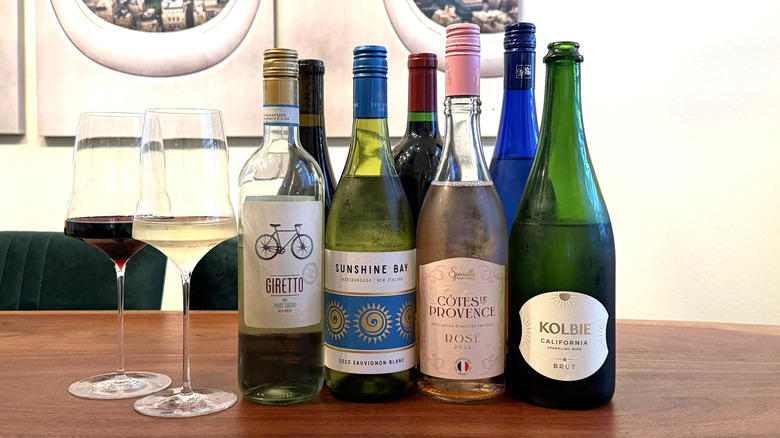
Aldi's wine aisle has developed its own cult following, not unlike the fans of Costco and Trader Joe's bottles. It's a place where shoppers can grab a house wine for less than the cost of an afternoon Starbucks run and hope that they've stumbled upon a hidden gem worthy of elevating to dinner party pour status. That low-price appeal is very much by design. Aldi says more than 90% of the products in its stores are Aldi-exclusive brands, and that private-label model — akin to Costco's Kirkland Signature line — helps explain why its wine section features selections you won't typically find elsewhere. Rather than relying on familiar mass-market labels, Aldi offers a tighter assortment of custom-label wines — some of which look eerily similar to well-known brands you might find in grocery store wine sections — in a range of styles from everyday reds and whites to sparkling wines and rotating special finds.
Shopping for wines at Aldi can feel a bit like a treasure hunt, with fans often sharing and debating their favorites online. The stakes are low, too: Many bottles clock in at well under $10. To see which bottles live up to the hype, I tasted and ranked nine cheap Aldi wines across multiple styles. I selected wines that were representative of familiar categories and flavor profiles so I could evaluate how well each one delivered on the expectations of its style, scoring each out of 10 in aroma, flavor, texture, and finish. Here's how things shook out, ranked in order of worst to best.
Specially Selected Côtes de Provence Rosé
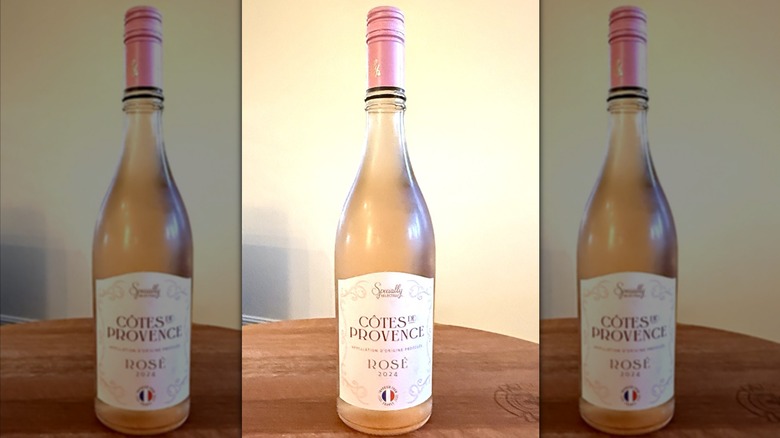
Provençal rosé can be a slam dunk when it comes to great value. The best versions are fresh, light, and crushable, with price tags that are just as palatable. Unfortunately, this one never really got off the ground.
From the start, this Côtes de Provence — a wine often made from Grenache, Syrah, and Cinsault, and other red grapes — offered very little. A hearty swirl and a whiff from the glass yielded almost nothing. I was expecting some berry and melon fruit, perhaps a hint of citrus zest, but instead I got little more than the essence of alcohol. On the palate, it was equally watery and thin, with very little personality to pull you in. The finish was the kiss of death, though, ending on an unpleasant, bitter note that made it less refreshing and far more disappointing than a rosé should be.
I scanned the bottle for any telling details, like specific grapes used, any noteworthy producers who may have had a hand in producing this wine, but these were as sparse as the flavors.
The wine isn't aggressive or weird; it's just underwhelming. If you're looking for a bottle to pour ice-cold or perhaps blend in a fun batch of frozen wine slushies, it could certainly get the job done. But in this particular lineup, it landed firmly at the bottom.
Winking Owl Chardonnay
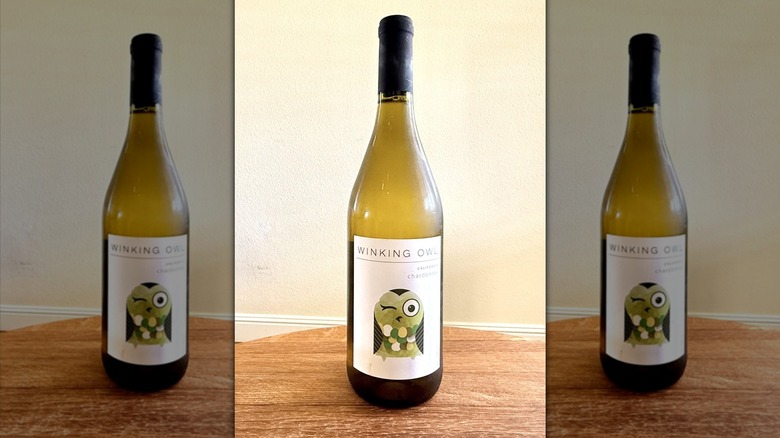
You can find plenty of cheap Chardonnay out there. And you can find plenty of good Chardonnay out there. But cheap and good Chardonnay? That's a tall order.
It's not because there isn't a demand for it. It's because for Chardonnay to be made in the style that many of us expect — soft, sometimes oaky or buttery, a backbone of freshness for balance — requires quite a bit of attention. The time and techniques used in the vineyard and winery to achieve these flavor profiles are expensive. So, when winemakers cut corners to reproduce these flavors for less, the result is what we find in this Winking Owl Chardonnay from California.
The wine actually opened up with a really pleasant nose, and its texture was better than expected for the price. It also avoided one of the biggest pitfalls of bargain Chardonnay: it didn't overdo it on artificial or clumsy oak or heavy-handed richness. For a moment, I thought this might be the sleeper hit of the tasting.
But the finish was its demise. All of the fruit and the kiss of buttery softness faded away and ended on a strange chemical note that lingered long enough to throw the whole thing off course. It wasn't a disaster, but it was unpleasant, especially when juxtaposed against the initial impression.
Giretto Pinot Grigio Delle Venezie
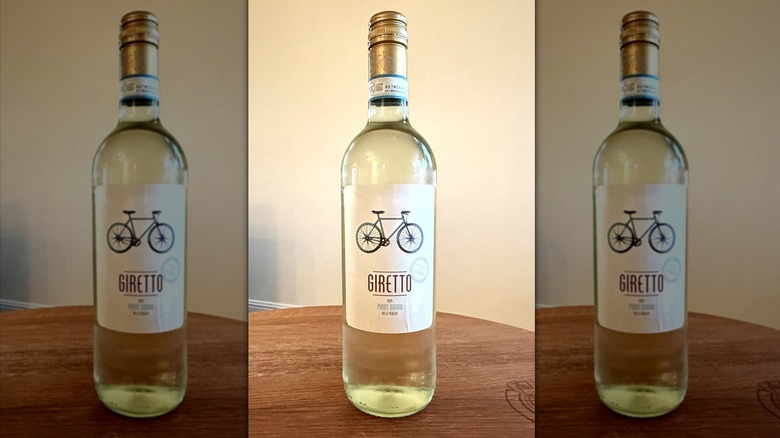
Value-driven Pinot Grigio from the Veneto region of Italy is often expected to be light and subtle, but subtle can quickly veer into forgettable. That's what happened here.
This bottle was clean and fresh, but it was also insipid and watery, with very little aromatic expression and virtually no depth on the palate. The best Pinot Grigios are rich in flavor, with distinct minerality, mouth-watering freshness, and length. This one just came and went without making any sort of real impression.
The silver lining is that this wine's neutrality could serve a purpose in the right context: perhaps as a spritzer, mixed into a white wine cocktail, or even poured over ice with a citrus garnish when the goal is refreshment over contemplation. On its own, however, this Pinot Grigio left me wanting so much more, and didn't bring enough to the table to compete with some of the other selections in the lineup.
William Walker Monterey County Pinot Noir
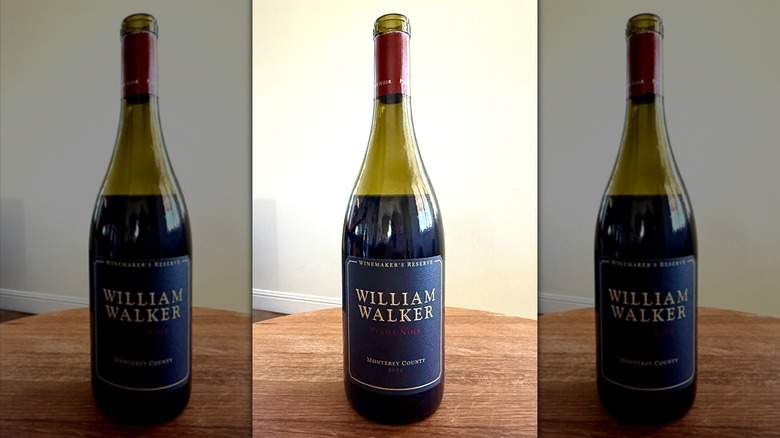
If Chardonnay is tough to do well on a budget, Pinot Noir takes that to a whole new level. Most wine drinkers will tell you that Pinot Noir — good or bad — is typically more expensive than other wines in the same price category (they even made a movie about it!). This is primarily because it's a notoriously fussy grape to grow and vinify, and really only thrives in certain regions. So I was especially curious to taste this value-driven Pinot Noir with regional specificity — in this case, Monterey County, a fantastic, cool-climate region for the grape — to see how it would stack up.
Up front, it had some real charm. Right away, the aromas out of the glass were classically Pinot Noir — red fruit, a touch of earth, some sweet spice. The flavors on the palate were rich and distinctly Californian, which belied the light color of the wine in the glass. Fans of New World Pinot Noir will appreciate this softer, almost slightly sweet style, though the wine finishes dry.
Where I was personally lost was the touch of artificiality to the flavor profile, which pulled it too far away from the savory elegance that many classic Pinot drinkers are after. Still, there was enough character, body, and typicity here to show why fans of the grape might pick it up again. And at under $10? Who could blame them?
Landkastel Mosel Riesling
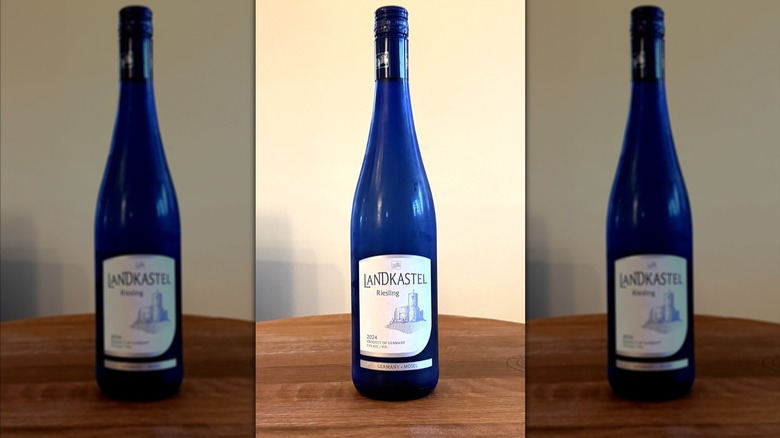
You'd be hard-pressed to find a wine geek who doesn't list Riesling as among their favorite wine grapes. And it's often a great cheap wine category because even entry-level versions can still offer a lot of charm. This bottle, from the Mosel in Germany, one of the most celebrated regions for Riesling, didn't aim especially high, but it was undeniably enjoyable for what it was.
It had all of the classic Riesling cues right out of the gate, with bright, varietal character and a nice interplay between sweetness and acidity. Nothing was overly profound or complex, but the wine was balanced, recognizable, and immediately likable.
This is the kind of bottle you want to keep on hand for nights of Asian cuisine or spicy takeout, as off-dry Riesling can often offer the perfect pairing for foods with more complex or pronounced flavors. It's also a solid wine for casual warm-weather afternoon sipping thanks to the lower ABV (9.5%), and for wine lovers who like a bit of softness in their white wines without necessarily heading into syrupy sweet territory.
Sunshine Bay Sauvignon Blanc
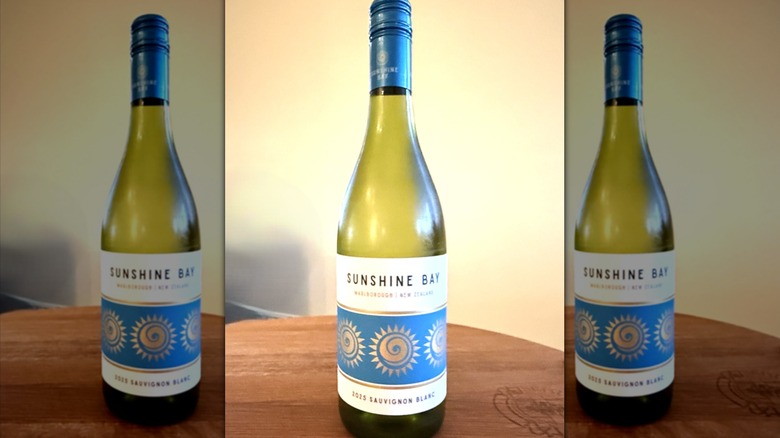
Few wines are more easily recognizable than a New Zealand Sauvignon Blanc. In fact, it's often used in early blind tasting exercises during wine certification programs thanks to its unmistakable aroma and flavor profile. This wine knew exactly what it wanted to be: loud, unapologetically New Zealand Sauvignon Blanc. Whether that's a good thing depends on your personal threshold for a wine's intensity.
There was no shortage of character here. The wine came bursting out with grassy, grapefruit-heavy aromas and almost exaggerated flavors. I could practically smell this wine from another room. Fans of that super punchy, hyper-exaggerated style will love this wine.
For me, it was a little too over the top, which is why it didn't take a top spot. I wanted those classic aromas and flavors, but softened with a bit more texture and nuance rather than amplified by razor sharp acidity. But these qualities are also what make this wine successful. It delivers exactly the kind of bold, zesty, aromatic profile fans of Kim Crawford and Oyster Bay actively seek. This wasn't a wine that lacked identity, and there was nothing forgettable about it. If anything, it had too much of it all, which, in a cheap wine lineup, is often preferable to blandness.
Lisbonissimo Portuguese Red Blend
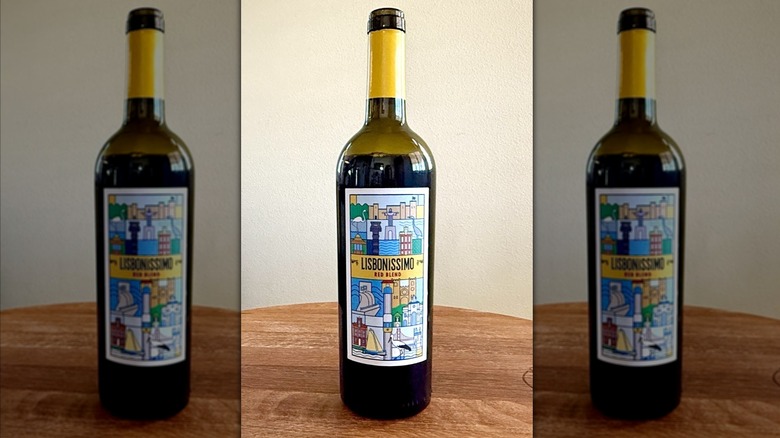
I'll admit, I wanted this wine to take the top spot because I am a huge fan of Portuguese wines in general and find there is exceptional value to be had in the region. And there was indeed a lot to like about this wine.
The nose was easily one of the most exciting in the tasting, with tons of rich chocolate and mocha notes that made it feel richer and more ambitious than its price tag suggested. It's produced by Casa Santos Lima, a large, family-owned winery operating throughout Portugal, which already lends some street cred to this bottling.
The label indicates the wine is "medium dry," though any residual sugar came across as dark, almost jammy fruit, and the wine finishes dry. It was a bit softer than I would have liked, which took some of the edge and structure away from the wine. Still, with its eye-catching label and likable flavor profile, this still feels like a bottle with broad appeal, sure to be a crowd-pleaser at any gathering. It smells great, is easy to drink, and, for many shoppers, that combination alone should be more than enough.
Kolbie Sparkling Brut
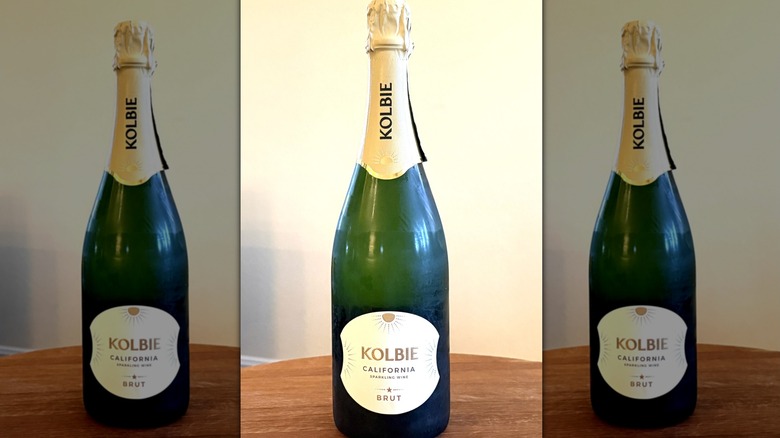
Walk by this wine quickly and you'll swear it's a bottle of Korbel, the ubiquitous California sparkling wine that many of us got our first taste of bubbly with. Sparkling wine under $10 can be a gamble, often ending up in bottomless mimosa headache territory, but this one turned out to be one of the most pleasant surprises of the tasting.
Some sources indicate that Kolbie is produced by sparkling wine custom crush facility Rack & Riddle, which makes wines for many famous wine brands and businesses, including Trader Joe's. It's done in the Charmat (tank) method, similar to how Prosecco is made, which prioritizes bright fruit and lightness over classic brioche notes and complexity from sparkling wines like Champagne.
Kolbie is no exception. There's lots to love with the juicy flavors and zippy acidity of this bottling. While the bubbles got a little frothy rather than refined, that didn't stop it from being enjoyable. This is a selection that feels party-ready — affordable, approachable, and cheerful, without tasting clumsy or artificial. You may not mistake it for a Grower Champagne, but that seems hardly the point. For the money, it overdelivers, whether you're sipping solo for a festive toast or, yes, whipping up a batch of mimosas.
Dancing Flame Red Blend
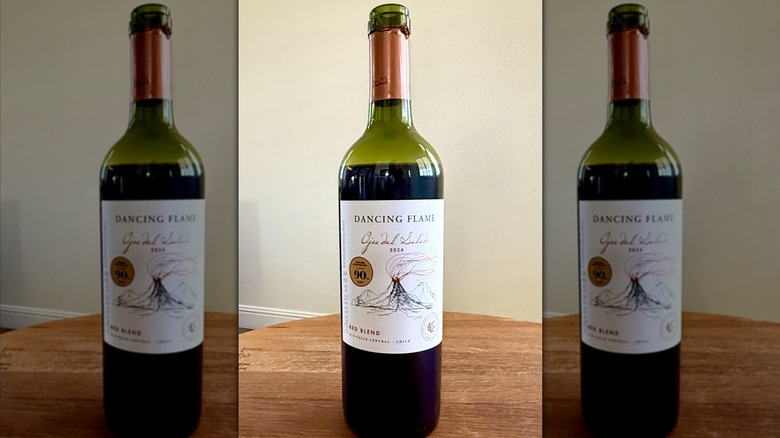
The top spot went to Dancing Flame, a full-bodied Aldi exclusive from Chile's Central Valley that felt like the most complete wine in the lineup.
Red wine blends are incredibly popular among wine drinkers as they tend to represent great balance in wine — there never seems to be any hard edges or things out of place in these wines. In fact, in many ways this is why wines are blended. This wine is no exception. While the specific grapes in the blend aren't disclosed, it had structure, body, and drinkability in spades. With juicy blackberry and cherry fruit, warming spice, and a hint of mocha, it punched well above its weight class for a $5.99 bottle.
I gave this wine relatively high scores in all categories because it seemed to deliver on all fronts: smooth and easygoing but still dry enough to stand up to food and feel like a grown-up wine rather than a cheap red built around sweetness. There was also a lovely savory note that gave the wine a bit more sophistication than I expected.
Most importantly, this was the bottle I would unabashedly serve to guests over for post-Little-League drinks or paired with a sit-down dinner. It doesn't taste expensive, but it does taste solid, and, at this price, that was enough to earn it the win.
Methodology
To rank these wines, I tasted all nine bottles from the same glass — a universal Josephinenhütte stem — to keep conditions as consistent as possible. Each wine was scored out of 10 in four categories: aroma, flavor, texture, and finish. The scores were tallied to determine the final ranking, with any ties broken by perceived market appeal and overall drinkability.
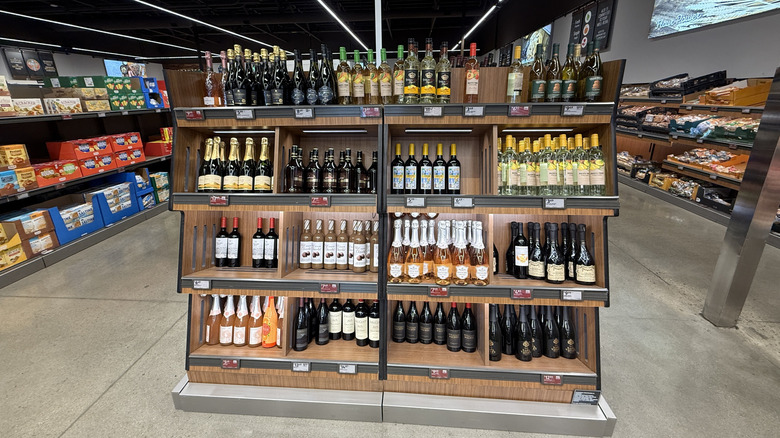
All wines were purchased directly from Aldi and selected to represent a cross-section of popular market categories as well as regional or stylistic typicity.