

Stop Making This Salt Error That Steals Soup's Flavor
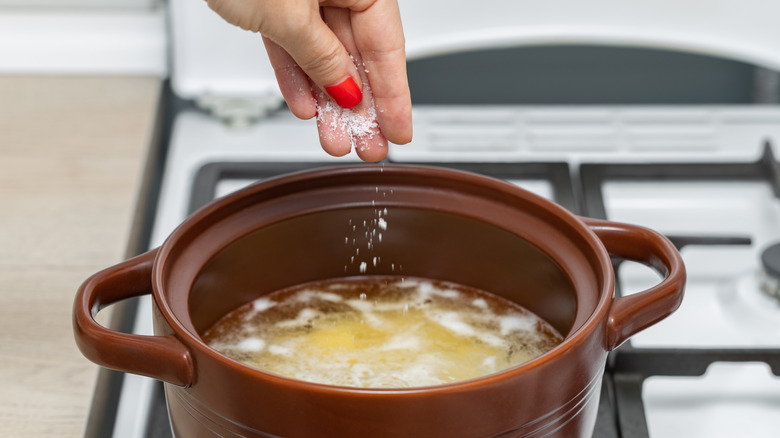
Soup is the perfect meal for a cold night (or a warm day, if you're a fan of cold soups like a traditional or white gazpacho). It may feel like choosing which kind of soup to make is the hardest part, but lackluster flavor might actually be a bigger deal. If your soup is lacking the complex flavor profile it deserves, salt — and when you add it — may be the sneaky culprit. If you don't add enough, the soup will be bland, and if you pour in too much, you've got to figure out how to fix your overly salty food.
However, it's not just about quantity — adding the salt too early or too late is a timing mistake that can kill your soup's flavor. When it comes to soup, the timing of adding your seasoning is key. You want to give the flavors time to meld, which means salting early with a small amount of salt, tasting as you go, and adding more at the end if it is needed.
When making pasta, you salt the water before adding the noodles. This allows the salt to sink into every piece of pasta and properly develop the flavor. The concept is similar to building layers of flavor in a good soup. By salting the soup early, you give the starches (like rice or pasta) time to hydrate and absorb the flavor, the vegetables time to soften so they are receptive to the salt, and the protein time to absorb the salt and retain moisture. In other words, you give all the components of your soup time to develop deep flavors.
Don't salt your soup all at once
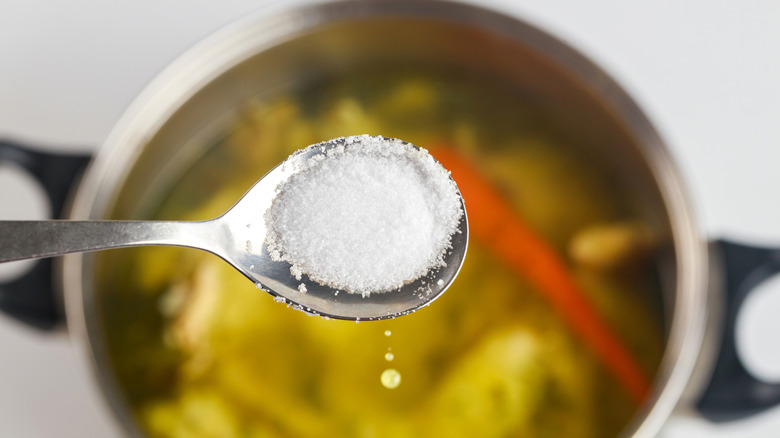
Generally, if you wait until the end to salt your soup, all you are doing is giving your soup surface flavor. You'll have a salty broth, but the ingredients themselves will be boring and lack deep flavor. The formula for the perfect soup starts before you add the broth, so you'll want to salt the aromatics as they cook rather than wait until the soup is finished.
But despite the importance of adding salt early on, there is a bit more to the process. While the salt needs time to permeate the ingredients, you'll want to start small and build the flavor. That means adjusting the amount as you go, since it is easier to add more if you don't have enough than to take it out if you've added too much.
Ultimately, you want to ensure that the salt has done its job. Before your soup is finished, be sure to taste the final product (after all, tasting as you go is part of the fun of cooking) to see how the flavors have come together. If it needs a bit of salt to finish it off, don't be afraid to sprinkle some more. In this case, the salt has had time to permeate the ingredients and build the complexity of flavors that you want your seasoning to accomplish. A dash or two of salt at the end could adjust the final taste, but only if needed, so you serve a soup with a delicious flavor profile.