

Bake Sky-High Muffins Every Single Time With The Simplest Fix
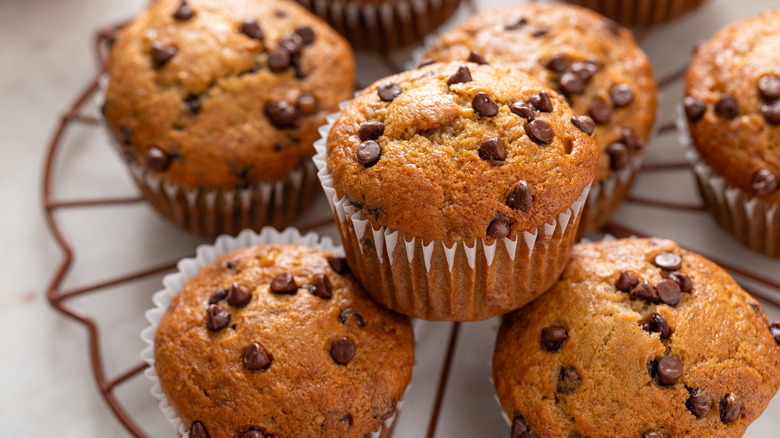
Nothing compares to the smell of freshly baked muffins escaping the oven. Whether beautifully moist, satisfying, and fluffy chocolate chip muffins, or fresh, tangy, and crunchy rhubarb and cardamom oat muffins, the classic baked treats are many people's go-to snack. Still, if there's one thing that annoys most home bakers, it's how they tend to stubbornly turn out flat, even when you've carefully followed every step of the recipe. But before you completely give up on baking them, here's a quick fix that will help the beloved baked goods turn out taller: check whether your ingredients are cold.
Vivian Villa, chef, food product developer, and founder of UnButter, an Ontario-based vegan butter brand made from shea butter and sunflower oil, told Chowhound that colder ingredients usually result in taller muffins. "Baking with cold bowls and ingredients (fat especially which works even better when grated coarsely frozen) is crucial for light and fluffy muffins," she shared, adding, "The cold temp slows down the rate of the fat melting into the dry ingredients and doesn't weigh down the leavening agents."
This is yet another simple temperature tricks that can easily give your muffins a bulkier top and make them taller. When asked if cold ingredients interfere with texture or mixing, Villa explained they actually protect the batter. "Cold ingredients actually safeguard against overmixing as it requires much more time to over-combine wet and dry components — once the ingredients are gently combined together, the batter hydrates as it is prepped for the oven," she pointed out.
Too much cold can also backfire!
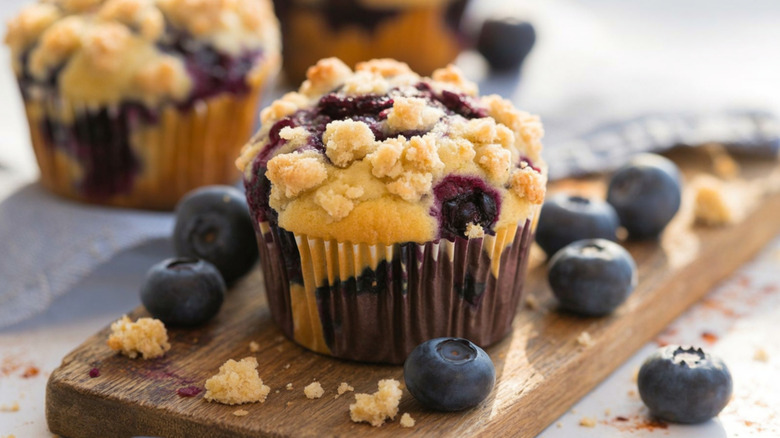
Considering that temperature affects muffin rise, briefly refrigerating the batter can eventually help the flour's starches absorb more moisture. As a result, it will become thicker, softer and additionally help you bake tall, bakery-style muffins. Yet, according to Vivian Villa, colder isn't always better, as too much cold can negatively affect the muffins. "Storing premade batter may save time, though [it's] not recommended as the leavening agents will lose their potency after a period of time, resulting in dense, flat muffins." Humidity, heat, and air can further weaken their strength.
In general, if you're running low on time and have already prepared the muffin batter, it's useful to know that it can be safely refrigerated for up to two days or frozen for about three months. Still, for the best results, you should only put the batter in the fridge to rest shortly before baking. Villa concurs that the fluffiest muffins rely on this simple batter rule. "Placing the batter in the fridge or freezer briefly just before popping into a very hot oven keeps it firm (not runny) as it bakes in the hot oven, the high heat kicking the leavening agents into action and creating steam for muffins that are light and airy," Villa notes. So, whether you're baking healthy, high-protein pumpkin muffins for breakfast or a sweet chocolatey treat like cookies-and-cream muffins after dinner, adjusting the ingredients' temperatures will surely help the baked goods rise sky-high.