

Hibachi Vs Teppanyaki Dining Etiquette: What You Need To Know
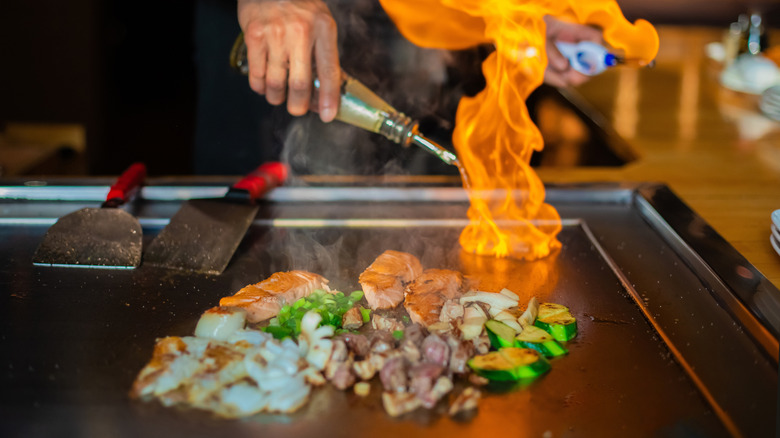
Adventurous restaurant-goers love what they consider hibachi. The close-knit community, fun cooking methods, and delicious foods are perfect for a great night out. When most people think of this theatrical, interactive dining experience, they typically assume it to be hibachi. However, there is a difference between the ancient cooking method hibachi and another Japanese style of cooking called teppanyaki.
We spoke to two experts on these two styles — Fitz Villareal, co-founder of Volcano Grille, and executive chef Chris Hong of O-Ku Atlanta — to understand the differences between them, including the etiquette expected for each. Unlike most restaurants, there are expectations for guests in environments such as hibachi and teppanyaki. Many people don't realize that there are certain behaviors required for patrons in such an interactive experience, as well as specific cultural conduct to observe.
Here is the expert advice we gathered from specialists in the field. It'll help ensure you have a good time at these restaurants while being knowledgeable and respectful to traditions.
What is teppanyaki?
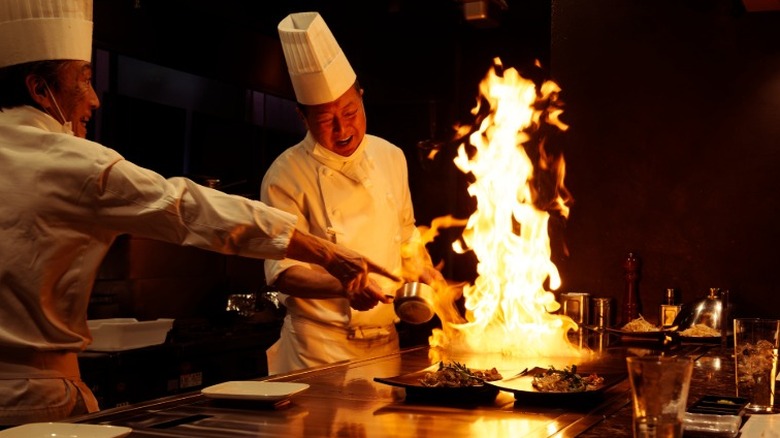
Teppanyaki is what most people in the U.S. think of as hibachi — dinner and a show. The chef uses a large iron griddle and performs tricks while cooking, often for a group of guests.
Chef Chris Hong offers his explanation of this unique dining situation. "What most Americans call hibachi is actually teppanyaki," he says. "Teppanyaki is a more Americanized version and features the flat top griddle and offers more of an entertainment factor. That's not to say that teppanyaki restaurants don't exist in Japan — they do!" He adds a simple way to discern the difference: "The Benihana-style restaurants are teppanyaki."
It's also important to note that the diner's experience is not the only differentiating factor; the way the food is cooked matters as well. "Teppanyaki is what we actually cook. It refers to food prepared on a large flat iron griddle. 'Teppan' means iron plate, and 'yaki' means grilled or cooked," says Fitz Villareal.
What is hibachi?
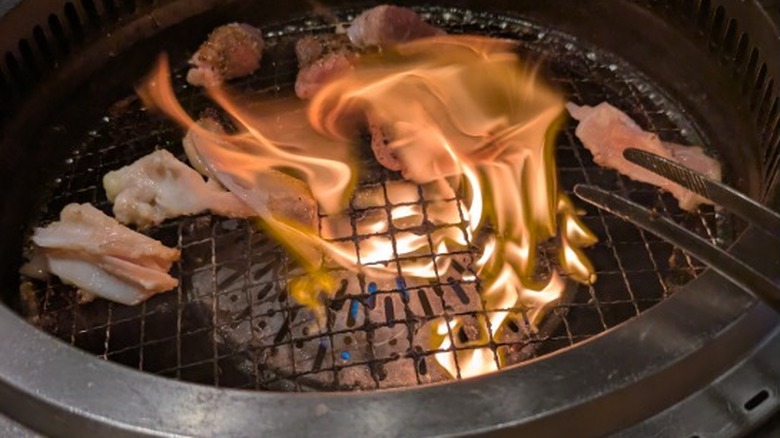
On the other hand, hibachi is actually a little less dramatic than its counterpart. "Hibachi [is] a more traditional way of cooking in Japan, one that includes cooking over an open flame on a grill," explains Chris Hong. While it can be entertaining in a sense, the performance is not quite as exaggerated as teppanyaki. The two are definitely similar, and this is one of the main distinctions.
"Hibachi originally referred to a traditional Japanese heating device. In modern usage, hibachi describes a small charcoal grill. In the United States, the word hibachi became slang for teppanyaki-style cooking because it's easier to say and stuck in pop culture." says Fitz Villareal, confirming the common misconception that hibachi is the method of cooking on a large, flat, iron surface. The word hibachi itself means "fire bowl," further removing it from teppanyaki, and is better suited for items like steaks or large vegetables.
Teppanyaki: Conversations should be cordial and inclusive
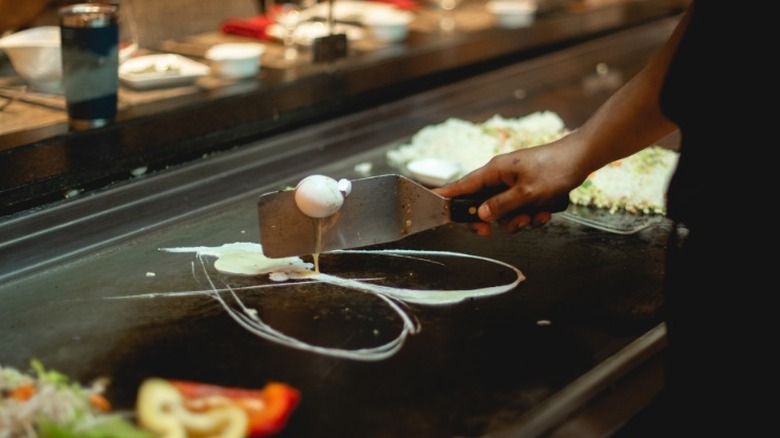
Since customers are sharing a grill space, they should keep conversations friendly. Teppanyaki is a very social event, so chatting is expected, but it's best to stay respectful. Being open and kind is important. You should typically speak at a low volume instead of shouting across the table. It's also important to make everyone feel accepted.
Fitz Villareal reveals one of the biggest faux pas at the teppanyaki table: "Turning the experience into a drunken spectacle." Keeping your alcohol consumption under control is a given because loose, casual conversation can very quickly turn into an uncomfortable situation when someone overindulges. In a close-knit teppanyaki setting, things can escalate much faster.
"Be present. Keep conversations inclusive, respect the shared grill space, and remember you're dining communally. Energy is welcome. Chaos isn't." Villareal continues. Remember, you aren't always dining with people that you know. It's very likely that your group contains strangers, so try to be respectful of others.
Hibachi: Guests should be conscious of others
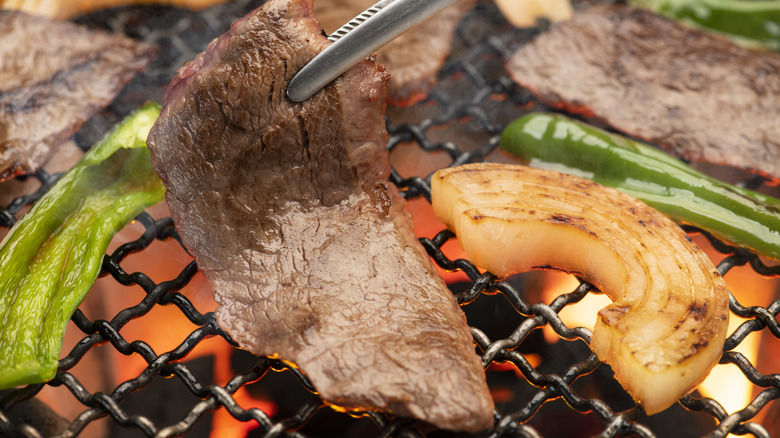
A hibachi dinner can be quite a bit more intimate than a teppanyaki one. There may be shared seating, but guests can also sit at personal tables for a more private dinner. Fitz Villareal puts it simply: "Be mindful of shared seating, avoid excessive interruptions during cooking, and keep personal items off the grill surface."
Similar to teppanyaki, respect for others (including the chef) is vital to a successful and pleasant hibachi meal. Since the hibachi grill is sometimes built into the table itself, it's important to be courteous to the other diners and refrain from placing items such as wallets or cell phones onto the shared space.
Of course, being social is also encouraged in a hibachi setting, but since it's typically more of a laid-back environment, it's best to speak politely so as not to make a scene. If a chef is present, try not to interrupt them while they are actively cooking as a sign of respect.
Teppanyaki: Making a reservation is best
While organizing a group outing, making a reservation for dinner isn't always a task people enjoy doing, especially when a restaurant is fairly difficult to get into. However, experts like Fitz Villareal strongly urge diners to snag their seats beforehand to ensure no problems arise once they arrive at the restaurant. It's best to plan ahead to make your experience as comfortable and enjoyable as possible.
"Reservations are recommended, especially for larger groups," Villareal advises. "Teppanyaki seating is organized by grill tables, so timing and party size matter." Particularly with special occasions like birthday parties or work events, giving the restaurant a call ahead of time is a good idea so that you can ensure your party gets to sit together. When a group walks in without making a reservation first, it's likely that they will be separated or seated with strangers, which isn't always ideal when trying to enjoy a night out.
Hibachi: Walk-ins are welcome
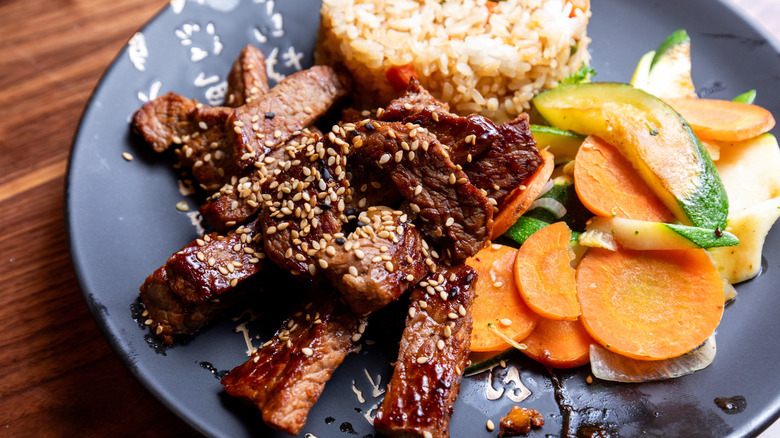
Calling ahead isn't nearly as necessary at a hibachi spot as it is at a teppanyaki one. "Walk-ins are welcome when availability allows," says Fitz Villareal. Hibachi is more intimate and usually only involves parties of about four people, so making a reservation isn't often needed if the occasion is just a simple dinner.
Since you'll likely get your own table, walking in isn't frowned upon; however, peak hours may affect your ability to be seated quickly. According to Villareal, "Reservations help guarantee seating, especially during peak hours." As with any other restaurant, though, you should be mindful of peak busy hours, since this will affect the likelihood of being seated in a timely manner. If you're planning a hibachi dinner when the restaurant will likely be packed, it's a good idea to reach out to the host to reserve a table.
Teppanyaki and hibachi: Be mindful of all while tipping
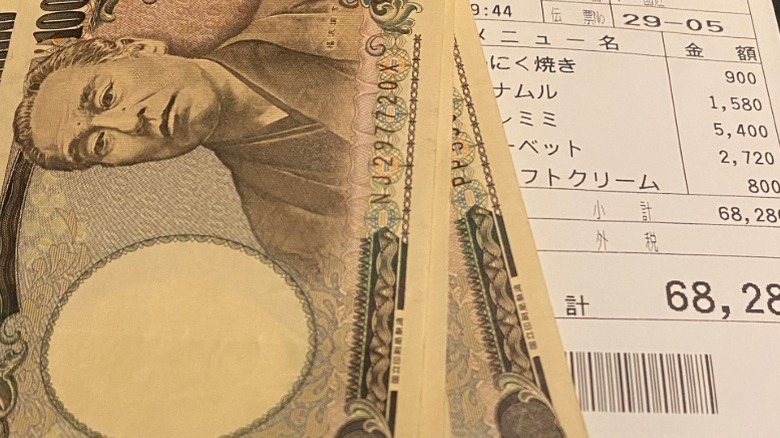
At teppanyaki (and sometimes hibachi), you're getting dinner and a show, which should be taken into account when deciding on the tip at the end of the meal. Unlike most restaurants, you're being helped by multiple members of the restaurant staff — and they all deserve adequate compensation for their services. Many people realize that tipping is not customary or required in Japan, but if you're enjoying teppanyaki in Western countries, it's usually expected.
Fitz Villareal advises, "Standard full-service gratuity applies. Remember, you're being served by both a chef and a server working in coordination." The chef is providing entertainment as well as cooking your dinner, and servers are bringing drinks and making sure you have everything you need to enjoy the meal. All of this should be considered and factored into your budget for the evening.
So what's a good rule of thumb when tipping after your teppanyaki experience? Villareal recommends for both: "Typically 18 to 20% depending on service quality."
Teppanyaki: Give thought to safety and respect
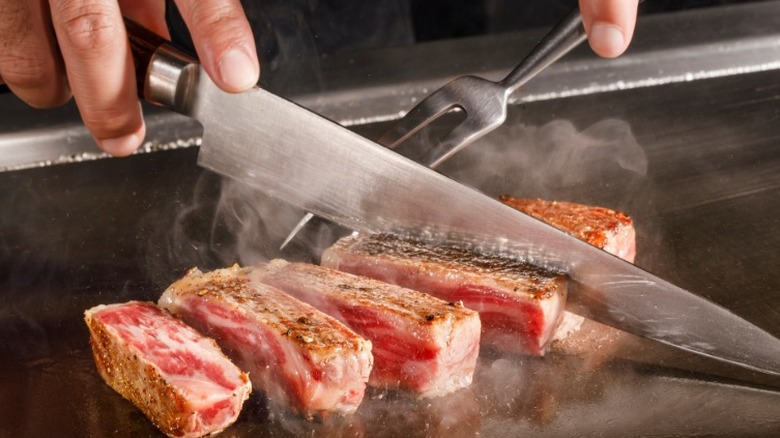
Teppanyaki is an interactive occasion, but that doesn't mean it's an excuse to be reckless. As Fitz Villareal puts it simply, "There is live flame and sharp tools involved." Engage with your chef while keeping carefulness in mind for the safety of everyone involved. It's important to conduct yourself in a calm manner while still having fun as you get to participate in the festivities. The staff wants you to have a great time, just not at the expense of safety.
"Stay seated and attentive. Engagement is encouraged. Interference is not." Villareal continues. In addition to compromising safety, it's simply the respectful thing to allow the chef to perform, cook, and serve without constant interruptions or distractions. Not only is being disruptive irritating to the chef, but it's also upsetting to the other patrons at the table who are simply trying to enjoy their evening the same way you are.
Hibachi: Consider the chef's space
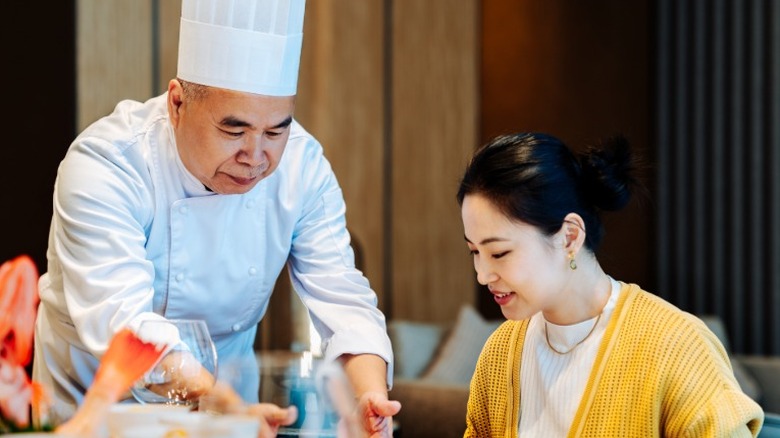
In an interactive hibachi situation, Fitz Villareal reveals a big no-no for customers: "Trying to direct the chef." A hibachi chef is an artist; although it's not quite as theatrical as teppanyaki, customers should still allow the space and creativity needed for them to craft delicious food and provide patrons a relaxing and unique experience. Talking to the chef while he or she is cooking is also considered a sign of disrespect in hibachi culture.
That's not to say that you shouldn't speak to the chef at all. "Engage respectfully," says Villareal. "Enjoy the interaction, but allow the chef space to work safely and efficiently." In addition to tipping, it's also encouraged to applaud and/or thank the chef once the dinner has concluded. They are just like any other performer and deserve praise for a job well done, and you've also gotten to enjoy a delectable meal at the same time.
Teppanyaki: Place your chopsticks respectfully
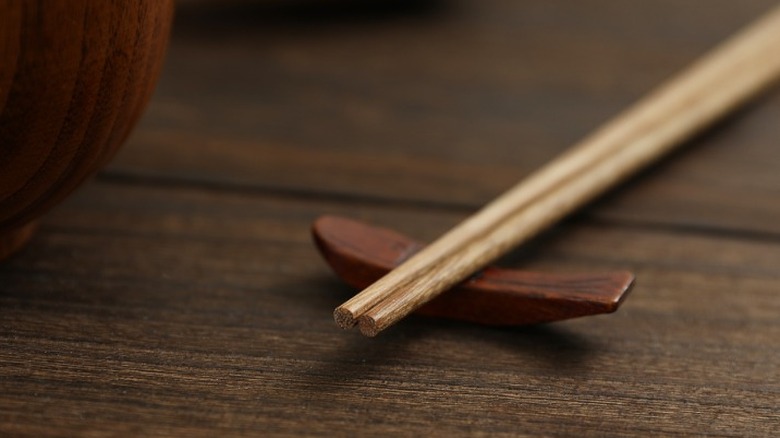
Most people might not realize this, but cultures around the world have different culinary traditions that should be considered when dining out. Diners should make sure to show respect to the chef and other patrons during nights out for teppanyaki. The way you handle your chopsticks while they're not in use is actually a very important thing to remember while eating at a Japanese restaurant.
"Avoid sticking chopsticks upright into rice, as this resembles a funeral ritual in Japanese culture," explains Fitz Villareal. "Rest them neatly on the holder when not in use."
If a chopstick holder (aka hashioki) is not provided at the restaurant, just lay them down flat on the table. Chopstick etiquette is more than impressing others with your skills and use of the utensils; it's also a way of showing respect during your meal.
Hibachi: Don't wave chopsticks around
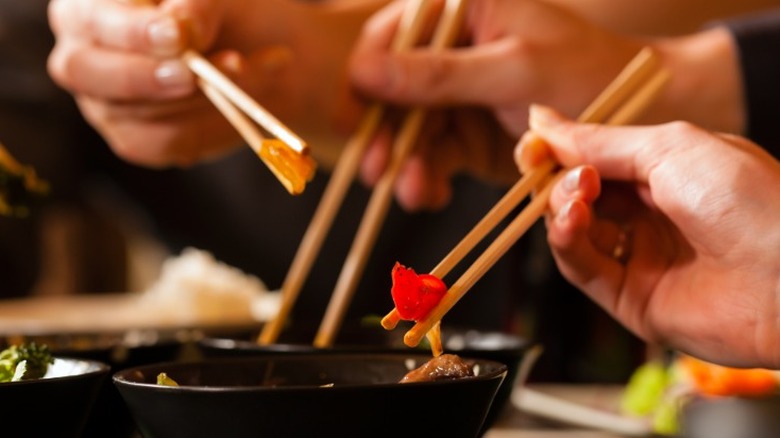
Being reckless with utensils or moving different foods around with chopsticks is disrespectful in a hibachi setting. Like with teppanyaki, customers should place their chopsticks down in their holders when not in use. But even though hibachi is more laid-back and quiet than the theatrics of teppanyaki, some might not realize that their conduct isn't becoming while seated at the table.
Fitz Villareal offers this advice to restaurant-goers: "Do not spear food, wave [chopsticks] around, or pass food from chopstick to chopstick. Place them down neatly when finished." These utensils are strictly for picking up food and should not be used to "stab" food, as you would with a fork. You also should refrain from sharing chopsticks or using them to give food to others — your chopsticks are your own and should be treated with respect and dignity. Honoring Japanese culture is imperative at hibachi restaurants.
Teppanyaki: Trust the portions of condiments provided
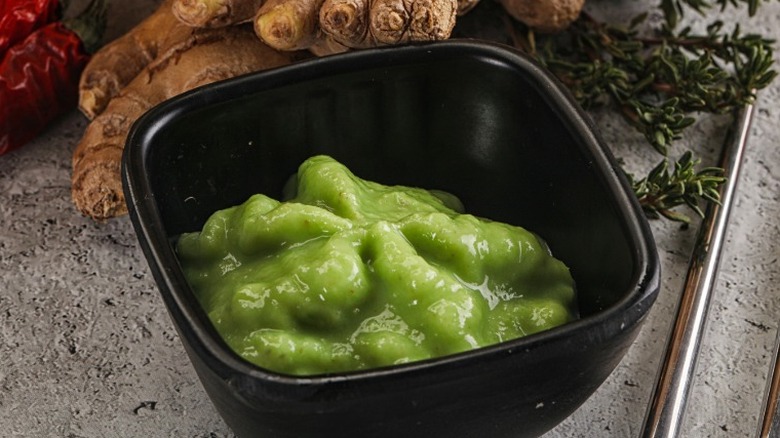
After enjoying the show, your meal is finally served. Although the food is cooked to perfection, don't chow down yet — there are still sauces and condiments to add to each dish. Lovers of sushi and other Asian cuisines understand the importance of adding condiments to enhance these foods, and probably have their preferences on what to add and what to avoid. But before you ask for extra soy sauce to add to your rice, consider the following advice.
"Use sauces thoughtfully. Teppanyaki flavors are balanced intentionally. Adding small amounts at a time allows you to experience the chef's intended profile before customizing," says Fitz Villareal. Chefs and servers understand the proper amount of sauces and flavors for your meal, and condiments are perfectly portioned for the number of guests. You should trust the chef's expert opinion on the amounts needed for each dish so as to fully enjoy the meal as it was intended.
Hibachi: Use sauces to complement, not overpower
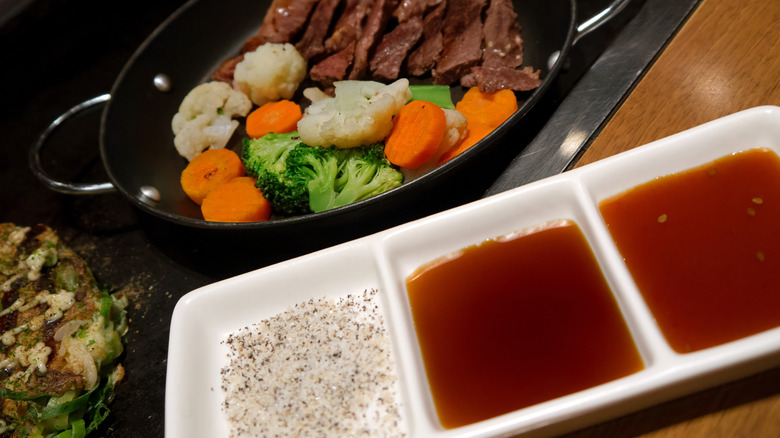
Like teppanyaki, hibachi is typically enhanced by condiments such as wasabi, ginger sauce, Yum Yum sauce, and soy sauce. You should try not to waste the condiments by taking too much, as they're intended to enhance the flavor of the meal, not overtake it.
"Start light. Hibachi sauces are designed to complement, not overpower. Portion reasonably to avoid waste," Fitz Villareal advises. Like with teppanyaki, you don't want to request more than necessary, and you definitely shouldn't let any go to waste after doing so. Food waste in restaurants is never a good look after a meal.
Also, like with teppanyaki, you should trust the chef's opinion on what sauces go with which item of food. Your meal will be better for it, and you'll appreciate how well the flavors go together in the end as opposed to attempting to create your own. Enjoy the traditional tried-and-true pairings that have been perfected by artists over decades.
Teppanyaki: Consider the chef while taking photos
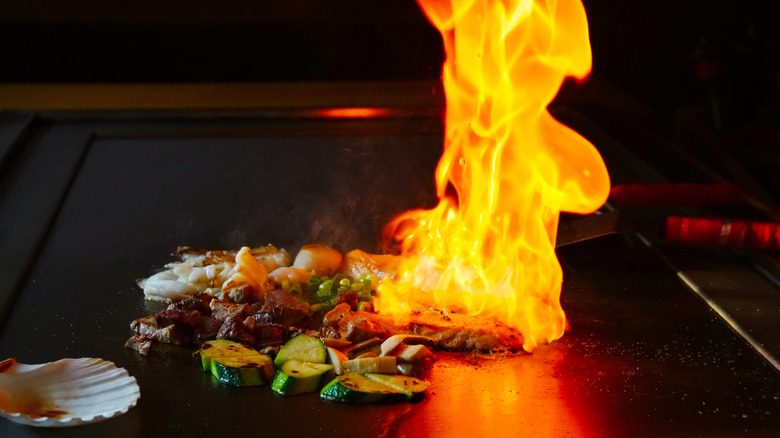
Patrons who are new to teppanyaki may wonder if taking photos of the event is acceptable or not. The answer is yes! Per Fitz Villareal, taking photos is "absolutely welcome. Just avoid flash directly into the chef's eyes and be mindful of other guests' [views]." It's important to consider the comfort and enjoyment of others as well as general safety.
Everyone knows that being photographed isn't always something that is appreciated. Despite being in a fun, open environment, not everyone is open to being caught on camera. Try to contain your photos to your own party and minimize the flash, if possible. Distracting the chef with a bright cell phone light is compromising his or her safety as well as the safety of others.
Teppanyaki is a fun experience that guests want to capture on film, so photos are welcome. Just make sure to be considerate and mindful of others.
Hibachi: Be respectful of other guests with your camera
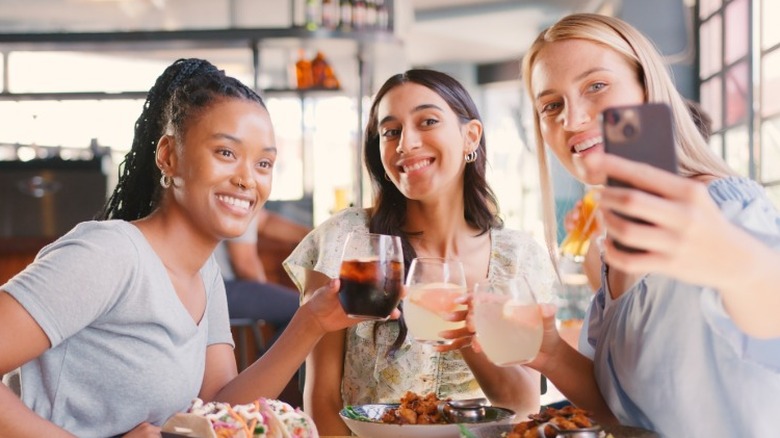
While it's not quite as flashy as teppanyaki, hibachi is another occasion that guests might like to remember. If you're celebrating a birthday or other important event with loved ones and friends, no one can blame you for wanting to bring home mementos from the evening. It's definitely okay to capture the moment; just make sure to be wary of other guests in the restaurant. Like teppanyaki, make it a point to respect the experiences of other people around you.
Fitz Villareal continues, "[Taking photos at hibachi is] encouraged. Capture the moment, just be mindful of safety and fellow guests." That being said, some restaurants in Japan frown upon taking photos of the food. Keep this in mind if you are traveling abroad: Ask first, and there should be no problem. If you prefer to be safe, be sure to ask others at the table if taking pictures will be distracting or uncomfortable for them.