

21 Stinky Cheeses You Should Try At Least Once
We may receive a commission on purchases made from links.
Is there any appeal to a cheese that smells like a hot gym locker room reeking of sweat, flatulence, and really bad body odor? The answer is a resounding yes! The category of "stinky" cheeses is wide, covering classic French stinkers like Camembert, American odiferous originals like brick, and a lot of funky stuff in between.
How can something so stanky taste so good? First, the use of unpasteurized milk, especially from seasonally grazing animals, maintains strong aromatic compounds of the terroir's microflora. Second, the type of animal milk, whether cow, sheep, goat, or a mix, uniquely contributes to the cheese's aromatic personality. Third, many are made by washing the rinds, meaning the exterior of the wheel is periodically coated in a brine solution. When allowed to ripen in ideal conditions, the interaction of microbes with the wet surface helps the cheese develop its flavor and texture while consequently creating a bold smell.
Take my word for it: As a full-time cheesemonger and certified cheese professional accredited through the American Cheese Society with more than 10 years of experience in the industry, I have closely worked with stinky cheeses. Many of the cheeses on this list I have personally cut by hand, and my nose has been my close and hard-working companion at the cheese counter. Read on for my compilation of 21 stinky cheeses you should try ... just keep a window (or two) open.
1. Époisses
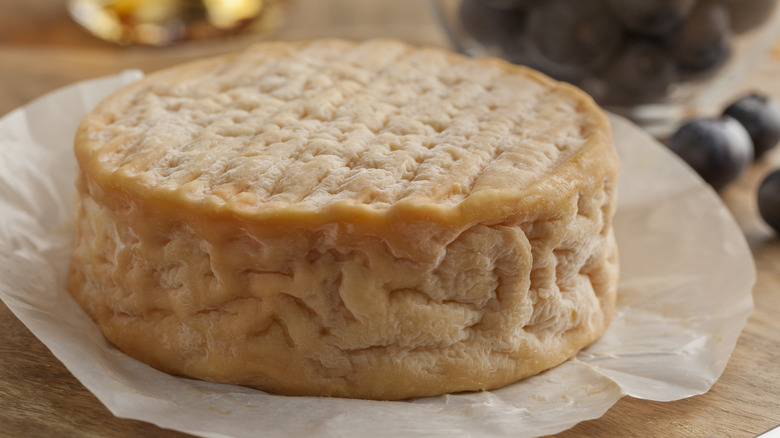
Époisses is a small French cheese wheel aged in humid cellars. Because the paste is runny and perfectly spoon-able, each wheel must be contained and sold in a wooden base. It's routinely washed with salt brine and Marc de Bourgogne, a French pomace brandy produced in Burgundy. The washing process yields a wrinkly burnt-orange rind and an incredibly pungent scent. My customers and fellow cheesemongers have described the aroma as decaying roadkill, really old smelly socks, and overcooked broccoli.
Some claim that because the cheese is so stinky, it has been banned from the Paris Metro public transit system. But that's just a humorous anecdote, without any actual legal regulations against transporting the cheese around the Parisian city.
2. Camembert
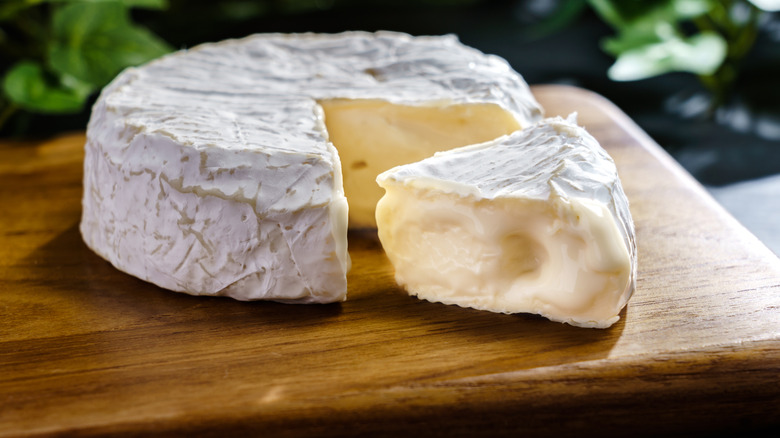
Camembert is a French original with historic production in Normandy dating back to the late 18th century. It now has many interpretations throughout the cheesemaking world, from small-scale cheesemakers rooted in terroir and tradition to large-scale producers churning out wheels to sell in multinational grocery store chains.
This bloomy-rinded cheese will often have a thin, white, velvety skin and an interior paste that can be dense and stiff when young or soft and nearly liquid when ripe. Its aroma can range from fresh, earthy white button mushrooms to deeply roasted Brussels sprouts or sweaty gym socks. The taste of Camembert is rich and buttery. It's an ideal companion with crusty bread and an oaked Chardonnay to complement the creamy cheese.
3. Le Maréchal
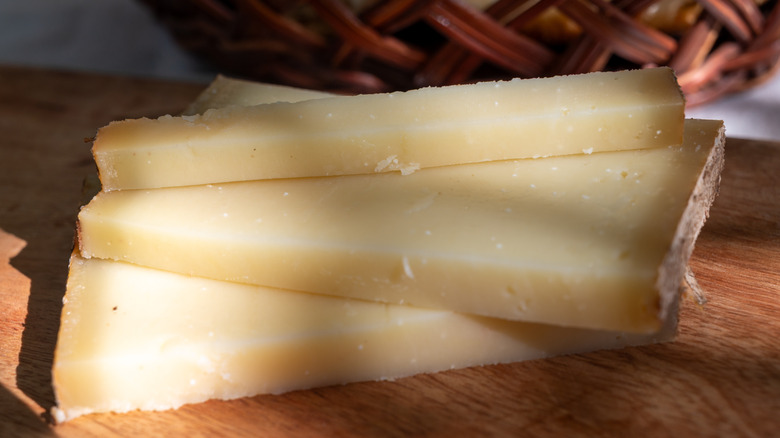
Le Maréchal is a Swiss original produced by multiple generations of the Rapin family, with milk being sourced locally by over a dozen farms around the area. It's a semi-firm Alpine raw cow's milk cheese noteworthy for its pungent aroma. This is mainly due to the process of rubbing the rind in a blend of organic herbs, including thyme and oregano, as it ripens.
My then-boyfriend (now-husband — surprisingly, he still married me) nearly ended our relationship because I suggested he try this one without warning him of the distinctly barnyardy, manure-forward stench. But once your nose adjusts to the smell, you can appreciate its nuanced flavors and textures. It has notes of buttery caramel and lightly toasted almonds, with a hint of herbs closer to the rind, and has a seamlessly smooth, dense texture.
4. Limburger
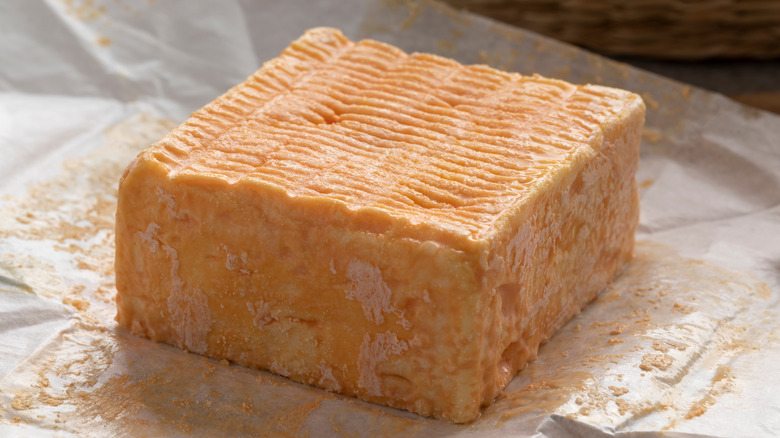
Limburger is a small and pudgy washed-rind block of cheese made with cow's milk. It develops an orange color on the outside due to the routinely applied bacterial salt brine. It will always live in worldwide infamy for its outrageously intense, smells-like-funky-feet aroma. It was created in the Belgium town of Limburg, but is now primarily produced throughout Germany. The United States had its share of Limburger activity over the years, but Chalet Cheese Cooperative in Monroe, Wisconsin, is currently the only creamery producing it in the entire country.
Limburger is often served with accompaniments like rye bread, raw onion, and liverwurst. As a good wine choice to drink with this stinky cheese, an acidic white wine like Grüner Veltliner pierces through the pungent smell and dense structure.
5. Taleggio
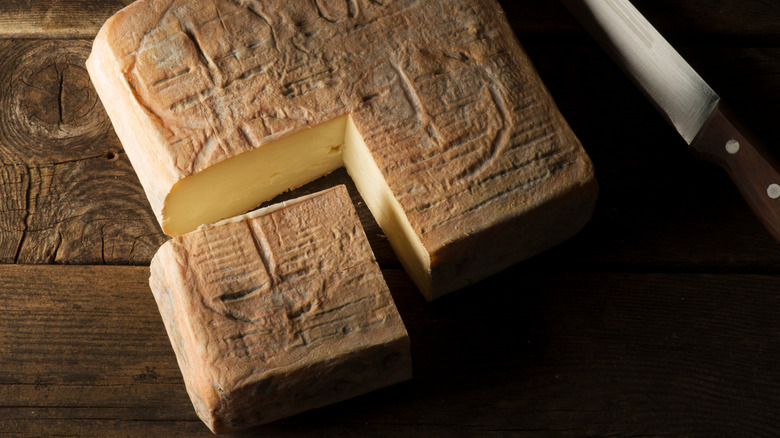
Taleggio is a popular washed-rind Italian cheese named after its original production area: the mountainous Val Taleggio in Lombardy. When young, it has a lightly yeasty aroma and a firm texture that can be cut cleanly with a knife. But when riper and older, it becomes super dense and pudgy, at times even oozing, with a strong stinky-socks stench. There can be a layer of fuzzy mold on the rind, which emits a mildewy smell.
The flavor is surprisingly mild and savory. Younger wheels taste similar to their smell, like a tangy, yeasty sourdough bread. The older wheels will have intense tasting notes of salty rotisserie chicken. Easily incorporate a ripe, stinky cheese like Taleggio into your cooking by blending it with other milder options, such as adding it to slices of American or cheddar cheese in your grilled cheese.
6. Red Hawk
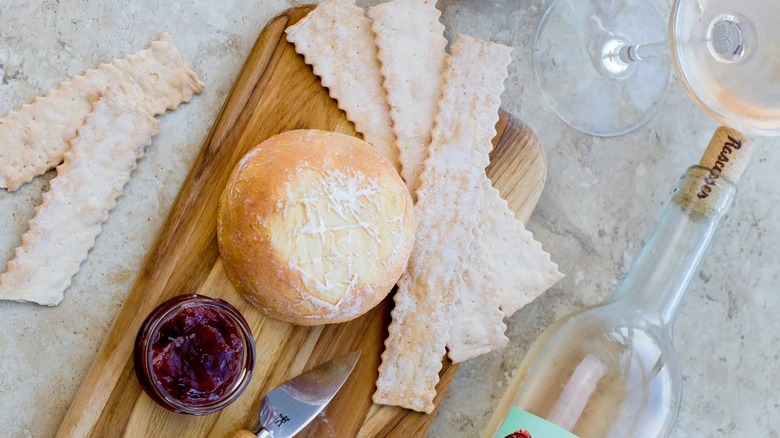
Red Hawk is an organic washed rind cow's milk cheese produced by Cowgirl Creamery in Northern California. It's a tiny, small-format gem that has a huge personality. Similar to many other washed-rind styles, it proudly sports a burnt orange exterior with a barnyardy aroma and a flavor profile of meaty charcuterie and deeply roasted peanuts. And because it's enriched with a generous amount of cream, the texture is rich and dense. Depending on its level of ripeness, it can develop a pudgy, pudding-like creamline directly beneath the interior of the rind.
Red Hawk is best paired with foods that have opposing qualities in order to create balance. Try it with acidic, vinegary items like pickles or onion jam.
7. Brick
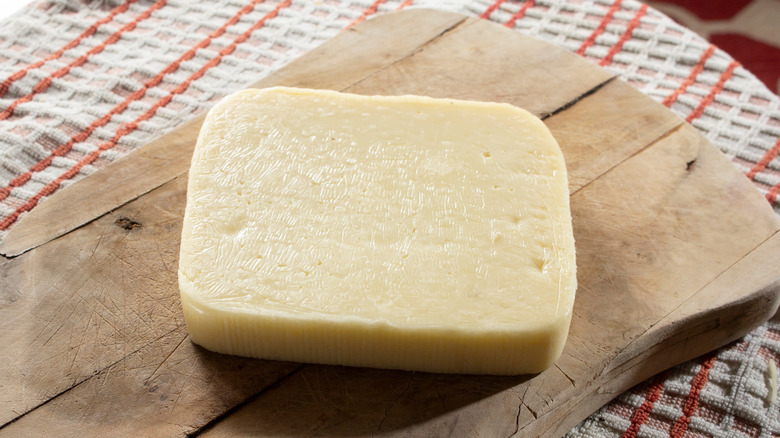
A Wisconsin original inspired by Limburger, brick cheese is slightly less pungent when young but increases in piquancy as it ripens. It has a mild, buttery flavor with a tanginess similar to cheddar. Swiss immigrant and cheesemaker John Jossi created this style in 1877 in Wisconsin to an effort to make a drier and less abrasive cheese.
There are multiple explanations for its name, one of which being that the curds were originally pressed using bricks — the weight of the bricks would expel excess whey from the curds. Another popular explanation is that the rectangular shape of the cheese is similar to a brick.
8. Raclette
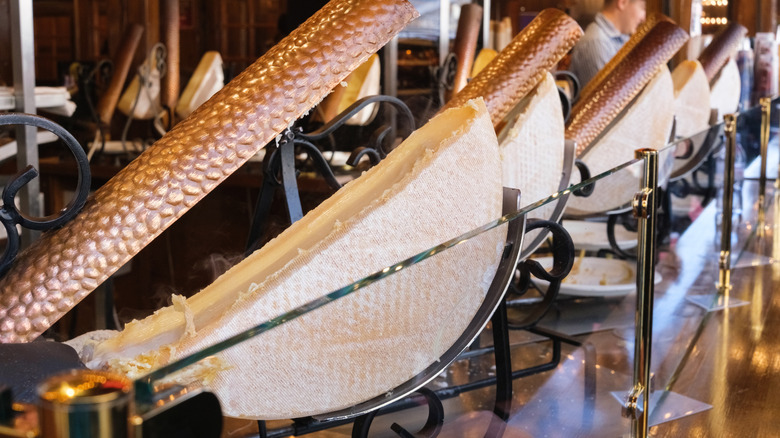
Raclette is a popular semi-firm, melt-worthy Alpine cheese made by both Swiss and French cheesemakers and is mimicked by producers across the globe. I usually describe the odor as sulfuric, a nose-wrinkling blend of fresh flatulence and hard-boiled eggs. Don't let that push you away — the texture, especially when melted, is sinfully luscious, and the full-bodied flavor is fruity, floral, and nutty.
Its name comes from the French verb "racler," meaning "to scrape." This refers to the traditional Alpine cooking method of heating an exposed portion of the cheese wheel and scraping the melted top layer onto various cooked foods. Classic accompaniments include cooked potatoes, roasted veggies, pickles, and cured meats. You can find pre-sliced raclette at Trader Joe's, but you'll need to plan ahead — it's only available in winter. Fortunately, you can also order a wheel on Amazon.
9. Vacherin Mont d'Or
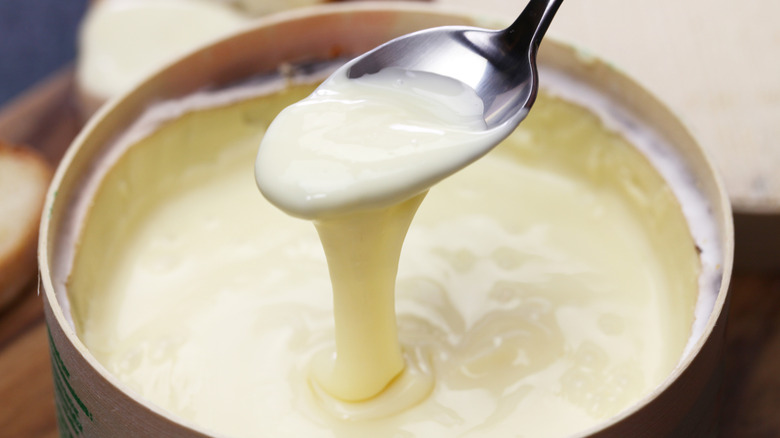
Vacherin Mont d'Or is a hyper-seasonal selection from Switzerland with a funky aroma and an unbeatably smooth, silky texture. These slightly wrinkled beauties are wrapped in spruce bark to contain their delicate shapes. The individual-format wheels are produced only during the fall and winter months, using milk from cows that are fed straw and fodder, which creates a much richer consistency in the milk.
You can serve the wheels cold or at room temperature and remove chunks with a butter knife, but my favorite preparation method is to gently heat a whole wheel in the oven until warm and oozing. Serve with your favorite fondue dippers or mix pre-cooked pasta directly in the melted cheese for an outrageously decadent, single-serving mac and cheese.
10. Roquefort
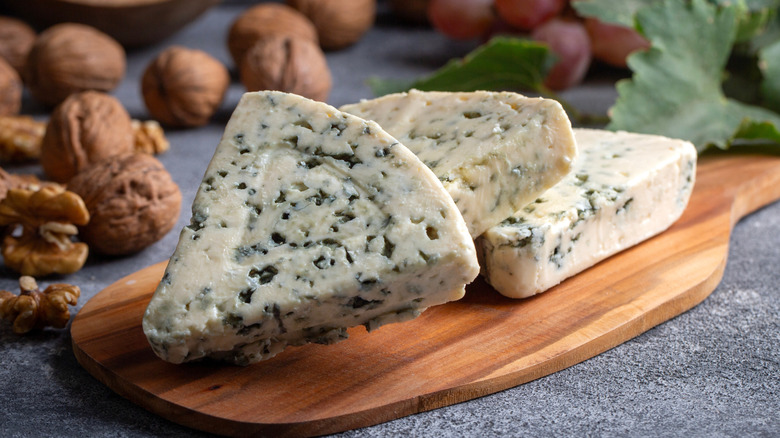
French Roquefort is the quintessential stinky blue cheese. It's moist, peppery, and uninhibitedly spattered with large mold spores. It's made with 100% raw sheep's milk from the Lacaune breed. Milk from sheep has higher concentrations of proteins and fats compared with cow's milk — as a sheep's milk cheese ferments, the fats in particular undergo a reaction known as lipolysis, breaking down into free fatty acids. The type of fatty acid chains found in Roquefort are responsible for the sharp flavors and aromas.
Despite its piquancy, this blue cheese is still an approachable ingredient. Like other types of blue cheeses, Roquefort can be used in unexpected ways. Try crumbling it on top of a pizza, melting it in mac and cheese, or even churning it in ice cream.
11. Ossau-Iraty
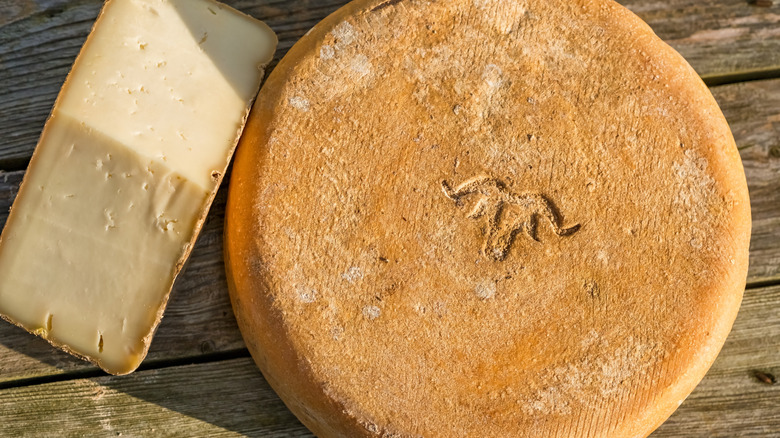
Given a Protected Designation of Origin (PDO) certification in 1980, Ossau-Iraty must be produced in the French Pyrenees with milk exclusively from the breed of Basco-Béarnaise sheep. The initial smell of the rind can be overwhelming, especially with riper options. Having opened dozens of cases of Ossau-Iraty over the years, I often compare the aroma to bonito flakes, the umami-rich, smoky shavings of fermented dried fish.
The smell, however, does not transfer to the taste of the cheese itself. Younger Ossau-Iraty wheels have a mild, milky flavor, which develops into a richly hazelnut-forward taste as it ages. The cheese also has a sinfully smooth, uniform texture that melts well. I love replacing any recipe that uses Gruyere with an equal amount of Ossau-Iraty to introduce friends to other lesser-known styles.
12. Moliterno al Tartufo
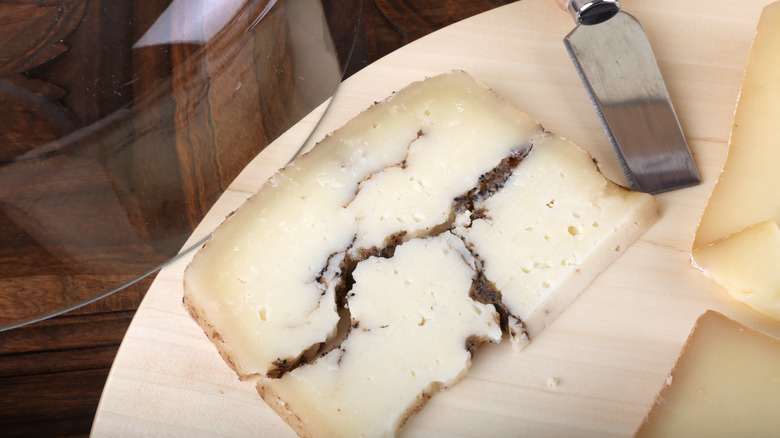
There's nothing like a whiff of an aged pecorino cheese that stings the nostrils in all the best ways. While a classic Pecorino Romano has enough fragrant heft all on its own, there's another similar style of Italian sheep's milk cheese that doubles down on aromatics: Moliterno al Tartufo. With an abrasive salt content and bold sheep's milk flavor, Moliterno al Tartufo contains ground black truffles, which are injected throughout the interior paste. Not only does this piquant ingredient lend its bold, mushroomy earthiness, it also creates a beautifully marbled appearance.
Moliterno al Tartufo is aged for about four months and uses pasteurized sheep's milk cheese. The next time your recipe calls for grated Pecorino Romano, substitute this one instead for a deeper, more intense flavor experience.
13. Fontina Val d'Aosta
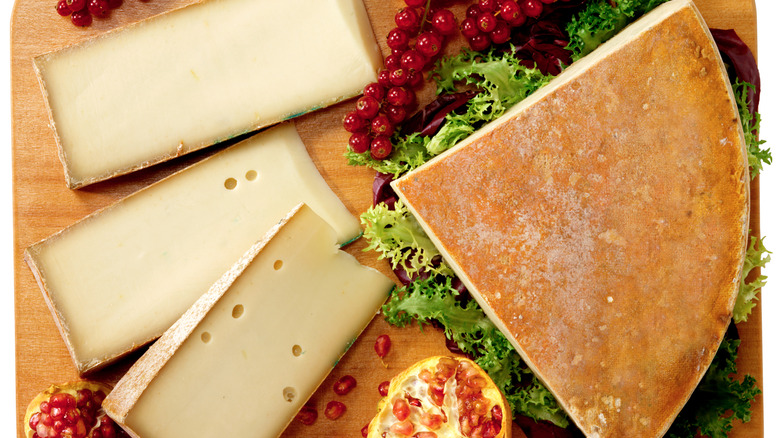
With raw cow's milk and a washed-rind exterior, Fontina Val d'Aosta is a strongly scented Italian selection. This specific style of cheese has a PDO and is produced in the Valle d'Aosta region in northwest Italy with milk from grazing cows enjoying the flora of the Italian Alps in summer and hay in the winter. This cheese's odor can be piercing, vaguely similar to a used diaper, but the taste is nutty and buttery with a subtle sweetness.
It's a smart choice for melting into a fondue, casserole, polenta, or risotto, but it's also perfect for a cheese plate. Just remember when you're adding this stinker to your charcuterie board to pair it with contrasting accompaniments. Fontina Val d'Aosta easily pairs with other Italian favorites such as salami and prosciutto, briny olives, and figs.
14. Vieux-Boulogne
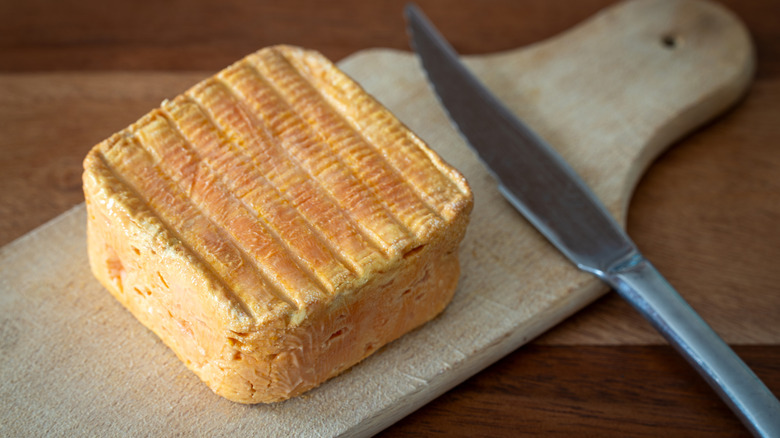
How could I possibly leave out a cheese that has been anointed as the stinkiest cheese by Guinness World Records? The record is based on a 2004 study conducted by Cranfield University in the United Kingdom that identified Vieux-Boulogne as the world's smelliest cheese. Its stench beat out 14 other contenders, including Munster and Époisses, across a panel of 19 judges as well as a computer that analyzed the odorous components. Vieux-Boulogne reigned above all with its dung-y, rotting rancidity.
This is an unpasteurized cow's milk cheese produced in the French town of Boulogne-sur-Mer. Periodically washed with beer, each square-shaped wheel gradually develops a bright orange rind and dense, creamy interior. Despite how extreme the odor is, the taste of Vieux-Boulogne is unexpectedly mild, with a pleasantly salty and savory backbone.
15. Munster
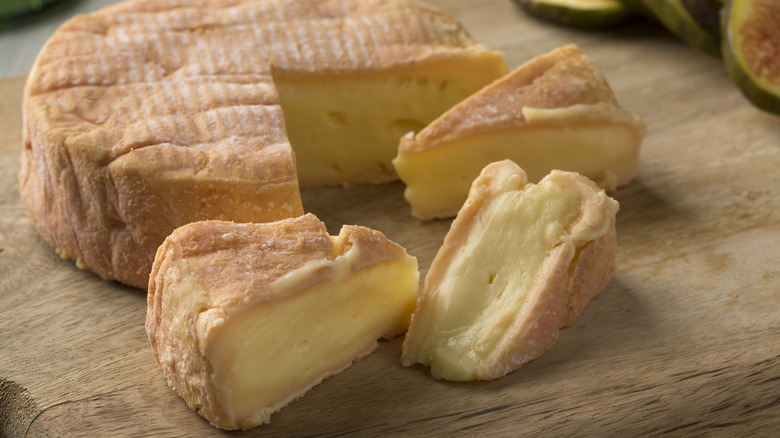
There's a distinction between American Muenster and French Munster. American Muenster is a deli-style cheese with a very mild, approachable taste and smell. You'll find it pre-sliced, pre-packaged, and vacuum-sealed at the store or as a large block at the deli counter. The orange exterior comes from food coloring and doesn't contribute any taste.
What many don't realize is that American Muenster is an imitation of French Munster, which is a pudgy, washed-rind cheese with a stinky aroma and complex flavor notes produced in various regions of France that border Germany such as Alsace, Lorraine, and Franche-Comté. The colorful, sticky rind that develops on Munster is due to the repeat process of salt brine washes.
16. Bleu 1924
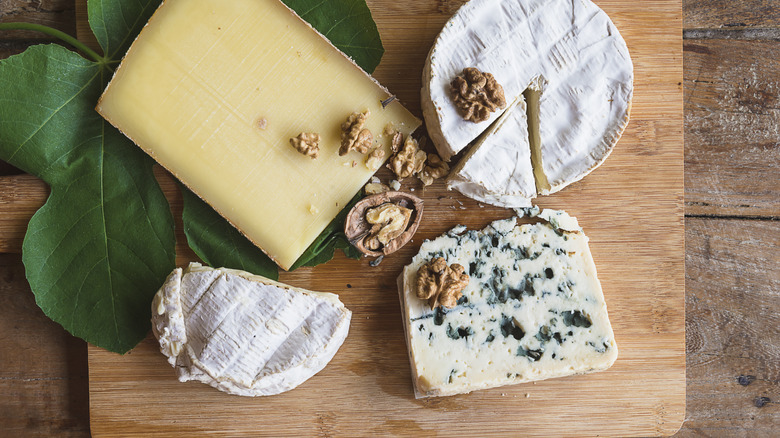
This one has made many of my cheesemongers cringe when removing it from the packaging. Bleu 1924 is a stinker, but it tastes so good. When blue cheese is made with a mixed milk base, like the blend of cow and sheep milk used for Bleu 1924, it can be particularly powerful with a lot of volatile aromas just waiting to punch your nose.
Produced in the Auvergne Rhône-Alpes region of France exclusively by the affineur company Maison Mons, Bleu 1924 is a playful ode to the original recipe of Roquefort prior to when it received its AOC (the French version of the PDO) in 1925. Before designating strictly sheep's milk for its production, Roquefort could be made with a mix. Bleu 1924 amplifies those original traditions by establishing a perfect balance between sweet, creamy cow's milk and peppery sheep's milk to create a rich texture and bold flavor.
17. Morbier
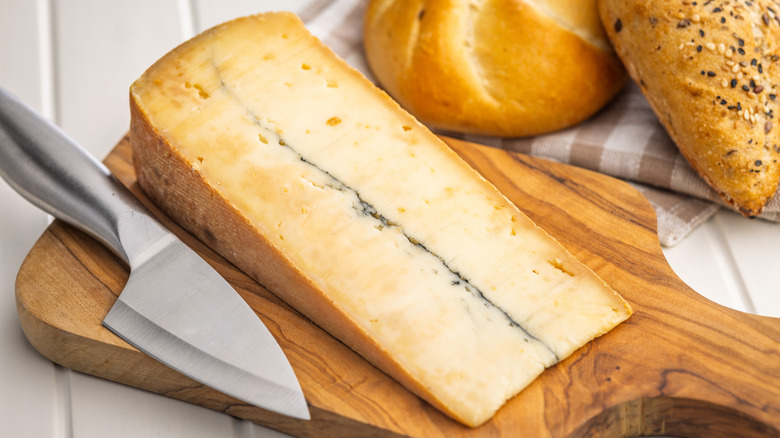
French Morbier is easily recognizable by not only its aroma but also by its edible vegetable ash line between two layers of raw cow's milk cheese. Dating back to the 19th century, wheels of Morbier were completed across a couple days — a layer of ash would be sprinkled on top of the unfinished curds in the molds to protect the exposed cheese through the night, and it would be finished the next day by layering the remaining curds on top and pressed together to complete the final the shape.
With modern production, the layers are assembled all at once, and the ash line is simply a decorative tribute to the earlier methods of cheesemaking. The smooth, semi-firm cheese is pleasingly rich and dense and tastes like gently heated cream when young and intensifies into concentrated notes of apricot jam, vanilla, and caramel as it ages.
18. Capriolina
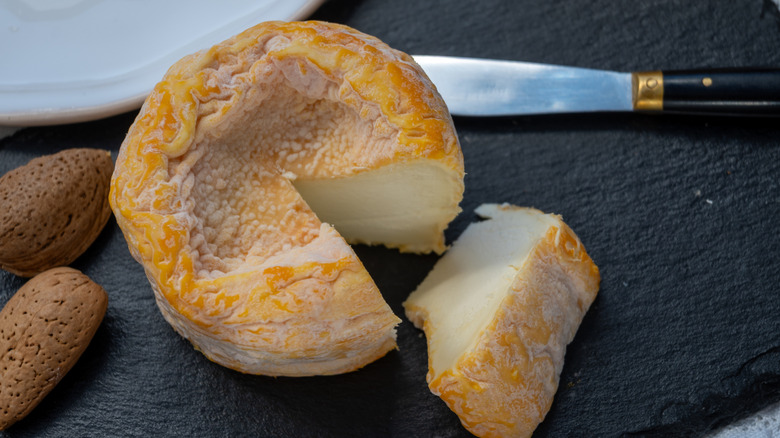
Tiny yet mighty, Capriolina is a pudgy punch of funky goat cheese. This orange-hued cylinder is reminiscent of a rowdier Taleggio and is actually made in the same original production location, Val Taleggio. We'll never know exactly how this cheese is washed or what ingredients are in the brine solution — these are protected secrets of the Arnoldi family producers.
But like other washed-rind cheeses, there are key traits that are no mystery. Capriolina has a buttery texture that becomes softer and more spreadable the longer it ages. It develops a very meaty flavor with a tangy backbone characteristic of most goat's milk cheeses. The mini size is perfect sliced into a few small wedges that can be individually served on crackers with a razor-thin piece of smoky speck and a dollop of grainy mustard.
19. Maroilles
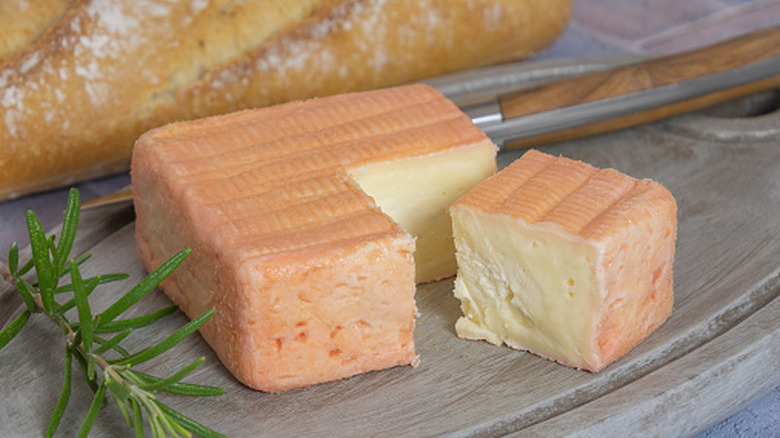
A sticky orange rind, a fudgy interior, and a stinky smell define this historic square-shaped French cheese. Maroilles holds a PDO protection and purportedly dates back to the 10th century when it was first made by monks from the Maroilles Abbey in the Nord department of northern France.
Maroilles production starts with unpasteurized cow's milk and takes place in humid cellars during the aging process. The wheels are matured between three to five weeks and are washed in a brine solution as they ripen to develop the orange exterior and rich texture. They have a perfect flavor balance of umami funk and bright lemon and pair well with a crusty baguette and a chilled French Sauvignon blanc.
20. Robiola
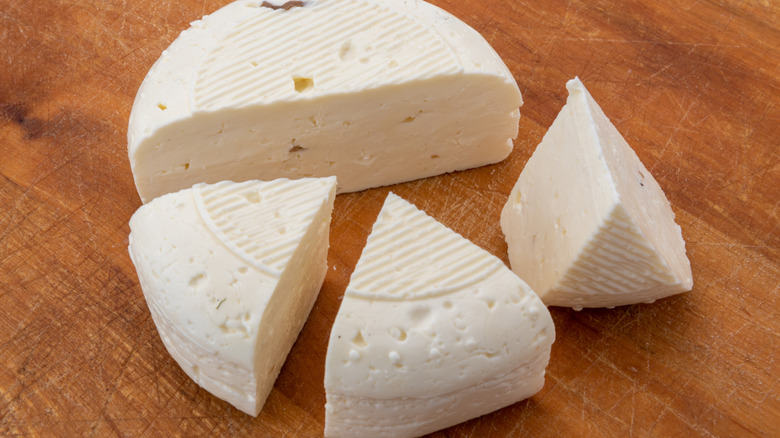
Robiola is a pudgy, Italian funkster that is available in a few different varieties, all of which share a gently soft-ripened texture and bold, lactic flavor and aroma. Born in Italy as an ancient goat's milk cheese that could potentially date back over 1,000 years, Robiola has ebbed and flowed throughout the decades and inspired a handful of U.S. cheesemakers to make similarly creamy offerings.
Robiola is typically made with a mix of milks, which offers an impactful tasting experience, but there are still some producers using milk from a single animal breed. La Tur is a popular Robiola-style cheese from the Italian producer Alta Langa that's made with cow, sheep, and goat milk. A little goes a long way — spread some on a cracker and serve with your favorite jam to cut through the tang.
21. Stinking Bishop
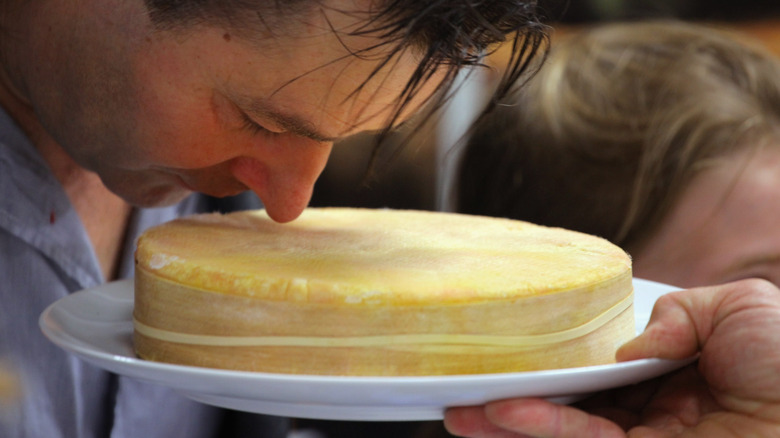
The title reveals it all for this cow's milk English favorite — Stinking Bishop is a classy cheese with an off-putting name. There is currently only one producer of Stinking Bishop in the world, artisan cheesemakers Charles Martell & Son. The company honors the local land, the region of Gloucestershire, by routinely washing the rind of the cheese with perry, an alcoholic pear-flavored beverage. Stinking Bishop refers to the name of the pear variety, which was named after 19th-century Gloucestershire farmer Frederick Bishop. He grew the pears but was also known for smelling bad.
The perry gives the wheel a distinct look, with its sticky orange exterior and lusciously ooey-gooey paste. It also contributes to the strong, funky aroma. The small wheels, available different sizes, are wrapped individually in wax paper and sold in wooden boxes to protect their delicate shapes.