

Skip The Oven. Smoke Your Easter Ham For A Crisp Exterior And Deep Flavor
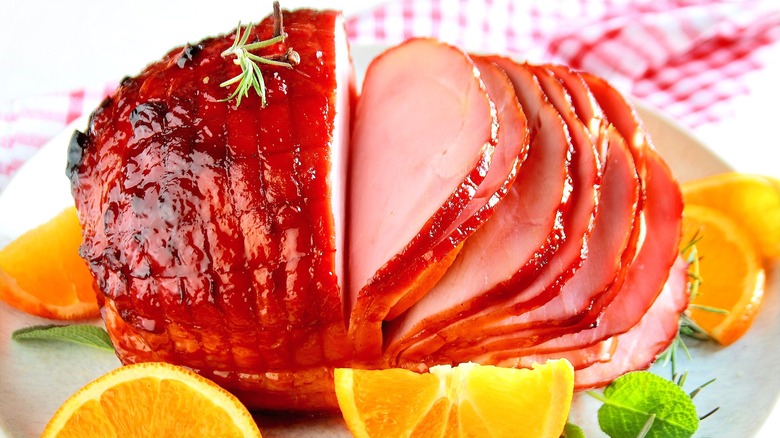
Are you looking for a tasty departure from your typical oven-baked Easter ham? You can add tons of flavor by reheating your holiday meal's centerpiece with the help of an outdoor smoker. But no one wants it turning out dry and lackluster after choosing the most succulent ham to feed a crowd. That's why Chowhound got tons of useful ham-smoking insight from Steven Ross, chef and senior manager of culinary at Tyson Foods.
According to Ross, when it comes to reheating ham, smokers are superior to conventional ovens. That's because a smoker can add complexity and texture you can't get from an oven. Ross says, "Even though most store‑bought hams are fully cooked, reheating them 'low and slow' at 225 to 275 degrees Fahrenheit over hardwood smoke adds depth of flavor and develops a crisp, caramelized exterior that an oven alone can't achieve." Not to mention, by using your smoker, you have more free space in your oven to cook Easter side dishes. However, choosing the right wood for your smoker can make all the difference.
How to choose the best wood for your smoker
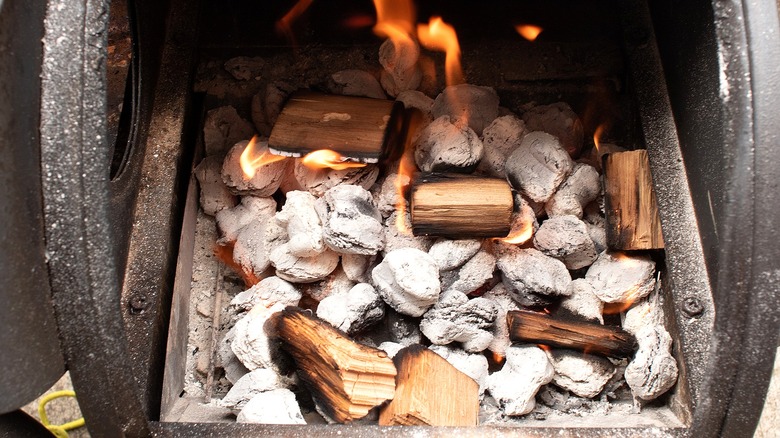
When selecting the best type of wood for smoking a fully cooked ham, you have more than one option to consider. For starters, Steven Ross suggests using seasoned hardwoods like hickory and pecan to balance the sweetness of honey or maple-glazed hams. Alternatively, fruit woods like apple or cherry promote ham's natural sweetness. Applewood specifically is very forgiving and versatile and complements a variety of additional flavors. That said, cherry wood gives ham a richer color and sweeter, more distinct smoke. Ross also says he sometimes uses a blend of pecan, hickory, and fruit for a balanced, nuanced flavor.
Overall, Ross advises against using soft woods like pine and cedar, which have a propensity to drip sap and produce excess smoke, causing ham to taste to taste acrid or sharp. That's especially the case with the sweeter recipes popular around Easter, like miso and maple-glazed ham.
Another important factor is keeping your wood dry during the often rainier spring season. If your smoker uses logs, keep them stored in a well-ventilated area, preferably outdoors — raised on a pallet away from walls, for example. If you use chips or small chunks, keep them in breathable boxes, bins, or their original packaging to prevent mold. Pellets are a bit different. Keep those in airtight boxes or buckets.
Tips for smoking the juiciest Easter ham
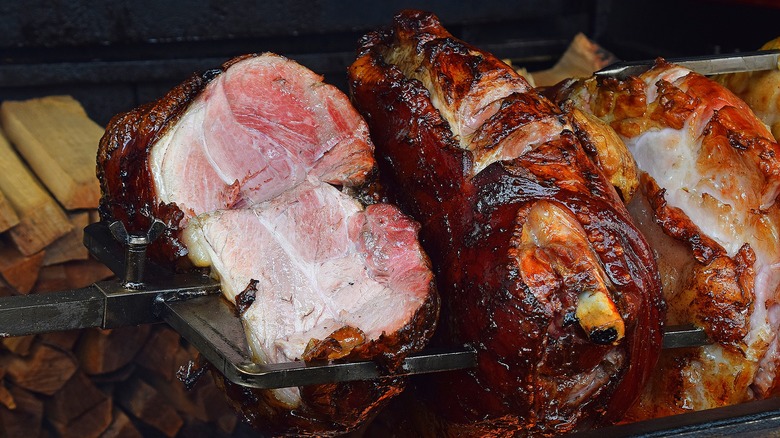
Some of the most important tips for cooking ham revolve around temperature. Steven Ross recommends smoking in the mid-200-degree Fahrenheit range because heating your ham too quickly can lead to tough, dried-out meat. You should also use a meat thermometer to ensure your precooked ham doesn't creep past the finished internal temperature — Ross suggests 130 degrees Fahrenheit, 10 degrees under the United States government's more conservative safety recommendations, to keep it tender and juicy. Overheating pre-cooked ham can negatively affect the resulting texture. As Ross explains, "Once the internal temperature climbs too high, the proteins tighten, squeezing out the remaining juices and leaving the ham noticeably less succulent." He encourages patience when using your smoker and allowing enough time for the ham to heat slowly.
To add more flavor, the best time to glaze a ham is during the last 30 to 45 minutes of smoking. Ross suggests one that showcases an equal balance of sweet, acidic, and savory flavors. For instance, combine guava or pineapple juice with ingredients like brown sugar, coffee or espresso, ancho chili, and black pepper. Or for a more traditional flavor, mix orange marmalade, Dijon mustard, apple cider vinegar, honey, and ground clove. A well-balanced glaze paired with patient smoking can create an Easter ham that's juicy on the inside and sticky and crisp on the outside.