

8 Grocery Store Items You Might See Less Of In 2026
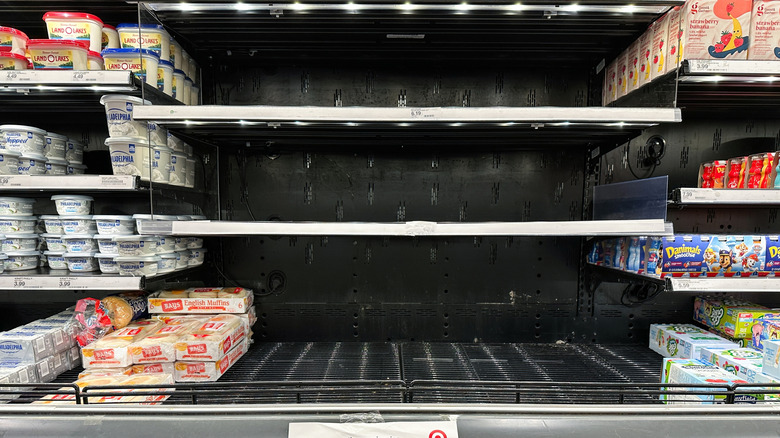
The past few years have seen supply chain volatility like never before. This was partly due to the pandemic, of course, but other factors have added to the problem. The epic egg shortage of 2025, for example, was the result of a continuing bird flu outbreak, and weather is always an issue for crops somewhere in the world. A number of foods look like they'll be in short supply in 2026. That, plus some surprising manufacturer decisions to discontinue products, could make your local grocery store look a bit different.
But don't worry just yet. Yes, some items will disappear permanently, and some are possibly going to be harder to find, but that doesn't necessarily mean you won't see them at all. This is especially true if you shop at stores like Walmart that are actively strengthening supply chains. If there's one thing businesses learned from the pandemic shutdowns, it's that the old supply chain was simply too fragile, and that they need to have alternatives for when this or that supplier is out.
In cases where products are being discontinued, they are usually being replaced with new ones. And, if they aren't, you could always see if your local stores stock other brands that make similar products. You never know what you'll find when you look for substitutes, and you might need to, as these eight grocery store items could be in short supply in 2026.
1. Minute Maid frozen juice concentrate
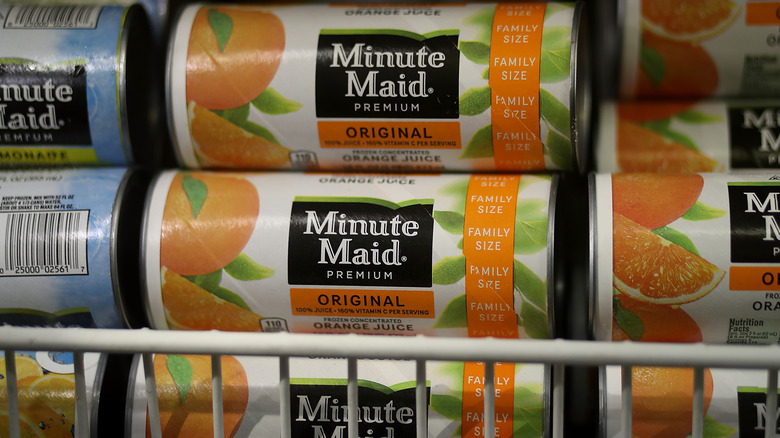
Yep, the stories you've heard aren't rumors. Coca-Cola really is discontinuing its Minute Maid frozen juice concentrate line in the U.S. and Canada. Customers have been losing interest in the product for a while, although the news created a wave of nostalgia among people who remembered growing up with the juice. Coca-Cola noted that customers were turning more toward fresh juice and that the company would concentrate (no pun intended) on those products instead. Production is supposed to end during the first quarter of 2026, which runs through March. Depending on where you live, concentrates from smaller brands may still be available.
Frozen concentrate exists thanks to World War II. Soldiers received packets of lemon powder to provide vitamin C. However, the powder tasted awful. The Army also ordered powdered orange juice, but before the product was ready, the war ended. Scientists took a good look at how to preserve fruit juice without making it taste terrible and eventually patented a process of evaporating and rehydrating the juice to produce a frozen concentrate. In 1948, the company that invented the concentrate, Vacuum Foods, went on an advertising blitz that included an endorsement from popular singer and actor Bing Crosby, complete with a "doctor" informing viewers about how nutritious the product was. Sales soared, and within one year, the company opened seven more production plants. Vacuum Foods changed its name to Minute Maid in 1949 and was bought by Coca-Cola in 1960.
2. About 20% of Pepsi's product line
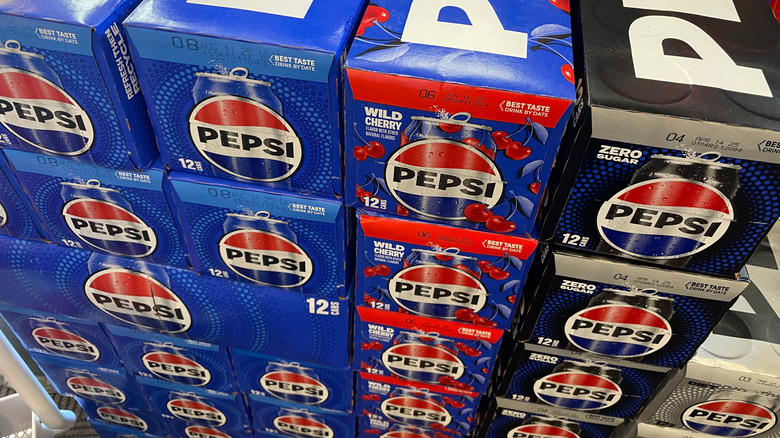
PepsiCo is putting its line through a major overhaul that includes plans to discontinue about 20% of its products before early 2027. The company hasn't (as of mid-February 2026) released the names of all the products affected. The first hints of the overhaul started in 2025 with the discovery that several Pepsi and Mountain Dew flavors would be leaving shelves; while some of the flavors were limited offerings to begin with, others weren't. Among the departing flavors were Pepsi Peach and Mountain Dew Caffeine Free. Some of the products, no doubt, weren't selling well, but others, like Pepsi Peach, had become favorites with many customers.
Surprisingly, though, the 2025 cuts weren't actually part of the main plan to mow down 20% of the product line. Those are scheduled to hit in 2026 through early 2027 as part of an agreement with an investor. The cuts will affect all types of PepsiCo-owned products and not just soda. The company also closed three manufacturing plants with plans to increase automation. While the cuts sound drastic, there are a couple of positive changes in the works. One is lower prices. So far, price cuts of up to 15% are scheduled for Doritos, Tostitos, Lay's, and Cheetos, among other brands. The company had a trial run of lower prices that resulted in greater sales. Another positive change is a focus on more basic ingredients, such as whole grains, and more nutrition-focused features like added protein.
3. Beef
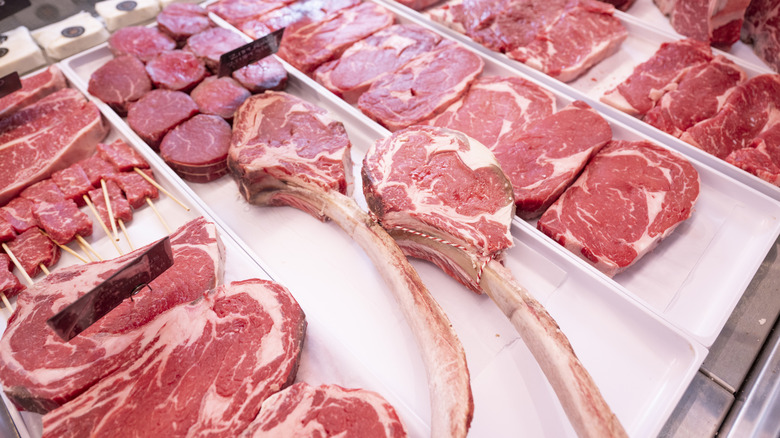
There's been a cattle shortage for a while, and 2026 could be the lowest year yet. The USDA's January cattle report put total numbers at about 86.2 million head, which is a little lower than 2025's numbers. Ranchers could increase their herds now, but apparently, not all of them are doing so. This is mainly because of fears that weather/economic issues that originally reduced herd sizes could strike again. Mexican herds are also dealing with a screwworm infection that's halted imports of those cattle into the U.S., making it more difficult for ranchers to increase herd size through purchasing. As a result, many ranchers are keeping female cattle for breeding, so beef production will likely be lower for another couple of years. Yet other ranchers are selling cattle quickly instead of breeding them, so their herds continue to shrink.
What that means for you is that beef prices will rise, and you could see less beef at the store. This does not mean there won't be any beef; it's very easy to interpret "seeing less" as "facing such drastic shortages that shelves go empty," and that's not what's happening here. The same USDA cattle report that showed lower total numbers also showed increases in categories such as beef replacement heifers, which are young female cattle selected for breeding after older cows are culled. Also, the USDA's Economic Research Service released a mid-January 2026 update noting that beef cows were actually heavier, meaning more meat from fewer cattle.
4. Blueberry Red Bull
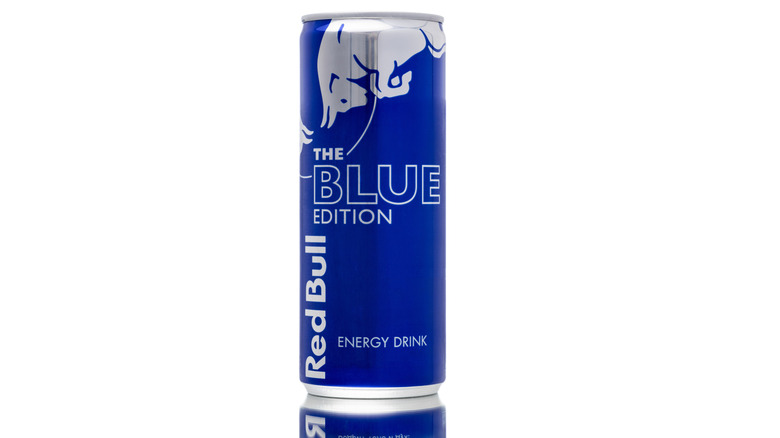
Red Bull is culling a few of its flavors, and while each of those flavors has some very dedicated fans, one cut in particular is a stunner: Red Bull Blue Edition, a.k.a. blueberry Red Bull. This is one of the original color "edition" flavors introduced in 2013, along with a cranberry-flavored Red Edition and a lime-flavored Silver Edition. No reason was given for blueberry's discontinuation. This was announced back in 2025 after weeks of rumors, but the company had already produced so much of the product that there was enough to keep it in stock into early 2026.
When blueberry was first introduced, reviews weren't that positive, with one comparing the taste to cough medicine. However, customers loved it, and at least one was so upset at the loss of this flavor that they started an online petition that's still gaining signatures.
As for the other three flavors that are going away, those are the two sugar-free Red Bull flavors (Sugarfree Watermelon Red Edition and Sugarfree Strawberry Apricot Amber Edition) and the full-sugar Curuba-Elderflower Green Edition, all of which were introduced in 2024.
5. Orange juice

Another product facing shortages is orange juice. This is not related to the frozen concentrate that Minute Maid and Coca-Cola are discontinuing. That was a corporate decision, but this is an actual drop in orange production that could affect the availability of fresh orange juice. Florida's orange orchards have been suffering for years. Back in the late 1990s, the state produced around 244 million boxes of oranges per year, but the predicted harvest for 2026 is only 12 million boxes, which is the lowest amount since the 1930s. Several problems have hit the crops over the years including citrus greening disease, hurricanes that uprooted entire orchards, and sales of orchards to property developers. Juice processing facilities also dropped by nearly 70% in the state. And a severe cold snap in early February 2026 may have harmed Florida citrus even further.
Most of the juice oranges produced in the U.S. are in Florida, with Texas producing a small amount. California's orchards focus on oranges for eating, and while Brazil usually provides orange juice to the U.S., that citrus industry is still recovering from bad weather and disease, too.
Florida oranges have also been growing less sweet thanks to citrus greening disease. That made a portion of the Florida crop ineligible for processing into juice thanks to an FDA standard of identity that requires a higher sugar content level. In 2025, the FDA proposed lowering the standard, which would enable growers to send more oranges for juice processing.
6. Romaine lettuce

Romaine production in the U.S. has two major growing cycles. One takes place in Salinas, California, in spring and summer, and the other is in Yuma, Arizona, in fall and winter. The industry moves itself between the two cities every year to ensure that romaine and other leafy greens are available in supermarkets all year round. The move is referred to as Transition, and it can be a little rough on supplies as all the workers focus on moving.
But lately, the romaine crop has had some issues that have made Transition even rougher and more prone to shortages. In late 2025, the Salinas crop saw severe weather and insect problems that lowered both quality and the amount that could be harvested. As a result, the season ended a bit early, further tightening supplies. The Yuma area also had to deal with monsoons and has had unusually warm weather, along with a mildew problem. Quality and numbers may be starting to improve a little, but mildew and lighter weights are still issues.
The shortages haven't gone unnoticed. People were asking in late 2025 whether there was a shortage of romaine, and one restaurant had to notify customers that some salad options wouldn't be available due to the lack of romaine. One commenter on Reddit pointed out another issue that could intensify supply chain problems: the deportation of farmworkers potentially leading to labor shortages in the industry.
7. Cilantro
Cilantro crops have been having a horrible few years, and 2026 doesn't look any better. Much of the supply of cilantro in the U.S. comes from Mexico, and growing regions there have had to deal with severe weather that's alternated between drought and damaging hail. Growers have also been battling a destructive aphid infestation and a parasite in cilantro that can cause a disease called cyclosporiasis.
Some cilantro is grown in California, and conditions were actually pretty good in 2025. But instead of producing a ton of cilantro, California crops were hit by a severe nutsedge infestation. This is a weed that loves the conditions that help cilantro thrive, and it easily edges out cilantro wherever it grows. Scientists are currently evaluating the results of a test run of an experimental herbicide to kill nutsedge, but right now, growers have to pull nutsedge by hand. This costs so much that growers may not plant cilantro if they see a lot of nutsedge in the area.
In addition to the nutsedge problem, some crops just didn't turn out well. One supplier warned customers that cilantro from a major producer turned out to have problems with yellowing. The good news is that the supplier also mentioned that other farms had better cilantro crops that customers could buy from. However, the shortage of cilantro has already become so bad that people on social media have reported not finding any in some stores.
8. Eggs
Egg prices in 2025 hit record highs as avian flu (or bird flu) devastated the industry. Both infected birds and those that were merely near the infected birds were culled because the virus spreads so quickly. This resulted in shortages that saw purchase limits on eggs, empty store shelves, and accusations of price gouging, although both the supply problems and prices cooled down later in the year. As of this writing in mid-February 2026, stores aren't reporting a shortage of eggs, and prices remain reasonable.
But avian flu never went away, and it's already impacted flocks in several states. In Colorado, for example, the disease hit an egg-laying facility that held 1.3 million chickens in January 2026. The USDA has claimed that no avian flu vaccines are currently approved for widespread use and that flock elimination and facility-based measures to control contamination are adequate. The agency did promise $100 million for vaccine research in 2025. However, vaccination remains controversial because of the fear that it would allow low-level, asymptomatic cases to persist, increasing the risk of the virus mutating into something more infectious for humans.
What this means is that conditions for another potential egg shortage are present. The USDA's January 2026 Market Outlook also reported lower projected numbers for egg production due to "lower layer inventories," although it also projected lower prices. If you're concerned that eggs might be in short supply later this year, look into using powdered eggs or freezing egg whites and yolks for future use.