

We Found The Hands-Down Best Way To Make A Mean Martini

We may receive a commission on purchases made from links.
For something that's more or less expected to smooth the senses, there sure are a lot of sharp debates about martinis. Whether to make them with vodka or gin is a big one, not to mention the many ways further customization can make or break a martini, or the optimal way to combine its ingredients. Shaken and stirred, the two martini-making methods have been warring for generations. So Chowhound put both approaches to the test to settle the debate and bring peace to the drinking kingdom once and for all. We found that shaken martinis reign supreme.
In addition to its aesthetic merits (shimmying a cocktail shaker just looks cool), shaking is what transforms a glass of booze into a proper libation. Let's say, just for illustrative purposes, that you're team gin, though the following principle would apply to any spirit. And let's further venture that you understand that some measure of vermouth must also be present in a model martini. Taken alone, those two components pack quite the punch. Shaken with ice, they're diluted by melting crystals just a bit, rounding out the ingredients to create the slightly more mellow flavor that we know as a martini.
More on why there's no debating shaking
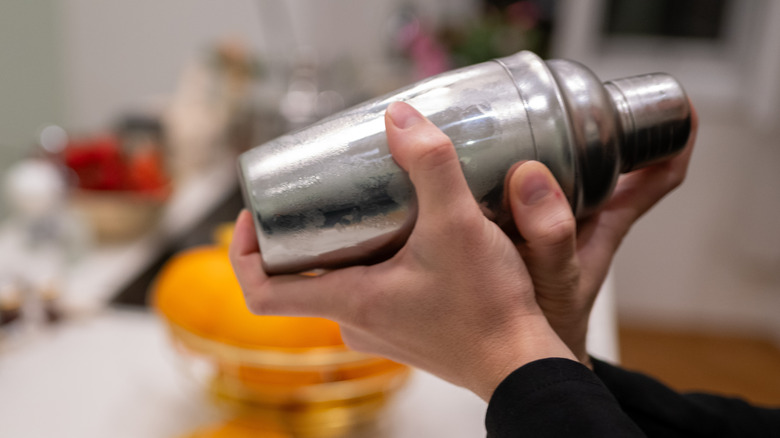
Some say that the martini's third compulsory ingredient is cold. Okay, "some" is us, and that frigid temperature is a large part of what makes a good one great, whether it's the best martini in New York City or the finest you can create at home. Our shaken martinis turned out colder than their stirred competitors, and they even seemed to stay that way longer.
There is also an informal way to get your martini wonderfully arctic with anecdotally less dilution: with one big ice cube. You're more likely to see a single large chunk of frozen water in a lot of polished professional drinks than a bunch of smaller cubes. There are sundry ways in which the size and shape of your ice can change the character of a drink. In this case, one big ice cube in your shaker creates fewer chips, thus fewer flecks to melt, and ultimately less dilution than a handful of jostling cubes would allow.
"But wait," you may be thinking, "I prefer stirred martinis, and I'm going to keep stirring them." That's great, and literally no one can stop you. Stirring is also always technically acceptable, as typically only opaque ingredients (like a margarita's lime juice) absolutely must be shaken. And we've never said no to a martini invitation yet in either case. We might just bring our own mini martini shaker next time to keep the peace between boozers.