

7 Expert-Approved Tips For Making Your Own Pasta
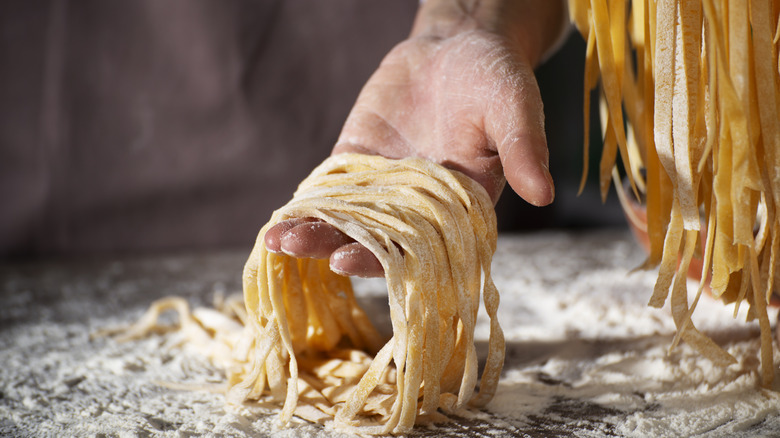
I love pasta! This is the kind of love where a pasta dish could be my desert island food, or last meal, and I would happily enjoy those sauced-up, carby noodles, even in distress. However, the last time I made pasta was literally over two decades ago in college with friends, which I barely remember at this point. I have been relying on store bought and restaurant cooked for my most memorable pasta meals. (I live in New York, where quality Italian is around every corner — can you blame me?).
However, there's something romantic about the idea of making your own noodles, and I'm sure other home cooks are also looking for inspiration. When I had the chance to speak with the pasta queen, "Top Chef" star, cookbook author, and restaurant owner Chef Antonia Lofaso at the Sun Wine & Food Festival at Mohegan Sun, I jumped at the chance. After watching her onstage demonstration, where she presented a delicious-looking, hand-made ravioli dish, I knew she was just the expert to talk to.
1. Go heavy on the egg yolks
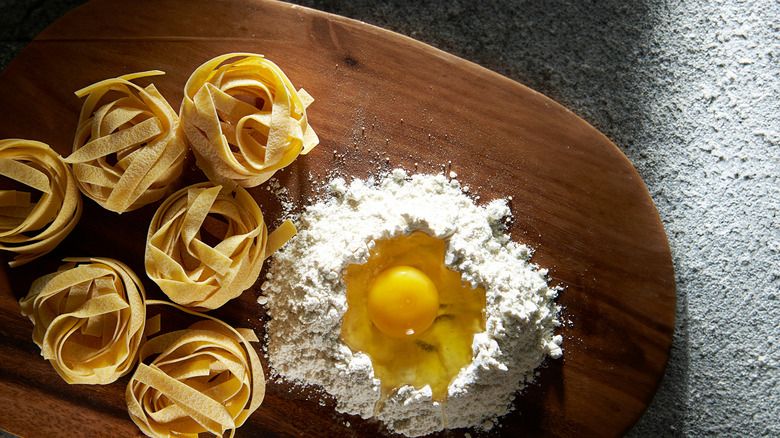
The first tip to understand, according to Chef Antonia Lofaso, is that not all pasta doughs are created equal. "I want everyone to really understand that different doughs do different things. ... so when you really figure out, like, what you want to do first, right, then you research the dough that you're looking for," she says. One dough does not serve all pastas in the same way.
For this conversation, however, we decided to talk about a high egg yolk noodle, which is best for making flat pastas. Lofaso explains: "It's, like, four cups of flour, 16 egg yolks, no egg whites, olive oil, of course, water, of course, salt, of course, but it's so heavily yoked. And that's what gives it sort of its structure and its richness." So, if you're making a pasta at home, don't forget about those egg yolks, as they will improve your noodles.
2. Aim for a flat noodle
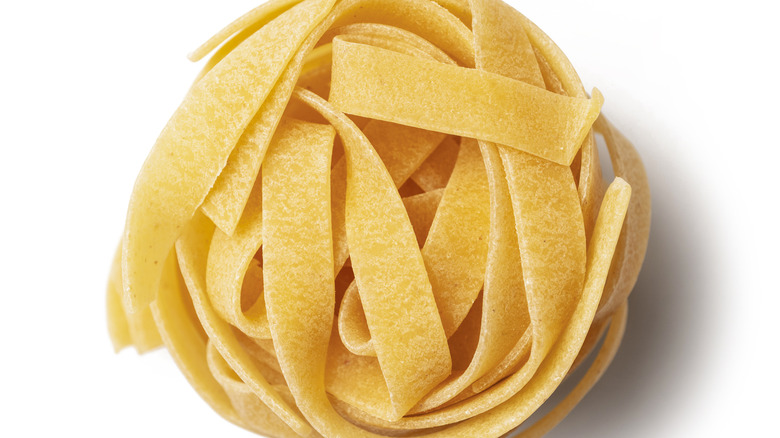
Assuming you do want to make your own dough, Chef Antonia Lofaso explains that for a first timer, a flat noodle is going to be easiest to create with the eggy dough we've discussed. This would cover, according to her, "a ravioli, a lasagna, a fettuccine, a pappardelle, even linguine."
She specifies further for those working with dough for the first time: "I would make fettuccine, I would make linguine, or I would make pappardelle. Those are your three." She emphasized that while you could of course experiment with other shapes, once again, if you want to keep things easiest and straightforward, you should aim for a simple pasta shape.
For example, don't bother with spaghetti, which, although it seems simple, is a round noodle, which poses challenges "Spaghetti is an extruded pasta. ... Like, unless you really want to get crazy at home, and you're, like, rolling them ... that would be, like, each spaghetti, like, rolled, you know?"
3. If you don't have a pasta maker, there are other tools you can use
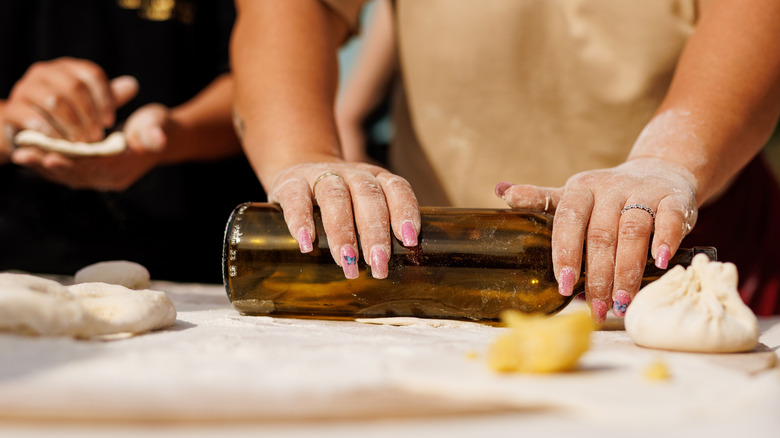
Don't worry about buying lots of pasta-making equipment that you may never use again — you probably have plenty of tools in your kitchen that will be absolutely fine. Chef Antonia Lofaso referenced her cooking demonstration earlier in the day, when talking about rolling and flattening the dough: "I used the wine bottle up there. I said I had a culinary teacher who told me that things like a rolling pin were fancy pieces of equipment that you didn't need. And he's 100% true."
The same advice holds true with cutting your dough. Lofaso says you can use what you have on hand to make the cuts, if a pasta maker is not on hand to do it for you. However, she does point out that if you think you might do this more than once, especially if you want a pasta sheet, "Those little, like, hand crank ones that you, like, lock into your thing, they're really inexpensive."
4. Try a ricotta filling
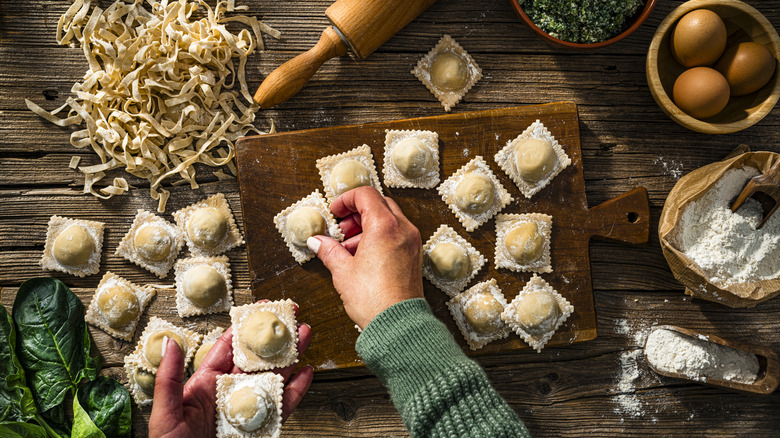
Making a batch of fresh ravioli might be one step up in terms of difficulty level (although still technically a flat noodle, just using two of them smushed together and prepared into little packages), but if you decide to go that route, Chef Antonia Lofaso recommends using a ricotta-based filling.
"I always like to say, cheese ravioli is very much my go-to," Lofaso says. "It's such an easy, easy thing, right? So for me, ricotta is, I think, the base to so many good ravioli fillings." But ricotta alone is not enough — try making a creamy, salty filling also using parmesan, pecorino, and mascarpone, with an egg yolk binding it all together.
Chef Lofaso continues with her recipe and reasoning: "A lot of times people think, oh, just use salt to season your ricotta or ravioli. No. Parmesan cheese is more nutty and lower in salinity. Pecorino is sharper, funkier, brighter, and very highly salted. I use those two cheeses, sometimes both at the same time, to season the cheese, along with salt. ... And also, mascarpone. Because I think that it mellows everything out and it adds, like, a nice creaminess to it. ... I just think it, like, balances out the texture of ricotta."
5. Don't salt your water until the pasta goes in
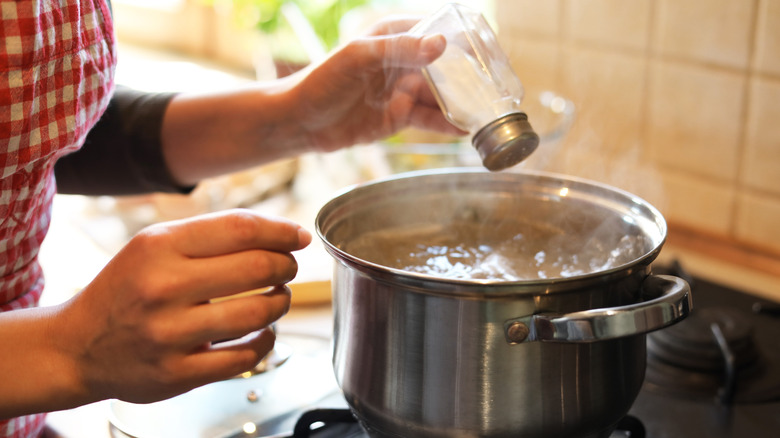
When I put a pot of water on the stove, I'll throw a dash of salt in right away. But now I know a tip that I had never heard before. Chef Antonia Lofaso explains: "I don't pre-salt my water. ... I always, whenever I'm getting ready to make pasta, even if I'm making it from scratch, I put on a pot of boiling water first. ... I don't want to wait for water to boil. To me, that is the most frustrating thing on the planet. ... I don't salt it until it's ready to go, and I want it at a rolling boil, I want to heavily season it. I want to taste that water."
She explained further that you need to actually taste that salty water to know if you need to add more to the boil, or leave it as is. For example, if you know you're going to use a salty cheese like a pecorino, you don't have to salt your water as heavily.
Before adding the salt, however, make sure that water is at a rolling boil! And when your fresh pasta is actually in the water, keep in mind that it will take less time to cook than dry pasta. Lofaso continues: "When they float... that's like your cue ... they're done. The other thing with fresh pasta that you can't get away with, like you can with dried pasta, the water has to be [a] rolling boil, otherwise it gets gummy, tacky, and sticky."
6. A simple tomato sauce is easiest
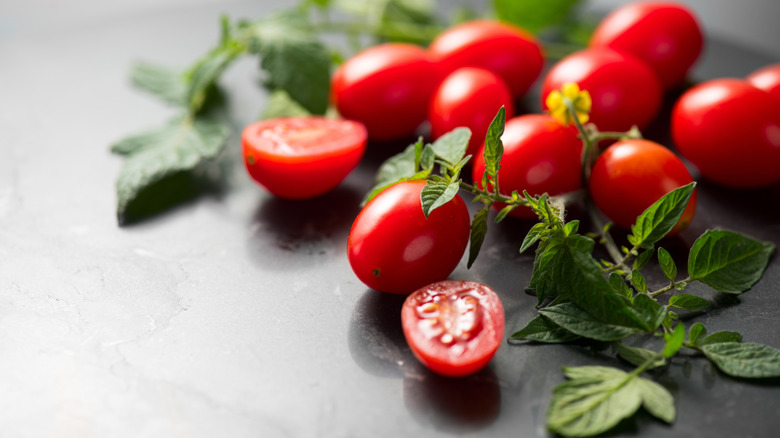
Since you're already going to the effort of making your pasta, why not keep things simple with your sauce? Chef Antonia Lofaso offered her own recipe for a very easy tomato sauce with just a handful of ingredients: "I have the greatest simple tomato [sauce]. I do. I 100% do. It's my favorite thing to make. ... I use a stabilized tomato that is good year-round. It's a hot house tomato. They're little Campari tomatoes. You can get them in really any supermarket, including Costco."
She continued, "It's a ton of raw garlic that I put into, like, a shallow pot with ... good olive oil. ... As the garlic simmers, I don't want the garlic to ever brown, I only like the garlic soft. And so I cut up the Campari tomatoes, and I have them ready to go. So as soon as I see that garlic starting to really aggressively move through the oil, I throw all the tomatoes right in there."
For seasoning, Lofaso says she throws in a healthy dash of salt, a ton of basil, and a small sprig of rosemary (which she'll remove before serving). The whole thing should come together in about 15 minutes, so start it before putting your pasta into the boiling pot.
7. Don't make more than you'll eat
Although I love leftovers, they're never quite as good the second (or third) time around. To reduce food waste, Chef Antonia Lofaso says she only likes to make enough for the meal she's preparing. "I'm a big fan of really only cooking what I need. I really am. So I never cook more than a pound of pasta for four people. I think a quarter of a pound of pasta per person, unless you're feeding a football player, I usually say one pound of pasta for every four people," she says.
And don't forget that pasta expands when cooked! "Remember, like, that the pasta expands, like, almost double. So if you're pulling out a handful, you're getting two handfuls," she helpfully reminded me.
Finally, remember that if any of these tips didn't go well for you and you want to throw it all out — that's okay, too. Lofaso says, "It's okay if you don't feel successful the first time that you do it. It's almost part of the learning process. ...It's messing up a ravioli, messing up cavatelli... There's something to be said about experimenting that has a great story, that has some laughs to it. And then people start to get more comfortable with it."