

10 Genius Tips For Making The Absolute Best Baked Potato Of Your Life
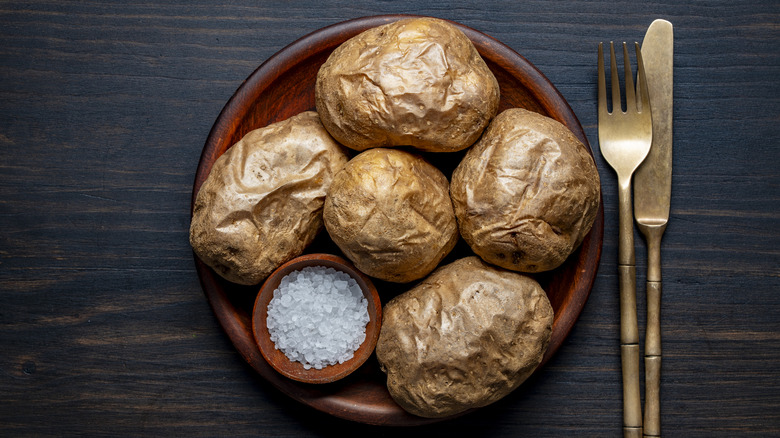
Baked potatoes are easily the most high-brow, low-brow side dish ever created. You'll find them on the menu at fancy steakhouses, paired with expensive cuts and à la carte sides, and sold at affordable, family-friendly favorite chain restaurants, often loaded with timeless toppings like bacon, chives, and sour cream. Their presence isn't exclusive to restaurants either; you'll find them served at football tailgates and upscale dinner parties alike.
Despite the versatility of this popular and ubiquitous side, baked potatoes are surprisingly easy to get wrong, which is kind of odd, seeing as the only real instruction is to bake the potato. However, there are many other hidden or unobserved steps in the process that will ensure your potato comes out crispy on the outside and soft and flavorful on the inside. That's exactly why we called in the big guns, cookbook author Lisa Steele and celebrity chef Robert Irvine, to uncover the makings of great baked potatoes. Not only did they share their professional insight on the potential pitfalls of baking potatoes at home, but they also have some ideas for upgrading their flavor and turning them into the main event, no matter where or how you're serving them.
1. Select the right type of potato
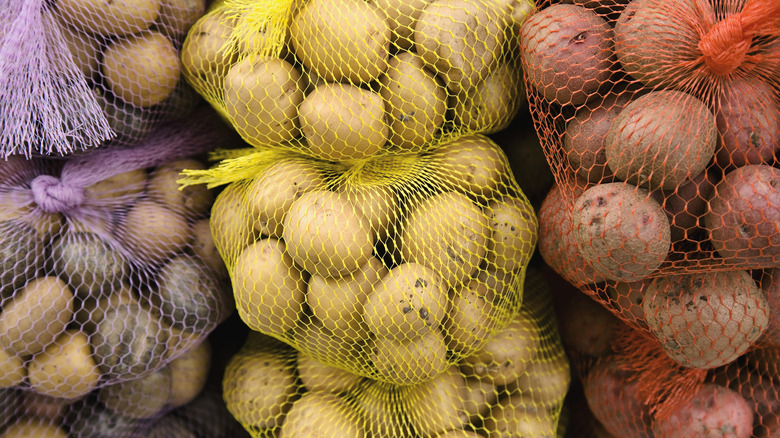
A walk through the grocery store produce aisle will surely clue you in to the myriad of potato varieties you have to choose from. And indeed, many of these common varieties are well-suited to baking. "Technically you could bake any type of potato, but Russet or Idaho-grown are the favored varieties due to their low moisture and high starch content, so you'll end up with a fluffy, light interior," says cookbook author Lisa Steele. Chef Robert Irvine affirms that Russets are an excellent choice. Steele is also partial to Yukon Golds, which she says boast a ton of flavor and a thinner skin.
While there are some varieties that are great for baking, there are others that should not be baked. Waxy potatoes, which remain firm after they're baked, are not ideal for traditional baked potatoes. Steer clear of red potatoes and purple potatoes (use them instead for boiling and things like potato salads) and focus your attention on creamy, starchy, and low-moisture varieties instead.
2. Opt for uniform-sized potatoes
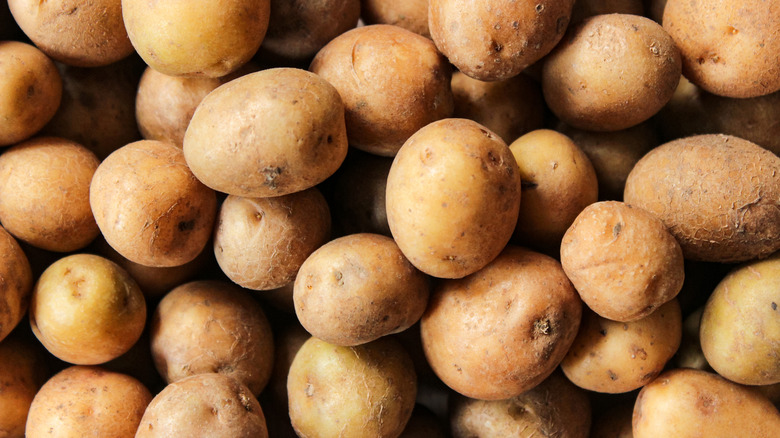
If you've ever roasted cubed potatoes or made your own homemade potato chips, chances are you've heard that the potato pieces need to be the same size so that they cook at the same rate. The same premise is important for baking whole potatoes as well. Lisa Steele explains that you don't necessarily need to modify the recipe based on the size or shape of your potatoes (amoeba-shaped, round, and long spuds are welcome here), but it would be in your best interest to choose ones that are around the same size, "otherwise you'll end up with some that are not done at the same time as others," she says.
Robert Irvine expressed a similar sentiment. He says he prefers to bake with 60-count-size potatoes. If you're scratching your head because you didn't know that potatoes can come in those specific sizes, you're in good company. He explains further: "50-count means it takes about 50 potatoes to fill a 50-pound box. Hence, 60s are smaller." If he's preparing an entrée-sized potato loaded with toppings, he shares that he may opt for the larger 50s. When you're looking for these sizes in the grocery store, per Irvine, you can look for either the "50s" or "50#" label.
3. Wash and dry your spuds well
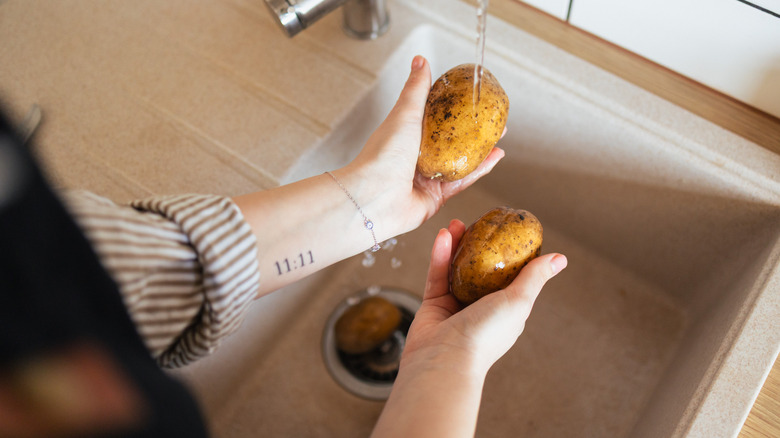
Compared to other produce at the grocery store, namely apples, bananas, and broccoli, potatoes can be kind of dirty. When you're paring through your bag, you may notice that the spuds leave behind a gritty residue on your cutting board or countertop. As such, you'll want to give your potatoes a good scrub before you start cooking with them. Robert Irvine explains that this is especially important if you plan on eating some of that crispy potato skin. Even if the heat of the oven may kill off any lingering bacteria, you still don't want to have gritty bites of anything other than seasoning. Be sure to only wash your potatoes before you need them, too; washing them prematurely can cause them to spoil faster. You can also use a vegetable brush to get all of those crevices cleaned; just be gentle if you're using a thin-skinned potato variety.
Drying your potatoes well is equally as important as washing them. "You've gotta dry them because if you go to oil them while they're still wet, it's not going to take very well," says Irvine. Lisa Steele also offers another compelling reason for drying your potatoes before baking them: "If you bake wet potatoes, the skin will be soft and watery, not crispy and golden." As such, be sure to towel-dry each spud well before proceeding to the next step.
4. Don't forget the oil
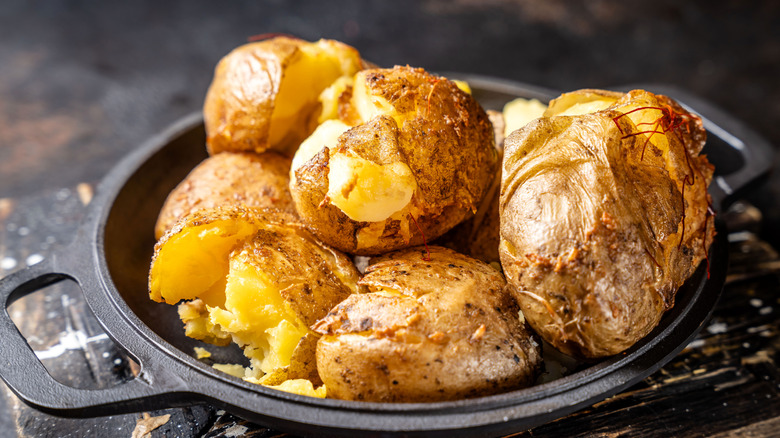
You may have heard the expression "fat is flavor" before, but when it comes to potatoes, fat is also crispiness. It's the secret ingredient to getting a perfectly crispy, crackly skin on the outside of your spuds. "If you're going to be eating the skin, then you do want to oil it, otherwise it will be dry and rather unpleasant to eat," says Lisa Steele, though she notes that you don't necessarily have to oil your skins if you plan on discarding them.
However, Robert Irvine adds that oiling the skin could benefit the potato even if you don't plan on eating it. "Even if you don't eat it, a crispier skin locks more moisture inside where you want it," he says. The best kind of oil for greasing up your spuds is anything with a high-smoke point and a neutral flavor: refined olive, grapeseed, canola, and vegetable oil are all viable candidates.
5. Season your potato skins with intent
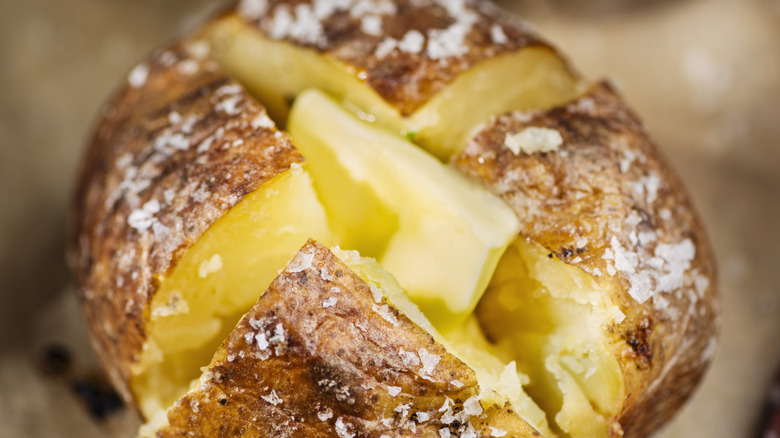
Oiling the outside of your potatoes doesn't just make them crispy; it's also a conduit for flavor and helps the seasonings stick to the skin. Chef Robert Irvine uses kosher salt on his potatoes along with the oil. "This adds flavor and helps you achieve that nice, crispy skin," he says. Kosher salt is specifically recommended, as it is coarser than iodized table salt and is easy to distribute on the potato's skin.
Lisa Steele offered some more flavorful suggestions. "Sometimes I get creative and sprinkle some harissa or baharat seasoning on the skin," she says, noting that she finishes her potatoes with a drizzle of lemon juice and butter after they exit the oven. Other spices that you can use include tarragon, thyme, and rosemary, which will give your baked potato a more refined twist (and can also highlight the flavors in a steak or sauce well). Ancho chili powder, cayenne, and black pepper, on the other hand, can add warmth and a peppery bite that'll balance out the potato's natural starchiness. Since you're applying these spices to the exterior of your potato before roasting, just be careful that you aren't toasting them too much, as doing so can lead to an acrid and unpleasant flavor.
6. Poke holes in your potato before microwaving
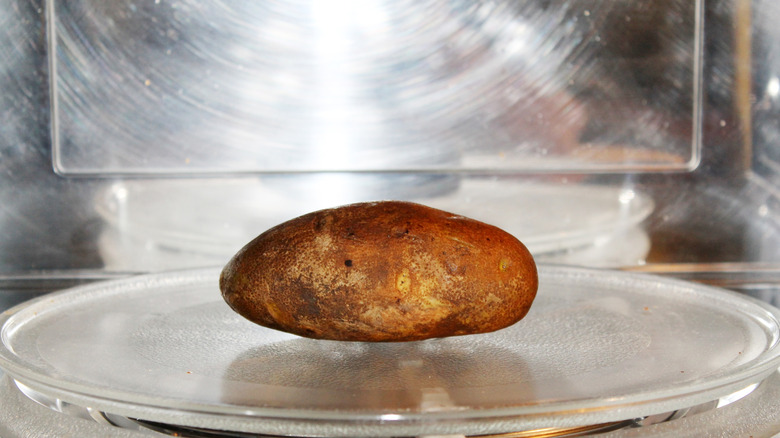
Is poking holes in your baked potato to prevent it from exploding an old wives' tale? Kind of, yeah. Many experts agree that it would take a lot for the potato to explode in the oven, though they also say that you should always prick a potato before microwaving it. "This will help prevent the potato from possibly bursting open; a microwave excites all the water molecules inside the potato, and if they don't have anywhere to go, you get a big, unpalatable mess," says Robert Irvine. A couple of pricks with a fork or a knife should do the trick.
The other instance in which you need to prick it is if the potato is going through a rapid temperature change, like if you were to put it into the oven straight from the fridge. However, this should never really happen because potatoes should usually be stored at room temperature; the cold temperatures can convert starch to sugar and alter their taste.
7. Test your potato for doneness before removing it from the oven
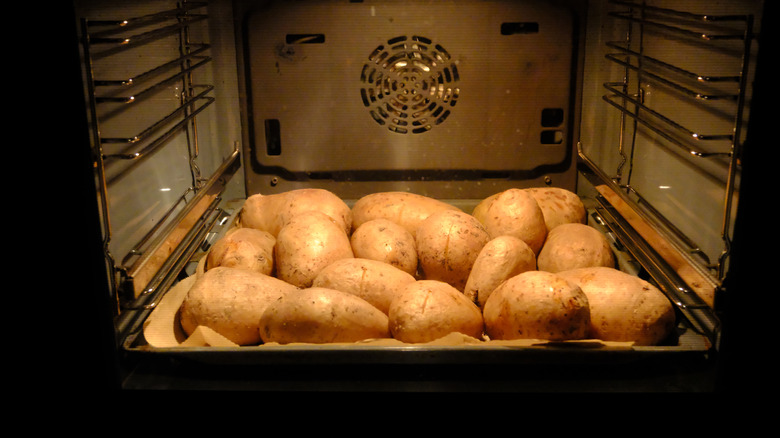
As a general benchmark, large russet potatoes baked between 400 and 425 degrees Fahrenheit will typically take 45 to 60 minutes, depending on size. Yet the last thing you want is to have what you think is a perfectly textured baked potato, only to pull it out of the oven and realize that it's still partially raw and hard. Luckily, our experts offered some tips to check and ensure that your potatoes are cooked to perfection before you pull them out. "I think the best way to tell if the potato is done is to poke it with your finger. The skin should yield easily to pressure," says Lisa Steele, sharing that you can also poke your spud with a fork to check for doneness, which is helpful if you want to avoid touching the hot potato with your fingers. If your fork can easily penetrate the skin, you'll know it's time to remove it.
Robert Irvine, on the other hand, prefers to use a bamboo skewer, paring knife, or toothpick. "[It] should go in and come out easy," he says. "If you run into some hardness in the center, they need more time."
8. Skip the foil
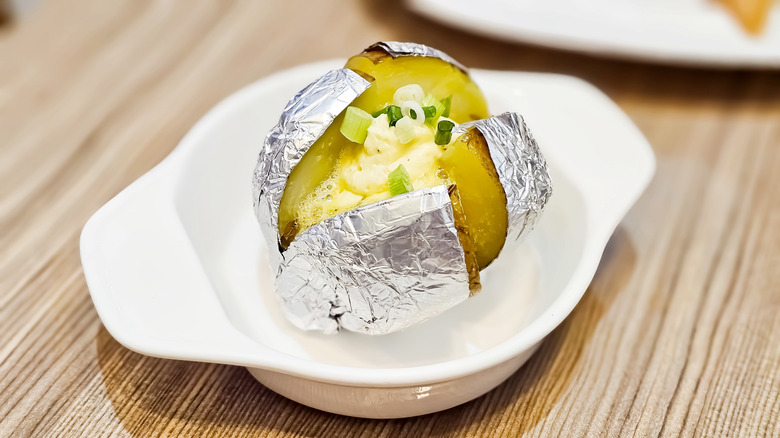
Foil-wrapped baked potatoes are not uncommon, but encasing your spuds in it might be one of the worst things you can do, especially if you're after crispy skin. This is because the foil acts as an insulator for moisture; the water can't escape as the potato cooks, leading to limp skin. Instead of reaching for the foil, just place the oiled and seasoned potatoes on a baking sheet and cook them; some people have also gone so far as to skip the sheet altogether and place the spuds directly on the oven rack. You also shouldn't wrap the potato in foil after it's done cooking. While this may keep it fresh and retain the heat, the better method is to put it in a warming drawer or a slow cooker.
Robert Irvine shares one instance where foil may be a good option with us. "The only time I recommend wrapping a potato in foil is for cooking a potato on a grill over indirect heat or on/near the coals of an open fire," he says. "In that use, the foil protects the skin from burning and helps distribute the heat a bit." While making a baked potato using this method might be ideal for camping or eating outside, oven-baking is generally regarded as the most consistent and foolproof cooking method.
9. Fluff the potato after removing it from the oven
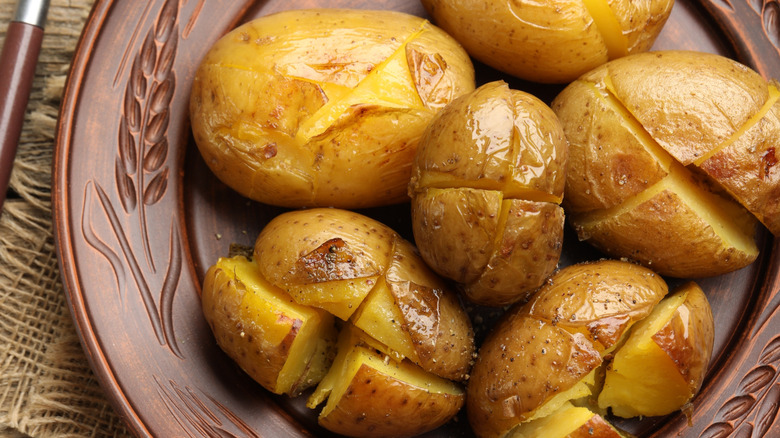
Don't be entirely focused on getting crispy skin on your baked potato; the inside of your spud also deserves some love, too. Both of our experts recommended fluffing the interior of the potato once it's removed from the oven. "As soon as the potato comes out of the oven and is no longer too hot to handle, I like to squeeze it and press my fingers into the sides to start to break up the insides, then I slice it down the middle and use a fork to fluff the insides," says Lisa Steele, explaining that this method will prevent the inside of your spud from getting chunky. "You want a fluffy interior so the butter will melt down into it."
Irvine agrees, saying that fluffing the potato will help the toppings mix in easily. However, opening the potato immediately as it comes out of the oven may cause some of the heat to escape, which may make it less satisfying if you don't plan on eating it immediately. If you're holding off, you may want to take Irvine's advice and leave the potato with the skin intact.
10. Get creative with your potato toppings
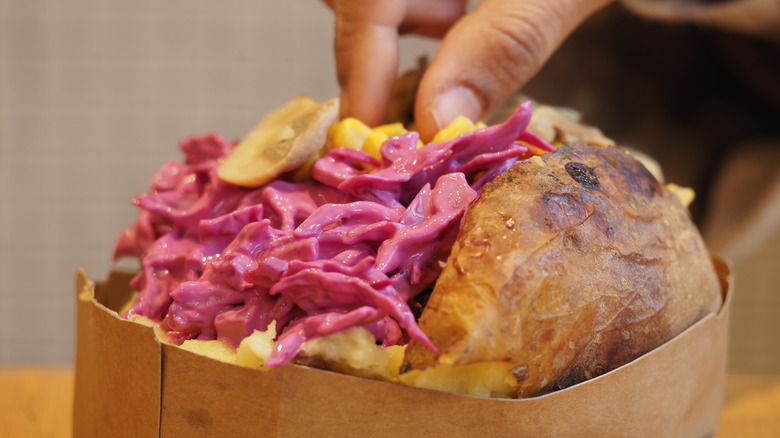
If you don't upgrade a baked potato with ingredients, it's arguably pointless, so we're glad that our experts could provide some recommendations for what to pile on top of these spuds. A baked potato is, as Robert Irvine calls it, "a blank slate," meaning you can take it in so many different ways. "I like BBQ, but you can go French bistro, Creole, anywhere, really," he says, stating that he is partial to classic toppings like applewood-smoked bacon, Gorgonzola, caramelized onions, sour cream, and whipped butter. If you're not ready to take the training wheels off and would prefer to stick to more traditional toppings, you can start by experimenting with different types of cheese or try a compound butter (a blue cheese one would stand out atop your starchy spud). Irvine also has a penchant for more out-of-the-box toppings as well. "How about some brisket burnt ends slathered in a rich barbecue sauce, or some buffalo chicken and blue cheese dressing? Now we're talking!" he says.
Lisa Steele's picks are a bit more Scandinavian-inspired. "I love a pat of butter, a dollop of sour cream or [crème fraîche], smoked salmon, dill, and some capers. Maybe some red onion," she says. Regardless of what direction you take your spud, we assure you that if you follow these tips, it'll be delicious.