

7 Tips For Carefully Cleaning Vintage Dishes Without Wrecking Them
We may receive a commission on purchases made from links.
In theory, stocking your cabinets with beautiful vintage plates sourced from flea markets and antique shops sounds whimsical and dreamy — like something you'd do if you lead a soft, magical life. In practice, buying, cleaning, and maintaining vintage dishes can be an intimidating experience, especially if you've never done it before.
On the one hand, you might strike gold and stumble upon some indicators that a rare vintage find is worth far more than you paid for it. On the other, you're responsible for keeping it pristine enough to hold its resale value once the dish is in your possession.
Even if you don't have plans on striking it rich, it's important to know how to clean these beauties — from classic china patterns to kitschy serving plates to bright and bold Fiestaware — if you want to include these beautiful vintage finds in your dishware rotation. Unlike a stock set of dishes, vintage plates can't universally be tossed in the dishwasher, as they may be different makes, models, or composed of delicate material.
1. Assess your dishware first
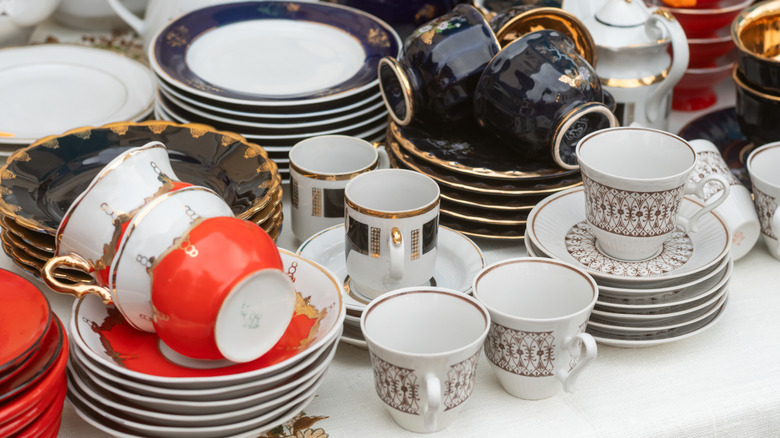
According to vintage and thrifting expert Stacy Verdick Case, founder of Peony Lane Designs, the best first step you can take with your newly acquired vintage dishware is to assess the items carefully. "There are a few things to be aware of before putting something in the dishwasher," says Verdick Case, who suggests paying particular attention to age, decoration, weight, and condition. If you decide your dishes don't need to be hand-washed, Verdick Case says it's important to know how to load the dishwasher. "When in doubt opt for hand washing or the very least the top rack of the dishwasher," she says.
Cleaning expert Bree Uebergang of cleaning brand Filthy Clean agrees, though she leans even more firmly toward playing it safe. Just as some vintage experts will tell you to be wary of dishware that pre-dated 1971, Uebergang suggests setting a manufacturing date on dishwasher use, too. "If the piece predates the 1990s, assume hand-wash," she says. "Older glazes, decals, and finishes were not made for modern dishwasher heat or detergents." This is also true of brands you may consider to be safe because you recognize their modern-day counterparts — including vintage Pyrex. It has made a recent on-trend comeback, but is not generally considered to be dishwasher friendly.
2. Know how to wash correctly
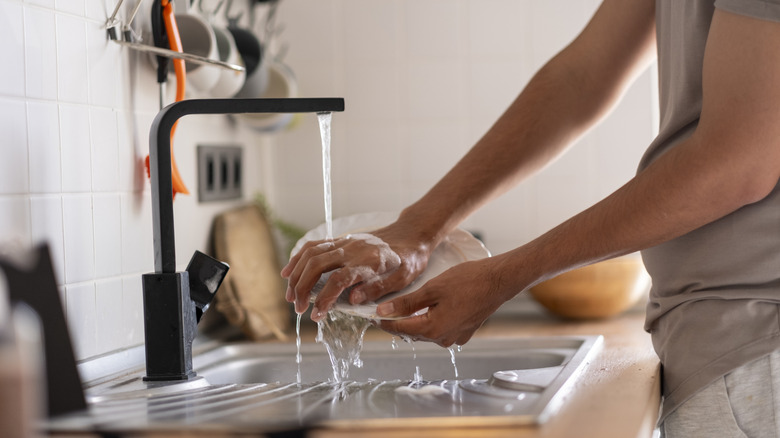
If your assessment leads you to the conclusion that you should hand-wash the kitchenware, there are a few things worth keeping in mind. "Avoid any abrasives," Stacy Verdick Case explains. "Use a mild dish soap — I use Dawn Power Wash for most pieces — and a soft cloth to wash the dishes. I would also avoid anything too acidic and bleaches."
Bree Uebergang agrees, noting she also uses warm water and a mild, fragrance-free dish soap and says to avoid anything abrasive, such as scrub pads or powders. "Wash one piece at a time and avoid stacking in the sink, which is where most chips happen," she adds.
Unfortunately, both experts agree that fading, warping, and surface damage is permanent and irreversible — this is another reason you might be safest hand-washing your valuables. "Once heat or detergent breaks down the finish, it cannot be restored," says Uebergang. This is why she also suggests drying dishes immediately with a soft cloth rather than air drying, and advises against sealing vintage dishware in plastic. "Trapped moisture causes long-term damage," she says.
3. Consider your stain treatments
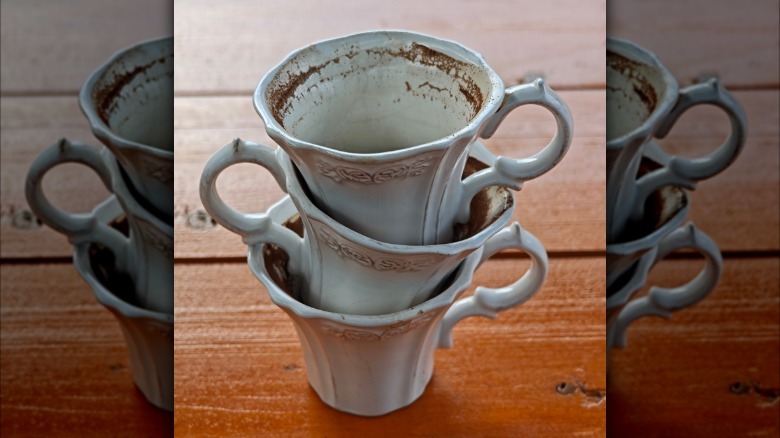
Finding unwanted stains lurking in your vintage dishware isn't uncommon, especially if you're working with ceramic pieces. Ceramic cookware, for instance, is known for staining. If you're working with any glazed ceramic, you might notice a phenomenon called crazing. This refers to the small cracks that can form in the glaze of ceramics, either intentionally or with age, and they are particularly prone to staining. When certain liquids such as tea, coffee, or even dark bone broth soak into these cracks, you might see discoloration. Luckily, according to our experts, these pesky marks can often be fixed, faded, or even removed completely — you just have to consider the material as well as the severity of the stain before tackling.
Depending on the piece, it's still important to be gentle, even when you're trying to bust these tough stains. That's why Stacy Verdick Case suggests soaking the pieces in peroxide. "[Then], rinse with warm water and allow the piece to dry," she says. "Most of the stains will magically disappear."
4. Be careful with painting and detailing
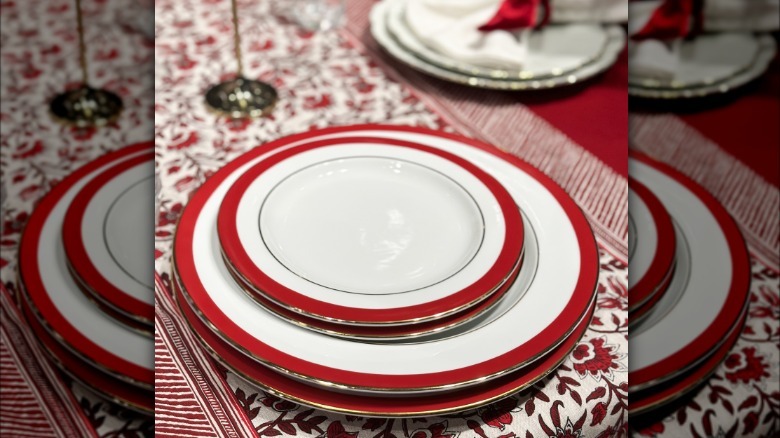
When assessing your vintage dishware, it's important to pay close attention to any detailing or design work. This will dictate how to best clean your items, and indicate whether they can handle the dishwasher. For example, as Stacy Verdick Case points out, most stoneware pieces that don't have any painted detail are generally considered dishwasher-safe. "Bone china and ironstone that don't have any crazing can [also] be washed in the dishwasher," she says.
If you have any dishes that feature painted designs, however, be wary. "Do not put dishes that have gold or silver painted trims in the dishwasher," says Verdick Case. "Any hand-painted detail, transfer print, crazing, or metallic trim puts it firmly in the hand-wash category."
Bree Uebergang agrees. "Gold or silver rims, painted details, decals, raised textures, or visible cracks all mean hand-wash only," she says. "Even small decorative elements are often the first thing to fade or peel in a dishwasher."
5. Handle glassware carefully
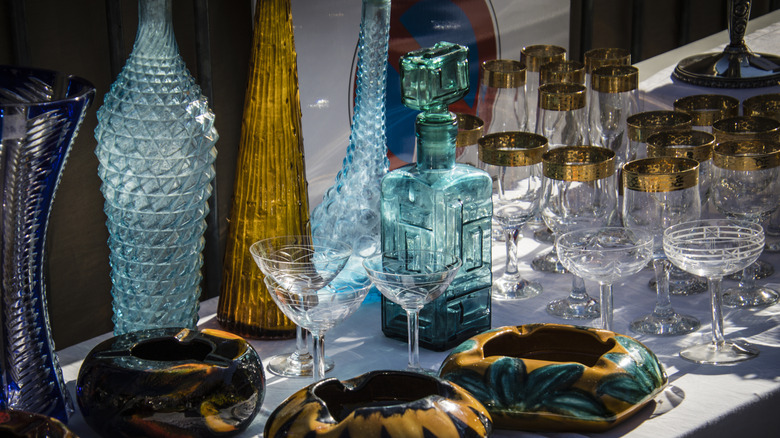
Ceramic and porcelain dishware aren't the only vintage pieces that require consideration before cleaning. Vintage glassware should also be handled with care — certain dishwasher settings are better for achieving spot-free glassware than others. This applies to anything with painted designs, but there are other things to consider, too.
"Vintage glasses that are only used occasionally can be top rack washed unless they are super thin and delicate, like vintage wine glasses," says Stacy Verdick Case. "Candy dishes and other types of heavier glass that aren't washed as often are just fine on the top rack, too."
If you're wondering about vintage glasses you use frequently, she suggests hand-washing more often than not. "Dishwashers can etch the glass over time," explains Verdick Case. Bree Uebergang agrees, adding, "Dishwashers cloud older glass over time, especially thin crystal or pressed glass." Once you see that haze, it's impossible to undo.
6. Only machine wash certain flatware pieces
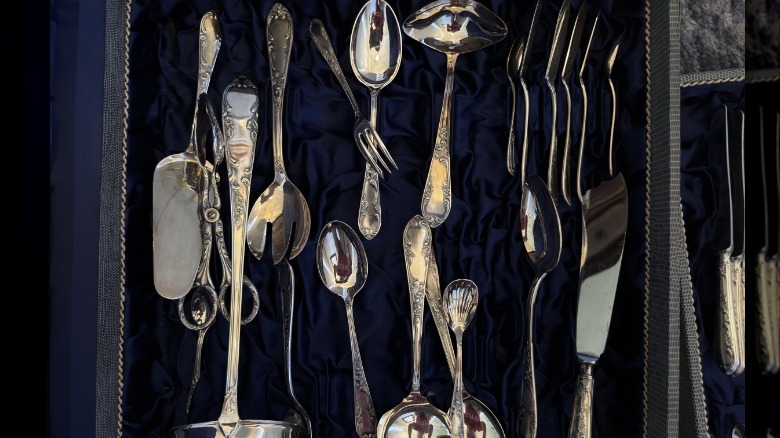
Antique flatware and cutlery can be additional beautiful ways to incorporate more vintage pieces into your tablescape. However, it's worth noting that some of these also need to be cleaned carefully to avoid ruin. While many standard forks, knives, and spoons will do just fine in the dishwasher, Stacey Verdick Case says it's necessary to hand-wash anything with a wood, pearl, or ivory handle.
Bree Uebergang agrees, noting that if you purchase vintage flatware that's made entirely of stainless steel, you can assume it's safe to go ahead and run it through your dishwasher on a gentle cycle. However, if your vintage pieces are made of silverplate or sterling, these should be hand-washed — and make sure you dry them immediately. "Leaving them wet or air drying leads to spotting and corrosion much faster than people expect," she says.
7. Handwash anything with delicate, multi-dimensional designs
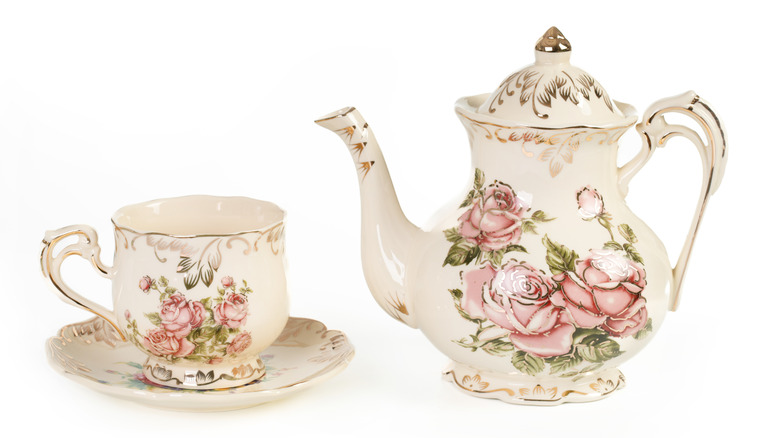
As a general rule of thumb, it's safe to assume that any of your vintage dishes that feature painting, etching, or detailing, should be hand-washed. It should be no surprise then, to learn that anything with delicate, dimensional designs — painted or not — should be treated with additional care as well.
In this case, we are talking about anything with added decor that is a part of the dish, but is not structurally necessary. "These [details] were very popular in the '60s and '70s, usually with flowers as handles or accents," says Stacy Verdick Case. "The petals are very easy to break, so hand-wash those." This also applies to any bowls, plates, or servingware that feature dimensional sculpting, as it can easily snap off if worn away, jostled, or eroded by your dishwasher.