

7 Healthy Oatmeal Toppers For A Filling Breakfast That Keeps You Going
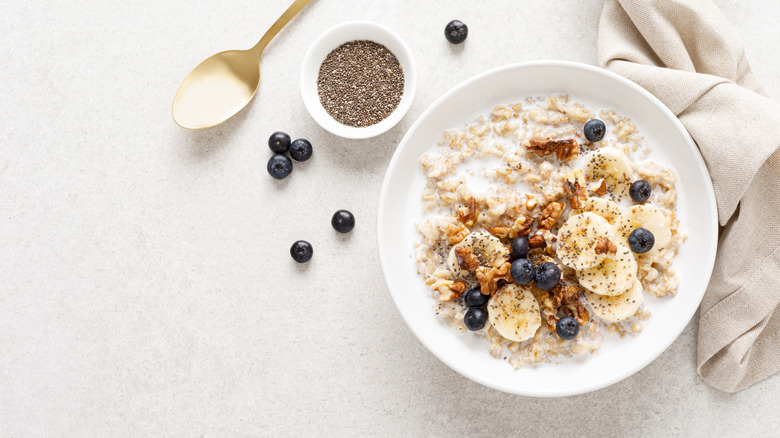
Oatmeal is a popular way to start to the day thanks to its health benefits, as well as its affordability and ease or preparation. Although it is a satisfying breakfast dish, you may find yourself feeling hungry soon after, since it is made mostly of carbohydrates that digest quickly. Adding toppings to your oatmeal is an excellent way to create a more filling version of your favorite breakfast.
Protein and fat digest more slowly than carbohydrates, so they are a great option for increasing fullness, while fiber adds bulk and slows the rate of digestion. If a topping contains two out of these three elements, it will help make your oatmeal more filling. If it has all three, you've hit the satiety jackpot.
From nut butters to pumpkin purée, there are numerous appetizing ingredients you can enhance your breakfast with. Let's take a look at seven healthy oatmeal toppers for a filling breakfast that keeps you going.
1. Walnuts
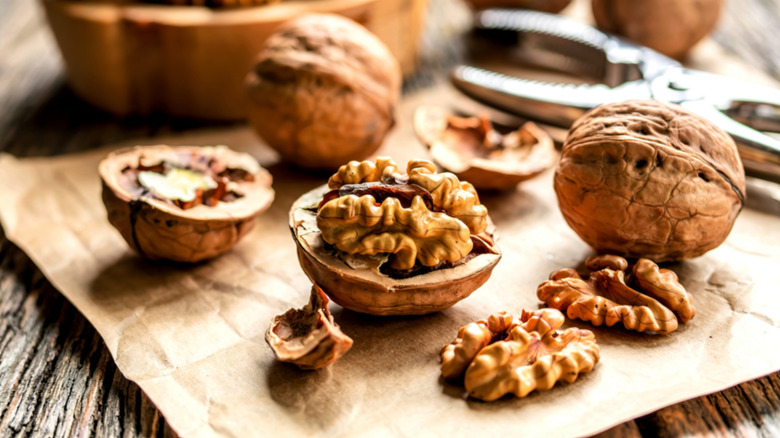
Nuts are a satisfying option for topping oatmeal, but walnuts are a particularly smart choice if you want to stay full longer. Though all nuts are high in fat, which gives you sustained energy without spiking blood sugar levels, walnuts also contain significant quantities of alpha-linoleic acid, anomega-3-fatty acid that is derived from plants. Studies in Appetite have shown that eating omega-3 fats can keep hunger at bay for two hours, meaning your walnut-topped oatmeal will be a satiating start to the day. Walnuts also contain an impressive 14.6 grams of protein per 100 grams, as well as 5.2 grams of fiber. The high content of all three fullness-promoting nutrients make this nut an excellent topping for a filling bowl of oatmeal.
A 2017 study published in Diabetes, Obesity, and Metabolism found that eating walnuts for five days in a row showed an increase in brain activity in the insula. This region of the brain is connected to recognizing feelings, including hunger, and can affect your restraint. The participants in the study had elevated insular activity when shown images of unhealthy foods, which suggests that eating walnuts could help us recognize satiety more effectively and prevent unnecessary snacking. To reap all of the filling benefits from walnuts, you can either add halves directly to the top of your oatmeal, or chop them into tiny pieces to enjoy the earthy crunch with every mouthful.
2. Pumpkin
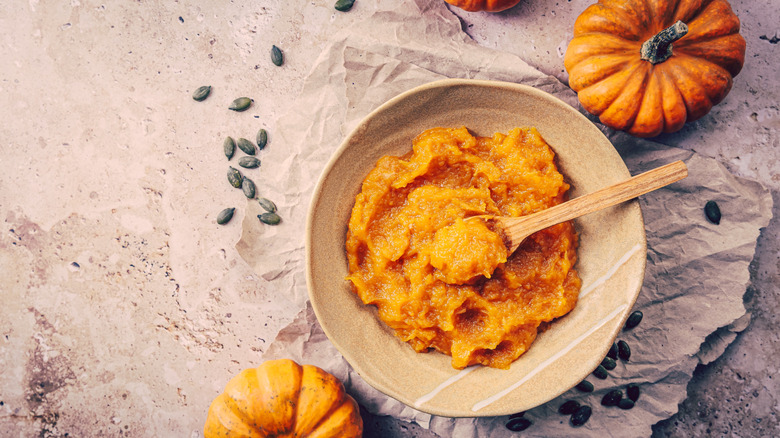
Pumpkin purée might seem like an unusual breakfast topping, but it is a great option if you want to feel full for the rest of the morning. In addition to its lightly sweet flavor, it's packed with nutrients, including fiber.
Pumpkin contains both soluble and insoluble fiber, meaning it helps you feel full by adding bulk and slowing down digestion. The longer it takes food to digest fully, the less chance there is that you will be reaching for a cookie by mid-morning.
You can make your own pumpkin purée by blending roasted pumpkin with warming spices such as cinnamon and nutmeg to create a thick, smooth paste. Alternatively, buy a can of pumpkin purée from the store. Half a cup stirred through your oatmeal once cooked will be enough to turn your regular oatmeal into a superstar version to see you through the morning.
3. Chia seeds
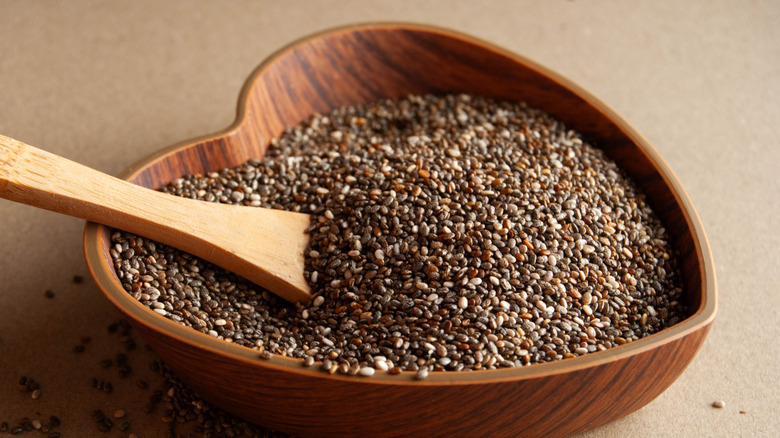
Chia seeds may be miniscule, but they can transform your oatmeal into an incredibly filling breakfast without effecting the flavor much. In their dry form, they are a pretty good addition, but soak them overnight, and you will multiply their nutritional super powers. Chia seeds can absorb a huge amount of liquid, as much as 10 times their own weight, which gives them a gel-like consistency. It is in this form that they can make you feel full, as they take up more space inside your digestive system. Their incredible fiber content of more than 34 grams per 100 grams is also a big factor in making them a satisfying topping.
As well as adding bulk to your oatmeal, chia seeds are also rich in the two other elements that affect satiety. They are full of protein, which can prevent blood sugar spikes, helping control cravings later in the day. They also contain the king of healthy fats, omega-3 fatty acids.
If you enjoy your oatmeal hot, add chia seeds once it is cooked and leave for 5 to 10 minutes to absorb as much liquid as possible. For the best result, however, opt for overnight oats, which allows the chia seeds to create their signature gel, and ensure your breakfast will keep you full and satisfied. There are plenty of great ways to incorporate chia seeds into your day, such as with these matcha almond overnight oats.
4. Raw cacao
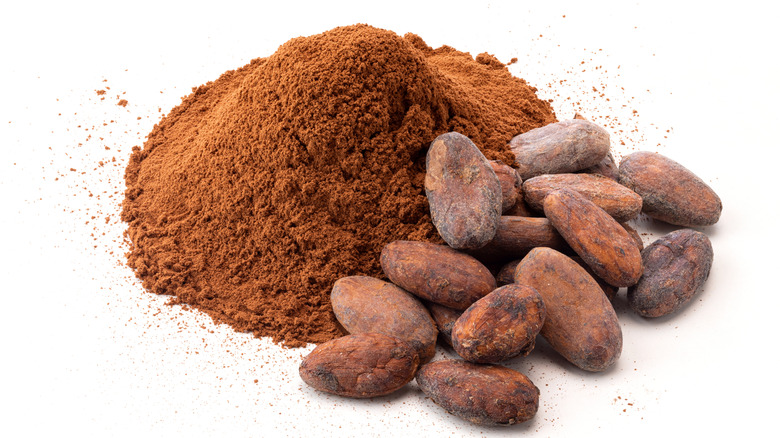
Chocolate for breakfast? Surely that is the news everyone wants to hear. If you choose real chocolate in the form of raw cacao to top your oatmeal, there are many reasons to enjoy it with your first dish of the day. Raw cacao refers to cocoa that hasn't been processed and roasted, meaning it preserves the wide range of nutrients it contains, since some of the powerful plant compounds are heat sensitive.
Foods are considered to be high in fiber if they contain at least 6 grams of fiber per 100 grams. Cacao contains more than 30 grams of fiber per 100 grams, making it an incredibly rich source. Most of the fiber in cacao is the insoluble form, which takes up more space in your digestive system, making you feel full.
Cacao is also incredibly rich in protein, with nearly 20 grams per 100 grams. When you compare this with beef, which is between 22 and 25 grams per 100 grams, it represents an incredible plant-based protein source that will fill you up and keep you full for hours to come.
Raw cacao has a deep, bitter flavor compared to regular chocolate, but the sweetness of the oatmeal should be enough to balance a spoonful stirred through after cooking. You could always add chopped banana or dried fruit to up the sweetness and create a breakfast that feels indulgent but is super healthy.
5. Nut butters
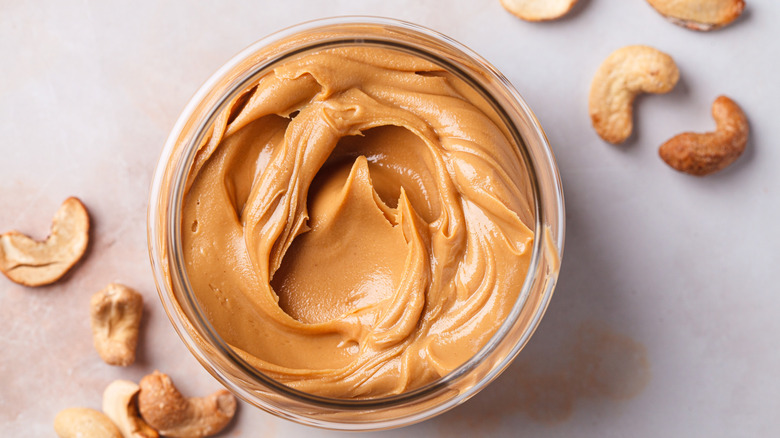
For a tasty oatmeal topping that packs a double punch of fat and protein, nut butter is an easy option. Different nuts contain various types and quantities of fats, so while you could make your own peanut smooth and creamy butter to include, branching out to other nuts every so often is a good idea.
Cashew and almond butters have the same smooth satisfying texture as peanut butter. Cashew butter has more monounsaturated fats than peanut butter, with 29.1 grams per 100 grams, compared with 23.6 grams in 100 grams of peanut butter. These fats are among the best for heart health and are known to increase satiety. Almond butter has a higher fiber content than peanut butter, and has both soluble and insoluble fiber, keeping you full and satisfied for longer.
Adding nuts butters to your oatmeal is simple. Stir a few spoonfuls into hot oatmeal to add the protein, fat, and fiber that will stabilize your blood sugar levels and keep you full for hours.
6. Unsweetened coconut
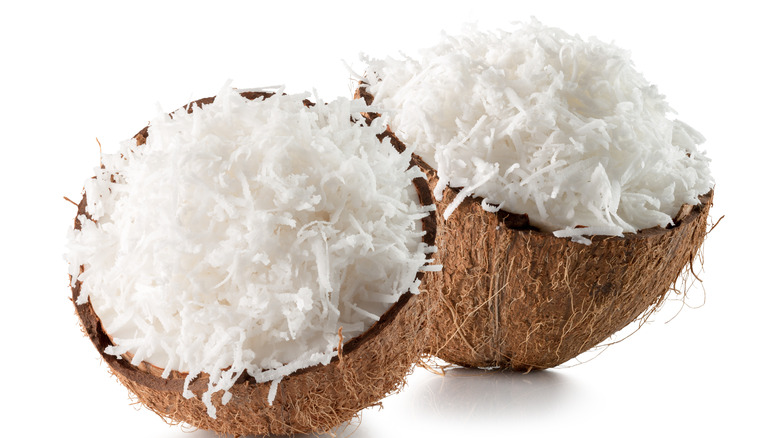
Coconut, in all its forms, has taken the health industry by storm in the last decade or so, mainly due to the unique fats it contains. Although they are saturated fats, which have been connected to cholesterol and heart disease, the medium chain triglycerides (MCTs) in coconut behave differently from the longer chain versions found in other foods.
The MCTs in coconuts may increase the feeling of fullness, which could be one reason coconut products are associated with weight loss. A possible reason for this is that MCTs are metabolized more quickly and make their way straight to the liver, a process that could enhance the feeling of satiety. With at least 9 grams of fiber per 100 grams, coconut meat also sits firmly in the 'high fiber' category, which further increases its ability to keep you feeling full.
Coconut meat also contains some protein, almost 3 grams per 100 grams, which, though modest, still contributes to a filling breakfast. Simply sprinkle a couple of tablespoonfuls of unsweetened coconut over the cooked oatmeal and match with tropical options such as banana and pineapple if you fancy some fruit with it too.
7. Hemp seeds
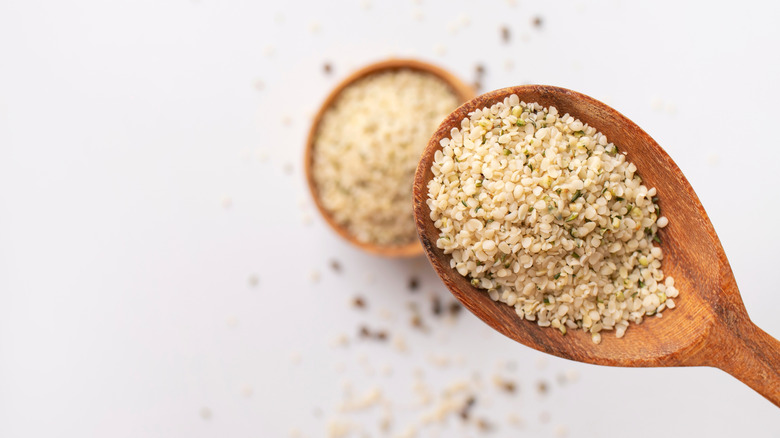
Topping your oatmeal with seeds is an excellent way to add crunch, but if you want to make it even more filling too, opt for hemp seeds. The combination of protein, fats, and fiber are sure to curb your appetite later in the morning.
Hemp seeds are a complete protein, containing all nine essential amino acids. Their protein content of around 32 grams per 100 grams makes them one of the most protein-dense whole foods, beating even chicken and salmon. Eating protein alongside the carbohydrates in the oatmeal will slow down the digestion of the whole meal, keeping you out of the hunger zone for longer.
As well as the incredibly high protein content, hemp seeds contain a significant quantity of fat, including omega-3 fats. With around 0.87 grams per tablespoon, just two spoonfuls of hemp seeds would exceed the recommended alpha-linolenic acid (ALA) intake of 1.6 grams for men and 1.2 grams for women. Alongside a moderate fiber content of 4 grams per 100 grams, the fats and proteins will all work together to create an incredibly filling and satisfying breakfast.