

The Difference Between 6 Types Of Canned Tomatoes, And When To Use Them
We may receive a commission on purchases made from links.
Canned produce isn't always (or even often) the best choice for flavor, nutrition, or presentation, but some recipes do lend themselves better to canned ingredients. Tomatoes are one of those canned products that not only work in certain dishes, but — depending on the recipe — they are often better than fresh. Tomatoes are canned when they're perfectly ripe and are available in different forms (whole, crushed, diced, petite diced, etc.). Many brands also specialize in different varieties. This means that, even in winter when grocery-store tomatoes are lacking flavor, you have options.
Celebrity chef, restaurateur and cookbook author Lidia Matticchio Bastianich of Lidia's Italy says fresh tomatoes that aren't at perfect maturity are more acidic and may not be as sweet as high-quality canned tomatoes. "If you want to use fresh seasonal tomatoes in the summer when plum tomatoes are at the market, make sure they are ripe all over," she says. "If not, set them in the sun and let them ripen completely, then peel them by making an X on the tip and plunging them in boiling water for a few minutes, retrieve, and set in iced water. The skin should peel off, then squeeze them over a sieve, capturing the seeds and reserving the liquid underneath."
Other times of the year — or, to be fair, when you don't have time — canned tomatoes will not only work, but they will also work beautifully. Here's what experts say you should know about different canned tomato varieties and when you should use them.
1. Whole, peeled San Marzano tomatoes
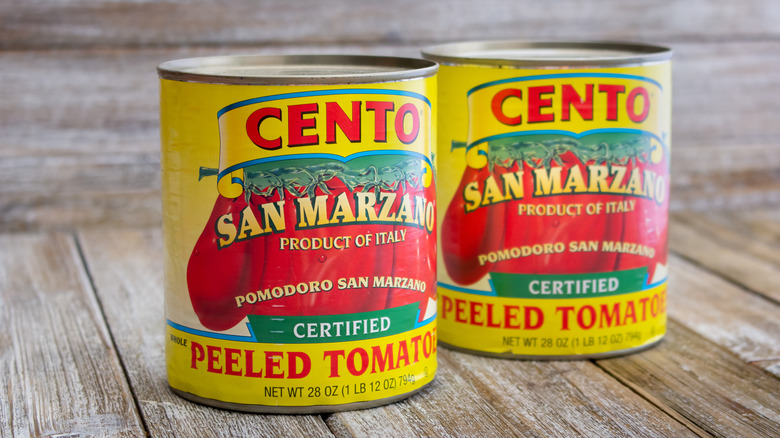
San Marzano is a variety of plum tomato grown in volcanic soil in a very specific part of Italy. "They have a thin skin, have a lot of sweet pulp, not too juicy so not too acidic, and have few seeds," Lidia Matticchio Bastianich says. "Seeds have tannins and make the sauce bitter." Much like champagne — which is supposed to be called "Champagne" only if it's made in Champagne, France — San Marzano tomatoes must be grown in the San Marzano region of Italy, or they aren't really San Marzano tomatoes. Even the same variety, if grown elsewhere, isn't a true "San Marzano." Although you can purchase domestically grown varieties (they'll cost less than the real thing), the flavor won't be the same. If you aren't sure, the label can help you identify true San Marzano tomatoes. Look for the words "San Marzano dell'Agro Sarnese-Nocerino DOP" or "PDO," which means Protected Designation of Origin.
"I use the canned San Marzano to make most of my sauces and to make braised proteins like chicken cacciatore, pork chops pizzaiola, Sunday sauce but as well to make pasta dishes like Amatriciana, Spaghetti and meatballs," Matticchio Bastianich says. "In using canned tomatoes, I always look for whole San Marzano skinless in their juice and check that they are grown and packaged in Italy."
Whole peeled San Marzano tomatoes are versatile and give you more control over texture. "I personally use whole peeled tomatoes for almost everything," says Italian-born chef and influencer Nadia Caterina Munno, who is known as The Pasta Queen.
2. Passata di pomodoro
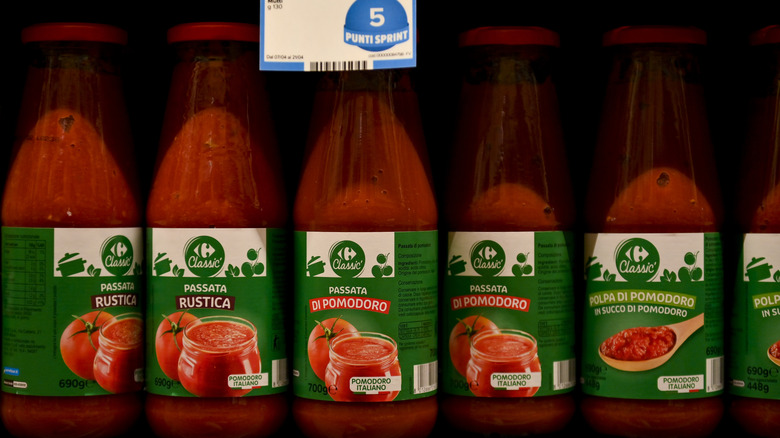
Unless you live in Italy, passata di pomodoro may be a little more challenging to find in a local supermarket. It's basically pureed, strained tomatoes without seeds or skins, but most importantly, it is also uncooked. On store shelves, it can look similar to pasta sauce, but it won't include other ingredients, such as onions, garlic, or basil. Passata di pomodoro typically comes in jars or bottles, but you can also find canned versions. It may be labeled "passata di pomodoro," "passato di pomodoro" or simply "strained tomatoes."
"The passata di pomodoro I use to add to the San Marzano when braising meats," Lidia Matticchio Bastianich says. "It adds more texture and works as well when I am in a hurry; the passata will turn into a marinara tomato sauce quicker. It is slightly cooked in the process." She recommends Mutti brand passata, but a lot of other brands also make passata di pomodoro, and unless you're shopping online or at an Italian grocer, your local store may only offer one or two of them. Generally speaking, though, tomatoes from Italy tend to be the best for Italian recipes, so read the label before you buy. "Always check where they are grown and where they are packed," Matticchio Bastianich says.
If you need a substitute, canned puree is the closest off-the-shelf option — just keep in mind that a cooked puree isn't precisely the same thing as passata di pomodoro.
3. Whole canned cherry or grape tomatoes
Canned cherry or grape tomatoes can be a good option if you're making something like pasta con pomodorini and you don't want to purchase tomatoes out of season, though they don't hold their shape as well as fresh cherry tomatoes do. They also "have skin on and are juicier," Lidia Matticchio Bastianich says. They're versatile enough to be used on bruschetta or in sandwiches or to make a no-cook salsa that doesn't taste canned. And they're good in sauces, of course. "The whole cherry tomatoes I use to make a simple sauce for pasta that has the freshness of the garden," Matticchio Bastianich says.
Nadia Caterina Munno also likes canned cherry tomatoes for sauces and recommends using them alongside other types of tomatoes to help add distinctiveness. "I think you can combine flavors from different types of varieties. For example, in my classic al pomodoro, I like to combine cherry tomatoes, whole peeled San Marzano, and Mutti's tomato puree."
Whole canned cherry and grape tomatoes may be challenging to find in an American chain supermarket, so look for them in Italian specialty shops or online. Remember that there are differences between cherry and grape tomatoes: Cherry tomatoes are small and round and have thin skins, while grape tomatoes are oval shaped and have thicker skins and a lower moisture content.
4. Tomato puree
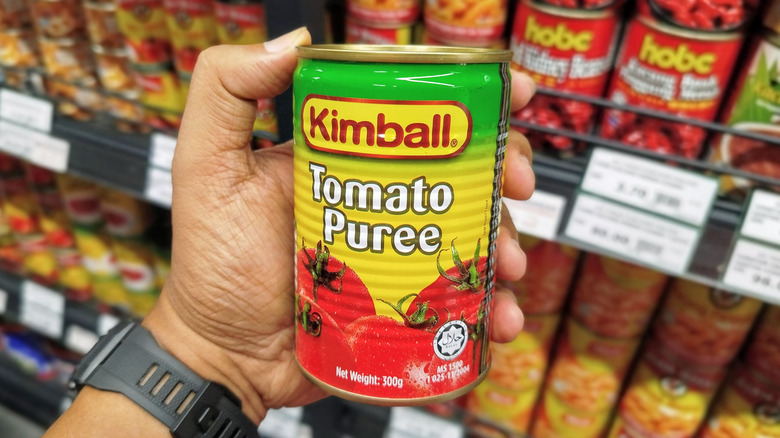
Tomato puree can look like passata di pomodoro, but the major difference between these two types of canned tomatoes is that puree has been cooked while passata di pomodoro has not. Tomato puree isn't the same thing as tomato sauce, either, for a couple of reasons. Most of the jarred varieties of pasta sauce are meant to be used as substitutes for home-made sauces (for example, three-cheese, vodka, or Italian sausage). Jarred sauces vary wildly in texture and consistency, too. However, canned varieties usually contain only a few basic ingredients, such as garlic or onion powder. They also tend to be thinner in consistency than tomato puree or tomato paste.
Tomato puree is made from tomatoes that are lightly cooked and strained so they no longer have their seeds or peels. A tomato puree may be mashed or blended and doesn't usually contain any added seasonings. Tomato puree is also thicker than tomato sauce, but not as thick as tomato paste. "If you are in time pinch and don't want to smash and blend the whole peeled tomatoes and don't like seeds, use a good quality puree like Mutti," Nadia Caterina Munno says.
It's also worth noting that not all recipes that call for "tomato puree" are talking about the same thing. In the U.K., for example, tomato puree is essentially the same thing as American tomato paste. U.K. products may also be called "double concentrate tomato puree," rather than tomato paste. If you're making something like a British cottage pie that calls for tomato puree, tomato paste is a good substitute.
5. Tomato paste
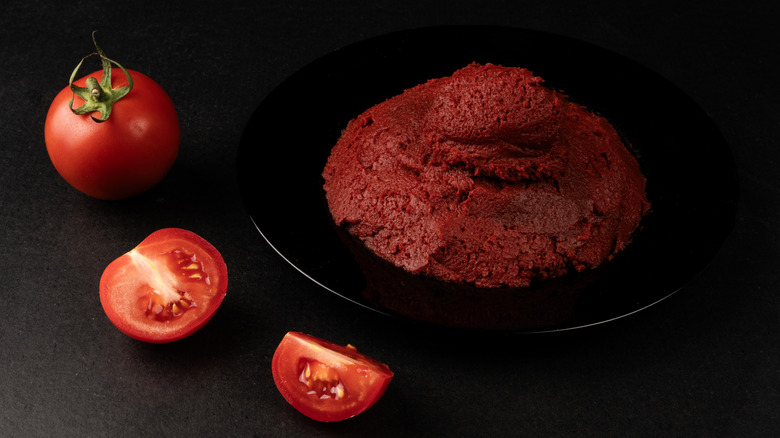
Tomato paste is a tomato concentrate. Tomato paste and tomato puree are made in a similar way in that they are both strained to remove their seeds and peels. However, tomato paste is also cooked down so it contains far less moisture than tomato puree does. Most tomato pastes are cooked twice — once before they're strained, and then again after straining until they reach a thick, pasty consistency. You can buy tomato paste in small cans or in tubes — the latter may be more convenient if you only use tomato paste a few tablespoons at a time because it will keep for longer in the refrigerator.
"I really truly believe in tomato paste," Nadia Caterina Munno says. "It really adds quite a kick to any tomato-based sauces, and [I] love using it on my meat sauces for lasagnas, bolognese, and also in my minestrone soups ... Tomato paste is a great way to start a red sauce by using it as a base with extra virgin olive oil, garlic, and red chili peppers!"
Lidia Matticchio Bastianich says she uses tomato paste not just for flavor but also for presentation. "The tomato paste I add to add color, sweetness and complexity, especially to braised meats," she says.
Tomato paste is popular in a lot of different cuisines; you'll find it as an ingredient in American chili, Indian curries, and Mexican salsas and sauces. Cook your onions and/or garlic first, and then add tomato paste and let it caramelize.
6. Diced tomatoes
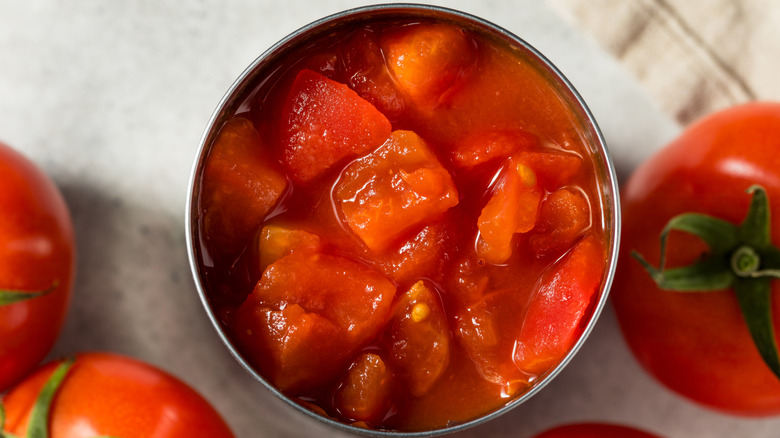
Different chefs have different opinions about diced tomatoes. Diced tomatoes are popular with home cooks because they are convenient and easy to find in supermarkets (you can get them in the larger diced variety or in smaller chunks, usually labeled "petite diced"). A lot of recipes call for them, and they're a useful substitute for chopped, fresh tomatoes when you have to put a recipe together in a hurry. They're less commonly used in Italian cooking, but some people prefer to use the larger, canned diced tomato varieties for stews or chili since they maintain their shape during cooking (versus tomato puree or crushed tomatoes, which turn to liquid, especially during longer cooking times).
Other chefs say you should always use canned whole tomatoes instead of canned diced tomatoes because diced tomatoes contain a preservative called calcium chloride, which helps them hold their shape. Although the Food and Drug Administration designates calcium chloride as "generally recognized as safe," it tastes salty, which can affect the flavor of the tomatoes and whatever you're adding them to. (You might also find calcium chloride in whole peeled tomatoes, so if you're trying to avoid preservatives, check the label.)
Both Nadia Caterina Munno and Lidia Matticchio Bastianich say they don't use diced tomatoes, though Munno's reasons are based on quality. "Most of them are chopped and I am never sure what part of the tomatoes are in it, and there's usually a lot of unripe, harder parts," Munno says. "With whole peeled tomatoes you can see what you're getting!"