

6 Old-School Condiments That Deserve A Comeback
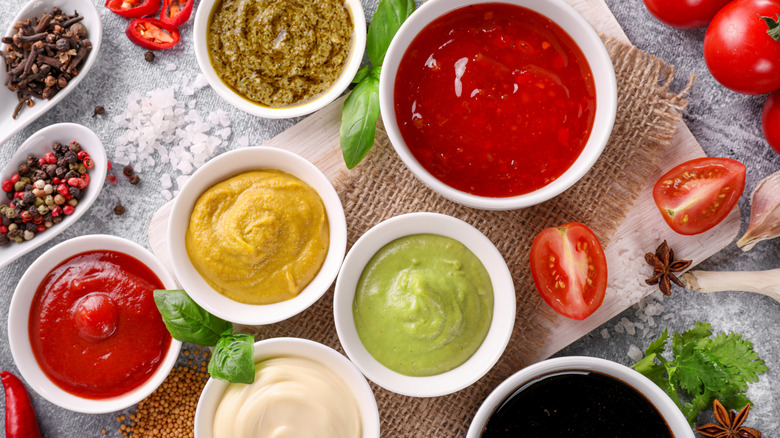
Whether you are one of those people whose fridge is overflowing with condiments or not (mine sure is), there's no denying that they have what it takes to add flavor and enhance countless dishes. However, the condiments we know and love today aren't the first recipes around — far from it — and there are a handful of old-school ones that deserve a comeback.
Even if it's just for novelty's sake, some of the old-school condiments that used to grace everyone's tables are worth another try. From walnut ketchup to chocolate gravy to mint jelly, the flavors are both unique and intriguing. Will they make a solid resurgence and be restored to their full glory? Probably not, but that doesn't mean we can't wax nostalgic, right?
So, if you're ready to learn about six favorite flavorful condiments that may have been used by your parents, grandparents, and even older relatives, you're in the right place. Bonus points if you try to track them down at a store or recreate them yourself so your taste buds get a direct peek into the past.
1. Walnut ketchup
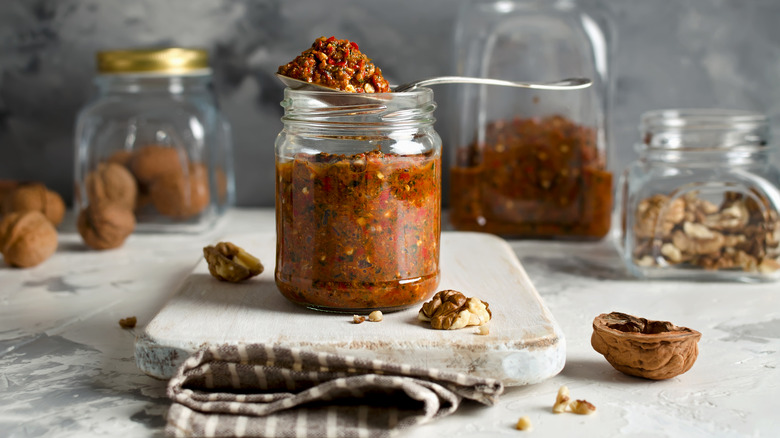
Back in the day, before ketchup was made with tomatoes, it was made with all kinds of different, flavorful ingredients. One of these earlier renditions was walnut ketchup. Compared to your typical tomato ketchup, well, at least typical today, it's much grainier and crunchier (walnuts, duh), but it still has a nice zing from vinegar and can be used like any other condiment — as a garnish for countless dishes.
A recipe from "The National Cook Book" from 1850 describes walnut ketchup as an excellent catsup and offers fairly simple instructions for making it. All that's required is mashing pickled, soft walnuts through vinegar, straining, boiling, bottling, and then topping with sweet oil. Seems straightforward enough. Sounds pretty tasty, too, if I do say so myself.
Whether you decide to try your hand at making walnut ketchup or not, it has been popping up on a few restaurant menus and making quite a splash. So, if you ever see it offered somewhere, give it a try. When dining out, you should obviously take the chef's recommendation, i.e., order it as it comes on the menu. However, at home, try it with potatoes — arguably the best way to use regular ketchup — and you'll likely be a fan for life.
2. Cane syrup
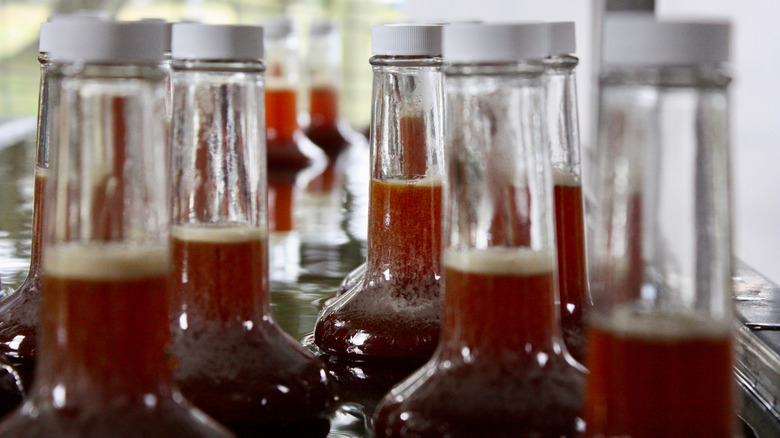
Cane syrup was a favorite among older generations in the South. While it isn't nearly as popular as it once was, it's sweet and sticky enough to deserve some more attention in current times. If you've never heard of cane syrup before, which is likely, think of it as kind of like a cross between maple syrup and simple syrup. It's dark, thick, and very rich in flavor. Actually, it was, and in some places still is, used much like you would maple syrup. It's pretty darn close in texture, color, and flavor as well. Regardless, it is a classic pairing for biscuits all over the South, and you might even remember your grandparents or great-grandparents pouring it over a plate of them (I know I sure do).
Much to many people's chagrin, cane syrup is no longer found everywhere you go in the South, such as in gas stations and on diner tables. However, it is still readily available in stores. If you want to get a taste, it shouldn't be too complicated to track down. Just make sure to try it on biscuits first if you want to make your grandma proud, which, duh, you do.
Fun fact: Author F. Scott Fitzgerald was partial to cane syrup, likely because he was stationed in Montgomery, Alabama, for some time. He preferred a specific brand, Alaga, but it was cane syrup nonetheless.
3. Piccalilli
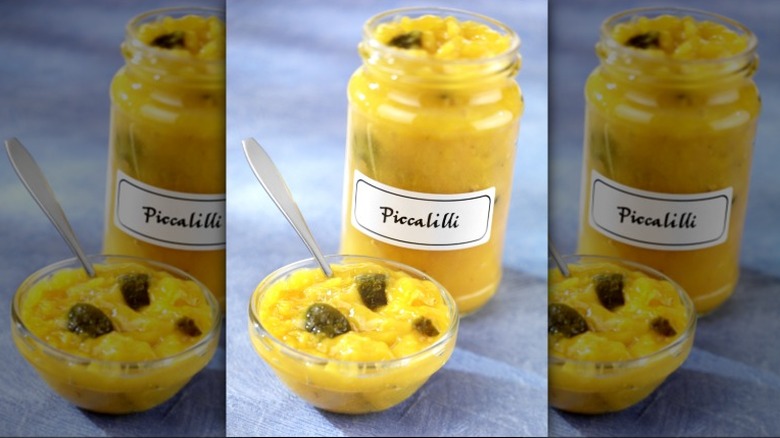
As the name may already have you guessing, piccalilli is indeed a pickled condiment. While it might be unheard of to most here in the United States, across the pond, it's a British staple — and it has been for many years. In fact, its roots date as far back as the late 1700s. As is the case with recipes from long ago, it has seen some changes over the years, but it still consists of pickled vegetables and a variety of spices. While there is no set-in-stone recipe, you can typically add whatever vegetables are in season. Cauliflower, gherkins, and onions are usually included, and turmeric is a must — it gives piccalilli its signature yellow color.
Tracking down a jar of piccalilli here in the U.S. won't be so easy, so if you want to give it a try, you'll likely have to order it online or venture into the world of pickling for yourself. Fortunately, it isn't complicated to make, but it does take a considerable amount of time, like 29 days before it's ready to enjoy. Once you have it, though, it's like liquid gold ready for spreading on anything from french fries to ham and cheese sandwiches to eggs and beyond. Some people even like to dip crackers in it, so it definitely spans well beyond an everyday condiment like ketchup, mustard, or even relish.
4. Currant jelly
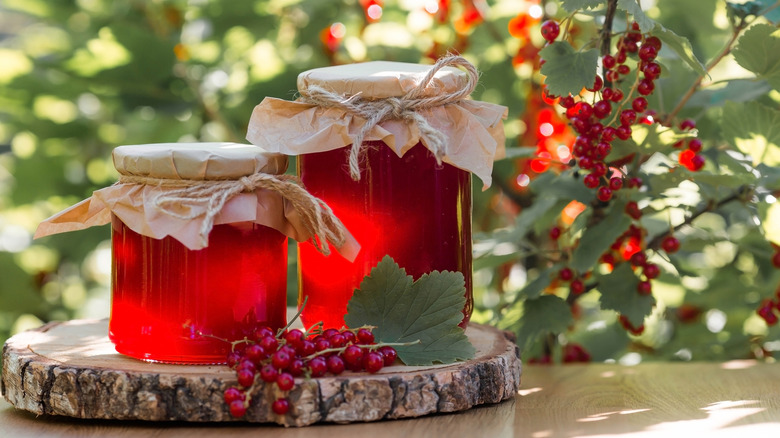
Like so many other jelly flavors of the past, currant jelly has all but faded into the pages of history. All you classic literature buffs may remember its appearance in Louisa May Alcott's "Little Women," but other than that, it's not a condiment you see used much anymore. That doesn't mean it's not tasty, though. It is jelly after all (or is it technically jam?), so maybe it's time to bring it back.
Currant jelly has a sweet-tart flavor that balances out the sugar in the recipe beautifully. It is delicious when simply spread on toast or muffins, and it also makes a great addition to charcuterie boards. However, serving it with roasted meats, similar to how we enjoy cranberry sauce to this day, has always been a prevalent choice for the tasty condiment. Actually, it is still thought of as one of the best jellies to pair with roast beef.
I have never seen a jar of currant jelly at the grocery store, but you might have some luck finding it at a farmer's market when red or black currants are in season. Otherwise, if you want a taste, you'll likely have to conjure up all of your March sister energy and take a stab at making it yourself. Hopefully, you'll have more luck than poor Meg, though (she couldn't get hers to set for the life of her).
5. Chocolate gravy
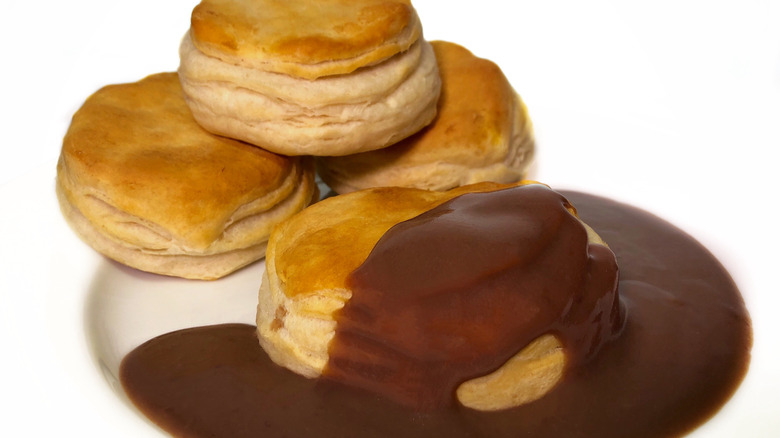
Chocolate gravy is another old-school condiment that deserves not only a revival but also widespread proliferation. Even the name alone is enough to pique interest among many people (myself included). But if you aren't from the South, there's a good chance you've never even heard of it. Not to be confused with your everyday chocolate sauce, like Hershey's or something similar, chocolate gravy is a condiment all its own. What sets it apart from your run-of-the-mill chocolate or fudge sauce is that it contains flour. As a result, it has a slightly thicker, less runny texture that helps it cling to foods better than its counterparts. Instead of just going on desserts, it is frequently paired with buttermilk biscuits, pancakes, and other breakfast foods. Something tells me it would slap on beignets as well.
As for chocolate gravy's origins, no surprises here, but they are contested. You know how it is. Everyone wants to take credit. Regardless, some theories speculate that it has been a part of American culture since as early as the 16th century. Or, it may have just been a resourceful invention that resulted from Hershey's cocoa hitting the market. Either way, it is a classic condiment in the Appalachia region and the Deep South. How it never became wildly popular anywhere else is beyond me, though, because who doesn't like to smother things with chocolate? Sign me up!
6. Mint jelly
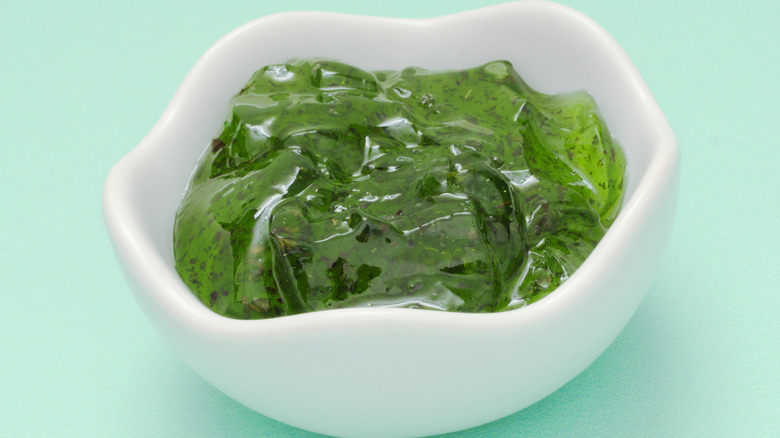
Akin to cranberry sauce, but with a much fresher, brighter flavor, mint jelly is an old-school condiment you don't see much anymore. Now that I mention it, it has a significantly brighter color as well. That's neither here nor there, though. What's important is that it is just as tasty as it has ever been, popular or not. Still, it used to be all the rage, and some of you may even remember it from your grandparents' holiday meals.
If you're wondering how to make the most of mint jelly, the answer is simple: It's the perfect condiment for lamb. Traditionally, that's how it was served, and the duo is such a match made in heaven; it's a wonder it isn't more prevalent today. Not to get too nerdy on you, but there's even a scientific reason our taste buds revel in a pairing of mint and lamb: They both possess certain molecules that share similar chemical structures.
If you want to try your hand at making mint jelly, you're in luck. It's incredibly simple to do and only requires five ingredients to get the job done. Seriously, it takes barely more effort than whipping up a package of Jell-O, and you know it will be tastier, too (homemade, and all). Regardless, give it a try, and you'll understand why it's due for a comeback. That goes for all the rest of the intriguing, tasty old-school condiments found on this list as well.