

Why Black Rice Was Once A Rare Commodity Reserved Only For Royal Tables
We may receive a commission on purchases made from links.
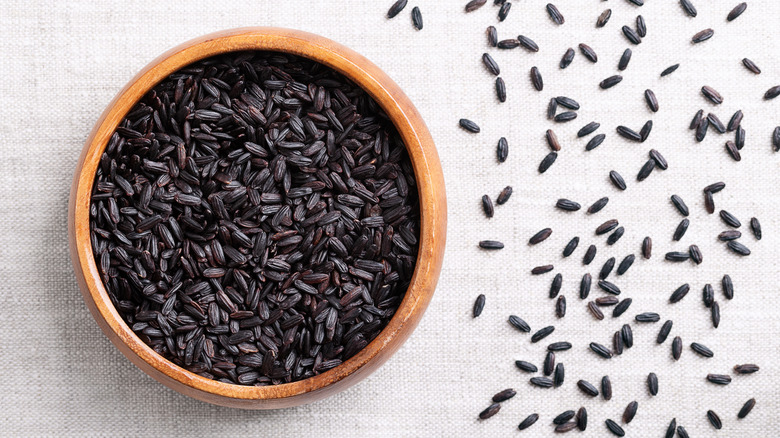
Rice is a staple in cuisines around the world. Served as fried rice, a porridge, or a side to a comforting soup or stew, rice is the primary source of nutrients in a number of communities. Different types of rice are popular in different regions, mostly because their respective terroirs are better suited for growing specific varieties. One such variety of rice, which stands out thanks to its striking, dark-purple hue, is black rice, often known as "forbidden rice." It earned its name not because it was harmful to consume, but because it was once reserved for the elites of ancient China — specifically royalty and members of the Imperial Court.
Black rice was believed to harbor vital health-promoting and healing properties, which members of Chinese royalty desired to keep for themselves. No longer "forbidden," we common folk can also access black rice thanks to brands like Lotus Foods, Lundberg Family Farms, and Nature's Earthly Choice, to name a few. The natural nuttiness and subtle sweetness of black rice can be savored in several rice-based recipes.
Why black rice is good for you and how to use it at home
Ancient Chinese royalty were certainly on to something, as black rice is a nutritional powerhouse that's easy to incorporate into your diet. It's rich in antioxidants like anthocyanins, which are also responsible for the deep purple color of the grain. It's also high in fiber, which is beneficial for your gut health, and it has a low glycemic index, meaning it's a good source of carbohydrates for those managing their blood sugar levels. The benefits of black rice add up, so why not bring the formerly forbidden rice to your own cooking? Chowhound has no shortage of rice and grains recipes to serve as inspiration for your next creation starring black rice.
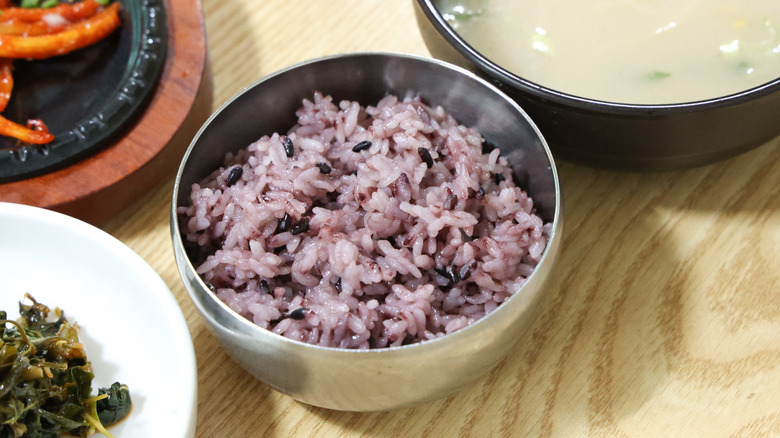
Asian cuisines that have historically incorporated black rice serve as a good inspiration for recipes that feature the grain. In Thailand and Indonesia black rice is served alongside a savory stew or in a sweet rice pudding dessert. In Korean cuisine, it's combined with white rice to create a lovely purple rice, which you can serve with various side dishes called "banchan," or with a piping hot stew. You can even make restaurant-quality fried rice with a healthier twist using black rice instead, or give your homemade horchata a fun spin with black rice. Ultimately, you'll enjoy a grain once reserved only for ancient nobility.