

Why Diner Food Became A Staple During The Great Depression
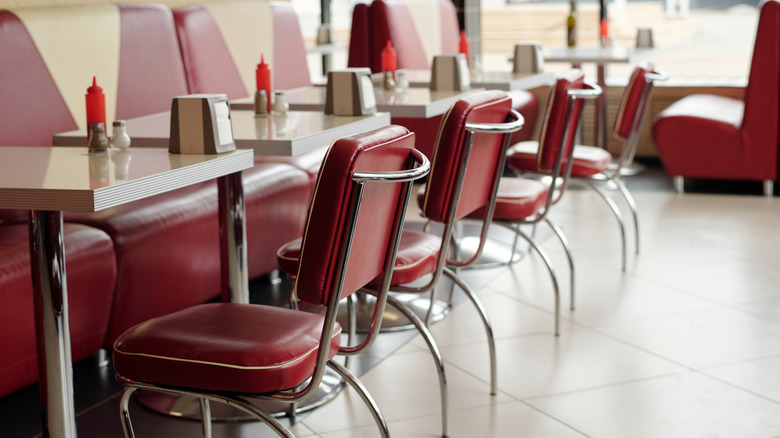
Whether you're in the mood for a slice of pie, a club sandwich, or a hot cup of coffee, it's tough to beat the appeal of a historic diner. The food is reliable, fresh, and won't put much of a dent in your wallet. The no-nonsense cuisine is an irrevocable part of iconic American culture, and it's no surprise that it soared in popularity during the Great Depression.
Early diners emerged at the end of the 1800s as old-school lunch wagons, portable operations that offered affordable meals to factory and office employees on their breaks. Eventually, lunch wagons (sometimes referred to as dining cars) began to stay put. As the glitz and glamour of the Gatsby era faded and gave way to the start of the Great Depression in 1929, diners became community staples. People knew they could rely on their community diner to get a hot, affordable meal, no matter what hour of the day (or night) their job-hunting schedule required them to be out and about. Diners across the U.S. are still a staple of many communities today, reflecting the enduring appeal of the affordable, dependable meals that made them essential during one of the bleakest eras in American history.
What diner customers ate during the Great Depression
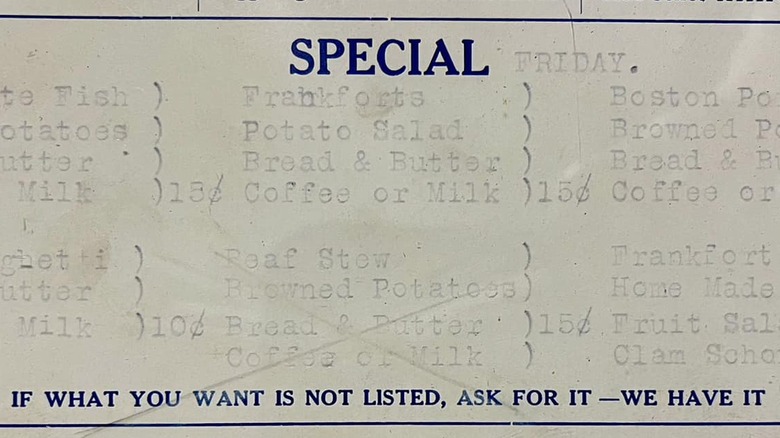
From meatloaf designed to make the most of the ingredients home chefs had on-hand to the Depression-era magic of water pie, families were stretching meager budgets at the end of the '20s and into the '30s, but low‑cost options made it possible for special occasions. Diners offered a variety of foods, including potatoes, coffee, sandwiches, and pork and beans. The cooks also got creative with limited ingredients, offering meatless options and seasonal desserts that were inexpensive but still felt like a treat.
While hot, filling foods were the (literal) bread and butter of diners during the Great Depression, desserts didn't go by the wayside. A user on Reddit shared a diner menu (from an actual on-train diner car, no less) from 1933 that included dessert with the price of dinner (all for $1 or $1.25, depending on menu choice). Dessert options included New York ice cream, blueberry pie, and watermelon — diners even had the option of finishing their dinner off with an iced coffee.