

Avoid These 10 Mistakes Everyone Makes With Roast Beef And Thank Us Later
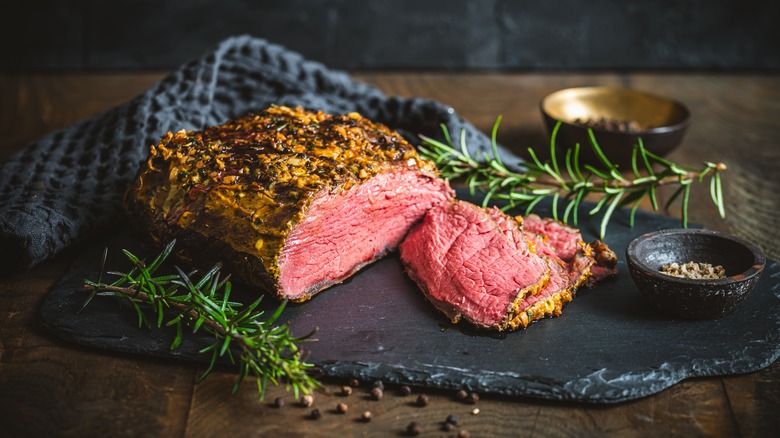
Is there anything more hearty and homey than a roast beef dinner? Growing up, roast beef was a regular Sunday meal in my house. It always came to the table the same way: beautifully browned on the outside and juicy and pink in the middle. I always assumed it was pretty effortless. After all, it's just a big hunk of meat roasted in the oven, right? But once I started trying to make it myself, I learned pretty quickly that roast beef is less forgiving than it looks.
Through trial and error, I've come to realize that most roast beef failures aren't necessarily because of one glaring error, but usually a handful of small ones. Maybe you didn't budget your time well, so you rushed through the process. Perhaps you relied on a recipe's suggested cook time instead of the actual temperature. Or maybe you left the meat in the oven a little too long "just to be safe." These are the kinds of mistakes that might not seem like a big deal at the time, but they can easily result in a dry, uneven, or disappointing roast.
To figure out where home cooks tend to go wrong (and how to avoid it), I reached out to several chefs and meat experts who know more than a thing or two about roast beef. They shared their insights on some of the most common mistakes they see people making with roast beef. Based on their advice, these are the things to watch out for when you cook your next roast, plus some things you can do to ensure your beef turns out tender and flavorful.
1. Mistake: Choosing the wrong cut of beef
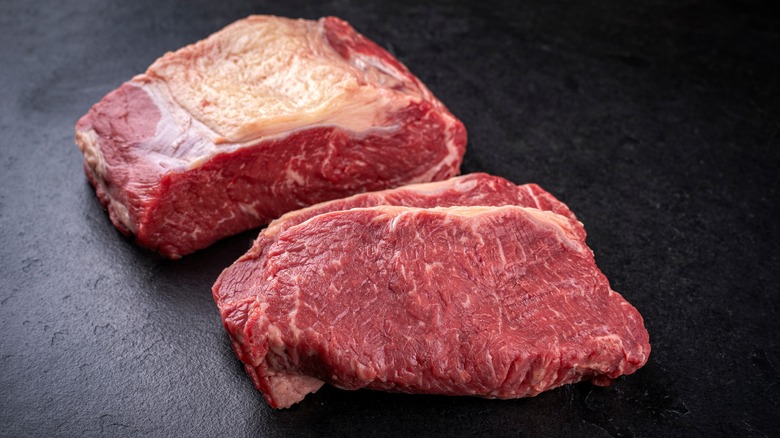
One of the great things about roast beef is that you're not restricted to one particular cut of beef. There are several cuts that work for roasting, and while each of the chefs we spoke to has personal favorites, two cuts came up several times: the tenderloin roast and ribeye roast. These cuts come from under the backbone of the cow, and they're muscles that don't get worked out too much, so they tend to be very tender.
Like the name suggests, the tenderloin is one of the most supple cuts of beef you can buy. It's also very lean, so you won't get gristle in your slices. Several of the chefs pointed out that it's fast to cook and easy to carve, but you do need to keep an eye on it because the lack of fat means it can dry out quickly. This is a great cut of beef for roast beef sandwiches because it will give you smooth slices of beef that are easy to bite through.
If you're aiming for a traditional family-style roast, the ribeye roast may be a better choice. It's also tender, but it tends to be fattier with nice marbling throughout. Dagan Lynn, executive chef at Beef! It's For Dinner, tells Chowhound, "That fat will help keep the meat tender and juicy as you cook it. You also want to check and make sure your meat has a good layer of fat on the outside. We call that the 'fat cap,' and it provides natural basting throughout the roasting period."
2. Mistake: Failing to season the meat
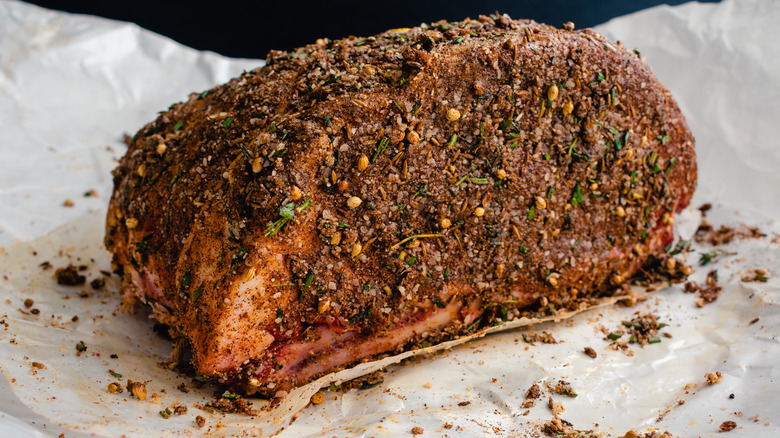
Seasoning is crucial for any dish, and with roast beef, many chefs say it should be the first thing you do. Michael Handal, a chef at the Institute of Culinary Education, tells Chowhound that he thinks the most overlooked step is dry brining the beef before roasting. "This step involves thoroughly drying and then rubbing the scored roast with salt, placing it on a rack, uncovered, in the refrigerator for two to three days, or at least overnight. This allows the salt to penetrate the roast and to dry the surface," he explains.
Once your beef has had time to let the salt work its magic, you may want to add extra seasoning to the exterior. Most of the chefs we spoke to agreed that dry rubs are better than wet marinades because they help give the meat a nice crust. A simple dry rub of salt and pepper will add flavor while still letting the flavor of the beef shine through. This works particularly well with premium cuts of meat that have full-on beefy flavor.
For less expensive cuts of meat that might not have a lot of marbling to provide richness, you can amp up the flavor with a mixture of spices, aromatics, and herbs. For example, Dagan Lynn says, "I like to mix together olive oil, finely chopped fresh rosemary, minced garlic, finely chopped fresh basil, salt, dried thyme, and black pepper." Some people also like to add mustard into the mix for extra tang or honey for a bit of sweetness, like in this recipe for herb-roasted beef tenderloin.
3. Mistake: Skipping the searing step
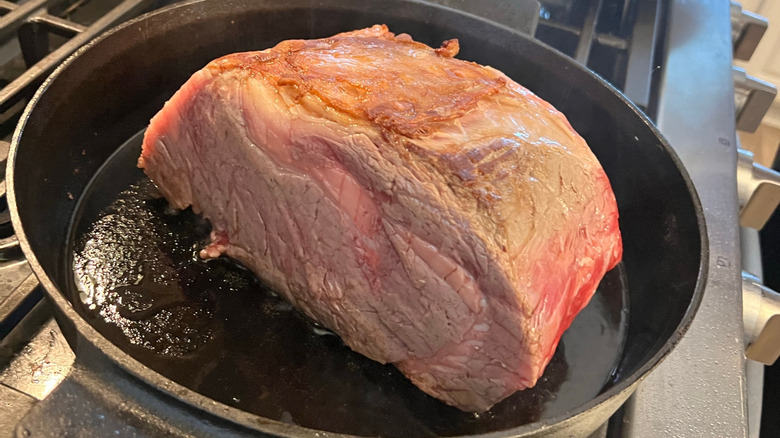
Once your beef is seasoned, you may be tempted to throw it straight into the oven, but then you'd be skipping a step that can give your beef exceptional flavor, texture, and color. Searing the meat at a high temperature will cause something called the Maillard reaction, which is a chemical reaction that turns meat brown and creates a nice crust. It also gives the meat new layers of flavor.
There are a few ways you can go about searing your meat. One of the most common, albeit messiest, is searing it in a pan with a bit of oil. You want the pan to be very hot because the Maillard reaction takes place between 285 and 330 degrees Fahrenheit. Once the meat is nicely browned, you can finish it in the oven. If you want to avoid dirtying extra dishes, you can also roast the meat on high in the oven to start, then turn down the heat for the remainder of the cooking time.
Another popular technique is the reverse searing method, which involves cooking your meat low and slow, then hitting it with a blast of heat at the end. Ashley Lonsdale, chef-in-residence at ButcherBox, tells Chowhound, "I think for those who are a bit more unsure, the reverse method, starting low and finishing high, is easier." In addition, Michael Handal said, " The reverse searing method will yield a moist, tender roast that doesn't have the wide, well-done strip around the outside of the roast that traditional cooking leaves you with."
4. Mistake: Positioning the meat incorrectly in the pan
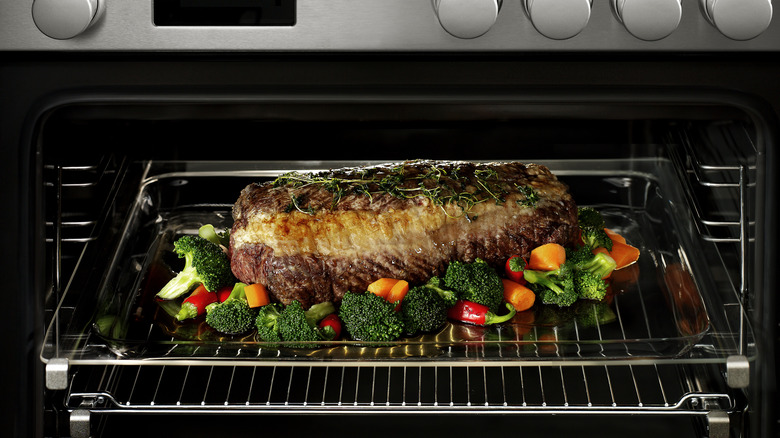
Many home cooks don't give much thought to how a roast beef is placed in the pan before it goes into the oven. As long as it fits, it should be fine, right? Well, not exactly. According to several of the chefs we spoke to, what you use to cook the meat with matters because it can affect how evenly the meat cooks. Also, the way you position the roast can actually enhance the moisture and flavor.
One mistake that people often make is placing the roast directly on the bottom of the pan. Michael Handal explains that using a rack is important both during the dry rub stage in the refrigerator and while cooking because it allows air to circulate around the meat. Without that airflow, the portion in contact with the pan is more likely to overcook, both from contact with the hot pan itself and from the juices steaming the meat. The juices can also make the bottom of the meat soggy.
The way you position the beef on the rack also matters, especially if you're working with a cut of meat that has a nice fat cap. Dagan Lynn says, "You want to make sure to position your beef so that the fat cap is pointing up. This will allow the fat to melt while it cooks and baste the rest of the meat naturally. If you put the fat cap at the bottom, you are just going to lose all of that flavor and moisture."
5. Mistake: Ignoring the internal temperature
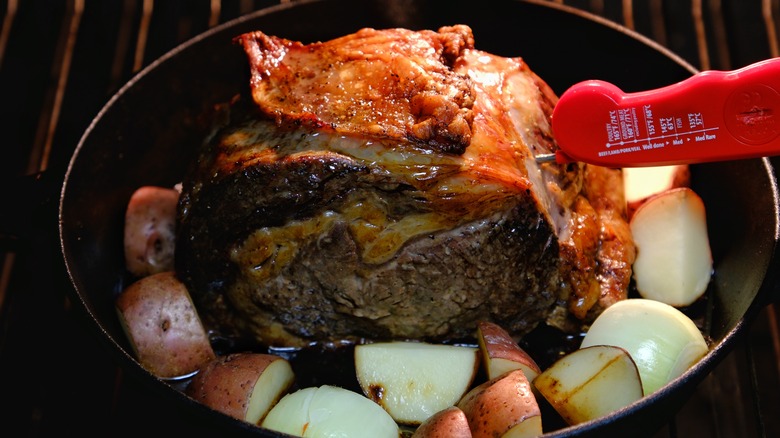
There's nothing worse than pulling a roast beef out of the oven, slicing into it, and realizing it's overcooked. This often happens because cooks don't know how hot the oven actually is. As Chuck Hayworth of The Resort Chef says, "In theory it depends on your oven and how well it's calibrated." Some ovens run cooler or hotter than the what the temperature setting shows. Elevation also matters. Hayworth said, "The higher you are above sea level, the longer it takes to warm your oven up."
If you want the best results, every chef we spoke to recommended using a meat thermometer. Some recommended Instant-read thermometers, which you can stick into the meat and get an immediate internal temperature reading. Dagan Lynn prefers an oven-proof meat thermometer. "This type of thermometer stays in the roast while it's cooking so you don't have to keep opening the oven and poking holes in the roast, causing you to lose some of the juices," he says.
Then there is the question of what temperature you want the meat to be. Generally speaking, medium rare is that sweet spot where you get a nice pinkness in the middle and the meat is tender and juicy. To achieve that, you want to aim for an internal temperature of about 135 degrees. If you like your meat a little more well done, that's fine, but Hayworth advises against cooking it over medium (145 degrees Fahrenheit) because after that, it starts to lose flavor and nutrients.
6. Mistake: Not realizing that carry-over cooking is a thing
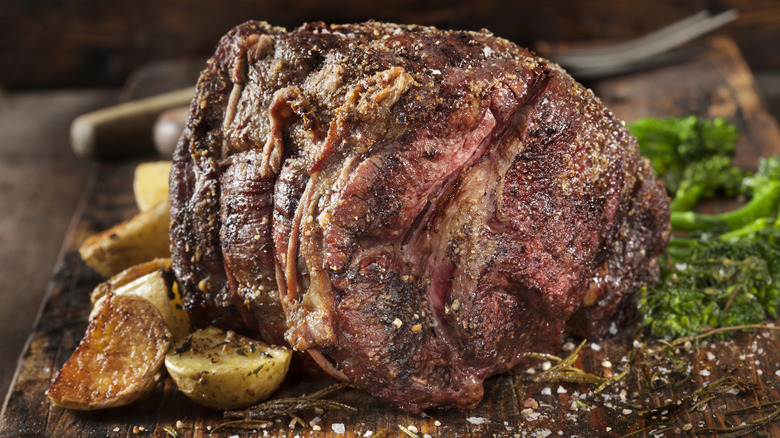
Even if you're carefully monitoring the internal temperature of your roast beef, it can still end up more done than you planned. That's because of carryover cooking — the process where meat continues to cook after it's taken out of the oven. Michael Handal explains, "The larger the piece of meat, especially one that is bone-in, the more it will continue to cook once it has been taken out of the oven and is resting."
This is where many home cooks get tripped up. It's easy to assume that once the roast hits your target temperature, it's time to pull it from the oven. In reality, waiting until the roast is "done" in the oven often results in overcooked meat by the time it's sliced. Luckily, there's an easy solution to the problem of carry-over cooking, and that's removing your roast from the oven a little earlier than you might expect. Handal recommends taking it out when it's 10 to 15 degrees below your ideal temperature for rare, medium, and well-done beef.
It may sound daunting to take the meat out of the oven early, especially if you're worried about undercooked meat and the risks that can pose. Just remember that you can always put the meat back in the oven if it's not quite up to a safe temperature (the Food and Drug Administration recommends an internal temperature of 145 degrees for roasts). On the other hand, once the roast is over temperature, there's no going back.
7. Mistake: Cutting into the roast beef as soon as it comes out of the oven
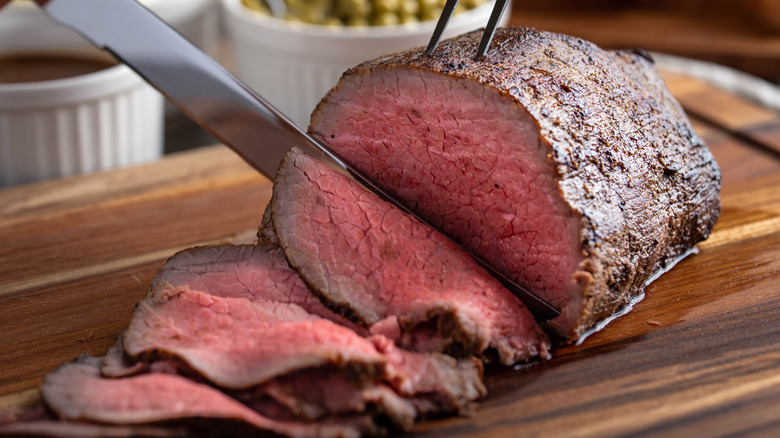
After patiently waiting for your roast to cook, the first thing you probably want to do when it comes out of the oven is slice right into it. But many chefs will tell you that's one of the easiest ways to undo all your hard work. As mentioned, the roast will continue to cook even after it's out of the oven, so you want to give it time to reach the right temperature. Plus, you need to give the juices time to settle.
All of the chefs we spoke to agree that resting is crucial for a good roast. Michael Handal explains that if you cut into the meat straight out of the oven, "the muscle fibers in the roast that have contracted during cooking will not have relaxed to the point where the natural juices have redistributed themselves throughout the roast." Therefore, all the juices will spill out of the meat, and you'll end up with what Handal called, "a dull, gray, and dry roast."
Once you pull your roast out of the oven, let it sit undisturbed on the rack or a cutting board. If you're worried about it cooling down too much, you can cover it with tin foil. Just don't tent your meat too tightly, though, because that can trap steam and soften the crust. Smaller roasts should rest for at least 10 to 15 minutes, while larger roasts can rest for longer. Handal recommends about an hour of resting for a 5- to 7-pound roast.
8. Mistake: Throwing out the juices in the pan
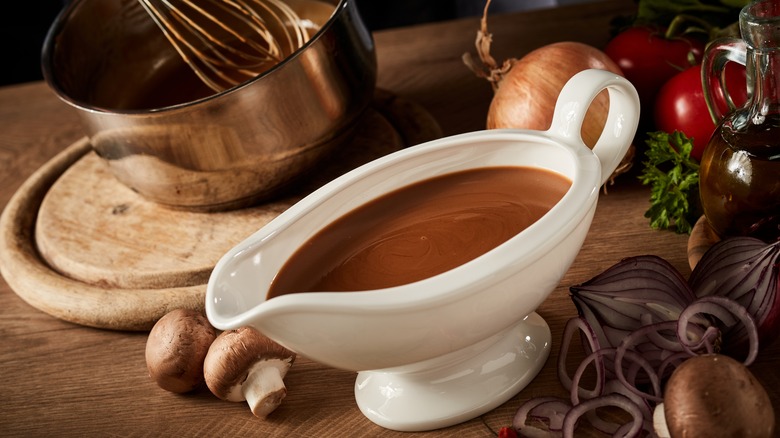
While your roast is resting, there's something else that deserves your attention: the juices left behind in the pan. It's easy to see them as just another mess to clean up, but savvy chefs know that they're actually liquid gold. Those juices are packed with concentrated beef flavor as well as notes of whatever spices and herbs you used for your seasoning. They're perfect for making a sauce to serve alongside your roast beef, like gravy or au jus.
While gravy and au jus are both rich sauces made from beef drippings, there are some fundamental differences between the two. Au jus means "with juice" in French, and it's a thin sauce made with natural meat drippings that are reduced. It's often used as a dipping sauce for roast beef sandwiches like the California-born French dip sandwich. Gravy has flour or some other type of thickening agent added, so it's much thicker, making it a great addition to sliced roast beef, potatoes, and veggies.
Au jus sounds fancy, but it's pretty easy to make. All you need to do is pour the beef drippings into a pan (or use the same roasting pan), add wine and some stock, and let everything simmer until slightly thickened. Some people also add veggies or herbs, and strain them when the au jus is done. To make gravy, you just whisk flour into the drippings to create a roux, then add stock and whisk constantly until it reaches your desired consistency.
9. Mistake: Using the wrong utensils to slice the meat
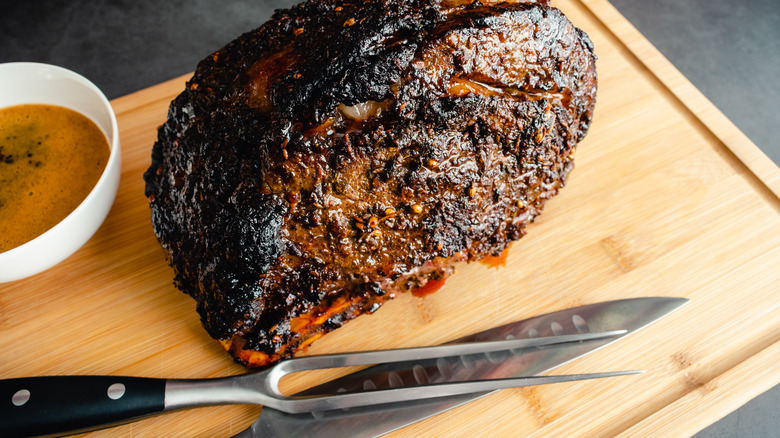
Now that your meat has been seasoned, roasted, and rested, the final step is slicing and serving it. This is also where a lot of home cooks run into trouble. Using the wrong knife or a dull blade can rip the fibers in the meat and cause juices to spill out, which can make even a perfectly cooked roast feel tougher than it should. Ideally, you want a proper carving knife with a long, thin blade.
Before you make your roast, many chefs recommend doing a quick check to make sure your carving knife is sharp. Ashley Lonsdale says, "Professional knife sharpening is one of my top kitchen preparedness tips, especially when you'll be cooking and hosting more than usual." Michael Handal adds, "If you are not adept at sharpening, most local hardware stores will be able to accommodate this task, and mail-in knife sharpening services are an excellent option."
How you slice the meat also matters. Lonsdale points out that slicing the meat against the grain will give you more tender meat. This means cutting the meat in the opposite direction the meat fibers are running so that you shorten the strands and make the meat easier to chew. Dagan Lynn also advised against poking the meat too much with the carving fork, as you might lose some of those tasty juices. He says, "If you want to avoid this risk altogether, you can use the back of the fork instead or simply opt for tongs."
10. Mistake: Drying out the meat when reheating
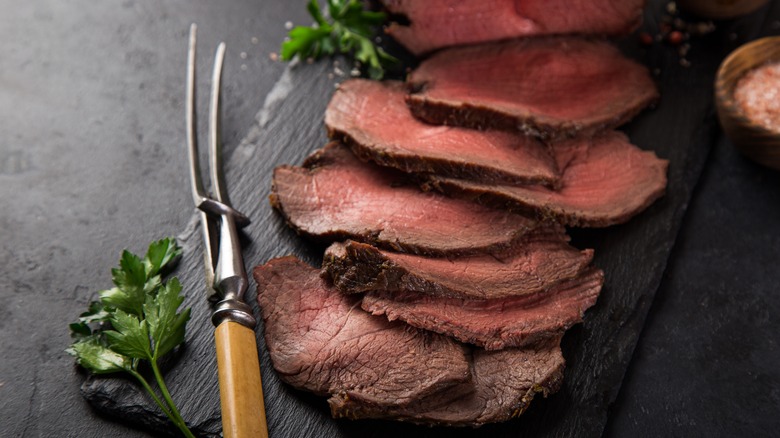
Roast beef tends to make enough food for leftovers, especially when you're cooking for a group. The problem is that reheating the beef the wrong way can dry it out and leave it tasting tough and unappealing. Many chefs agree that the best way to reheat roast beef is to put it in a dish with some liquid like stock or water, then cover it, and gently warm it in the oven. The liquid will add moisture that makes up for any juices lost when the meat was sliced and stored.
If you're planning on bringing your roast to a gathering and re-heating it there, Chuck Hayworth recommends a similar process. He said, "Transport [the] roast undercooked with a braising liquid of some type. I'm talking pink practically." When you arrive, you simply put the roast in a casserole dish along with the braising liquid and reheat it in the oven. Hayworth recommends 350 degrees Fahrenheit so that you can slowly bring the roast to your desired temperature.
Then again, there's nothing to say you have to reheat your roast beef at all. Ashley Lonsdale believes that a chilled roast beef can be a great centerpiece at a party or buffet. She said, "It eliminates the need to reheat and pairs so well with a creamy horseradish sauce and freshly toasted bread. Just be sure to chill the roast whole and carve before serving for the perfect pink hue." There are also plenty of creative ways to use leftover roast beef that don't involve reheating. Think salads, sandwiches, and nacho toppings.