

10 Regional Cakes You Should Try At Least Once
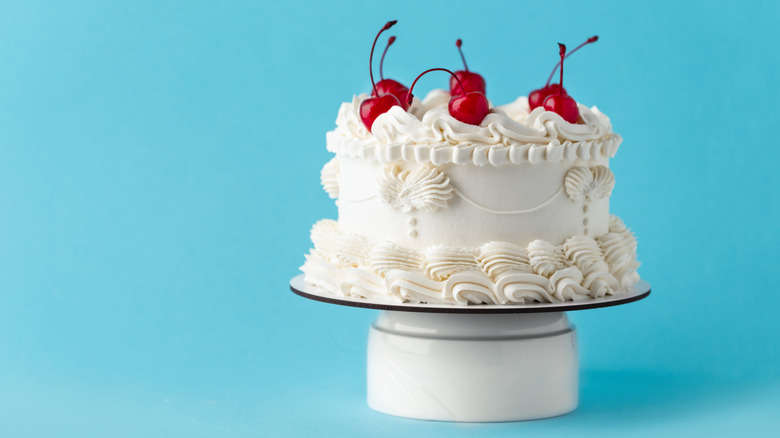
If you have a sweet tooth, saving room for dessert is second nature to you. Desserts, including the likes of cookies, puddings, pies, and more, are not merely a medley of indulgent ingredients, diverse flavors, and unique textures; they're also a window into history and a reflection on the past. Cultures around the world — and even within the different regions of a country — all have their own way of doing dessert that reflects their backgrounds, local ingredients, and sometimes even values. It's a sentiment that rings especially true when it comes to cakes.
Whether you are looking to do a road trip around the country in search of the tastiest regional sweets or are just looking to explore the local lore surrounding your favorite towering layer and sheet cakes, you've come to the right place. In an effort to highlight the sheer diversity and favorite cake recipes from all corners of the U.S., we decided to make a list of the must-know cakes that should be on your foodie bucket list. While their backgrounds and flavors vary, they are all deeply intertwined with the regions that they were created or popularized in and have stood the test of time, making them favorites among their respective communities.
1. Hummingbird cake
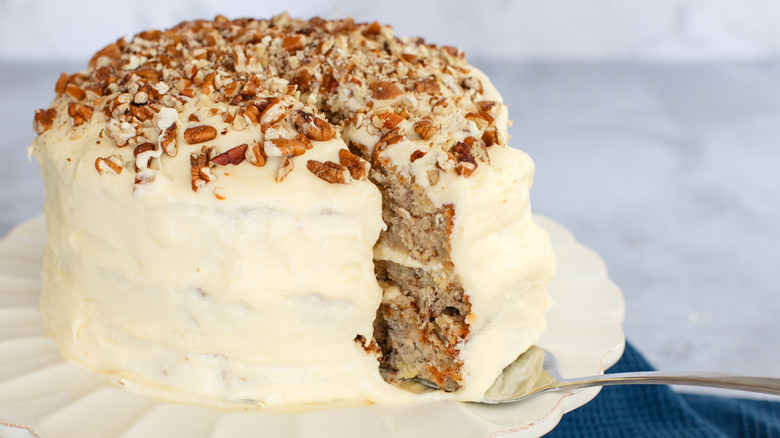
If you were to look at this towering dessert and think "carrot cake," you won't be too far off. However, hummingbird cake does not contain any carrots; it instead opts for other tropical fruits such as pineapple and banana, paired with classic spice cake ingredients like vanilla, cinnamon, and nutmeg.
While hummingbird cake is more commonly found now than when L.H. Wiggins submitted the original recipe to Southern Living in 1978, it is a beloved treat in the South. It is actually a treat we can credit to an island even farther south than the bottom of the continental United States: Jamaica. After seeking independence from Britain in 1962, the island nation was trying to establish its agricultural and culinary identity. As such, an effort by the Jamaican tourist board in the late 1960s sought to share the islands' produce and tropical fruits with the rest of the world, namely bananas and pineapples. The original recipe for the cake was distributed by the tourism board, and hungry Americans who were experimenting with the imported produce quickly fell in love with its flavors.
Despite its popularization in the U.S., Jamaicans put their culinary stamp on this cake in more ways than one. For one, the "hummingbird" component of the name is a nod to Jamaica's national bird, and the cake's ingredients, which can include pecans and cream cheese frosting, illustrate the role of British colonization in shaping Jamaica's culinary identity.
2. Lane cake
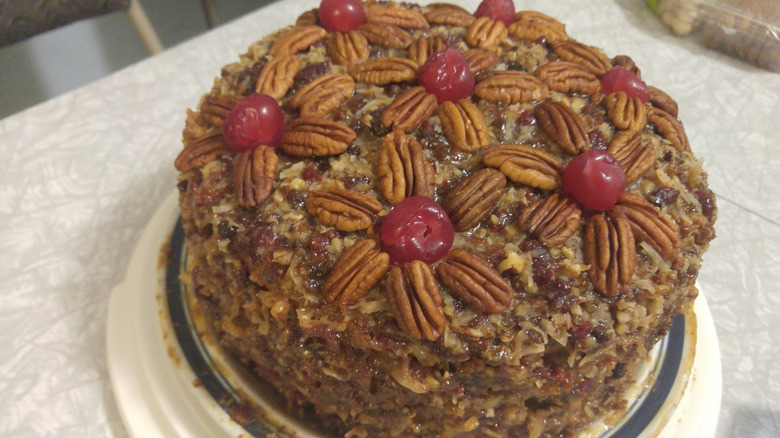
Southerners like their treats sweet, and Lane cake is no different. This classic Alabama dessert has achieved literary fame, as it was referenced by Harper Lee in her acclaimed book, "To Kill a Mockingbird." If you can't remember back to your freshman English class, we'll give you the assist here: Miss Maudie Atkinson made a cake that was "so loaded with shinny it made me tight." Shinny, of course, refers to alcohol, in this case brandy or bourbon, which gives this sweet cake its boozy edge. It's added to the custard filling, along with raisins, which complement the white or yellow cake base.
Lane cake, which became Alabama's state cake in 2016, was initially prepared by Emma Rylander Lane (from Georgia) for a country fair. It won, and she renamed it "Prized Cake" and included it in her self-published 1898 cookbook, "Some Good Things to Eat." At the time, the cake contained some pretty revolutionary ingredients in the cake-baking world, including double-acting baking powder, which gave the sponge its rise and fluffiness. Many subsequent variations of the cake also included coconut, pecans, and a seven-minute frosting, which is cooked over a double boiler and made with egg whites for extra stability. Lane cake remains popular among sweet tooths in the South, and will often make an appearance on tables at gatherings and special events.
3. New England spider cake
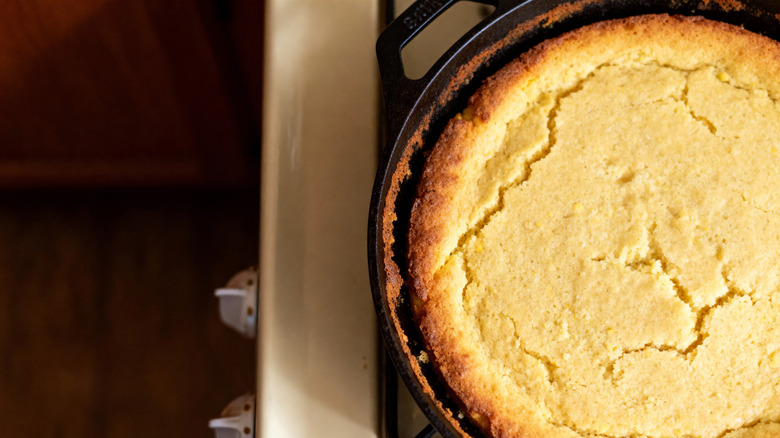
Many of the country's most popular regional cakes are from the South, but many are not. In an effort to give New England some more (and better) representation, we wanted to include a somewhat unconventional addition to this list: spider cake. Arachnophobes fear not, as no spiders are involved in this recipe. Instead, it takes cornbread — a classic dish that many credit to the South, but is actually popular in New England as well — and gives it a unique twist: a topping of heavy cream, which gives the entire dessert a more pudding-like consistency. The skillet is preheated in the oven before the batter is added, and the heavy cream is drizzled on top before the pan is returned to the oven to bake.
This cake was traditionally cooked in a spider skillet, a tripodded cast-iron vessel that could sit above a hearth. The first recipe for it was published in "The American Frugal Housewife." This 1832 recipe for "Indian Cake" was made with "Indian meal" (cornmeal), a popular ingredient for indigenous people living in New England. However, it wasn't until many years later that the cream was added to the recipe to make the spider cake that we know today. An iteration published in 1884 in "Mrs. Lincoln's Boston Cook Book" instructs home cooks to pour the milk on top of the cake, rather than stir it into the batter with the rest of the ingredients.
4. Texas sheet cake
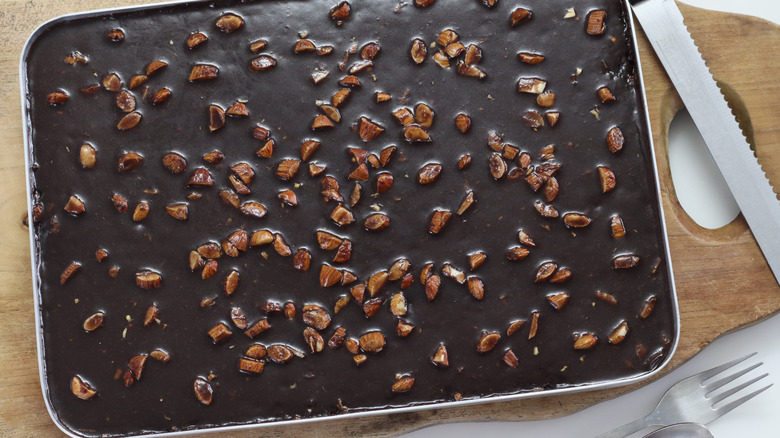
Everything is bigger in Texas ... including the cakes. Texas sheet cake is a monstrosity, for sure, and it has a very unique history. Also called Texas funeral cake, it's typically made in a sheet pan and slathered in a deeply fudgy, pecan-dotted frosting. It's very thin but very heavy and decadent, and it continues to appear at gatherings in Texas and the American South.
The exact origin and history of this cake are difficult to pinpoint, but they likely coincided with the production and popularization of cocoa powder as an ingredient. Recipes for the cake first started popping up in Texas newspapers like the Galveston Daily News in the 1930s, though an Alabama newspaper published a recipe that included pecans, one of the dessert's signature components, in the frosting. The other essentials for this recipe include buttermilk, which adds a slightly tangy flavor, and cocoa powder, which plays a major role in its decadence.
To prepare the cake, the sponge ingredients are added to a half-sheet pan. Once the cake has come out of the oven, and is still warm, it's topped with the frosting. This gives the cake an almost brownie-like texture.
5. Gooey butter cake
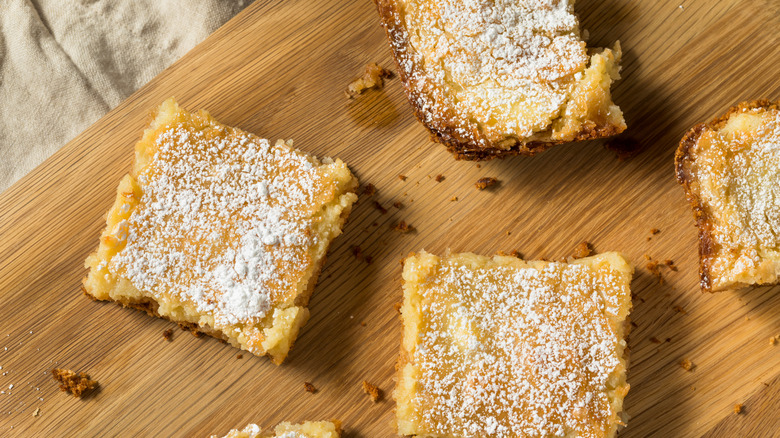
You would be remiss not to try a slice of gooey butter cake on a trip to St. Louis. It's widely considered to be one of the best old-school Midwestern desserts of all time and features a yellow cake base mixed with cream cheese, giving it its signature gooey and wobbly texture. Some preparations also use a yeasted crust base and a corn syrup, egg, and vanilla filling that retains its pudding-like consistency after baking, though many simplified at-home variations utilize boxed cake mix. Despite its "vintage" name, gooey butter cake still hasn't gone out of style; it's a staple at potlucks, celebrations, and events in the St. Louis area, is sold in bakeries, and is often made by home cooks.
Like many of these regional cakes, the origins of this dessert are hard to pinpoint. Some say that it was the result of a mistake in the kitchen; an area baker added too much butter to a deep butter cake, thus giving it its wiggly, soft texture (the butter was presumably replaced with cream cheese later on). There are two competing figures who lay claim to it: Johnny Hoffman and John Koppe — both bakers living in St. Louis in the '40s. Eventually, other bakers caught on and started selling their own versions of the cake, cementing its place in the city. Others say that the dessert wasn't created in St. Louis at all, but in Philly, where butter cakes have been sold since the '30s. Regardless of where it came from, it's surely one of the most integral dishes to the city's culinary identity.
6. King cake
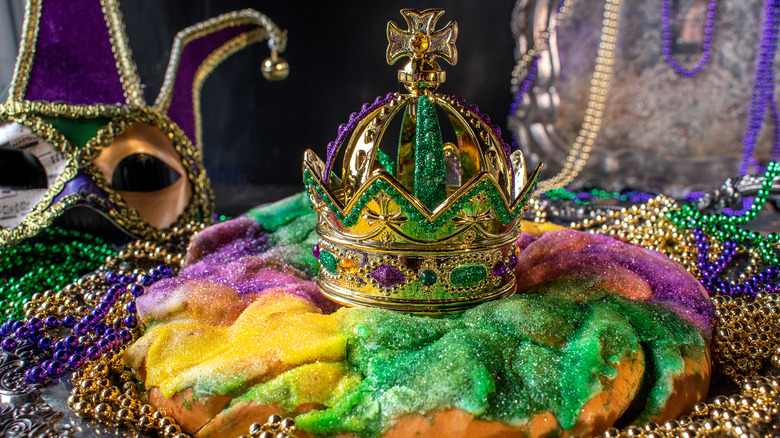
If you make a visit to New Orleans during Mardi Gras, you absolutely have to try one of the most colorful and iconic regional cakes: king cake. This colorful round cake, often adorned with frosting and green, yellow, and purple sprinkles, is the result of the merging of Christian religious tradition with the city's vibrant Creole culture. A 1916 excerpt from "The Picayune's Creole Cook Book" explains that the cake was created to celebrate the Creole custom of naming a new king or queen on the Twelfth Night, also called King's Day or Epiphany. This day kicked off the celebration of Carnival, which concluded with the Mardi Gras holiday we now associate with king cake.
The cake is traditionally made with an enriched bread dough that twists around layers of cinnamon and, in some variations, fillings such as pecans or dried fruit. These fillings depend on who's making the king cake, but one has become as iconic as the colorful sugar on top: the baby. In Spanish and Latin American versions of king cakes, called Rosca de Reyes, little trinkets and plastic figurines are commonly placed inside the rings. We can credit baker Donald Entringer for first adding plastic babies to the American version of king cake. The plastic toys were seen as a better alternative to the tooth-chipping porcelain babies of yore and are symbolic of good luck. While you may need to visit New Orleans for a taste of this unique cake, you can also have one shipped straight to your door from an area bakery.
7. Smith Island cake
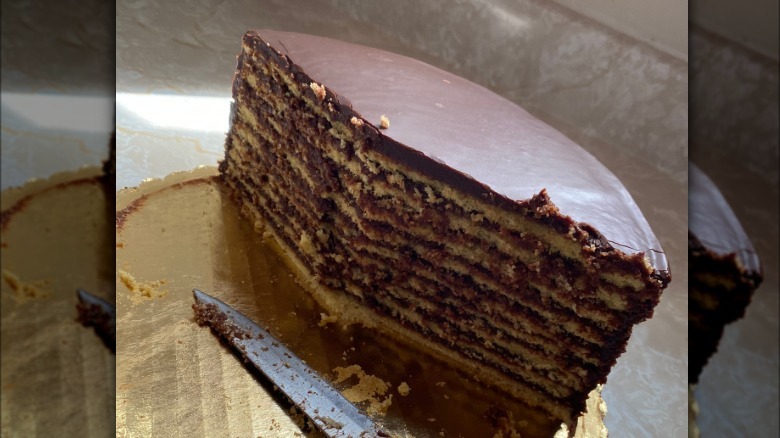
Smith Island cake is surely a sight to behold: an 8-layer yellow cake layered with decadent, fudgy icing. While it has spread in popularity across Maryland, even being named the state dessert in 2008, it wasn't always that popular or widely known. Its home is Smith Island, a relatively remote island located about 10 miles from the mainland. The Smith Island Baking Company, one of the primary purveyors of this dessert today, traces its origin back to the 1800s, when women would send their oystermen husbands out to the bay with this cake in tow as a symbol of their love and care. It's believed that the thin layers of the cake — which were originally cooked in a wood stove as there wasn't electricity on the island until the '50s and '60s— were encased in the fudge frosting to prevent them from staling during the journey.
It wasn't until the '50s that Smith Island cake began to garner more widespread attention. As the island community faced economic decline, they asked their representative to make the cake the state's dessert in '08. With a lot of convincing (which included passing around plates of cake to the general assemblypeople), Smith Island cake was eventually cemented into statewide recognition. If you don't plan on making a trip to the Chesapeake Bay region anytime soon, the good news is that you can order this fudgy delight online from the Smith Island Baking Company.
8. Bumpy cake
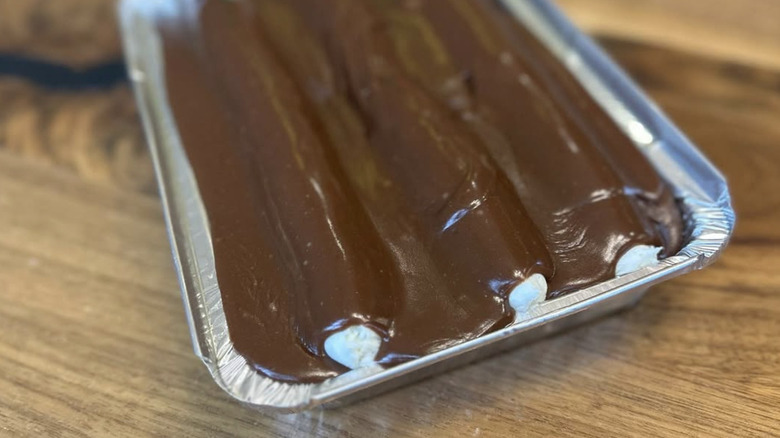
Bumpy cake is aptly named for the bumps of vanilla buttercream underneath fudge frosting and on top of a decadent devil's food chocolate cake. This dessert draws parallels to other Midwestern favorites, including chocolatey Hostess snack cakes, and unlike many of the others on this list, can be traced back to a single source: Sanders Confectionery in Detroit. In 1913, it was called the Devil's Food Buttercream Cake, though it quickly became known for its humps. This iconic Michigan dessert has remained a staple in the Motor City and in Michigan more broadly and has sparked several iterations, including ones that swap out the devil's food cake base for another flavor, though traditionalists say that it has to be made with the rich, chocolatey base to be considered a true bumpy cake.
Why does this cake have bumps to begin with? Well, Second Nature Brands, which has this cake under its umbrella, reports that in 1912, Fred Sanders, at his Detroit confectionery shop, made the devil's food cake to honor his late father, who had an appreciation for the decadent, rich sponge. Sanders started piping on the buttercream, but quickly realized he had run out before he had enough to finish the cake. The bumps stuck, along with the layer of chocolate ganache that encases the whole thing. The cake is trademarked, but that has not stopped folks from trying their own variations of this regional cake at home.
9. Boston cream pie
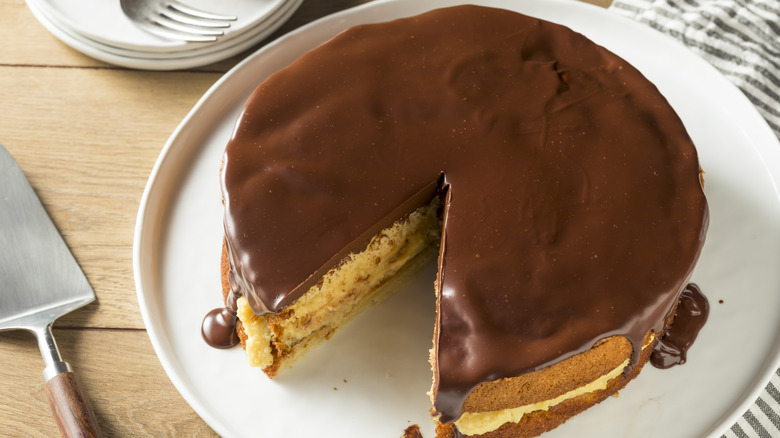
A pie on this list of cakes? Blasphemy! Fear not; Boston cream pie is not as much of an imposter as its name would suggest. The "pie" component of the name may have something to do with the fact that, at that time, cakes were baked in pie tins. It was first made by chef Augustine François Anezin and served at the opening of the Parker House in Boston (which also lays claim to Parker House rolls) in 1856. The hotel is now called the Omni Parker House, and it's where the tradition of this cake, made with yellow sponge, a pastry cream filling, and a layer of ganache on top, still lives on today.
When the cake was first created, the idea of using chocolate in a frosting was foreign, and some historians even credit this cake recipe as being one of the first to use the ingredient. Boston and New England, broadly speaking, were increasing their capacity to mill and produce chocolate. Given the complex supply chains, chocolate desserts were reserved for the wealthy.
However, chocolate — and the Boston cream pie — eventually became more commonplace. We can partly credit Betty Crocker for Boston cream pie's popularity. The fictional character included a recipe for it in her "Picture Cook Book" — one of the texts that paved the way for home cooks everywhere — and even sold a Boston cream pie mix. The creation of the Boston cream pie spawned other desserts, including American pudding pie and Washington cream pie, as well as other Boston cream pie-inspired creations, including donuts and martinis.
10. Lady Baltimore cake
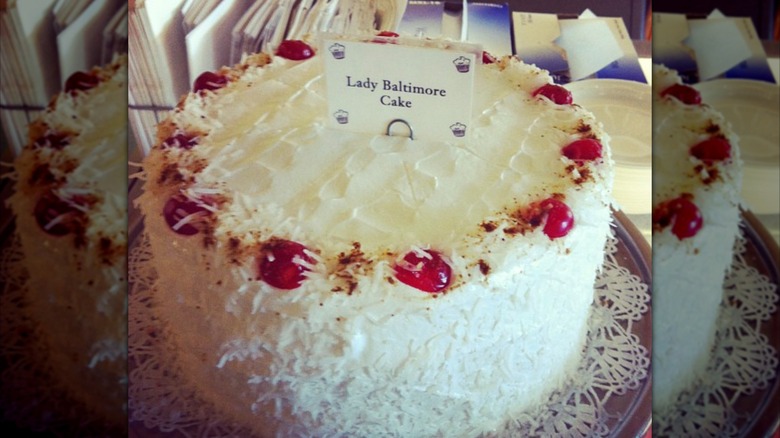
You might assume that Lady Baltimore cake was something right out of the fictional "Bridgerton" franchise. But, like the characters in the television series, Lady Baltimore never actually existed.
This nostalgic cake looks like something straight out of the Gilded Age. It's typically a two-layer white cake layered with a filling made from dried fruits, nuts, and copious amounts of alcohol. Another thing that sets it apart is its icing. It foregoes the classic buttercream in favor of a fluffy white meringue.
This cake has a strong association with the American South, particularly the city of Charleston. Allegedly first baked at the Lady Baltimore Tea Room in the city. It's believed that Owen Wister, author of "Lady Baltimore," was inspired to name his 1906 book after the confection. In his story, the narrator, a soon-to-be groom, visits a local bakery to try a slice of the wedding cake that he plans to serve at his upcoming ceremony: "I returned to the table and she brought me the cake, and I had my first felicitous meeting with Lady Baltimore. Oh, my goodness! Did you ever taste it? It's all soft, and it's in layers, and it has nuts — but I can't write any more about it; my mouth waters too much." If your mouth also waters at the thought of a sweet frosting, sherry-doused fruity filling, and towering fluffy white sponge, it appears you wouldn't be the only one.