

Is There Really A Difference Between Cabinets And Cupboards?
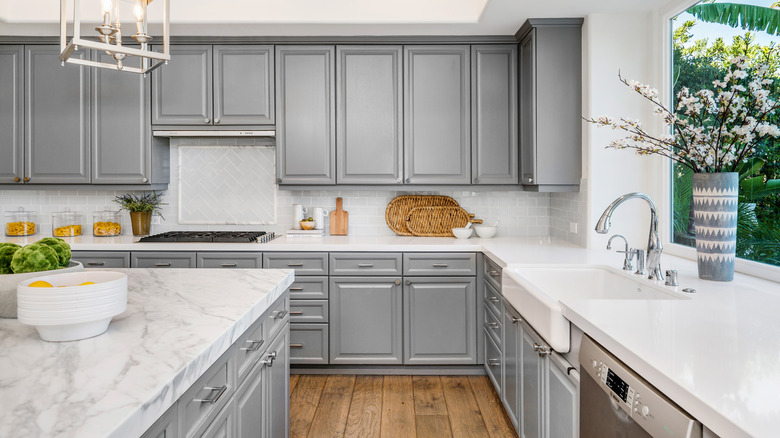
Sometimes, the English language gets no respect (much like late comedian Rodney Dangerfield). Some speakers call any old sparkling white wine Champagne, even if it's just prosecco. The same goes for roe and caviar, yams and sweet potatoes, and, in a different part of the kitchen, cabinets and cupboards. But, just like the difference between a larder and a pantry, these covered shelves, too, are technically distinct from one another.
Cabinets are typically fixed, built-in storage units that most people only update or totally replace a few times throughout home ownership. Because they're functionally permanent, it's highly unlikely that renters ever have the burdensome benefit of redoing them. That relative immutability makes them an expensive pain to change, which is why the very notion of a major kitchen cabinet upgrade can send a chill through anyone who's ever extended the effort. A cupboard is more likely to be a portable, free-standing unit that can come and go as you please.
What to know about cabinets and cupboards
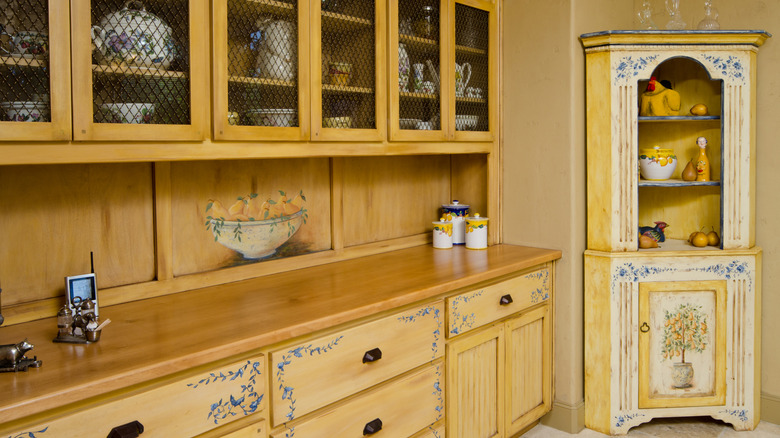
Cabinets' traditionally uniform configuration gives your kitchen an aesthetic continuity that, for better or worse, you probably don't have to reconsider for a long time. Depending on how they're installed in your space, they probably have less surface area to keep clean (versus a cupboard's many exposed sides). Cabinets are also the standard storage solution for most homes, while a room full of cupboards would stand out as more of an outlier.
Because they're a little bit off the beaten path, cupboards might seem dated (or ahead of retro freestanding furniture trends depending on who's looking). But it's your time and dime — who cares what other people think? You can source and arrange your cupboards for uniformity, too, or mix and match them for an eclectic look. You can also introduce a cupboard or two to lightly edit a cabinet-clad kitchen's style (and give yourself a little more concealed storage in the process).