

5 Types Of Stubborn Tablecloth Stains And How To Remove Them
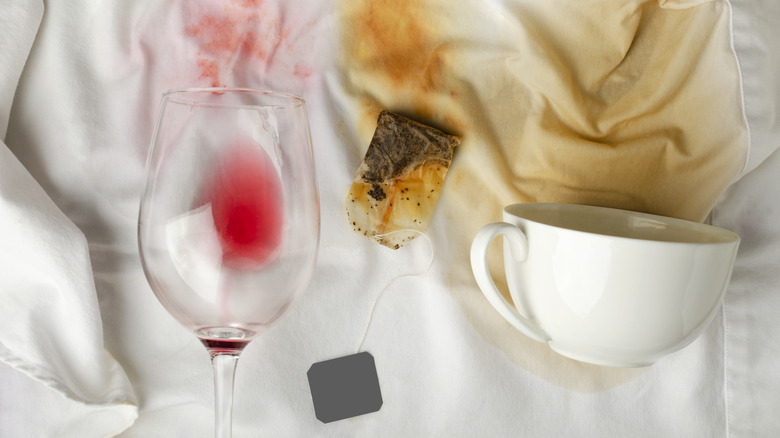
There's honestly nothing worse than making one wrong move and suddenly having that cup of espresso or glass of pinot noir end up right on your tablecloth. Tackling stains can be a complete nightmare. Not only are they incredibly stubborn, but because they're all so different, each one usually requires its own cleaning approach.
While pantry ingredients can tackle many common food stains, some, such as coffee or tea splatters, might sometimes need chemical cleaners. However, before you reach for one of these, which can actually be very harmful for the environment, keep in mind that you first need to know the type of stain you're dealing with. Time is key, so don't waste it, because the faster you act once the stain is made, the greater the odds are of saving your tablecloth.
There are a couple of tricks that can actually make the stain removal process easier. The number one rule: regardless of what your instinct tells you, rubbing the fabric is the last thing you should do. For certain stains, such as those from beverages or blood, a quick rinse under cold water can help flush them out before they set. And though it may come as a surprise, applying some liquid dish soap or detergent to the stain can truly work wonders for your fabric. With that in mind, let's take a closer look at the most common tablecloth stains and how to deal with them.
Acting fast makes all the difference when it comes to tomato sauce
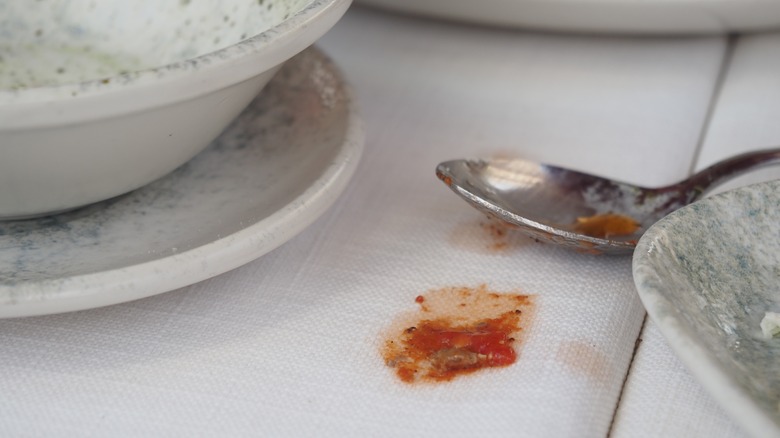
Experimenting with different ways to boost the flavor of your tomato sauce can be fun. But you know what isn't? Watching it land on your white tablecloth instead of your plate. No need to panic, but you have to move fast. The first thing you need to do is remove the excess sauce with a knife and then immediately rinse the affected area from the other side with cold water. This is essential as it will stop the food's proteins from binding to the fabric's fibers. Make sure to avoid using warm or hot water, because that way you'll risk setting the stain permanently.
Once you're done, rub in a bit of dish soap, laundry detergent, or even a baking soda paste if the stain seems particularly stubborn. Then rinse the material one more time and simply leave it to air-dry. If that still doesn't do the trick, try mixing together some distilled white vinegar with water, and let the tablecloth soak in the solution for about half an hour. All that's left to do then is washing the tablecloth using the warmest cycle approved on the label. You can use this method to get rid of ketchup stains as well. If the stain is already set in, or the fabric is white, then using an enzyme-based cleaner or hydrogen peroxide might be a more effective approach.
Salt is a shockingly effective quick fix for red wine stains
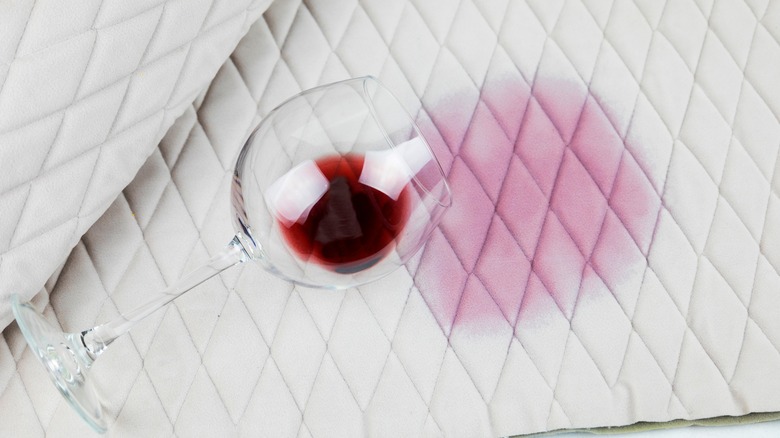
Many might have heard that white wine is the solution to your red wine stains, but don't be fooled. Red wine stains are far more stubborn than they look. This is because red wine contains tannins and pigments such as anthocyanins, which can range from red to purple. Let the stain sit for a while, and these natural dyes will instantly stick to the tablecloth. While white wine may help dilute the pigment, it only works if the stain is still fresh. However, there is an easy salt trick for removing wine stains, which is not only far more effective but also requires nothing more than what you already have in your pantry.
Scrubbing the wine stain isn't recommended. So instead, try using a paper towel to blot out as much of it as you can. Once that's taken care of, grab your salt shaker, pour a good amount of salt over the stain, and leave it to do its magic. Science-wise, salt is an absorbent, which means that it will soak up the excess wine in no time. What's left to do then is pour boiling water from a height, because the heat and pressure will help wash out the pigment. Just make sure that the red wine stain isn't set when pouring hot water, as that can make it settle in even more.
Baby powder, baking soda, or cat litter can be great substitutes for salt if, by any chance, you're out of it. And in case you're out of any of these too, try a different method and blot the stain with a cloth dipped in vinegar, alcohol, or even milk.
Washing alone won't effectively remove grease or oil stains
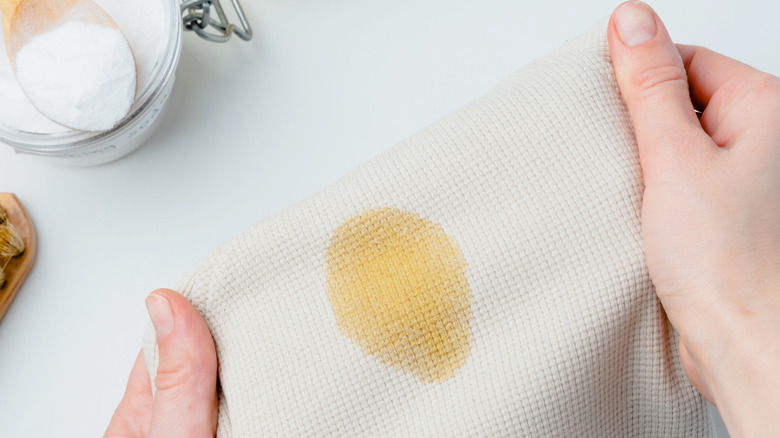
A regular wash cycle won't take out that Thanksgiving gravy from your tablecloth because it's not water-soluble. Simply put, oil molecules are hydrophobic, which means they repel water. This means that you'll eventually need other methods to fully lift these stains from the material.
So, if you were wondering how to, say, get butter stains out of fabric with ease, one great solution is to first blot away the excess grease with a paper towel, and then just sprinkle any kind of dry powder, including cornstarch, baking soda, or flour over the stain. The powder will do a great job in removing the stain because its tiny pores act like miniature sponges. Once they absorb the oil or grease, they will trap it and prevent it from escaping.
You can also treat the stain with WD-40 (a handy all-purpose lubricant spray), sprinkle baking soda on top, and leave it till the powder begins clumping up. Then just prepare a hot water and dish soap solution and soak the stain. Leave it for an hour or so and give it a good rinse before letting it dry. You can repeat these steps if the stain is still visible.
Remove tea from your fabric without damaging it
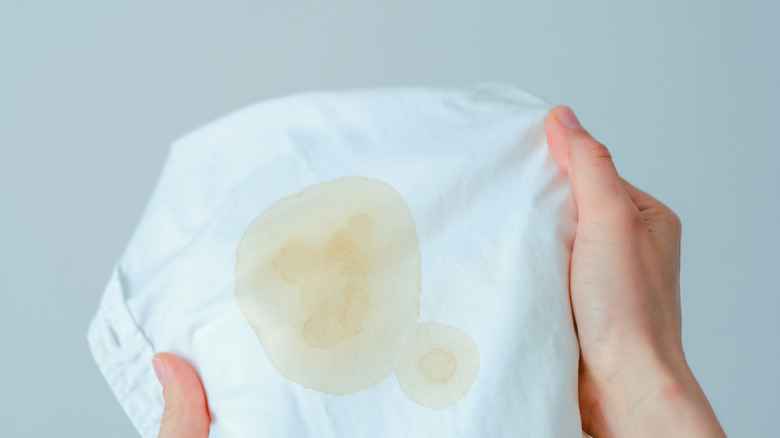
With more than 5 million cups of tea consumed around the world daily, a few drops are just destined to end up on someone's tablecloth. Chances are, yours might be one of them. And the reason tea stains are so annoying is because of tannins, the same group of astringent polyphenolic compounds found in wine. Since tannins give tea its color, it comes as no surprise that their residue causes dark staining on materials. FYI, your local water quality can actually make these stains even worse.
However, if this makes you think twice before making tea, there's really no need to panic. While simply tossing your tablecloth in the washing machine won't remove the stains, you'll be glad to know that both baking soda and vinegar are great for tackling tea spills, especially while they're still wet. Nevertheless, even though this method might work for milder stains, the stubborn ones will likely require an oxygen-based stain remover.
Make sure to first blot away as much of the tea as you can from the tablecloth, and then apply a stain remover or a DIY white-vinegar-and-water solution. Once that's done, run the tablecloth through the washing machine and check whether the stain is gone before drying, as heat can make it permanent. What's more, just like wine stains (where tannins are also present), you can use salt to lift off tea stains. Simply dip a vinegar-soaked cloth in salt and gently rub it over the area. Just don't try it on carpet or upholstery because salt can also set the stain for good on them.
The simple way to clean coffee spills from fabric
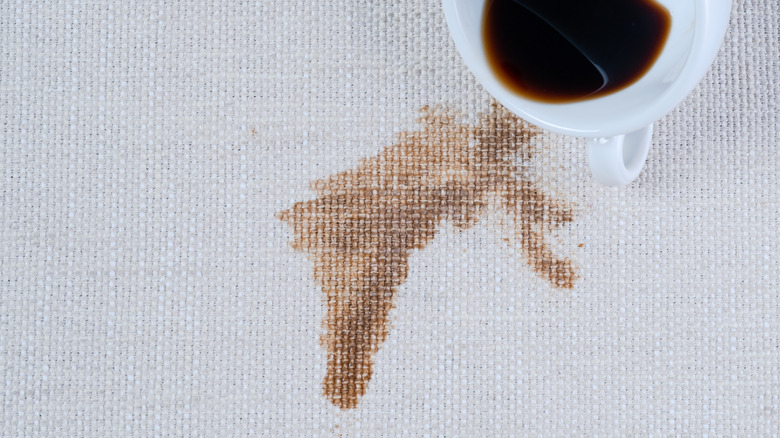
While a cup of coffee is many people's morning ritual — especially if it's made using one of the best coffee bean brands out there – nobody's looking forward to it spilling on the tablecloth (which, for some reason, happens more often than we'd like). And even though a fresh coffee stain might look invincible at first, there are a couple of tricks you can try before completely giving up.
Just like with tea stains, start by blotting away the coffee from the tablecloth as quickly as you can. One approach is to secure the stained section of the tablecloth with a rubber band and allow it to sit in hot water for up to 15 minutes. Once the time is up, prepare a hot water and white vinegar solution (don't forget to also add a small amount of dish soap), and let the stain soak some more. Then rinse it with warm water and repeat the process if the stain persists.
Another option is to pre-treat the stain with water and a few drops of dish soap before washing it. A bit of shaving cream, salt, or even toothpaste can actually also handle coffee stains quite well. Rinse the stained tablecloth, and if the mark is still visible, then bring in an oxygen bleach laundry detergent and let it do the heavy-lifting.