

This Farmhouse-Style Kitchen Countertop Trend Is Dying Out — Here's Why
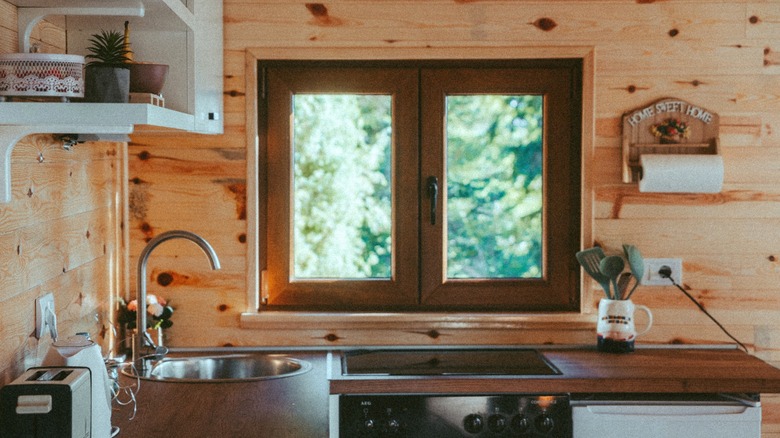
There truly is no accounting for taste, whether that's one's own unique avocado toast technique, or their devotion to appliances of the same shade that others find to be among the more questionable vintage decor trends. Of course, mashed up botanicals aren't quite as permanent, or expensive, as home design, no matter what the memes may say. So if you, like those green refrigerator lovers, just adore your countertops, whatever their material may be, carry on. But anyone considering a switch might want to avoid decreasingly desirable butcher block countertops going forward.
Not only does a whole kitchen full of butcher block countertops seem like a vestige of the recent past's cheugier, hyper-cozy days, it's also kind of a pain to maintain. It's recommended that you sand the things every now and then like you're a dang carpenter. Even if you are a dang carpenter, is this really how you want to spend your off days? Oilings are recommended as well. Unexpected butcher block countertop problems further abound. They're stain magnets, pretty prone to scratching, and somewhat sensitive to heat, potentially leaving burn marks. In the kitchen! Where heat comes from! So, unless you've already committed, you just might want to look to other materials instead.
Butchering those blocks and choosing the best countertop for you
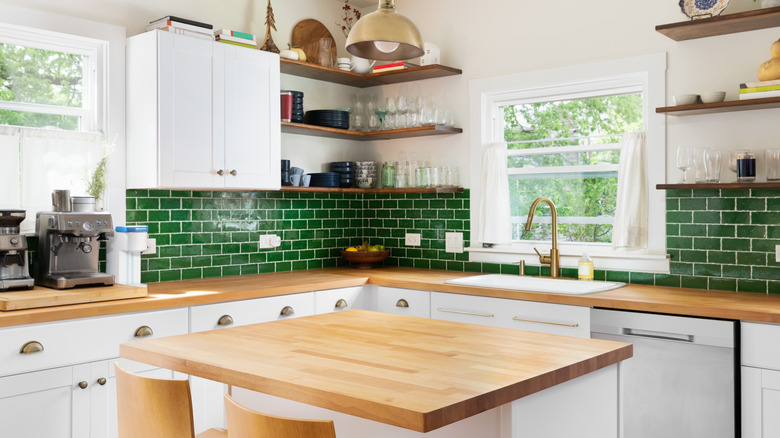
If it was the lifetime of oil and sawdust that turned you off butcher block countertops once and for all, there's good news. We have yet to come across a kitchen counter alternative that requires this particular pair of chores. The best countertops for adding resale value, for example, require little more than the swipe of your favorite mild cleaning spray. Likewise with many other popular stone countertop varieties. You'll want to confirm the best cleaning practices for your pick in any case, but it's safe to say that most other counters won't demand that you strap on a dust mask.
Should you still wish to aim for the farmhouse aesthetic, lighter colors can do the trick, even when you don't want to go full wood. Although it's typically associated with more industrial designs, you can also consider concrete. It's surprisingly adept at swinging either way between the disparate motifs' shared rustic quality. You can also always just build an invisible kitchen and forget where you left the thing in the first place.