

16 Tips You Need When Cooking Chicken Pot Pie
We may receive a commission on purchases made from links.
When the wintry weather sets in, many of us crave some comfort food to help warm us up from the inside out. Among the best stick-to-your-ribs options out there is chicken pot pie. Though there are plenty of store-bought varieties of chicken pot pie to choose from, many of these are lacking in flavor and texture. While making chicken pot pie isn't as challenging as you might think, it does require a little know-how to execute to perfection.
As a professional chef, I have a laundry list of tips I have learned that are invaluable when making a homemade chicken pot pie, and I am prepared to share these with you. From selecting the right type of chicken to ensuring the crust remains flaky and light to allowing the dish to rest before serving so it doesn't fall apart, adding these tricks to your arsenal of culinary skills can make the difference between pot pie failure and success.
1. Select high quality chicken
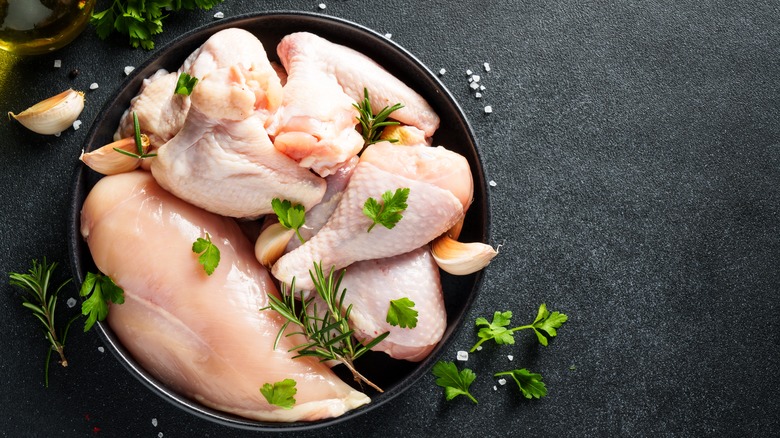
While it may seem like all chicken is essentially the same thing underneath that plastic wrapping, nothing could be further from the truth. Not only are there differences in nutritional value, but certain types of chicken can also yield drastically superior results when used in recipes. For this reason, it is important to know how to pick the best chicken at the store.
At its most basic, use your senses to select a quality bird. Start by inspecting the packaging for damage, looking for any discoloration in the meat, and sniffing for any foul odors. Next, check the label for any added water. Chicken can be injected with a solution that will artificially inflate them, making them look plumper and more visually-appealing. This can not only affect the flavor, but it will also produce an inferior, spongy texture in the cooked meat.
Lastly, don't let fancy labeling sway you. Many labels fall under what is called "health halo" language, which can create a false sense of superior quality where it doesn't exist. Perhaps the only label that may be worth paying attention to is that it is USDA Organic, which is regulated and requires the animals are fed an organic diet free of GMO's and that they have access to the outdoors.
2. Use the whole chicken
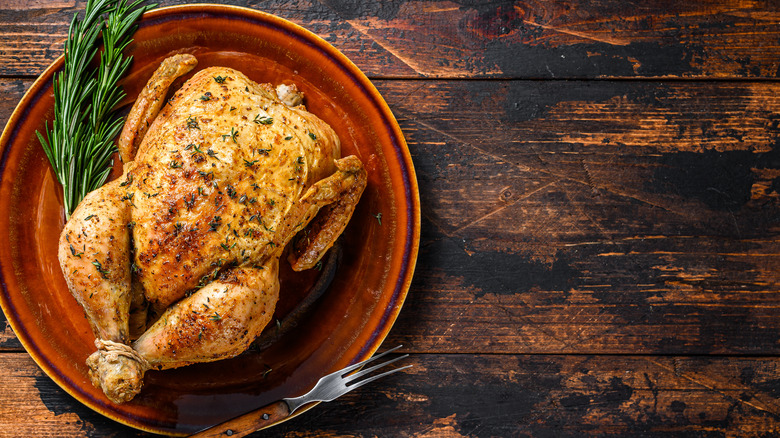
Though chicken is often separated into white and dark meat, this may be the time to use a whole chicken for a recipe. Not only is a whole chicken cheaper than buying individually-packaged parts, but each cut also has distinctive flavor and texture qualities that will impact the finished pie when used in harmony.
White meat chicken tends to be leaner and can be susceptible to overcooking, which is a real problem when making a pot pie that needs to be baked in the oven. To help mitigate this, dark meat chicken can be added. Dark meat is higher in fat, which makes it both juicier and helps to give it a more intense savory flavor. The two together represent the best of all worlds.
While you can cook individual chicken parts or roast a whole chicken for this purpose, this is a great opportunity for repurposing that leftover rotisserie chicken you bought at the grocery store. This will not only save time, but the chicken will also have a robust flavor that lends complexity to the finished dish.
3. Don't be afraid to swap out the pastry crust
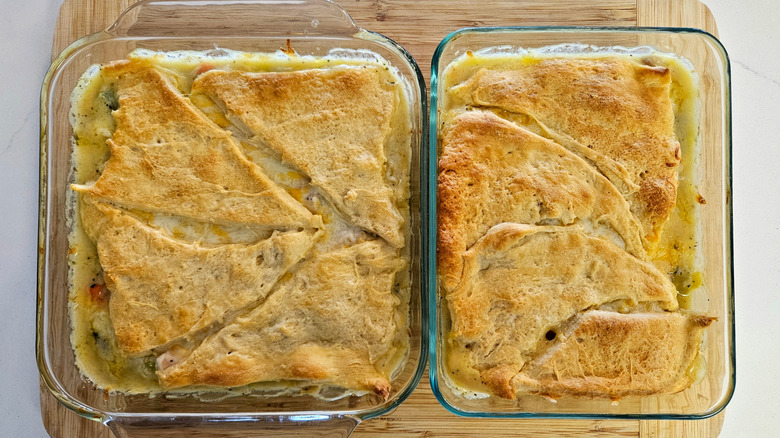
As a chef, I tend to be something of a snob when it comes to making my own pastry crust for chicken pot pie. That said, I recognize that this isn't necessarily an option for everyone, whether it be because of time constraints or lack of comfortability with baking from scratch. For this reason, it is a good idea to recognize the potential substitutions and swaps that can work just as well when you are in a pinch or don't want to deal with the labor-intensive proposition of making your own crust.
Certainly, store-bought pie crust or puff pastry are options, but there are a few unconventional swaps that are just as effective. One of my favorites is using a can of crescent rolls. These are easy-to-use and there are a number of different varieties that can produce a unique flavor in the finished recipe.
4. Use the 3-2-1 rule to make a flaky crust
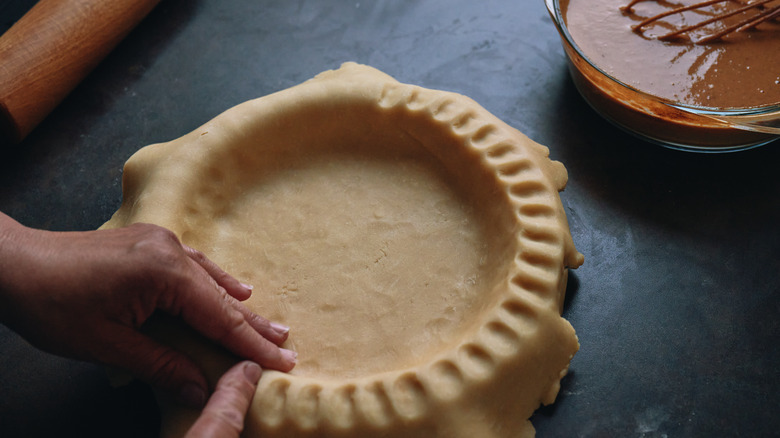
If you are feeling ambitious and want to try your hand at making it yourself, get familiar with the 3-2-1 rule for making homemade pie crust. The rule is relatively straightforward: three parts flour, two parts butter, and one part water. Sticking with this blueprint produces relatively foolproof results that can make even the most novice baker feel like a professional. That said, there are a few tips to keep in mind.
First, the best flour to use for pie crust is an all-purpose flour with a medium protein content of roughly 10%. When it comes to butter, it should be ice cold when it is added; otherwise, the pie crust will fail to form air pockets as it is baked, producing a gummy, not flaky crust. Lastly, keep the water cold by adding a couple of ice cubes to the mix. Once the ingredients are added, don't overwork the dough or it will become dense and unmanageable.
5. Don't forget to spice it up
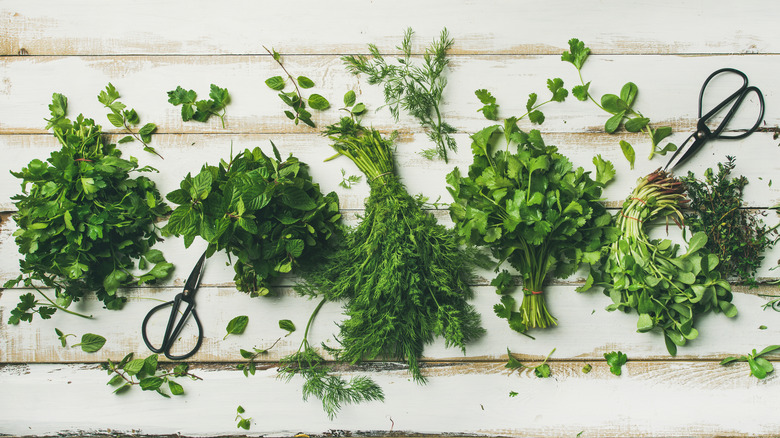
One of the biggest issues with most store-bought chicken pot pies is that they are bland. They possess little to no taste above and beyond the aromatics and salt added to the filling, which makes for an unsatisfying experience. This is instructive when making chicken pot pie from scratch. Don't be shy about using herbs and spices. They will make or break your finished dish.
At the very least, I recommend ample amounts of kosher salt and freshly cracked pepper. I also always add freshly grated nutmeg to any gravy-like filling to help brighten it up. Other spices that can be dynamite in pot pie include turmeric, smoked paprika, and celery seeds.
When it comes to herbs, fresh is best. Take a hint from poultry seasoning for inspiration by using fresh thyme, rosemary, sage, or marjoram in the mix. Just be sure to finely chop the herbs and to add them at the last minute, just before removing the filling from the heat, so as not to overcook them.
6. Get creative with the vegetables
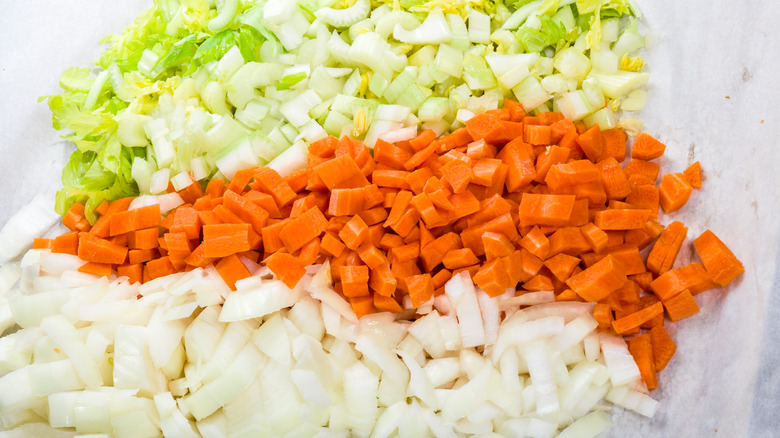
A majority of chicken pot pie recipes are relatively simplistic in terms of the vegetables used to form the base for the filling. These include onions, celery, carrots, and peas. While using these produces a base flavor that is commonly referred to as a mirepoix, they are by no means the only vegetables that can be used to boost the taste and texture of chicken pot pie.
Some of the best ways to elevate a basic chicken pot pie involve repurposing leftover roasted or grilled vegetables. These have added savory flavor due to the Maillard reaction, and they are already tender, so there is no need to pre-cook them to add them to the filling; simply reheat them gently. Other great additions to pot pie include mushrooms, corn, broccoli, and cauliflower. Before adding these, they will need to be cooked to eliminate any excess moisture that may leak into the pastry crust and make it soggy.
7. Get boozy with it
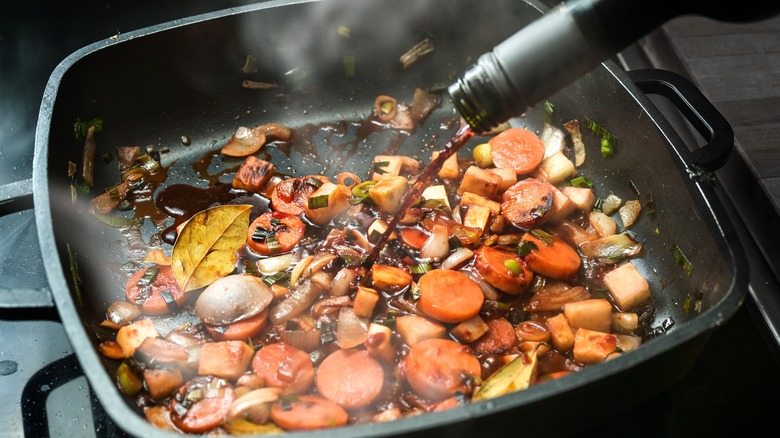
Another great way to boost flavor in chicken pot pie is to add a little booze to the filling. This is generally done by deglazing the pan within which the chicken is cooked to help dislodge some of the browned bits that have settled to the bottom. Alcohol can accomplish a number of things. Not only does it impart flavor into the recipe, but it can also help tenderize the chicken, make the sauce smoother and creamier, and add a layer of brightness that can help lighten an otherwise hearty recipe.
Though white wine is always a good option for this purpose, brandy or cognac packs an even greater punch. These distilled spirits are produced from fermented fruit juice. Not only do they have a higher alcohol content than wine, but they have an intense, complex flavor that can completely transform a pot pie from something casual to a sophisticated dish that is restaurant-worthy.
8. Don't over or under thicken the sauce
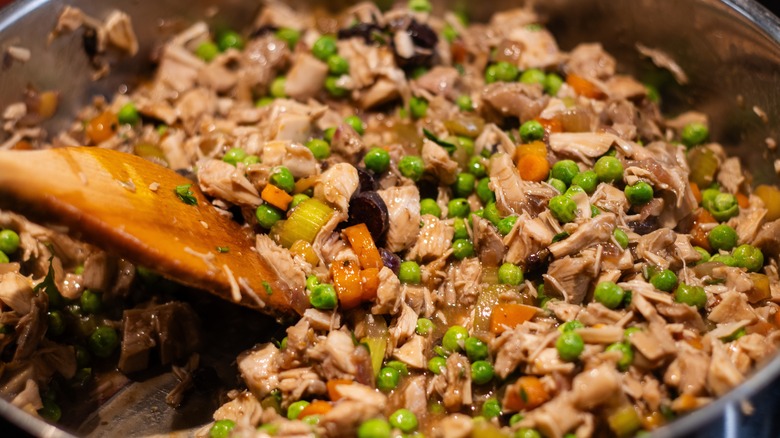
Perhaps my biggest pet peeve when it comes to chicken pot pie is filling that is either too runny or too thick. The filling should be just thick enough to hold together, but not so dense that a spoon can stand straight up in it. Conversely, it shouldn't be so thin that it is almost soup-like.
This generally involves adding flour to the cooked chicken and vegetables and then augmenting this with milk, cream, or even sour cream. When adding flour, it is important to heat it for at least a minute to guarantee any raw taste is cooked out of the sauce; otherwise, it will have a pasty flavor. It is also necessary to remember that the filling will continue to thicken as it cools, so you may want to err on the side of making it slightly looser than you think you will need in order for it to achieve the desired texture in the finished dish.
9. Cool the filling before assembling the pie
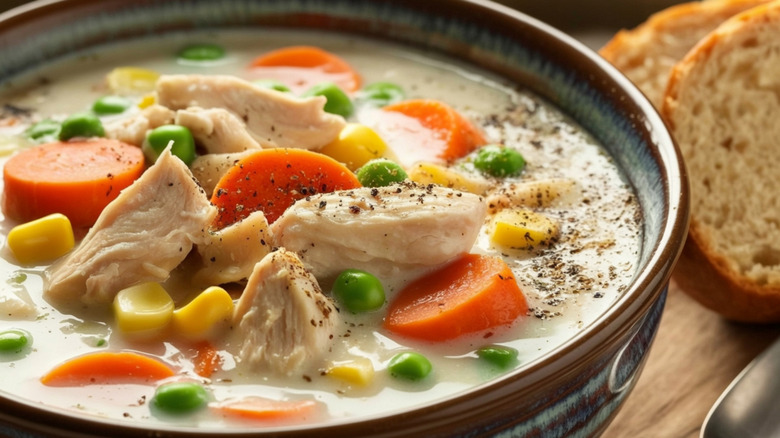
If you tend to be a bit impatient in the kitchen, like I am, it can be tempting to rush the assembly process for chicken pot pie just to get to the eating stage. Unfortunately, doing so is one of the biggest mistakes you can make, especially if you do not want to end up with a soggy pie crust.
As noted, the filling for chicken pot pie will continue to thicken as it cools, which improves its texture and makes it less likely to leach liquid into the bottom pie crust. Additionally, adding warm filling to the pie crust will melt the butter within it, which can prevent it from becoming light and flaky as it bakes. Lastly, the hot filling can create excess moisture that will turn into steam pockets, which can cause the pot pie to explode in the oven.
For best results, cool the pie filling for at least 30 minutes, but not beyond an hour, as this can potentially lead to a foodborne illness. You can also refrigerate the filling overnight before assembling the pie to streamline the process.
10. Keep the crust cold
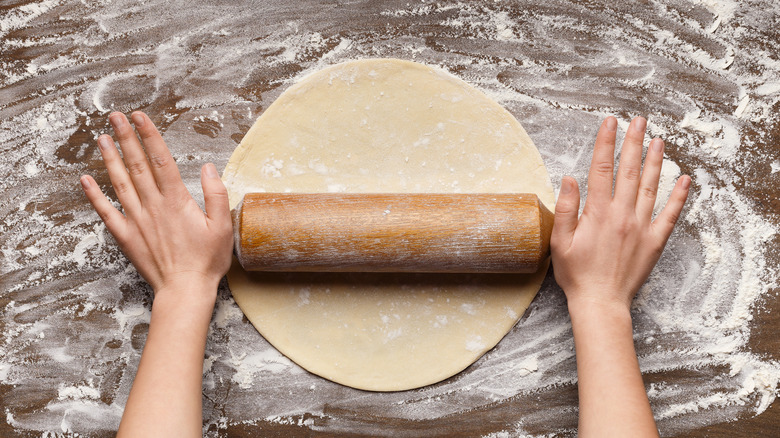
If you are using homemade crust, the most common mistake you can make with it is failing to keep it cold. The secret to a delicious and flaky crust that is light as a feather is in the bits of cold butter that are strewn throughout it. As the pie bakes, these chunks of butter will begin to melt, and steam will begin to form. These little air pockets fill with the fat and puff up, lightening the crust and giving it a tender texture.
Additionally, the cold temperature is the key to keeping the crust manageable. It prevents tearing, produces a smoother surface, and keeps the pastry from sticking to the countertop or rolling pin. Lastly, a cold crust is less likely to shrink while in the oven, which can prevent the filling from overflowing and making a mess.
For best results, place the prepared pie crust into the refrigerator for at least 30 minutes before rolling it out and filling it. If you notice the crust beginning to stick, return it to the refrigerator until it has hardened somewhat before continuing the assembly process.
11. Don't forget to use an egg wash
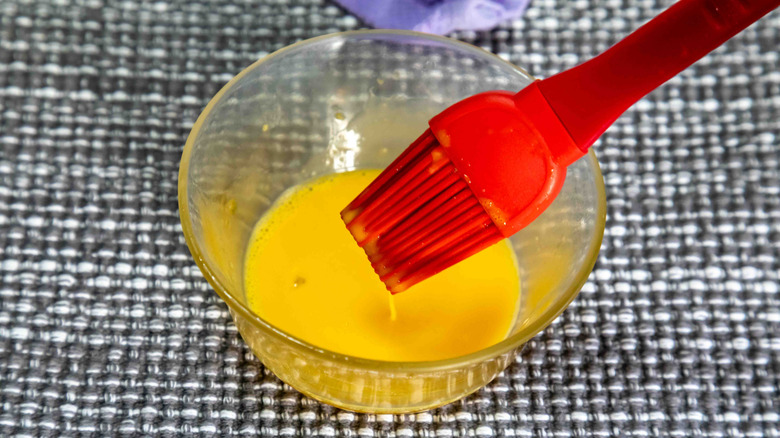
Another key to restaurant-worthy chicken pot pie is covering it generously with an egg wash. An egg wash has a couple of primary purposes when making pot pie. First, it produces a delightful golden brown crust, which makes it visually appealing. Second, it acts as the proverbial glue that binds the crust together and helps to seal it, preventing it from breaking open as it bakes. Lastly, it can also create an extra layer of crispness on the surface of the crust, which juxtaposes the flaky interior, producing a more complex mouthfeel.
Though a simple egg wash made with beaten eggs and milk or water will suffice, there are alternatives to this that can be used. Among the best of these are melted butter, Greek yogurt or sour cream, water combined with honey or maple syrup, mayonnaise, and aquafaba, which is the residual liquid contained within a can of chickpeas.
12. Vent the pie
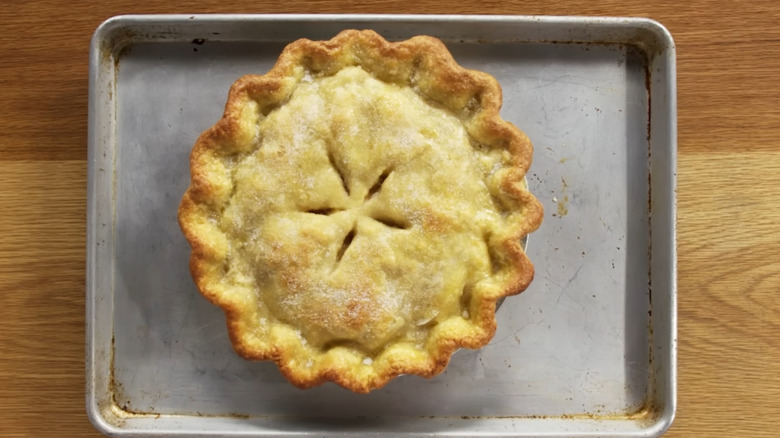
Before placing the assembled chicken pot pie into the oven, there is one final step that is necessary: venting the crust. This is done by cutting slits or making decorative patterns in the top crust of the pie with a paring knife or pizza cutter. Doing so can make the difference between a crisp crust and one that resembles Elmer's glue.
As the pie bakes, the filling will begin to release excess moisture, which will turn into steam. As this steam builds up within the pie, it can cause the crust to burst open or become waterlogged. Creating vents in the top crust will allow for this steam to find its way out of the pie, producing a better final result.
Additionally, it is important not to overstuff the pie with filling. This can make it even more challenging to preserve the structural integrity of the pie and will encourage even more steam to condense within the pie, which can further impact its final texture and mouthfeel.
13. Don't overbake or underbake the pie
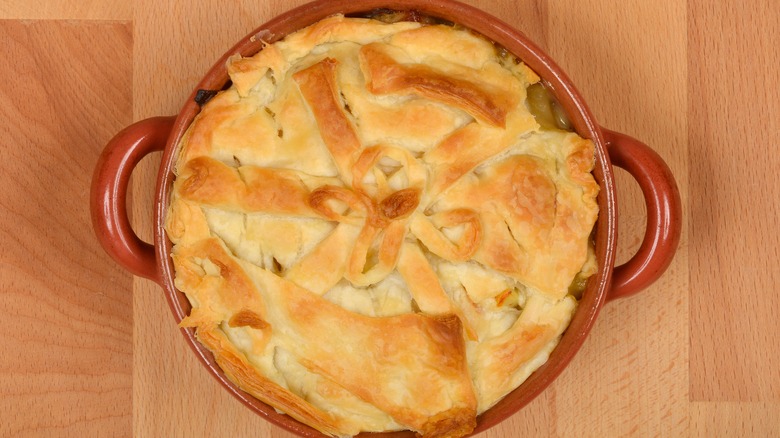
There is indeed a sweet spot for a perfectly-baked chicken pot pie, a magical place where the crust is flaky and light, the filling is evenly heated, and the whole thing is drawn together to a perfect doneness. Assessing what this sweet spot is, however, can be harder than you might think. It is easy to overbake or underbake a pie if you aren't paying close attention.
An underbaked pie will fail to hold together, will have a gummy mouthfeel, and may be a health hazard waiting to happen. An overbaked pie will have a burnt crust that is tough and a filling that is dense and pasty. Though there are some visual cues you can use to assess the doneness of chicken pot pie, the only reliable way to determine this is using a thermometer.
Chicken pot pie should reach a safe minimum internal temperature of 165 degrees Fahrenheit before it is removed from the oven. If it begins to burn before it has reached this temperature, cover the top of the pie crust with aluminum foil to prevent it from getting overcooked before the filling is hot enough.
14. Let the pie rest before serving
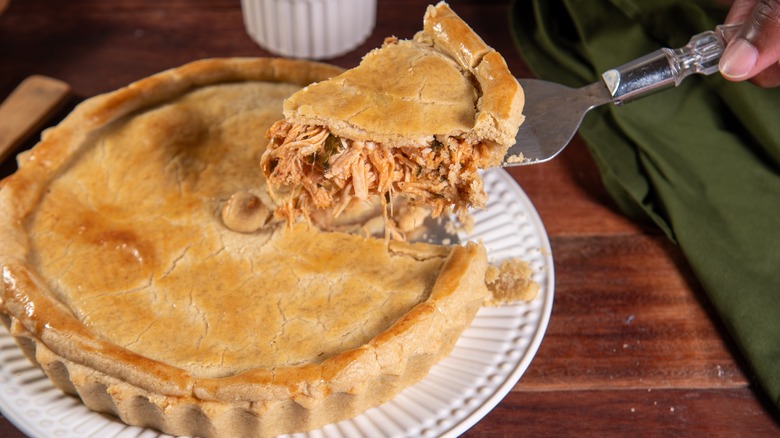
Another common error when making chicken pot pie is failing to allow it to rest adequately before serving it up. Before digging into a hot chicken pot pie, allow it to rest for at least 10 minutes. There are a number of reasons for doing so. First, as the pie cools, the filling will continue to thicken and set, ensuring it has a creamy, not runny texture. Doing so will also ensure the crust is thoroughly baked through and has firmed up. Lastly, obtaining clean, even slices will be easier.
Though you can cool a pie on the countertop, I prefer resting it on a cooling rack, where it can get ample air flow around the dish, which will ensure it cools evenly. If you plan to make multiple pies at once, consider investing in stackable cooling racks, like the ones from Leonyo. This will not only streamline the process but will save you valuable countertop space if you happen to be preparing to feed a crowd.
15. Make it in the air fryer
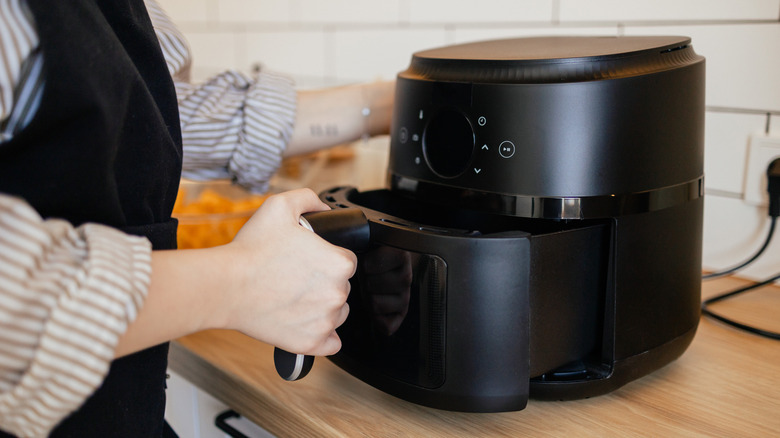
The air fryer has revolutionized home cooking in many ways. It has eliminated the need for a full-sized oven while allowing for many foods to be cooked in half the time. It also tends to produce premium results in terms of flavor and texture, especially with baked goods or foods with a crust, owing to its uniform airflow that promotes even cooking. While it may seem counterintuitive, it is possible to cook chicken pot pie in an air fryer; this just requires a few extra steps.
To make chicken pot pie in an air fryer, you will need to ensure the baking dish you use will fit in the air fryer basket. This means you will probably need to make a slightly smaller pie or produce individual-serving portions in ceramic or glass ramekins. Another consideration is preventing the bottom crust from becoming soggy. This may require par-baking the crust before assembling the pot pie to guarantee it has adequate time to firm up, or skipping the bottom crust altogether.
16. Make it ahead
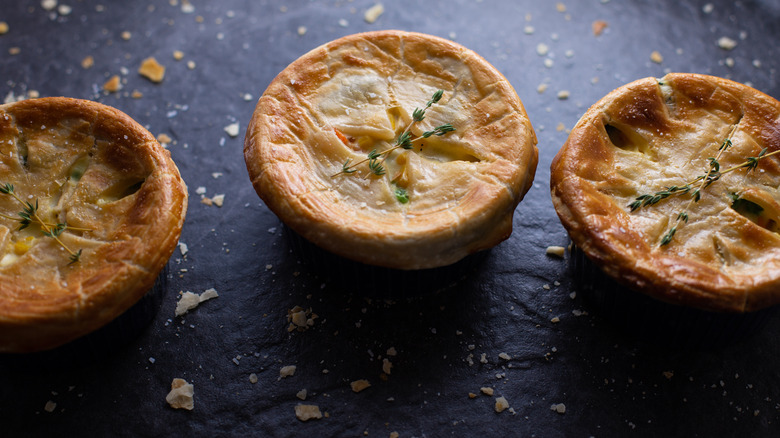
While a freshly-baked chicken pot pie is a thing of beauty, it is a labor-intensive project to undertake, and you may not have the time to execute this dish in a single day. Fortunately, there are a couple of ways you can make this dish ahead of time, which can not only cut back on the time investment, but also leave you with a pie to have on hand for any impromptu gathering.
First, the easiest way to make a chicken pot pie ahead is to prepare every component in advance and refrigerate it before assembling and baking it. The filling and crust can be made up to 48 hours in advance before the pie is put together and baked. You can also assemble the pie and place the wrapped, unbaked pie in the freezer for up to three months.
Another alternative is to bake the pie and either refrigerate or freeze it. A freshly baked chicken pot pie can be refrigerated for up to 4 days. It can be reheated in the oven or air fryer for the best flavor and texture. To freeze a whole, baked chicken pot pie, cool it, wrap it tightly, and place it in the freezer for up to three months.