

10 Essential Tips When Cooking Chicken Alfredo
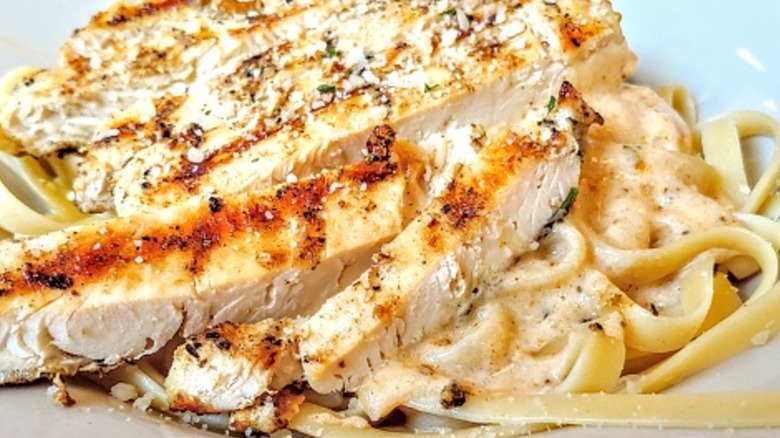
Chicken Alfredo was not necessarily eaten by Italians in their homeland, but that didn't stop the dish from surging in popularity among Italian American eaters, folks with a vehement hatred of red sauce, and anyone who pays a visit to their local Olive Garden after a long day of strip mall shopping. There is a lot to love about this creamy and cheesy concoction, which is believed to have been derived from an Italian recipe made with butter and Parmesan that eventually joined forces with heavy cream to create the beloved dish we know today. While Alfredo can be served plain, many chefs and home cooks have taken to topping it with shrimp, veggies, and arguably the most popular adornment: chicken.
While the recipe may seem quite simple, composed of only pasta, a three-ingredient Alfredo sauce, and chicken, there are a lot of mistakes that folks make along the way that can ruin this whole dish. If you're looking to master the art of chicken Alfredo, you're in the right place. We spoke to Joanne Gallagher, recipe developer for Inspired Taste, who shared some of her top tips for making tasty, creamy, and decadent chicken Alfredo with us. Bon appétit!
1. Select the right pasta shape
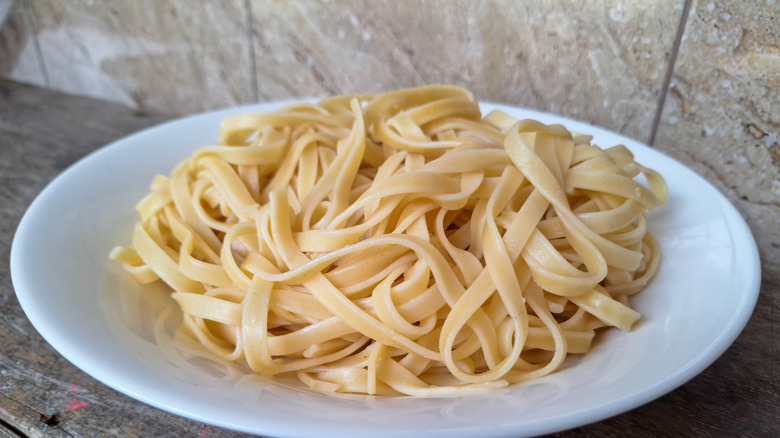
There are so many different pasta shapes out there that it may be difficult to choose the one that's best for a hefty dish like chicken Alfredo. Luckily, recipe developer Joanne Gallagher has some ideas. "Fettuccine is the go-to for chicken Alfredo! Its wide, flat noodles are perfect for catching creamy sauce and bits of chicken in every forkful," she says.
Besides tried-and-true fettuccine, the best types of pasta to pair with cream sauces, such as Alfredo, are ones that withstand the weight of the sauce. Wider, flatter noodles are ideal for this dish because they have a ton of surface area, meaning that you get a little bit of cream sauce and perfectly cooked pasta in every bite. If you aren't a fan of fettuccine, you can try tagliatelle, which is an even wider flat noodle. Short shapes, like penne, rigatoni, and even corkscrew-shaped cavatappi can also work. If you haven't mastered the art of twirling your noodles around a fork, these pasta shapes might be perfect for you, as nontraditional as they may seem.
While there are tons of pasta shapes that you can use for your chicken Alfredo, there are just as many that you should avoid. "Thin shapes like angel hair or delicate pastina just can't do the sauce justice; they tend to clump together and don't offer the same luxurious bite," Gallagher says.
2. Use boneless skinless chicken breasts
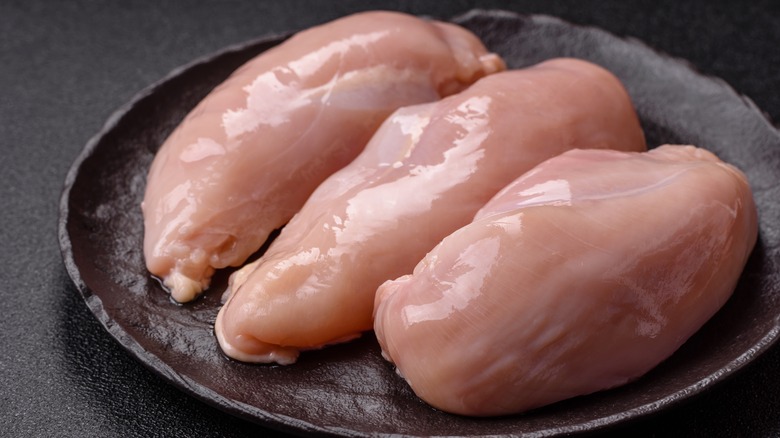
While the sauce and the noodles command a lot of attention in this Italian pasta dish, we can't forget about the protein. The chicken adds a meaty flavor, offering some extra macronutrients to complement the carb- and fat-heavy noodles and sauce. Joanne Gallagher recommends using boneless skinless chicken breasts for chicken Alfredo, though she notes that you can use chicken thighs if you're after a bolder flavor. Besides cooking relatively easily, chicken breasts also slice easily into strips, Gallagher shares.
However, anyone who has cooked with chicken breasts before knows that their flavor can be kind of bland — if you neglect to season and treat them properly. Gallagher suggests seasoning the chicken in advance, presumably so it can soak up all those herbs and spices. "Just salt, pepper, and a pinch of garlic powder or Italian herbs are plenty," she says. "This keeps flavors bright and lets the creamy Alfredo sauce shine without being overshadowed."
The cooking method for the chicken breasts will vary based on what recipe you follow. Gallagher prefers to pan-sear her chicken breasts with olive oil; this quick cooking method helps preserve the chicken's juiciness. She also rests them for a bit before slicing and serving to lock in that moisture. You may also want to consider shallow-frying your chicken, though the leftovers won't stay as crispy on day two.
3. Don't neglect your noodles
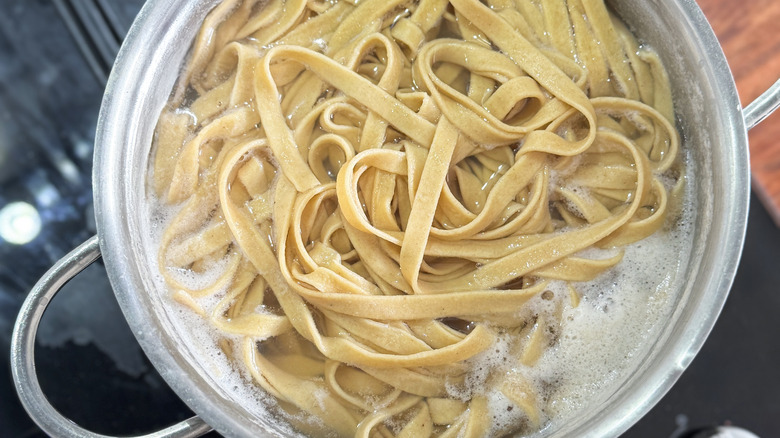
Rarely do we put a lot of thought into cooking noodles. It's always boil the water, add noodles, bon appétit! However, if you aren't cooking your pasta correctly, you could be setting your dish up to fail right from the start. The first thing to do, and we can't say this enough, is to salt your pasta water. Salt is the building block of flavor in food, and cooking your noodles in salt gives them a base level of seasoning from which the sauce and the chicken build off. Besides salting your water, another big mistake you can make with your pasta at this stage is letting it cook for too long.
No one wants a plate of Alfredo-tasting mush, which is why cooking your noodles al dente is ideal. "Cooking pasta al dente means it's tender but still has a bit of a bite, helping it hold up when tossed in the sauce without getting mushy," Joanne Gallagher says. She explains that cooking your noodles to this point is also important for getting the perfect, saucy mouthfeel. "Al dente noodles also soak up the sauce's flavor while keeping their shape for a satisfying texture," she says.
The throwing-spaghetti-at-a-wall myth isn't a good barometer for deciding whether your pasta is done cooking or not. The better way is to taste it once it hits the cooking time recommended on the box or packaging. Fresh pasta won't need to cook for anywhere close to the time needed for dry pasta, so be sure to keep this in mind when preparing your noodles.
4. Reserve some pasta water
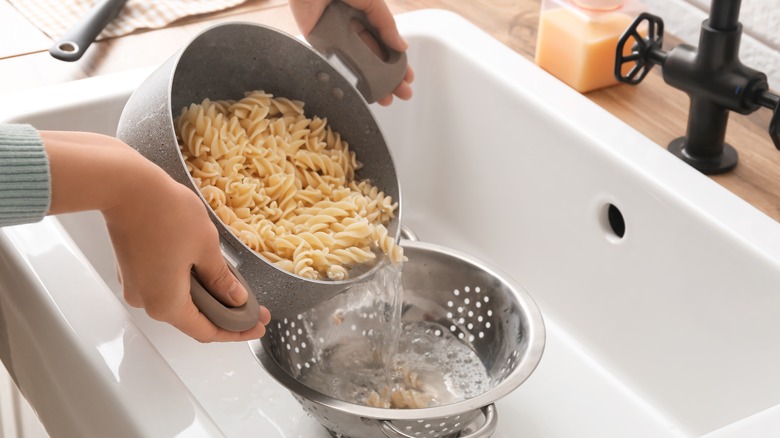
One of the most precarious parts of making chicken Alfredo — or any pasta dish, for that matter — is transferring the pasta from the cooking pot to a colander to drain all that excess water. However, if you're dumping every last drop down the drain, you could be committing one of the biggest mistakes you can make with pasta. Since Alfredo doesn't use a roux, the pasta water plays an important role in helping the sauce stick to the noodles. "The natural starch from the pasta and a bit of reserved pasta water help bring the sauce together," Joanne Gallagher says.
You don't need to save all that pasta water, but you do need to have enough on hand to incorporate back into your sauce before tossing the pasta. In her fettuccine Alfredo recipe, Gallagher opts to reserve about 1 cup of pasta water and pours about half of it in once the noodles have hit the sauce. You don't want to add so much pasta water that you completely flood the dish — just enough to encourage the sauce to stick.
5. Don't add the cheese in too fast
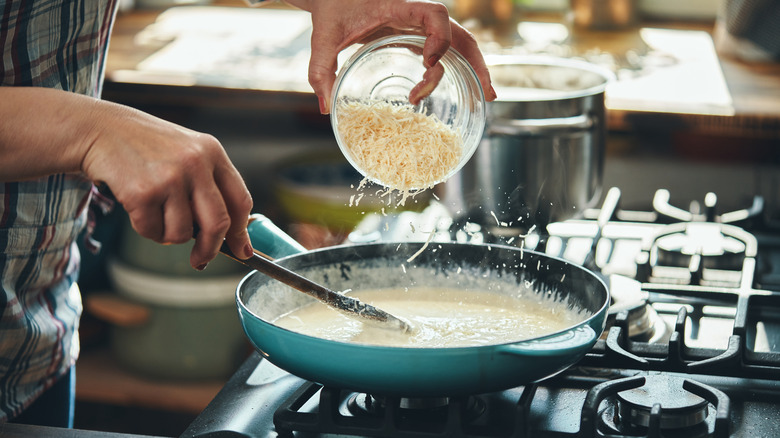
Slow and steady wins the race when it comes to making homemade Alfredo sauce. One of the most common mistakes that people make, which can ruin the sauce, is adding the cheese all at once. Joanne Gallagher explains that adding the cheese too quickly and heating the temperature up too high can cause the sauce to break or become grainy, rather than smooth and silky. "Fix it by keeping things on low and adding the cheese by the handful, whisking patiently until it melts into a smooth, silky sauce," she says.
Another thing that will help ensure that your pasta sauce is silky smooth is grating your own cheese. It may seem like a silly thing to do, especially considering there are so many different store-bought, pre-shredded cheeses to choose from. However, pre-shredded cheese doesn't melt the same because it's usually packed with anti-caking agents like cellulose and starches. Instead, whip out your box grater and get to work on your Parmesan. "Freshly grated cheese makes all the difference for velvety texture and deep, nutty flavor," Gallagher says.
6. Add sour cream for an extra creamy texture

Although the hallmark of a good Alfredo sauce, as suggested by Joanne Gallagher, is cream, good Parmesan, and butter, that doesn't mean there isn't some room for culinary experimentation. Her Alfredo recipe uses an unconventional ingredient — sour cream. Not only does this ingredient act as an excellent stand-in for heavy cream, but it also adds a balancing, subtle tang. She uses only 2 tablespoons per 8 ounces of pasta and adds it to the recipe with the butter so it can emulsify into a creamy, tasty sauce.
Other ingredients that you can use to add depth and flavor to your Alfredo sauce (whether you're using a store-bought Alfredo sauce in a jar or making your own) include mascarpone, which, like sour cream, has a high fat content and will make your Alfredo sauce extra luxurious. You can also add a pinch of lemon zest to lighten the flavor of the sauce; it would pair especially well with a garlic-seasoned chicken.
7. Swap out the heavy cream for a lighter alternative
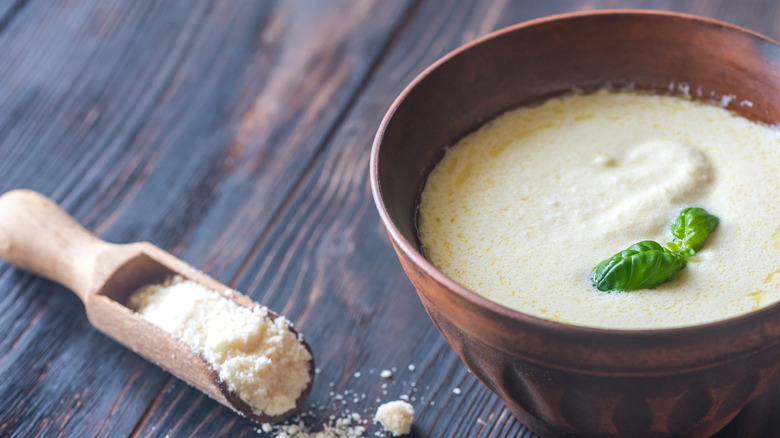
One of the main drawbacks of chicken Alfredo is that it tends to be a very heavy dish. Even if you're only serving yourself a small portion, that combination of carby pasta, heavy sauce, and chicken can send you down for the count after dinner. However, that doesn't always have to be the case, as there are many ways you can lighten the flavor of the Alfredo sauce without sacrificing its rich, cheesy flavor. Joanne Gallagher recommends swapping out the heavy cream for another alternative, like half-and-half, or include a bit of chicken broth. "These tweaks keep things lighter while still delivering that luscious, creamy feel," she says.
The key is to not swap all of that heavy cream out, as it's the ingredient that gives this pasta dish its robustness. If you're adding the chicken broth (or stock), try pouring in a splash to deglaze the pan that you cooked the chicken in. Not only will the chicken broth help release any of those pieces of chicken stuck to the bottom of the pan, but it can also make this dish a two-pot meal: Cook the pasta separately and add it back into the deglazed pan with your heavy cream and cheese.
8. Have the pasta and the sauce ready at the same time
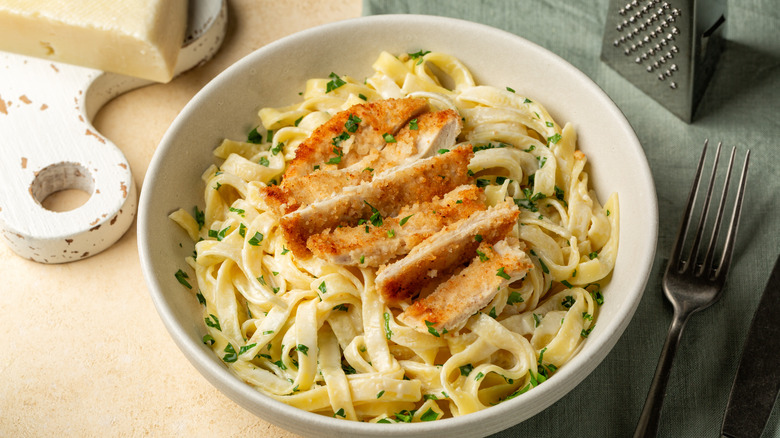
One of the biggest challenges of cooking is trying to get your timelines to intersect perfectly. You don't want to have your chicken get cold sitting on the stove while your sauce is overcooked and your pasta water has just barely begun boiling. With that in mind, you might think that making the sauce ahead of time would allow you to focus your attention on the chicken and the noodles, but Joanne Gallagher actually cautions against it. "Always make Alfredo sauce right before serving, alongside the pasta," she says. "The sauce is at its creamiest and silkiest when it's fresh out of the pan, so try to have both ready at the same time."
Laying out your mise en place — complete with all the tools, measured ingredients, and instructions you need — to stay on your timeline is important. As a general rule of thumb, pasta water takes time to get up and boiling, so you may want to have it running at the same time as you're preparing your sauce and cooking your chicken.
9. Use the tossing method for optimal noodle coverage
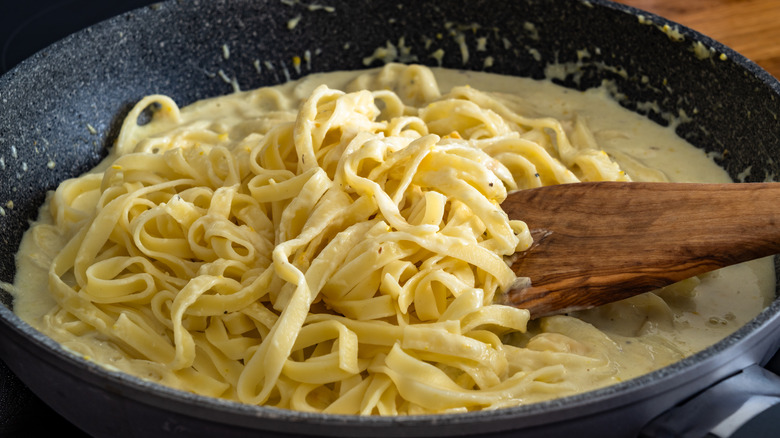
Do you like to pour the sauce in with the pasta? Well, there is a right and a wrong way to combine pasta and sauce, and haphazardly dumping your cheesy Alfredo into the whole pot of pasta is definitely not the way to go here. Not only will this method overwhelm your pasta, but because there is no added starch (from the pasta water), you may find that the sauce struggles to cling to your noodles.
"You want the noodles glossy, not swimming in sauce," says Joanne Gallagher, who recommends using about a cup of sauce per 8 ounces of pasta. To ensure the perfect saucy consistency, she recommends waiting until the noodles are perfectly al dente and then transferring the drained pasta to a separate mixing bowl and tossing the noodles with the sauce ingredients — along with that reserved pasta water. Once the sauce starts to stick to the pasta, you'll know that it's ready to serve.
10. Reheat your leftovers on the stove
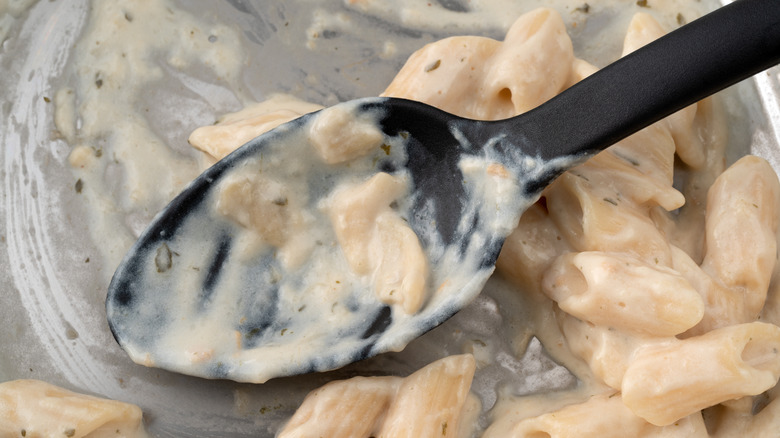
Chicken Alfredo can be a great leftover dish — so long as you know how to reheat it correctly. Popping it into the microwave and nuking it for several minutes may be the worst thing you can do for chicken Alfredo, as the sudden heat can cause the sauce to split. Plus, if you are reheating a large portion of pasta, it may not heat up evenly in the microwave. The better method, per Joanne Gallagher, is on the stovetop. "Store leftovers in an airtight container and reheat gently on the stove with a splash of milk or cream to help loosen the sauce," she suggests.
Sure, having to dirty yet another pot to make your leftovers may not be ideal, but it will result in a much smoother sauce. You'll want to use a low heat setting and can even add a pat of butter to the pan to discourage the noodles from sticking to the bottom. Stir to keep it from burning and incrementally add the liquid as needed; you may only need a few tablespoons for a single serving. You'll know it's done when it's simmering and warmed through — but not actively boiling or bubbling.