

Quartz Vs Marble Vs Granite: Which Countertop Material Is Most Durable?
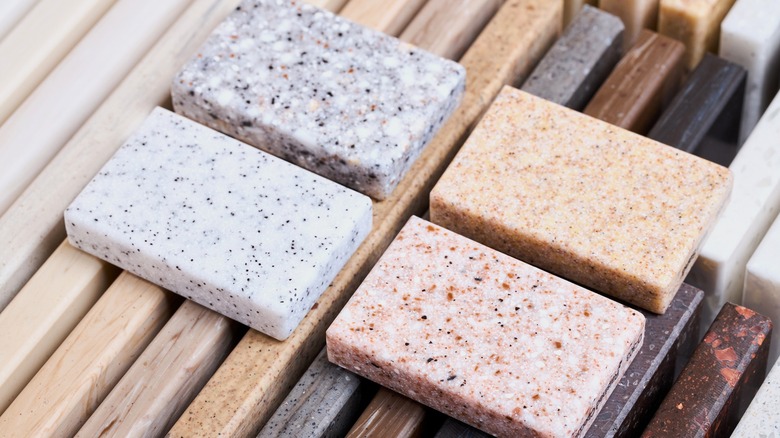
Picking the right material for your kitchen countertop can be painstaking work. Not only do you have to decide between wood, metal, stone, or something else, but you also have to pick a specific material within those categories. How can you know for certain what type of stone you should use for your kitchen countertops? For some, it's the material's durability that swings their vote. If you find yourself wavering over quartz, granite, and marble, you should know which is the hardiest.
When you factor in hardness, heat resistance, porosity, and lifespan, granite slightly edges out quartz for overall durability in the kitchen. It's also a little more expensive, however, costing anywhere between $80 to $150 per square foot depending on the make and your location. For comparison, quartz will set you back around $65 to $110 per square foot, and tends to have lower maintenance costs, too. Marble countertops should only be a choice if luxury matters to you; despite being the least durable, it's also the most expensive. The material itself is about $40 to $200 per square foot, but its delicateness requires more expensive labor to install it.
If you want the most kitchen-ready countertop, go for granite. Keeping costs in mind, however, quartz is a great option that balances quality, aesthetic, and function. In fact, it's harder than granite, so if you want a more affordable option that can still withstand the rigors of a busy kitchen, you won't be disappointed with the durability of quartz.
Quartz is technically the hardest, but that's not all that matters
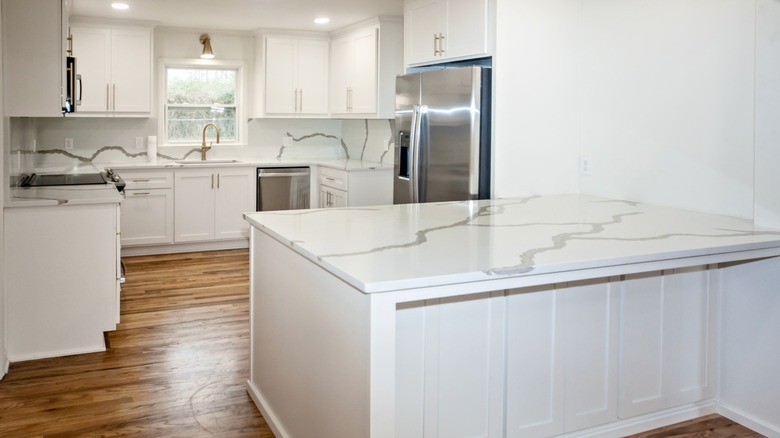
One of the first things people bring up when talking about the durability of a countertop material is how resistant it is to wear and tear. We can base this on how each one measures up on the Mohs scale, which determines hardness by the material's ability to withstand being scratched. Lower-scoring materials can be scratched by higher-scoring ones, so you want your kitchen countertop to score as high as possible.
Quartz is the hardest among the three materials with a Mohs score of seven, while granite's score tends to fall somewhere between six and seven. Marble is the softest at around three to five. To put this in perspective, stainless steel has a Mohs score of five to six, meaning it won't scratch quartz or granite, but can definitely scuff marble. While scratches can be relatively easy to fix if you're willing to put in the work, you're still better off with a surface that can resist them.
Kitchen countertops are exposed to a lot more than just the bottom of your pots, however; there's heat, moisture, and acidity to consider, too. Even though quartz has a slight advantage over granite in terms of pure hardness, granite wins out just slightly when talking about full kitchen use.
Granite is the most durable option by a small margin
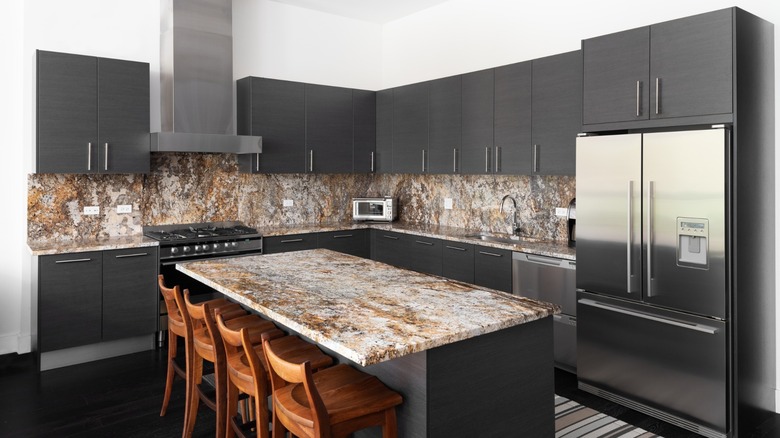
Despite being the hardest, quartz is the least heat-resistant of the three materials. Quartz countertops are composed of 90% to 93% quartz crystals with the rest being a polymer that binds them; depending on the type used, polymer breaks down over 300 degrees Fahrenheit. This leads to scorching, cracking, and warping. Marble is a little more heat-resistant than quartz, but granite takes the top spot on account of it being an igneous rock, meaning it was formed from literal hot magma.
Kitchen countertops are also exposed to a lot of moisture and acids, which impact its durability depending on how porous it is. If something like coffee manages to seep into these pores, it can stain or damage the stone. Non-porous quartz is the winner here, but granite comes pretty close thanks to sealants that mask its porosity. Marble is the most porous and stains easiest, which is why you should think twice before choosing white marble kitchen countertops.
Both granite and quartz can last for 30 or more years; granite just needs a bit more maintenance. But try to avoid some of the most common mistakes people make with it. Marble lasts 20 to 25 years on average but can go much longer with proper care — Ina Garten herself swears by it. Because granite and quartz are neck-and-neck for lifespan, hardness, and porosity, we consider granite the more durable kitchen countertop, by a hair, due to its superior heat resistance.