

You Can (And Should Be) Rotisserie-Cooking Steak
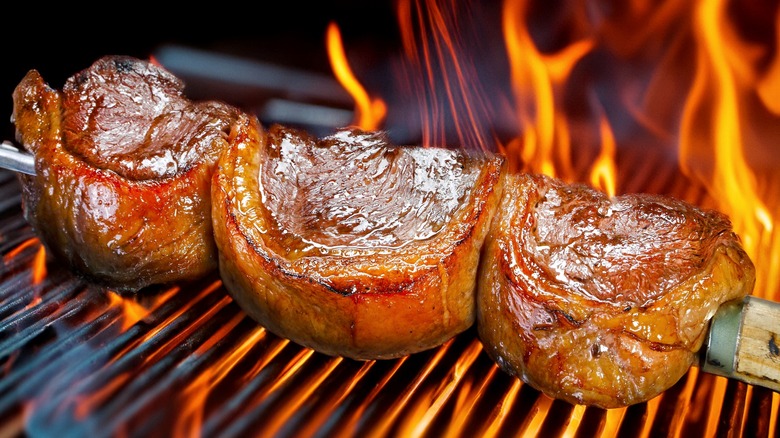
There are a ton of opinions out there on the best way to cook a steak. Even the most meticulous meat masters have people disagreeing with them. Sous vide, for example, routinely gives you a perfectly even cook throughout, but the time it takes to actually cook the steak has some folks opting out of giving it a try. Pan-searing a steak takes just a few minutes if you do it right, but it can get tricky without the help of a meat thermometer. Out of all the techniques chefs, master grillers, and home cooks argue about, however, there's one that is criminally underappreciated — and it may be one of the very best.
The next time you break some steaks out of the freezer, give rotisserie grilling a try. Because the steak is periodically turning on each of its sides, the method gives the meat a more even cook both inside and out. As the fat renders, it bastes the meat, amping up the beefiness of your steak. The dry heat from the open flame also helps the steak develop a better crust. Many of the best Brazilian steakhouses in the U.S. use this technique, particularly with the picanha cut. In fact, rotisserie grilling — traditionally called churrasco in Brazil — is widely considered the best technique for this steak. All it takes is one look at the characteristics of picanha steak to see why: Its signature thick fat cap provides plenty of basting material as the meat turns over your grill. You can, however, also get pretty good results with other cuts.
Other steak cuts that do well with rotisserie cooking
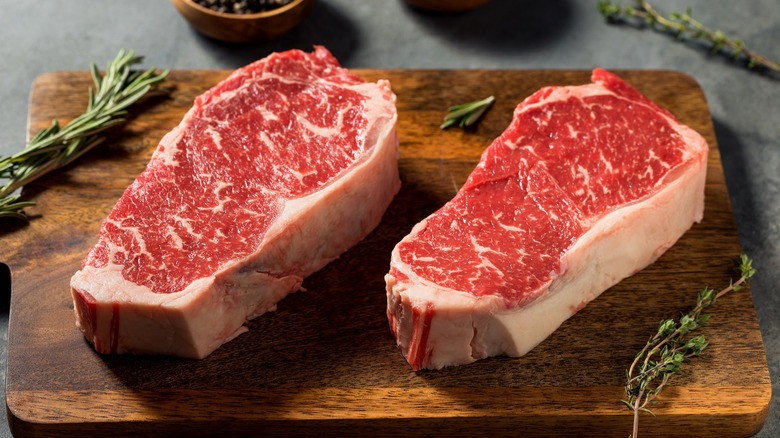
Since one of the biggest reasons picanhas are ideal for rotisseries is its generous fat cap, it stands to reason that other cuts with significant fat caps would work as alternatives. Strip steaks, for instance, have a band of fat running along their back sides that would render beautifully on a rotisserie grill. Ribeyes can likewise have fat caps on some of their sides depending on how they're cut, while also having a thick kernel of fat in the middle. If you want a lower-priced cut, ask your butcher for a tri-tip steak with the fat cap intact. As a bonus, the color of your steak fat can tell you all about the cattle's diet; if you prefer your beef grass-fed, you want the fat cap to have a yellowish tint to it.
Because fat is your friend here, a well-marbled steak could also give you good results when cooked rotisserie-style. Some folks have even seen success with a rotisserie wagyu prime rib. If you want to try rotisserie cooking with such a premium steak cut, however, make sure you get a good handle of celebrity chef Robert Irvine's tips for cooking expensive steaks. After all, you don't want your first attempt at a new technique to ruin a pricey piece of protein.
Tips for a perfect rotisserie-cooked steak
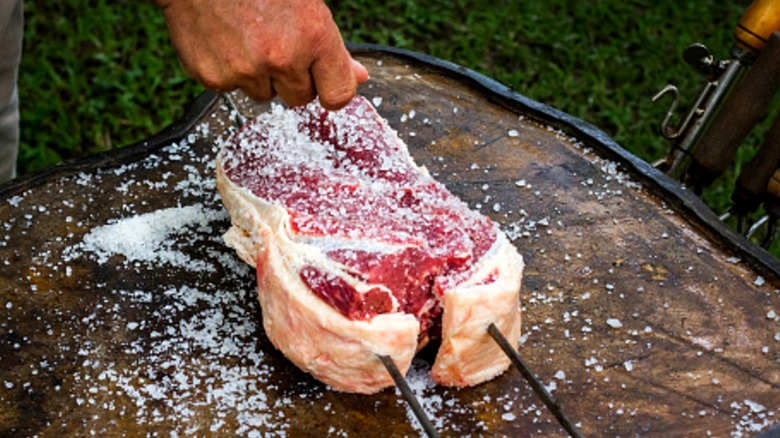
For rotisserie-cooked steak, start with a cut around 1.5 to 2 inches thick; this allows for a longer cooking time in which the fat can render without overcooking the meat. This is especially important for picanha since a good cut has a fat cap around ½ inch thick. If you're grilling multiple steaks in one go, try to keep their thickness as uniform as possible to help them all cook evenly. Because they're all on the same skewer, it's harder to move individual steaks off the grill if some end up cooking faster than others. If for any reason your steaks dangle a little too loosely from the skewer, you can secure them using kitchen twine. Again, it's all about making sure the steaks cook evenly; any bits that hang closer to the heat cook faster than the rest.
As for the actual cooking, create at least two heat zones and do what chef Michael Symon does to grill the perfect steak: Sear it in direct heat for about four to five minutes to develop the crust, then move it over indirect heat to cook more slowly. This gives the fat more time to render and prevents the drippings from landing on your coal (which creates a dirty, bitter smoke that messes up the flavor of your steak). Use a meat thermometer to check on the steak's doneness, and let it rest for a few minutes once finished. If you do it right, you end up with unctuous, perfectly cooked beef with a beautifully charred crust shimmering with the juices of the steak's own fat.