

If You Love Seafood, Watch For These 6 Fish Market Red Flags Before Buying

Fresh seafood is one of life's pleasures, and there is something special about buying it straight from the market. With a huge variety of seafood to choose from, it can sometimes be overwhelming, and knowing which fish are the freshest can be tricky if you don't have much experience.
From telling the difference between a pleasant fishy smell and a concerning one, to checking out the brightness of their eyes, if you know what to look for, there are some definite signs that the "fresh" fish may have spent more time out of the water than you would like.
Since fish past its best can be a source of food-borne illness, spotting these signs and avoiding the produce in question is crucial. Whether you've just discovered the joys of cooking with fish or you're a seasoned pescatarian, our article will give you the confidence to walk into your local fish market and choose the freshest fish possible. Let's take a look at six red flags to keep an eye out for before stopping by your nearest fish market.
1. Overpowering smell

One of the biggest tell-tale signs that something may be wrong as you walk around the fish market is the smell. Contrary to what many people think, a strong "fishy" smell is not normal for fresh fish, and may be a sign that it's past its best.
Of course, you expect a fish market to smell of fish, but it should be a mild, pleasant smell that reminds you of the sea. If, instead, you can smell a pungent, ammonia scent, this is a big red flag, and should put you off buying from that stall or market. The strong smell is a clue to a chemical reaction that happens shortly after the fish dies. Trimethylamine oxide (TMAO) is an odorless compound that exists in fish while they are alive, but soon after being caught, it begins to break down into trimethylamine (TMA). The TMA is what causes the overly fishy smell, and though small amounts will be present in freshly caught fish, the longer the animal has been dead, the more TMA will be produced, leading to a more overpowering scent.
Smell is a great indicator of freshness, so when you arrive at a stall in the fish market, you should not hesitate to ask to smell the fish up close. If you detect a faint smell of the ocean, go for it. But if it is acidic, ammonia-like, or overly fishy, don't take the risk, and source your fish elsewhere.
2. Shellfish with broken shells
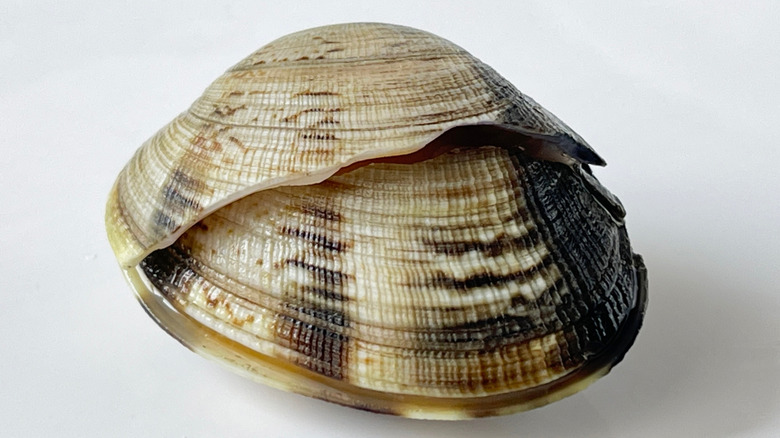
Purchasing shellfish from a market is a different experience compared to other fish, and there are a few rules you should follow to keep yourself safe from food poisoning. Fish purchased in the shell should always be alive, as dead shellfish can start to degrade quickly.
Bivalves such as clams, mussels, and oysters are filter feeders, meaning that more bacteria may be present in them than in other fish. For this reason, care needs to be taken when choosing them to avoid food-borne illness. The first thing to look for is broken shells. The shell protects the animal inside, and once it is compromised, more dirt and bacteria can penetrate. Assuming the shells are intact, you should give each shellfish a tap on the shell to see if it closes. A live mollusc will always close itself for protection, so don't buy any that remain open after you give them a knock on their proverbial front door.
Once you have purchased your shellfish, cook and eat them as soon as possible to reduce the risk of bacterial growth. All shells should open up after cooking; a closed shell means the animal was likely dead beforehand, so be sure to discard these ones to keep everyone safe.
3. Cloudy eyes
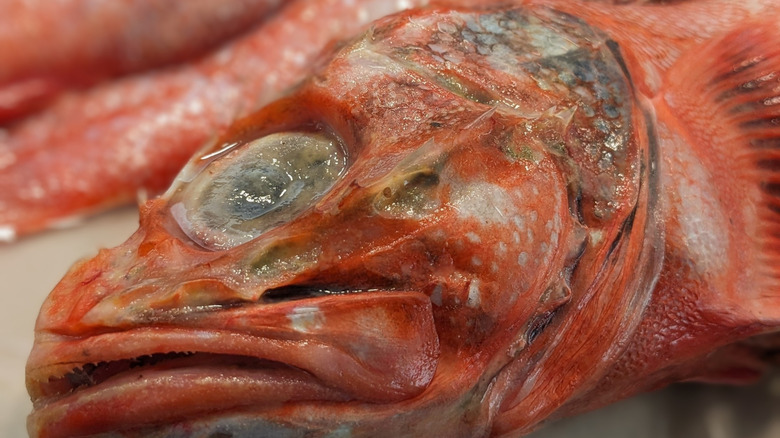
Assuming you are happy that the fish you are considering smells fresh, the next clue will require you to examine it a little more closely. If you're buying a whole fish to cook, the eyes are a reliable indicator of freshness, and a quick check means you can avoid purchasing one that is past its best.
If a fish is freshly caught, its eyes will be bright and shiny, similar to when it was alive. After death, the tissues break down through autolysis, which causes them to turn cloudy initially, before turning white. Dehydration can also cause cloudiness, giving an indication of how long the fish has been out of the water. If you notice that the eyes are cloudy rather than bright, and especially if they are turning white, walk away.
In most fish markets, you will find that the fish are deliberately displayed so the eyes are visible, making it easy to check for freshness. If you feel that the eyes are being intentionally obscured, this is a red flag, and you should find somewhere else for your fish shopping.
4. Dull gills
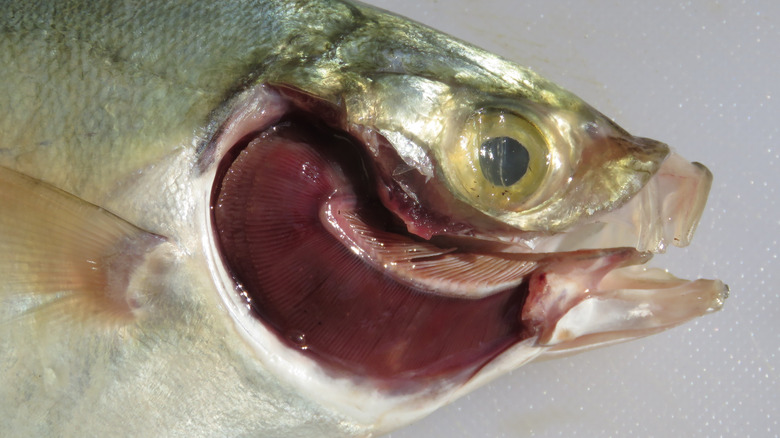
The gills of a whole fish are another great indicator of its freshness. Since they are the place where oxygen passes into the fish and meets the blood, they should still be bright red if the fish hasn't been dead for long. After death, the gills will start to dull and degrade, and may turn brown or grey as time passes.
To examine the gills, you will need to ask the fish vendor to lift the gill flap so that you can see them clearly. This is a standard way to measure freshness, so the stall owner should be happy to do so. If they seem reluctant, you can assume they have something to hide, and reconsider. Slimy gills can also be a sign of a fish that is past its best, so ask the fish vendor to show you the gills in enough detail that you can check the texture of them too. If you are in any doubt about the color or texture of the gills, it is not worth the risk of purchasing.
5. Lack of suitable refrigeration
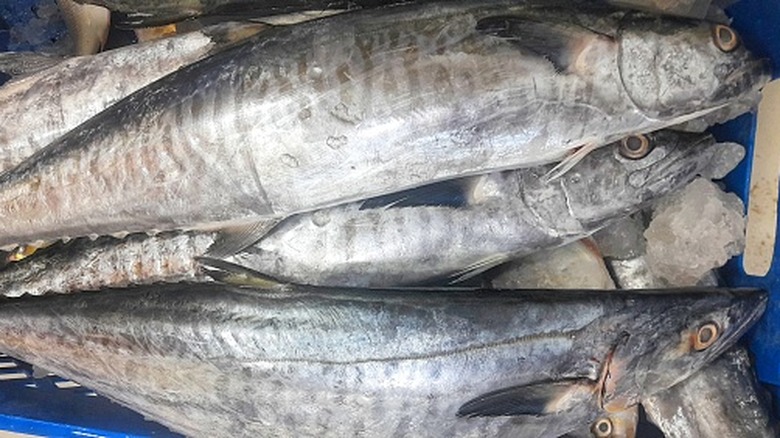
Keeping fish and shellfish at an appropriate temperature is imperative to keep the produce fresh and safe. In a market where fish are on display for customers to see, it is important to pay attention to the methods they are using to keep the fish cool.
If the fish is not in a refrigerator, it should be stored on ice at all times, and should be deep in the ice to keep it as cold as possible, rather than simply sitting on top. If the ice has begun to melt, the vendor should be replacing it straight away, so don't purchase any food that is sitting in a pool of water. Contrary to what you may assume, live shellfish will die if stored in water, and they should always be displayed separately from the other fish.
Quality fish vendors will take pride in their stall, replacing the ice regularly to keep the fish fresh. If you come across a stall where the ice is visibly melting, you need to assume the fish is too warm to be safe, increasing the chance of food-borne illness.
6. Slimy texture
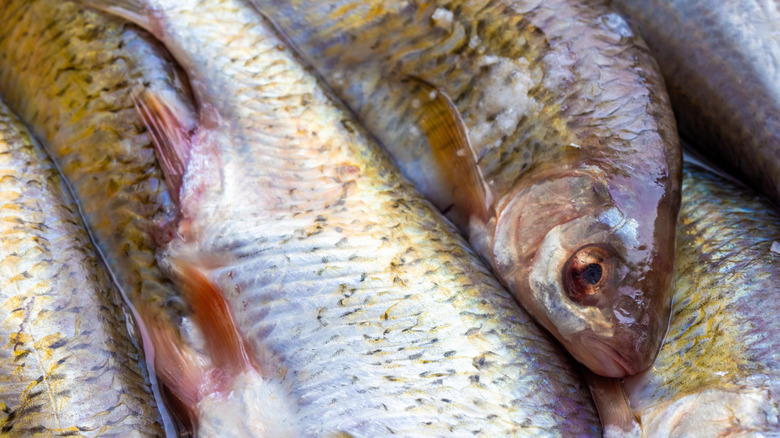
Fish are naturally slippery due to the layer of moisture on their skin, but if it seems overly slimy, it may be advisable to avoid them. The key to choosing fresh fish is understanding how much slime is acceptable and natural, and when it is a sign of something concerning.
The natural mucus layer on the outside is known as the slime coat, and it protects the fish when it is alive. It is a thin layer that makes the fish slippery to hold, but it is colorless and shouldn't have a strong odor. As time passes, the fish will slowly begin to break down, and the slime quantity will increase, the color will darken, and it may begin to smell. If you notice the slime is thick and there is a pungent smell emanating from it, it is safe to assume that it is beginning to spoil, and you should not purchase the fish.