

8 Biggest Scandals To Ever Go Down At Aldi
Aldi has helped many people save on their grocery bills (and get some fun items in the Aisle of Shame), but it's a large, global company. And you know what that means: scandals! Yes, Aldi, like just about every company, has had its share of unsavory accusations and events.
Obviously, not all scandals that affect a company are that company's fault. Sometimes it's a supplier that's to blame, and the company just gets caught up in the mess by association. An example would be a recall of a company-branded product where the item was made by a third party, but it's the company's name that news reports use in conjunction with the recall. Other times, an employee goes rogue and does something that the company doesn't approve of. But then there are those times when it's not so clear about the company's role, or how much they knew about the scandalous subject. So, let's take a look at the eight biggest scandals that involved Aldi and see what's up.
Horse meat
One of the better-known scandals to affect Aldi occurred in the U.K. In 2013, several European grocery companies had to pull ready-to-eat meals off the shelves when investigators found that a supplier had used horse meat instead of beef. This followed a previous discovery of horse meat in burgers in the U.K. and Ireland. Initially, the markets blamed Comigel, a French supplier who was supposed to use 100% beef, but Comigel claimed it was a victim of a devious supplier. Aldi's reaction was swift and angry, and it also promised to test the meat for phenylbutazone, a veterinary medicine.
The problem with horse meat isn't the meat itself. In fact, it's commonly eaten in some countries. The problem is that horses are often treated with veterinary drugs that aren't deemed safe for human consumption, and those drugs leave residue in the meat that humans would eat. Additional concerns include unsanitary handling of the product itself, since it wasn't slated for human consumption.
Unfortunately, the internet won't let this scandal die. Reports of more horse meat have surfaced online occasionally — they did so in 2023 — but they're based on the 2013 incident. There have been other horse meat scandals, including in the U.S. in 1981, when it was revealed that an Australian supplier was exporting horse meat and kangaroo meat instead of beef. That means a new report of horse meat somewhere could be true, but you always want to research it first before believing social media rumors.
Cocaine bananas
Here's an example of Aldi getting caught up in a scandal that the company had nothing to do with. Technically, this was Aldi Nord, which doesn't own the Aldi markets in the U.S. (Aldi Nord owns Trader Joe's, while Aldi Sud owns Aldi). But if you look up Aldi, you're going to see these stories anyway.
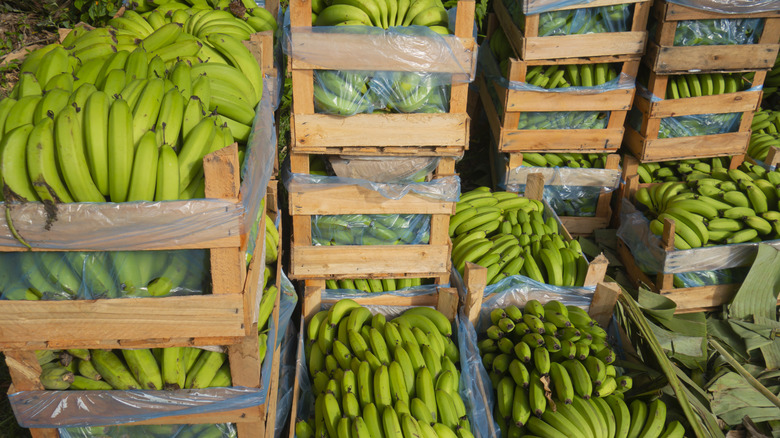
In 2014, five different markets in Berlin and Brandenburg received 309 pounds of cocaine mixed in with bananas from Colombia. The shipments were apparently mistakes made by traffickers, who obviously didn't mean for the cocaine to go to an Aldi loading dock. In May 2015, 14 more Aldi locations in Berlin received banana shipments from Colombia that held a whopping 386 kilograms, or 850 pounds, of cocaine. This was a record-breaking find for Berlin police. But that's not the worst part of the 2015 find. This discovery was actually the second one of the year. Yep, the same stores received cocaine shipments in January 2015. Thankfully, the police did think the shipments were mistakes rather than inside jobs.
It only got worse from there. In April 2019, workers at Aldi in Rostock, Germany, and at a distribution center found about 500 kilograms, or 1,102 pounds, of cocaine hidden among banana shipments. In fact, the haul was so large that police were unable to give estimates in the initial reports. Thankfully, it seems as if the discovery of these bonus items has ceased (at least for now).
North Korean nuclear fish profits
Back in October 2017, the Associated Press conducted an investigation that tracked the money you spend on seafood, specifically squid, salmon, and cod. The investigation looked at where the seafood was processed and by whom, and where your money eventually trickles to. It turns out that people buying these foods at markets like Aldi may have contributed, unwittingly, to North Korea's nuclear program.
When Americans bought the seafood in question, the money went to the markets where they bought it. Those markets would use that and other funds to purchase more seafood. Sounds normal, right? The companies that Aldi and other markets bought the seafood from were in China, and those companies used a mix of Chinese and North Korean workers to process it. The North Koreans received pay for their work, but the North Korean government would take a huge cut, as much as 70% in some cases. The implication was that the money customers spent here likely made it into North Korea's government coffers, which could have been used to support the country's nuclear-weapon research and testing. An additional problem was that the U.S. wasn't supposed to import anything made by North Korean workers, and U.S. Customs declared it would block future shipments. U.S. distributors cut off contracts with the processing companies amid the investigation.
Lead in a kitchen faucet
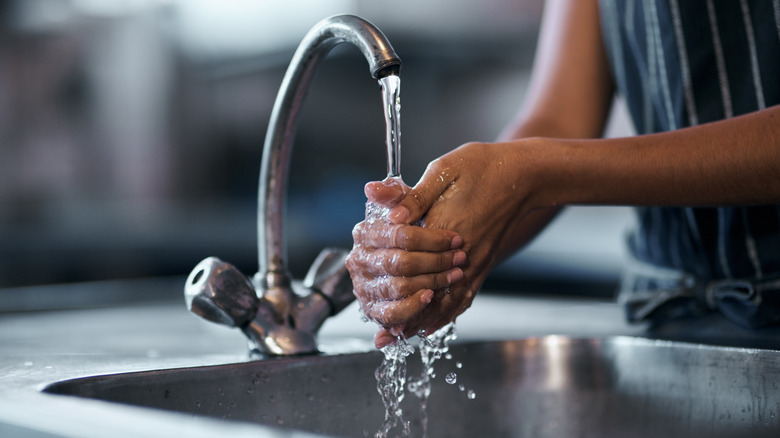
Aldi is also in Australia, and in 2016 and 2017, the company sold a popular kitchen faucet model called the Easy Home spiral spring mixer tap. About 12,000 families installed it, using the water for drinking and cooking. However, in 2017, the Queensland Building and Construction Commission (QBCC) found that the faucet could contain anywhere from 15 to 21 times the allowable level of lead. Lead leaches into things like water and food and causes a range of health problems; even normally healthy adults can suffer from cardiovascular and kidney problems. One customer reported that she had been experiencing memory problems during the year that she drank water from one of the taps. While she wasn't sure if her problems were actually linked to the tap, she and her family eventually replaced it.
Aldi, the QBCC, and the Australian Competition and Consumer Commission (ACCC) went back and forth over the tests. The QBCC insisted that its tests showed the faucet to be unsafe, while Aldi had documented tests showing that it was safe and complied with national safety standards. Aldi claimed that the QBCC's tests lacked specific information that would confirm where the tap came from and that the study didn't describe part of the testing process. The ACCC recommended that people stop using the tap anyway, and Aldi removed the faucets from shelves.
Customer upskirt photos and employee locker room surveillance

It shouldn't be new news to anyone that companies monitor customers and employees to an extent. The companies want to view customer behavior and ensure employees are actually doing their jobs. But sometimes the monitoring turns into outright spying and even harassment.
In 2012, German news outlet Der Spiegel found that Aldi branch managers in Frankfurt had been filming female customers as they bent down to retrieve items from shelves. The customers were in low-cut tops and short skirts, and the cameras would zoom in to take photos. Footage of the customers in revealing clothing was burnt on a CD and shared with other employees. It turned out that the managers had placed whole stores in several locations under surveillance. They used excuses like security to get store detectives to place CCTV cameras. Der Spiegel also found that some of the cameras captured customer PIN information at checkout lanes.
In 2013, Der Spiegel reported that a former Aldi store detective in Germany claimed that he had been asked to install cameras in staff locker rooms in one store and to report on the employees' personal lives. He said that he had refused and that the management of the store threatened to remove him from surveillance duty. A former Aldi manager from another location also claimed that year that the chain would resort to blackmail and threats against workers they wanted to get rid of.
Salary and wage theft
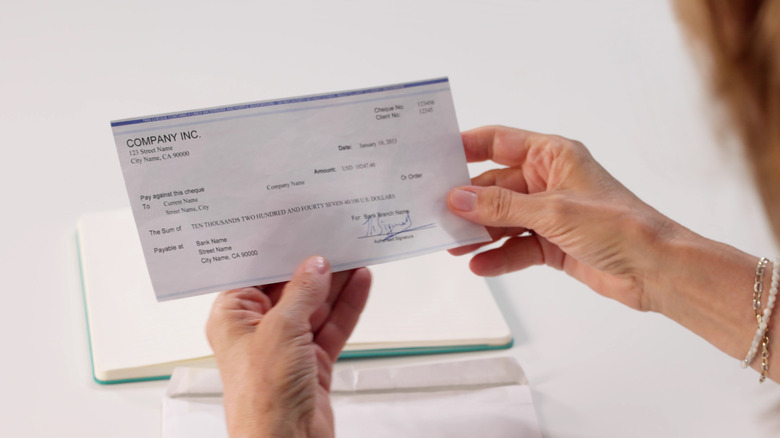
Aldi has been the defendant in more than one lawsuit over wage theft. In 2019, store managers in Syracuse, New York, filed complaints that they were given salaries to do hourly work, meaning that they were essentially not being paid to do work that their employees were paid to do. It's true that if you receive a salary, you may have to work more than 40 hours with no increase in pay. But in this case, the specific work was that which hourly employees were already doing. The hourly employees were eligible for overtime, but the managers were not. The case eventually expanded nationwide, and Aldi ended up settling in federal court for $9.8 million. In 2020, Aldi had to settle a $2 million class-action suit brought by California workers who accused the chain of not paying them correctly (or in a timely manner), and also denying breaks.
Back in Australia, Aldi was accused multiple times in 2022 and 2023 of wage theft by requiring employees to start working before they clocked in. Distribution-center workers in New South Wales were asked to start work 15 minutes before clocking in, and workers in Prestons (near Sydney) were asked to start working 10 minutes before clocking in. And these weren't just once-in-a-while things. The Prestons' case covered four years (Aldi issued back pay), and in October 2023, the Shop Distributive and Allied Employees Association accused Aldi of requiring some workers to work as much as 30 minutes before clocking in over the course of six years.
Two separate slave-labor accusations
2017 was not the best year for Aldi. Not only did the company have to deal with the North Korean fish situation and the lead faucet, but it was also accused of exploitation and using workers who were in so-called slave-like conditions. In April 2017, two Korean citizens who had worked as contractors at an Australian Aldi warehouse claimed they were assigned flat salaries but made to work overtime. One also claimed he wasn't paid at all, while another claimed he was partially paid. The two were employed with a separate labor company that contracted with Aldi. In September 2017, Aldi was one of three companies accused of running factories in Bangladesh where workers were paid very little (about 25 pence or 33 cents per hour) and forced to work in hot rooms up to 12 hours per day. The poverty wages and terrible working conditions led to accusations of exploitation.
But it wasn't just workers overseas or temporary contractors who had issues with terrible working conditions. In August 2017, the Transport Workers' Union, which represented truck drivers for Aldi in Australia, accused the company of pressuring drivers to skip their breaks and drive for too long a time. The union also said Aldi tried to get drivers to ignore maintenance, which would have taken time away from driving. Aldi tried to get a gag order in court aimed at the union, but in March 2020, Aldi lost the case.
Exploding turkey burgers that caused permanent scarring
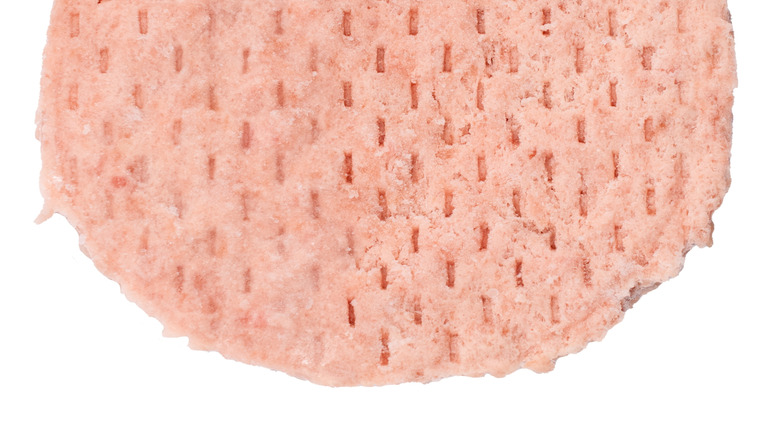
Back in August 2018, a Pittsburgh-area woman followed the instructions on a package of frozen turkey burgers from Aldi. The instructions called for pan-frying the burger in a skillet with a little oil for a few minutes. The burger apparently exploded, to use the woman's description, causing serious burns and permanent scarring. She sued in February 2019, claiming it needed to warn customers about the burn risk, and settled with the company in December of that year.
On one hand, the instructions on the Aldi packaging were just about the same as the instructions that other companies use. Pan-frying in some oil for a few minutes per side is pretty standard. The Jennie-O company even has a video that demonstrates how to cook a frozen turkey burger using the same process. On the other hand, you never know what could happen to a burger patty during processing that could make it act very differently than it's supposed to. You can expect some oil spatter, of course, when ice on a patty melts into the hot oil. But an actual explosion that causes second-degree burns could imply something was wrong with that turkey burger, assuming the woman followed directions exactly.