

10 Old-School Dips We Think Deserve A Comeback
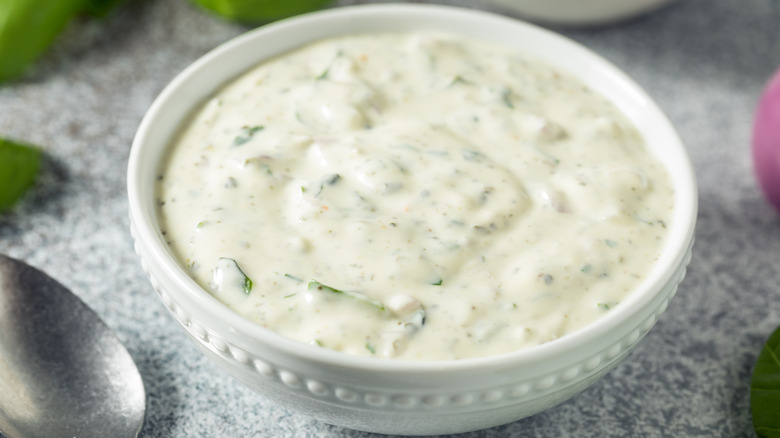
What's a Super Bowl party without dip? Or a Christmas spread without a cheese ball? Pretty boring if you ask us. Dips are essential for large gatherings or when you need to feed a crowd, with finger foods taking precedence over fork-and-knife fare. Prepared spreads may be convenient, and even simple add-ins can jazz up store-bought dips, but the real crowd-pleasers are homemade. Modern cooks are always trying to reinvent the wheel, but you might be surprised to learn about how many vintage versions of these thick sauces exist, which would have been the highlight of party spreads back in the day. Many classic 20th-century recipes have been forgotten over the years, but we're here to help you explore the world of old-school dips.
Philly hostess, creamy clam, caviar pie, and pimento cheese spread might not be in your current repertoire of menu ideas — but maybe they should be. Lurking on the Internet in forums and low-view-count videos, and featured in long out-of-print cookbooks, these vintage recipes are treasured. We found some classics that you might want to try out at your next party, so grab a cocktail napkin and read on for a rundown of ten old-school dips we think deserve a comeback.
California dip
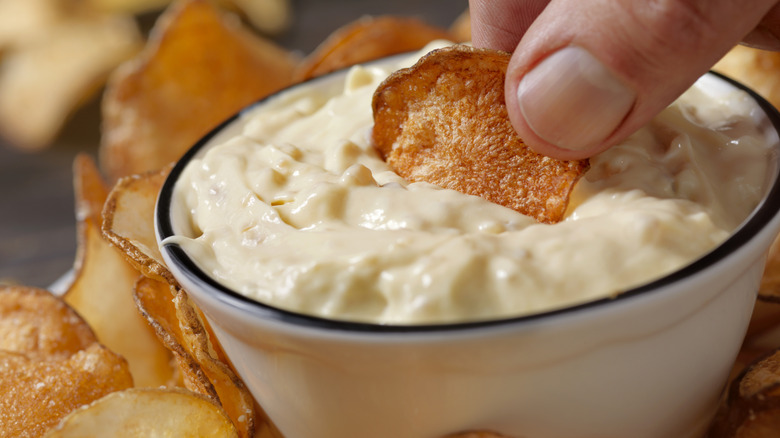
Any food or drink with the California prefix just sounds fun, and we're not sure why. You've probably tried California rolls, California almonds, California wine, and California-style pizza — and California dip should be next. If you're scratching your head and can't quite recall ever having tried this vintage spread from the Golden State, we'll break it down for you. As with any food or recipe, pinpointing the exact date, time, and place of its origin can be almost impossible, but this dip reportedly hails from mid-century California. The dip recipe then spread around the state by word of mouth — the old-school, pre-TikTok way of going viral.
In the 1950s, dips were quite popular in post-war American households, with large food companies like Lipton promoting the party-snack trend. It even printed dip recipes on the back of their onion soup mix boxes, featuring this California dip for decades. The dip couldn't be easier to make and only requires two ingredients: 16 ounces of sour cream and one envelope of Lipton Onion Soup mix. Vigorous mixing will produce a generous amount of dip, perfect for scooping up with potato chips or baby carrots. If you want to experience some food Americana through the lens of party fare, give this simple old-school dip a shot.
Green goddess dip
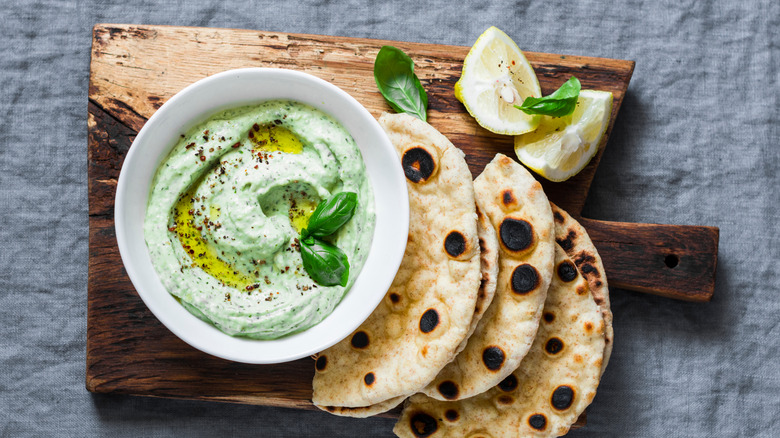
Green sauces come in countless variations, with culinary roots spanning the globe. Take any herb — like parsley, mint, or basil — mix it with a fat, an acid, and maybe some thickening component like nuts or avocado, and you have something that is both earthy, refreshing, and creamy. Salsa verde, chutney, pesto, and chimichuri are just a few examples of sauces that are the perfect accompaniment to foods like a grilled chicken sandwich. Another, which originated in San Francisco in the 1920s, is green goddess dip.
When made thicker, green goddess can serve as the perfect dip for crudite at a gathering; when thinner, it can be repurposed as a dressing. For those unfamiliar, green goddess consists of anchovies, garlic, Greek yogurt, parsley, basil, chives, lemon juice, avocado, and salt. It's a symphony of flavors and, as the name suggests, a richly green dip for your veggies. And while veganism wasn't a cultural trend in the 1920s, nowadays plant-based eaters can swap dairy for vegan yogurt and replace anchovies with capers or olives for a brine-y, salty pop. Either way, this dip is a great way to add more greens to your diet.
Port wine cheese ball
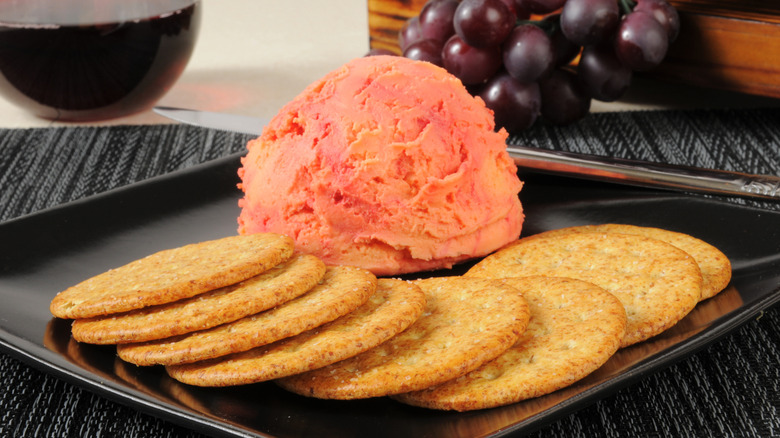
Cheese balls are a Christmas-time staple, and like all of these dips on our list, they are definitely old-school. As part of a holiday snack spread, homes of yesteryear would typically have one on full display, with an assortment of crudites and crackers spread around them like petals on a flower. Of course, there are simpler and variations of cheese balls, but here we have a gourmet-inspired version: the port wine cheese spread. As it happens, this type hails from Wisconsin, which should come as no surprise given the state's rich cheese-making culture. The original recipe dates back to the early 1900s, with dairy farmers and local gourmands shaping it into a popular dip of the time.
Though perhaps rarely found on charcuterie boards these days, this old-school dip consists of port wine cheese. This flavor bomb is essentially a Wisconsin sharp cheddar combined with those rounded and punchy blackberry, plum, spice, and chocolate notes we love in port wines. If you don't live in Wisconsin or don't have access to a local specialty cheese monger, there are recipes online for making your own port wine cheese with sharp cheddar, cream cheese (sometimes with blue cheese as well), port, Worcestershire sauce, and seasonings like garlic powder. Blitz it all in a food processor, form into a ball, and let it set in the fridge for a few hours. Yum!
Philly hostess dip
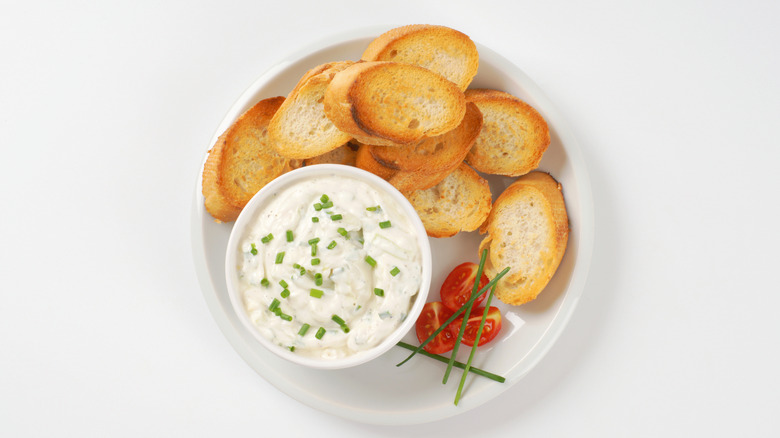
Philadelphia is a town known for great bites like the Philly cheesesteak, hoagies, roast pork sandwiches, tomato pie (pizza), and soft pretzels from street vendors. So you may be surprised to learn that Philly cream cheese, the popular, spreadable cheese condiment that millions schmear onto bagels and sandwiches daily, actually hails from New York. Originally conceived in the late 1800s, it was named after the city of brotherly love for a marketing edge, due to the area's renowned dairy quality. Fast forward to mid-century America, and it is the core of this old-school spread made with that creamy and delicious cream cheese, aptly named Philly Hostess dip.
Philly dip essentially consists of cream cheese, some milk to loosen it, lemon juice for acidity, Worcestershire sauce for umami, mayo, mustard, and seasonings to balance it all out. Served on a platter at gatherings or as a pre-dinner snack, this dip pairs well with corn chips, pretzels, and crudités for scooping. Or, serve it with a baguette, sourdough pieces, or any other heavy bread.
Creamy clam dip
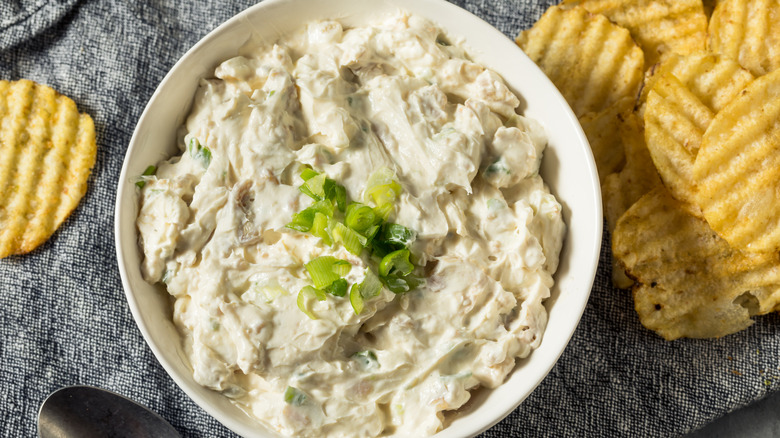
Just like many of these old-school dips in our list, this one also has its origin story dating back to the 1950s, as a taste of long-since-forgotten Americana. Creamy clam dip is pretty self-explanatory, with an unmistakably briny, super savory, salty profile of the shellfish. According to food historians, clam dip was thrust into the forefront of mid-century pop culture through a Kraft Music Hall television show feature. This show basically served as a vehicle for the food conglomerate to push its products, like the then-new Miracle Whip dressing.
The specifics of creamy clam dip's launch into the food space aren't entirely clear, but what is certain is that it is a delicious old-school choice. To make your own version and explore some food nostalgia, you can whip this dip up relatively easily. You just need a can of whole baby clams with the juice reserved, some sour cream, horseradish, cream cheese, lemon juice, Worcestershire sauce, seasonings like cayenne and celery salt, and some scallions and parsley to freshen it up. Like pretty much any other dip, it's best to let it sit for a few hours before digging in so the flavors can get acquainted — and it's even better if chilled overnight in the fridge.
Ham salad spread
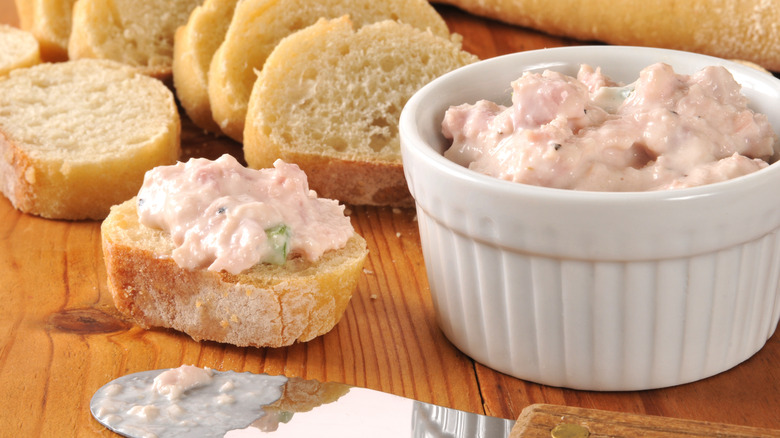
Chicken salad and egg salad — either on their own, or in a sandwich — are ubiquitous and standard fare that fuels many a workday as a no-frills lunch. Ham salad, on the other hand, might not be quite as common — but it is equally satisfying. This spread was quite common during the Great Depression, when money was incredibly tight and humble food was essential.
Making this thick dip, as you can likely imagine, requires finely chopping up some of that leftover delicious baked ham, either by hand or with a food processor, and then combining it with diced celery, scallions, sweet relish, mayo, mustard, and some salt and pepper for good measure. Serve with baguette slices.
Caviar pie
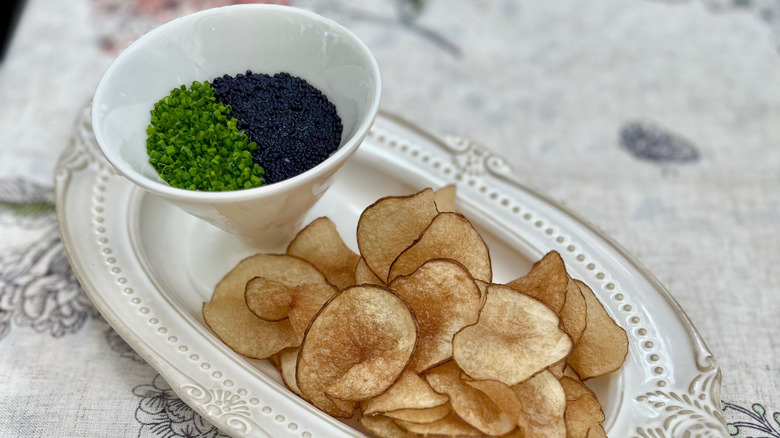
If you want to impress at any gathering, a tin of caviar amongst charcuterie and crudité will likely pull in your guests like a magnet and keep them swarming the table spread. Yes, it's a very expensive foodstuff and might even be hard to source at your local gourmet shop, but it's a treat, almost like champagne, that's only consumed a few times per year. Caviar pie, while perhaps having a misleading name, isn't quite a pie — instead, this is a dip that you'd eat with some fancy crackers. Sure, you could eat it with a spoon, but we think it is best suited as a finger food for special gatherings.
If you haven't heard of it, we wouldn't be shocked, but out of all the dips on our list, it might be the richest and most indulgent. It consists of hard-boiled eggs, mayo, sour cream, and an optional finely diced onion or shallot. From there, you want to separate the egg whites from the yolks, then mash the yolks with the sour cream and mayo, before incorporating the whites back in, creating a paste-like consistency. Having a ring mold helps to set the dip, but it isn't necessary — a small bowl could do in a pinch. Then add the minced shallot and season with salt, then chill in the fridge for a few hours. Before serving, add a layer of the caviar on top, and garnish with chives.
Chipped beef cheese ball
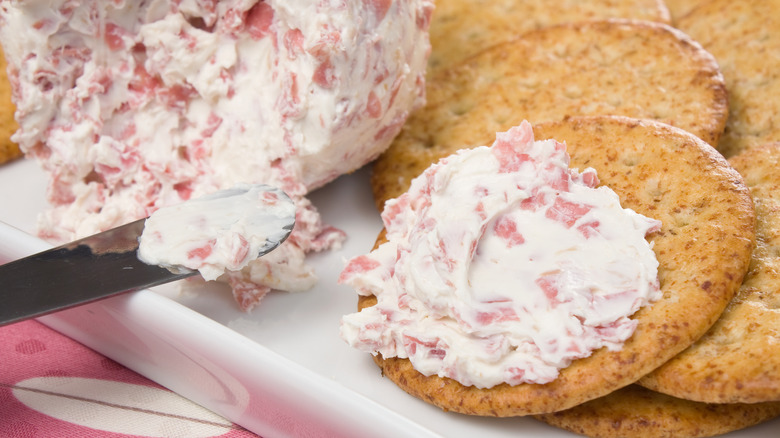
Cocktail parties and potlucks of yesteryear may have had a chipped beef cheese ball or two set out on tables and in kitchens as a super-savory snack. Chipped beef cheese balls, for those who weren't around in the '70s to experience them in their heyday, bring together two fast friends: beef and cheese. In particular, this old-school dip uses chipped beef, which is simply dried, cured, salty beef cut into slices.
Chipped beef can often be found in the grocery store aisle where you'd find the canned tuna. The remaining ingredients are cream cheese, Gouda cheese, Worcestershire sauce (you have noticed by now that many of these old-school dips feature this umami bomb, which helps to add depth of flavor and richness), seasonings like salt and garlic powder, with parsley and green onion to freshen up and garnish, as well as optional pecans. Combine the ingredients by mashing everything together, form it into a ball with some cling wrap to keep its shape, let it set in the fridge for a few hours, and then garnish with some pieces of chipped beef and parsley.
Shrimp dip
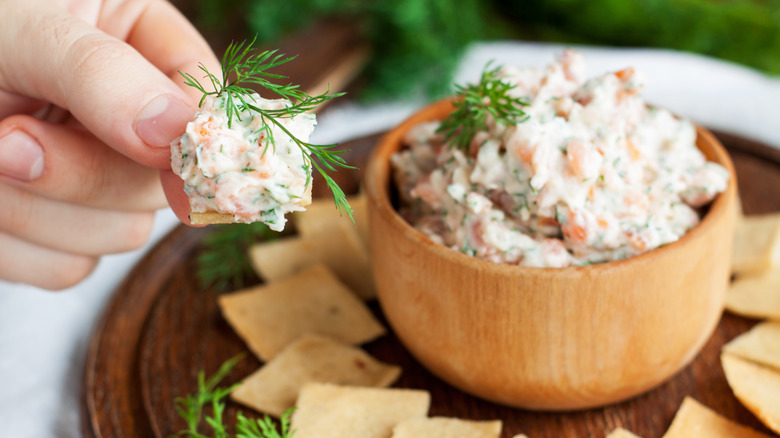
Chances are, you haven't seen a shrimp mold at a party in ages, if ever. A jiggly and pink-hued mound of glorious pureed shrimp on a bed of lettuce, in all its glory, isn't likely to be the star attraction at your next gathering, but we think it should be — in some form. While the presentation back in the day was rather kitsch — consisting of the dip set into a mawkish, on-the-nose fish mold — it doesn't have to look so 1970s for the modern cook, but the dip itself is delicious.
As for the ingredients, there are variations, but it mostly requires a bunch of shrimp — canned for expedience or fresh for better flavor. The seafood is blended with cream cheese, chicken broth, hard-boiled eggs, mayo, and flavor boosters like pimentos, olives, hot sauce, and some gelatin powder. Everything is combined into a thin paste, which is then traditionally poured into a mold. For texture, you could also add some diced celery at the end, after the blender blitz, along with chopped onion or green pepper. Feel free to break the mold and experiment with the ingredients, using the shrimp as your anchor.
Pimento cheese spread
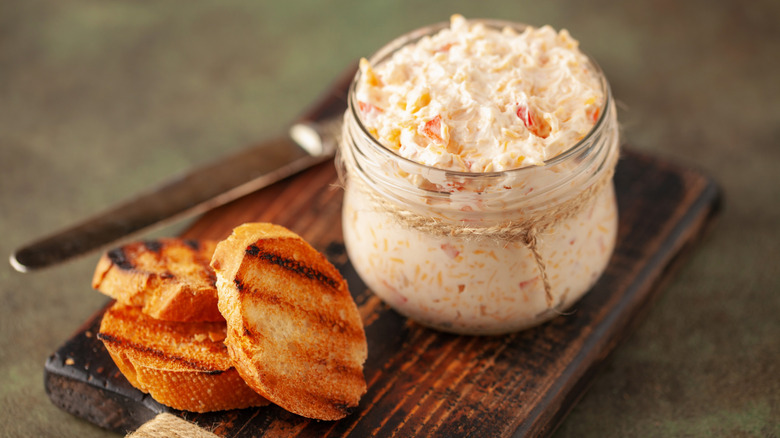
The last old-school dip on our list is not to be overlooked. Flavour-packed pimento cheese spread, like so many American foods, has a mix of influences and cross-pollinated ideas. It has a distinctly Southern connotation, yet can be historically traced to kitchens in the North of the country. This pimento-flavoured dip has a sharp cheddar cheese base. To thin it out, cream cheese and mayo are used (Duke's or Hellmann's work well here), along with seasonings like chilli flakes, salt, and pepper. Alternatively, you could use marinated and jarred red peppers in place of the pimentos if they are not readily available.
The cheddar needs to be grated before being added to the cream cheese, mayo, and pimentos. Then you just have to work it into a paste and add in the remaining seasonings, adjusting to taste, while also adapting the consistency to your liking by adding more or less of the liquid ingredients. Some purists, especially Southerners who grew up eating this old-school dip, may not agree with adding cream cheese, opting for mayo alone. Either way, this one is a winner, and we're sure you — and your guests — will love it at your next dinner party.