

Your Complete Guide To Freezing Your Thanksgiving Leftovers
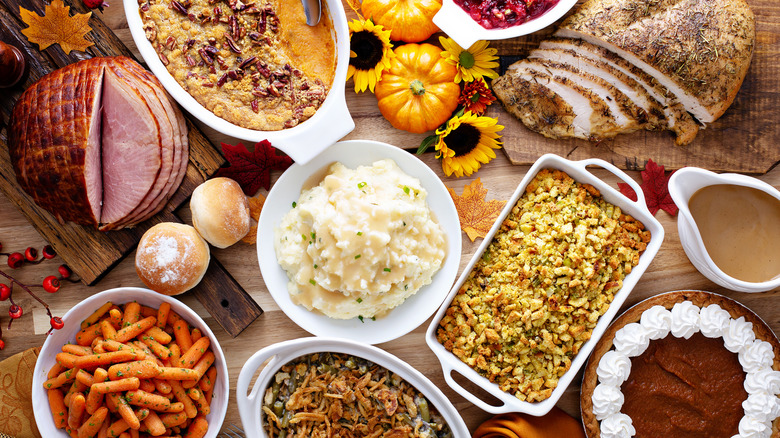
Complaints about having too many Thanksgiving leftovers are almost as traditional as the turkey itself. However, all that excess food means you can have meals for months if you know how to preserve the food correctly — but you need to be aware of several safety tips. As you eye the leftovers on the table all foods need proper handling. That means cooking to safe temperatures, washing your hands before cooking, and storing ingredients safely before cooking. Perishable food shouldn't sit out for more than two hours once cooking is done.
All leftovers should go in containers that are no more than 2 inches tall. When you store thicker amounts of food, the freezing process may take too long to remain safe — the food in the center of the container may not freeze well, but using 2 inches as a maximum promotes better freezing. You'll also need to be careful not to store large stacks of warm food in one spot in the refrigerator. Instead, distribute containers around the entire space so that the food cools off more quickly. After those Thanksgiving leftovers are chilled, here is what you need to know about how to store them in the freezer.
Turkey and gravy
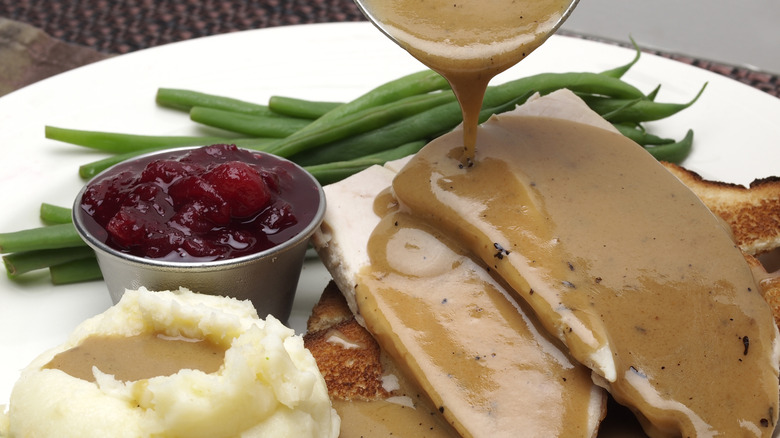
Both turkey and gravy need to be completely cool before going into the freezer. Because you can't leave them out on the table for more than two hours, put them in the refrigerator first — that way, you won't have to worry about food safety while letting them cool completely down. If you don't and suddenly realize the turkey and gravy have been out for longer, throw them away. Cutting up the turkey first can help each piece cool more quickly. Freeze the turkey within a couple of days, and freeze gravy within a day.
Once you have the turkey pieces cut up and cooled, wrap each in aluminum foil. Place a few in a freezer bag and freeze; repeat for all the pieces. You don't want to stuff a lot of pieces into one bag because the pieces in the center might not freeze properly, creating a food safety hazard. For gravy, pour the cooled gravy into ice cube trays and freeze. Afterward, remove the cubes and store them in a freezer bag. Ensure you've squeezed out as much air as possible from both the turkey and gravy packages. Use the turkey and gravy within three months. If you have leftover plates with turkey covered in gravy, place those in separate small freezer containers or bags and freeze. Reheat those and use them sooner rather than later.
Pies
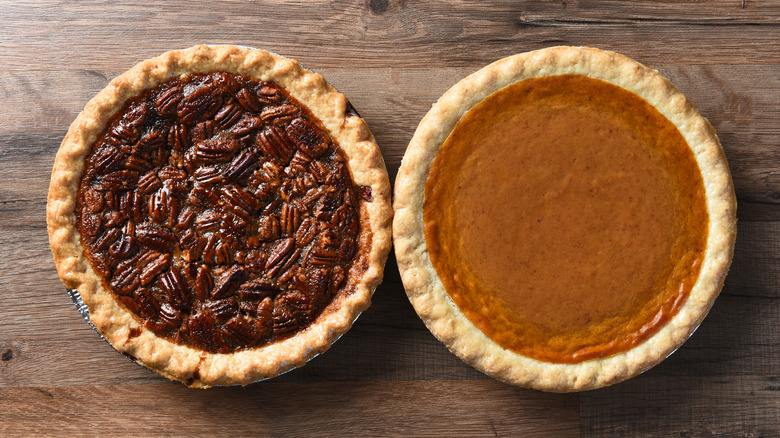
Pies, such as pumpkin and pecan, freeze well, but with one warning: they need to be frozen and stored flat. Don't try to store them in a space where you have to angle them and perch them precariously — pies can be rather fragile.
When you're ready to freeze the pie, you can do one of two things — freeze a whole pie by wrapping it in freezer-friendly plastic wrap and a layer of aluminum foil. If the pie is in a ceramic dish, you might consider moving the pie into a disposable foil pan before wrapping and freezing. These pans are thinner than ceramic and will allow the pie to freeze more quickly — longer freezing times can result in ice crystals forming on the pie. If you want to freeze individual slices, cut up the pie and place each slice on a baking sheet. Place this in the freezer for as long as it takes for the filling to become firm, and then wrap each slice in plastic wrap and store in a freezer container or bag. If you don't put the pie through that initial round of freezing, the slices will be at risk of crumbling. The freezing also helps stop the filling from sticking to the plastic wrap and tearing apart when you unwrap the slice.
Sweet potato casserole, corn casserole, and mac and cheese
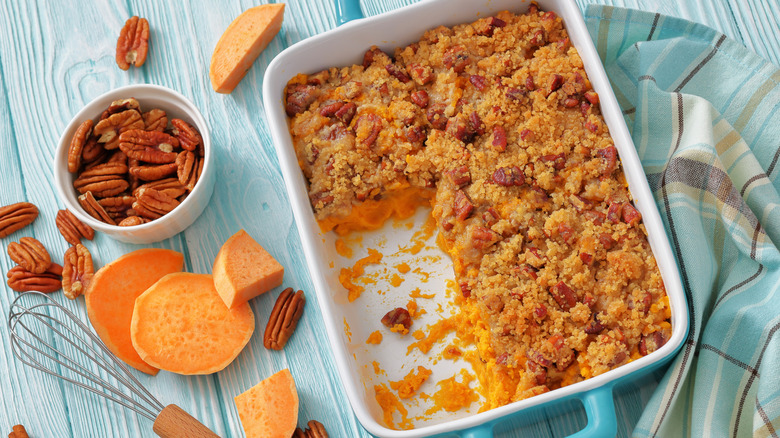
Something that's important to note is that casserole-style dishes that contain emulsified sauces shouldn't be frozen. However, recipes that don't contain these sauces can be frozen. Corn casserole and macaroni and cheese both freeze well. Sweet potato casserole freezes well, too, for the most part. The topping is an issue because nut, streusel-style, and marshmallow toppings all become soggy once they thaw. The sweet potato base, though, will freeze and thaw relatively well. Your options are to remove the toppings first and freeze the sweet potato on its own, or just be prepared for the toppings to be a bit soggy when you eat the thawed casserole. The same goes for mac and cheese if it has crackers for a topping.
It's usually easiest to leave the casserole in its dish at first just because these foods tend to be so soft. Let the dish cool down completely first. You can't leave these dishes out for more than two hours, so after dinner, place them in the refrigerator if necessary to ensure they chill. Then, wrap the dish in freezer-safe plastic wrap and foil. Try to wrap the dish as tightly as possible to limit air exposure. Another option is to wrap the dish in one layer of foil and then place it in a freezer bag.
Fluff salads
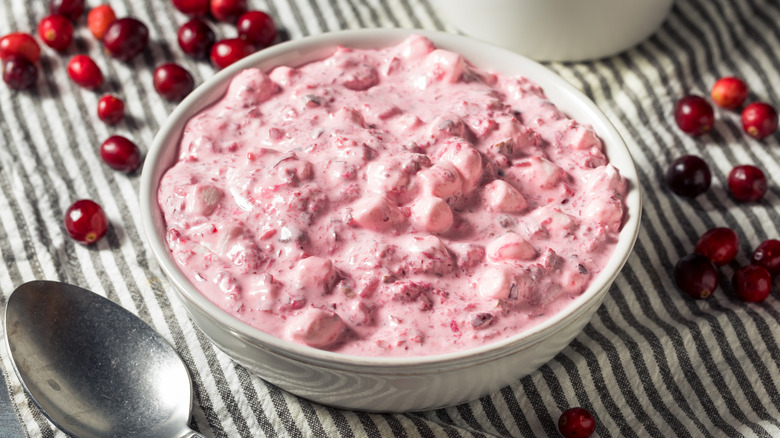
If you're planning to have a fluff salad on the menu, you can freeze that, too. For the uninitiated, fluff salads (including "pink stuff") contain ingredients like fruit, marshmallows, cream cheese, nuts, and cream, which are all mixed together into a creamy, sweet, fluffy side dish. They're sometimes called marshmallow salads and may also contain pudding mixes or non-dairy whipped topping. Other recipes contain flavored Jell-O, and there's a whole category of recipes that contain crushed pineapple.
Freezing them is a cinch — just be sure the fluff hasn't been sitting out for more than two hours. Grab a scoop or measuring cup and scoop the fluff into a cupcake mold. Freeze the mold until the fluff is completely frozen, and then pop the "cupcakes" into a freezer-safe bag. Defrost these in the refrigerator. Do not let them stay at room temperature for more than a couple of hours. Also, finish them up quickly, ideally within a couple of months.
Potatoes
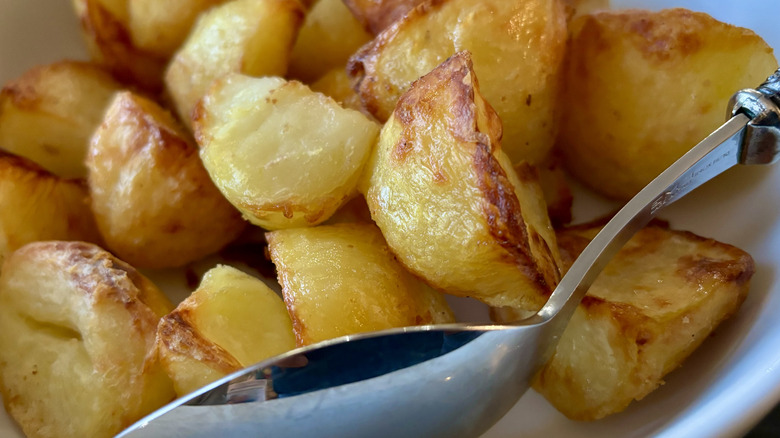
Freezing leftover potatoes can be iffy. Some freeze well and others don't, all depending on the preparation method, ingredients, and who you ask. Leftover mashed potatoes made with butter or cream can freeze well, but not everyone is in agreement. There's the risk that the dairy could curdle once you thaw and reheat the potatoes. Additionally, mashed potatoes with onions or garlic — actual chopped bits, not powder — don't freeze well because when thawed, as the onions and garlic can turn slimy.
Others say the butter or cream help the potatoes stay flavorful after thawing, although the result could be a bit watery. Divide the potatoes with a measuring cup or ice cream scoop, place the pucks of potatoes on a baking sheet, and freeze for one to two hours. Then, wrap each well in plastic wrap that's freezer-friendly and store them in a freezer bag. You may need to restore watery potatoes when thawed; use cream cheese, shredded cheese, or sour cream. Alternatively, you can use the potatoes in frying or baking. However, mashed potatoes made with broth aren't good to freeze — the broth makes the potatoes turn icy, and they're very watery when thawed.
Roasted and scalloped potatoes also freeze well. Spread roasted potatoes out on a baking tray to freeze as you would with mashed potato. Pour the frozen potatoes into a freezer bag. For scalloped potatoes, cut into portions, freeze on the tray, and wrap each in plastic wrap as you would the mashed potatoes.
Stuffing/dressing
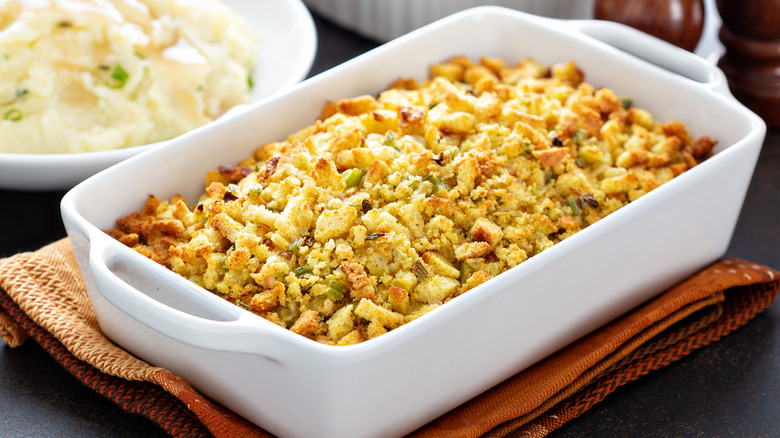
Whether you call it stuffing or dressing, this carb-loaded side dish is simple to freeze. You can even prepare it ahead of Thanksgiving dinner, bake, and freeze the entire thing. However, with leftover stuffing/dressing, you'll need to divide it and flash-freeze it first — and you have a time limit. It's best not to let the leftover stuffing/dressing sit in the refrigerator for more than 24 hours. That just helps keep the quality a little better once you thaw it. If the stuffing/dressing has been in the refrigerator for a couple of days, it's not the end of the world.
Cut the leftover stuffing/dressing into portions, and be sure they cool completely. Then, either place the portions into a silicone tray with compartments (e.g., a large cupcake mold or soup mold), or place them on a flat baking sheet, and freeze for about an hour. This helps the food become firmer and less likely to become smushed when you pack it away for the next few months. If you merely wrap the portions and stack them in a bag, the weight of the upper portions can smash the portions on the bottom of the stack. After the hour is up, wrap each in freezer-safe plastic wrap, and stack the blocks in a freezer bag.
Cranberry sauce
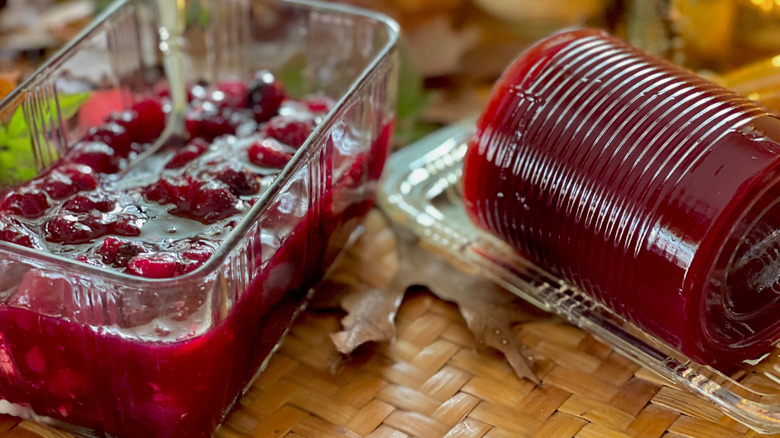
Homemade cranberry sauce does well when frozen and thawed. Treat homemade cranberry sauce like you would tomato sauce. Let it cool completely, and then either freeze it in silicone freezer molds (like the ones you use for soup), or pour portions into zippered plastic bags or bags you can vacuum-seal. Press the sauce into a flat layer, and freeze the bags flat. For the molds, measure out the sauce, freeze, and then wrap each block in freezer-safe plastic wrap. Follow up with either another layer of foil, or just put the blocks in a freezer bag.
Canned sauce is another matter. You can freeze it; that's not the problem — it just won't have the glossy, smooth, gelatin-like gleam of fresh-from-the-can sauce. The jellied texture can break down a bit when thawed, and the sauce may be watery. In fact, some sources don't recommend freezing it for these reasons. If you don't want to waste food and don't mind a little water, freeze away. Remove any remaining sauce from the can. Divide the sauce into portions; silicone freezer molds and silicone ice cube trays both work well for this. Wrap larger frozen blocks in plastic wrap as you would with the homemade sauce, and place ice cubes in a freezer bag. Use up the canned sauce quickly.
Brussels sprouts, collard greens, candied yams, and other cooked vegetables
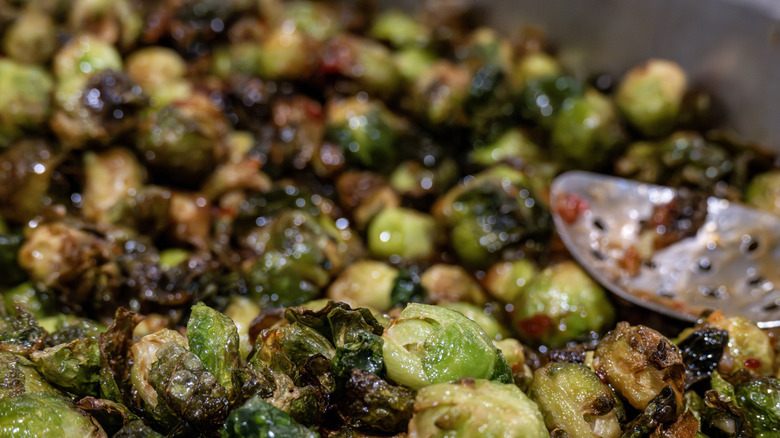
The best way to freeze vegetables is when they're cooked, so if you've got leftover Brussels sprouts, sturdy greens like collards or spinach, or candied yams, half your pre-freezing work is already done for you. The cooking process eliminates an enzyme that makes raw vegetables continue to deteriorate even when frozen (This is why you need to blanch raw vegetables that you're trying to preserve in the freezer; even the "raw" vegetables you get at the store have been blanched).
Drain excess oil from the vegetables if necessary, but don't pour the oil down the sink drain — put it into a disposable container, or use an oil-solidifying powder and then throw the solid block away. Spread the vegetables out onto a baking tray, and try to ensure that they aren't up against each other — letting them have their space helps them freeze more quickly and evenly. Freeze the tray for about an hour, and then pour the frozen vegetables into a freezer bag or freezer container. Label the bag with the date, and try to use all of them up within three months.
For candied yams that have all that delicious sauce, divide the yams into portions. Freeze each in its own freezer container, or in a silicone freezer mold. Wrap frozen blocks in layers of freezer-safe plastic wrap and foil to block out air.
Rolls and other bread
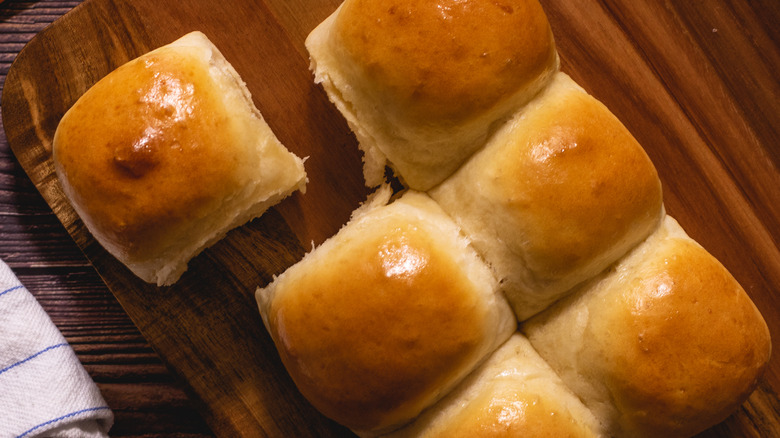
From slices to rolls, leftover bread is very easy to freeze. In fact, the freezer is the best place to store bread. For plain breads, including any unglazed and unfrosted quickbreads like pumpkin bread, ensure the food is cool. Never try to freeze warm bread — the steam that the warm bread produces can actually promote bacterial and fungal growth inside the bread (Remember, freezing doesn't kill these off). The moisture from the steam can also make the bread soggy once thawed.
Divide the bread into portions. Wrap each portion in freezer-safe plastic wrap or foil, and then either wrap it again in foil or place the portions in a freezer bag or container. If you're freezing a sliced loaf, you might want to place pieces of parchment or wax paper between each slice so that they're easier to separate when frozen. The goal is to ensure as little air reaches the bread as possible to prevent freezer burn.
What if the bread, such as quick bread, has some sort of frosting or glaze? Cool and divide the bread, and then place each portion on a baking tray in one layer. Freeze it for about an hour, and then wrap as before. Note that, when thawed, the texture of the glaze or frosting may be a little different.
What you can't freeze: deviled eggs, green bean casserole, and lettuce-based salads
Finally, there are those dishes that you could technically put in the freezer, but you'd regret it. When something freezes, all the water in the item turns to ice, which expands. If the frozen moisture is inside of the food (as opposed to exterior condensation), that expansion can affect the food around it.
When the dish thaws, the structure of the non-liquid material doesn't recover. This isn't so apparent in foods with a little moisture, but for very watery foods like iceberg lettuce, you're left with this mushy food. Dishes like lettuce-based salads are going to be limp when thawed. If you really want to freeze them, you can, but use them up quickly in recipes, like ones for smoothies or cooked dishes.
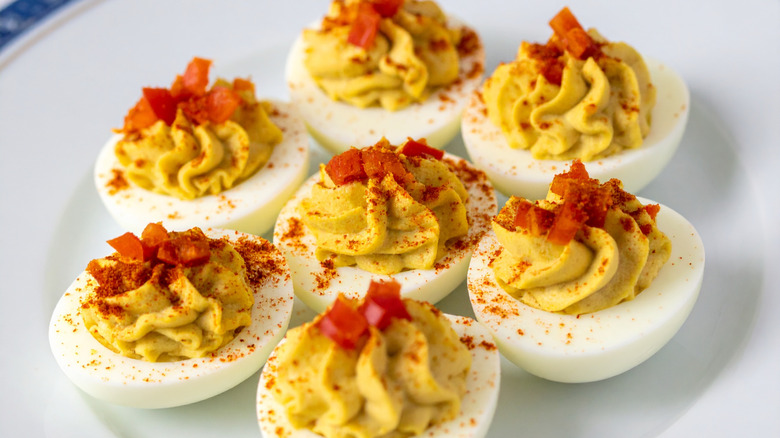
Deviled eggs are another no-freeze item. The yolks are usually mixed with mayonnaise, which "breaks" when frozen and thawed; it essentially reverses the emulsion process in the mayonnaise, letting the components separate. The egg whites can actually continue to become tougher after freezing and thawing.
Finally, don't freeze the green bean casserole. The emulsified, creamy sauce will also break and separate, leaving a mess that's alternately watery and studded with fatty lumps. Any leftover green bean casserole should go in the refrigerator. Eat the rest within four days.