

Can You Actually Make Cider From Apple Juice?
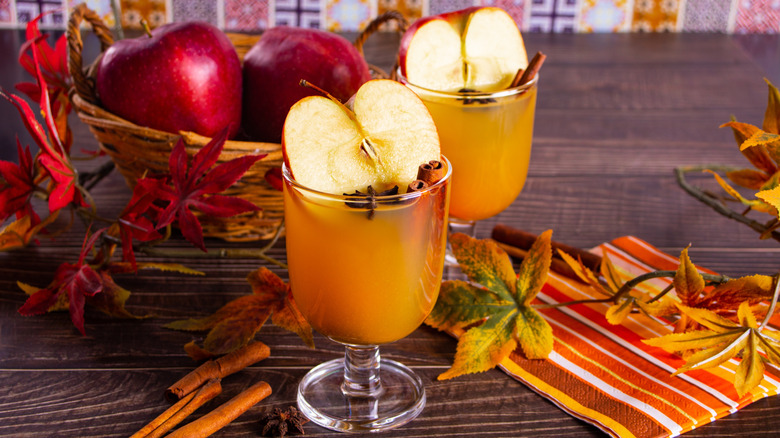
Apple cider can be considered the canonical drink of the fall season. Its signature flavor shines in a variety of autumnal foods and drinks, from unique and flavorful apple cider-based cocktails to the go-to donut flavor that New Englanders can't get enough of. Fall is also the time of year when you find grocery stores lining their shelves with different apple cider brands, which we ranked if you prefer taking the time-saving route of buying the beverage rather than making it from scratch.
Home chefs who prefer scratch-made should be familiar with the labor-intensive process of homemade apple cider. It requires grinding the apples and pressing the juice out, which is then served as such without much additional processing. This is unlike apple juice, which typically undergoes additional steps, such as filtration and pasteurization, to make it shelf-stable. Even when you make your own apple juice at home without a juicer, you may notice that the liquid is clearer than that of the unfiltered cider.
Although apple juice and apple cider are two different drinks, you can still use apple juice to make cider in a pinch. Bear in mind that you can't use just any apple juice. It needs to be pure apple juice, not ones from concentrate, to avoid any unnecessary added sugars. Either fresh-pressed juice, if making it at home, or the cold-pressed version from the store would work fine. Simply combine the juice along with the cider spices and let it simmer for about an hour or two for the ultimate fall drink.
What about alcoholic ciders?
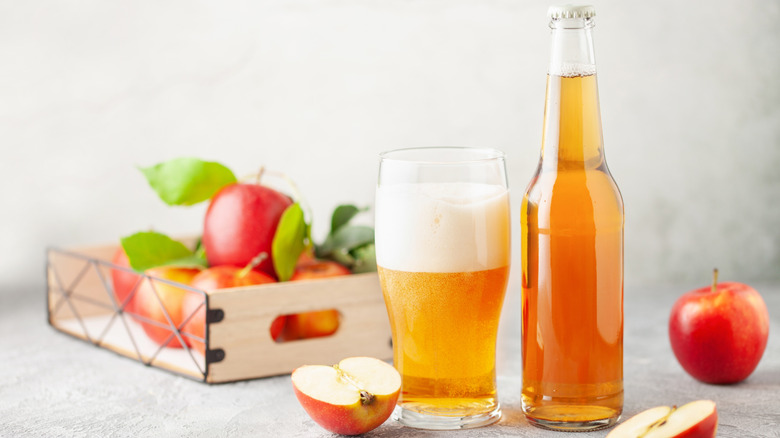
If pure apple juice can be used to make a delicious cider, would the same rules apply for turning apple juice into a mildly boozy beverage? The answer is yes! You can absolutely use apple juice to make hard cider — as long as you avoid juice made from concentrate or juice containing added sugars and preservatives.
If working with homemade apple juice, it's important to pasteurize it first so your batch isn't contaminated by microbes during the fermentation process. Pasteurizing homemade apple juice is simple. Just bring it to a boil, then simmer for an additional five minutes before transferring it to a fermenting jug to drop to room temperature. You need up to 1 cup of sugar for hard cider as well, if your apple juice's sugar content isn't at least 1.050 (per a hydrometer) — the more you add, the sweeter and more alcoholic the drink can be. You also need yeast for fermentation, along with yeast nutrient to really boost the process. Finally, aside from appropriate fermentation equipment and all things necessary to sanitize the bottles before starting, you also need to wait a few weeks for fermentation to complete. The length of time determines how sweet or dry your cider becomes.