

How To Choose The Best Okra For Homemade Pickled Okra
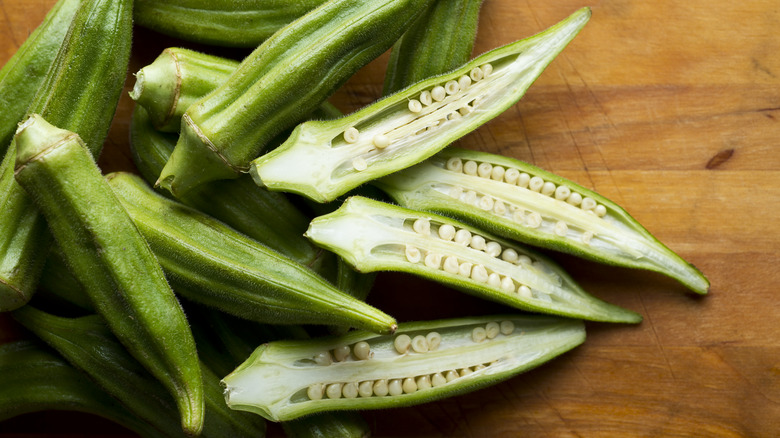
Among the many fruits and vegetables you can choose from, okra has emerged as a popular choice for pickling. Okra was introduced to the United States between the 16th and 19th centuries, and it flourished in the South, where the climate was optimal for growing the vegetable. During the pre-refrigeration times, pickling okra was one way to help preserve it for longer periods of time. These days, pickling okra is more than just an attempt to extend its shelf life; rather, its distinct crunch and the tang from the pickling process make it a sought-after snack, a tasty ingredient to add to sandwiches, wraps, salads, and grain bowls, or to even use as a cocktail garnish.
As is the case with most pickles, you can certainly opt for store-bought options, and Chowhound even ranked some pickled okra brands to help you make the best choice for yourself. However, if you're going the homemade route, there are a few tips to ensure the best results. Pickling is often viewed as a way to use up old produce, and in some cases, that can be true. However, for okra, using fresh, firm, and tender pods is the way to go. This is because when okra is left to sit around for too long, it will start to soften and go limp, yielding an unappetizing texture when pickled. But if the pods are too tough and not tender, that means you'll have to bite into a tough pickle instead. Aiming for the sweet middle ground of using young, fresh okra is the key to a successful pickle.
Crafting the perfect pickle brine
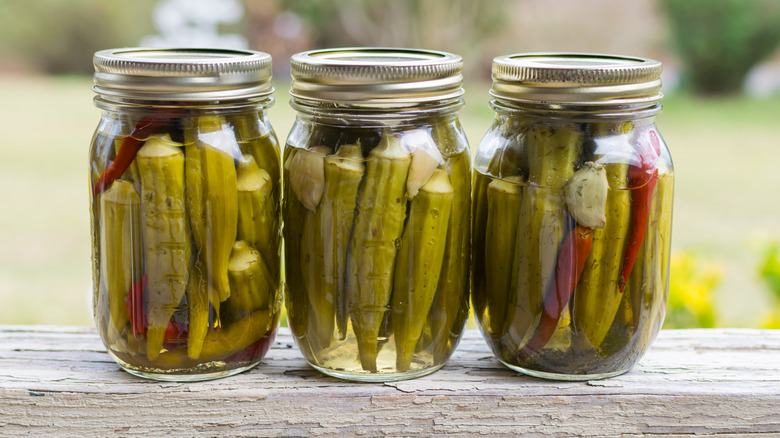
Behind the success of every perfect pickle is a good brine that's packed with flavor to complement the main produce without overpowering the natural notes from the pickling process. The brine plays a key role in the overall taste and enjoyment of a piece of pickle. Moreover, it not only prevents the growth of unwanted microorganisms but also facilitates the natural fermentation of the bacteria present in the okra, which adds to the tangy flavor. A basic brine typically only needs water along with vinegar and salt, preferably dedicated pickling salt. While this trio often yields a solid pickle, there's no reason not to zhuzh it up with added spices, herbs, and seasonings.
Something as simple as adding different spices can instantly add nuance and depth of flavor to every bite, and you can play around with different flavor profiles to curate the perfect balance for your taste preference. When it comes to pickled okra, common ingredients include aromatics like garlic, herbs like dill, and hot peppers. The pungency from the garlic is a solid pairing for the subtly sweet and grassy notes of okra. Dill brings a touch of freshness and zest to the mix that enhances the gastronomic experience of the pickle, while hot chili peppers are excellent for spice lovers who seek a notable kick in it. Cilantro and lime are also great choices for a vibrant burst of flavor that will awaken your taste buds. Don't be afraid to experiment with your brine seasoning.