

Julia Child's Iconic Version Of Cranberry Sauce Gets A Boost From These Flavorful Ingredients
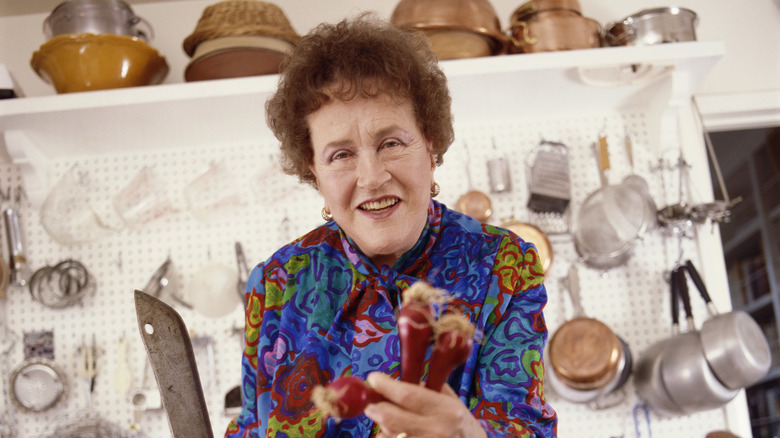
A holiday feast is typically incomplete without cranberry sauce. Its balance of sweet and tart flavors is perfect to cut through the rich spread of holiday staples. Though relegated to a humble side, there's a lot to be discovered and appreciated about cranberry sauce. This includes innovative ways to make the sauce even tastier and customize it to cater to varied taste preferences. From balancing the tart notes with a touch of heat to giving the sauce a textural boost (or if you're going for canned cranberry sauce, taking a tip from chef Duff Goldman to elevate it), there's no reason why cranberry sauce can't shine on the plate in a number of nuanced ways. So, adding to the creative iterations of cranberry sauce to bring a pleasant surprise to your taste buds every holiday dinner, we bring you one from none other than Julia Child.
In just 10 minutes, you can use her method to put a sophisticated spin on a cranberry sauce, transforming it into a chutney of sorts to complement your meal. Using ingredients that you likely already have on hand, your cranberry sauce will nail a trifecta of key flavors for a gastronomic balance: sweet, sour, and spicy. All you need to do is infuse your sauce with flavorful reinforcements from apples for sweetness (and tartness if you opt for Granny Smith apples), lemon and orange juice for tang, and cayenne pepper for subtle yet notable spice. When these components are simmered together to create a cranberry sauce, they massively boost the flavor of the chutney-style condiment.
The innovation behind cranberry sauce
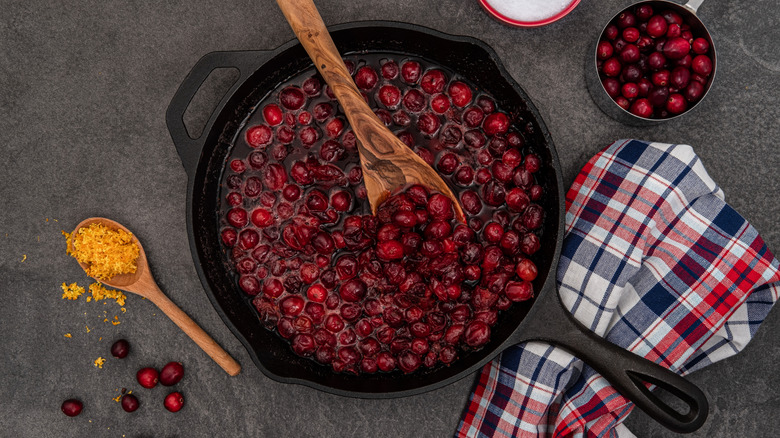
While eating fresh, raw cranberries does no favors for our taste buds, many of us scoop cranberry sauce onto our Thanksgiving dinner plates without question or skepticism. So, what made cranberry sauce a holiday mainstay to begin with? While the exact timestamp for the origin of cranberry sauce is tough to pinpoint with certainty, food historians have possible theories to explain the inception of the condiment. For centuries, Native Americans have been growing and consuming cranberries, which are one of three commercially produced fruits indigenous to North America. Historic accounts allude to Native Americans and European settlers boiling the berries with sugar to create a sauce to pair with the protein of choice in the 17th century, potentially serving it during the first Thanksgiving.
This fundamental foundation of fruit plus sugar paved a number of ways to enhance the taste of cranberry sauce, and Julia Child's hack of incorporating apples, citrus juices, and cayenne pepper is only one such example. Some recipes infuse notes of warming, seasonal spices like cinnamon, allspice, cloves, and ginger along with orange juice, which is similar to Child's approach. The idea is to balance out the tartness from the cranberries with more complex flavors than just sugar to create a full-bodied sauce with a touch of sophistication and depth to it. For an herbaceous take on cranberry sauce, consider adding rosemary, thyme, or sage, either finely mincing them or simmering them in the sauce and removing them before serving it with your holiday feast.