

7 Vodka Brands Bartenders Always Avoid Buying

Vodka is one of those spirits that might seem uninteresting at first glance, with some even dismissing it as harsh or tasteless. But the truth is, a good vodka can be refined and smooth, with complexity and character worth savoring straight up. Vodka also makes a solid cocktail base. However, the vodka aisle in a liquor store (or the numerous options at a well-stocked bar) can be daunting for consumers. Like any other type of alcohol, the price range, quality, style, and presentation vary significantly from brand to brand. This, in turn, makes choosing the perfect bottle of vodka difficult not only for casual sippers but also for industry experts and mixologists alike.
Through trial and error, tradecraft, and years of experience, a very astute bartender will have a repertoire of vodkas to lean on when crafting drinks and making recommendations. To save readers time and money, and to ensure your home bar remains stocked with only the best, we've compiled a list of six brands here that professionals always avoid. For expert opinion, we tapped renowned Scottish mixologist Jack Jamieson for guidance. He was the 2022 Scottish Drinks Influencer of the Year and shares his expertise online with over 70,000 Instagram followers. On this side of the ocean, we asked Montreal's Kate Boushel, a 2024 Altos Bartender's Bartender Award winner, to chime in as well. Read on for some stellar tips on how to improve your vodka stash.
1. Smirnoff
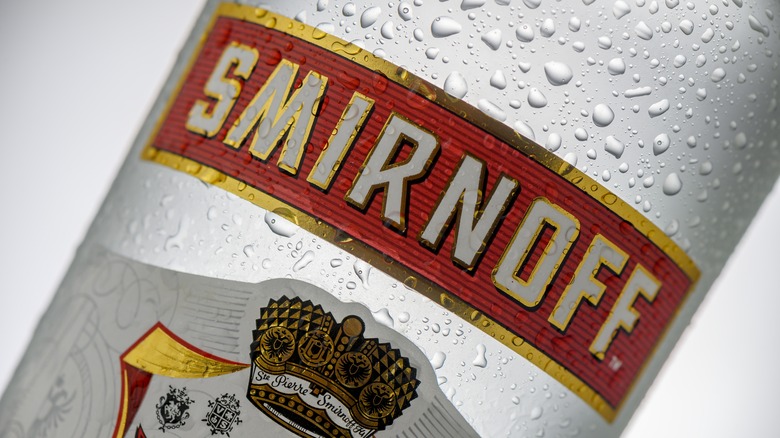
When it comes to ubiquitous vodka, Smirnoff is one of those brands that shows up at almost every bar as a bottom rung, entry-level offering. This is vodka 1.0, and it's not the type of spirit you'd ever really want to sip straight up lest you burn your throat in the process. The brand's No. 21 standard version, in that ultra-recognizable red-label bottle, is triple distilled and filtered 10 times, which Smirnoff claims results in a dry, smooth finish. Of course, they would market it that way, but this is anything but smooth. The red label No. 21 offering is 40 percent alcohol by volume, while the brand's blue label No. 57 recipe is stronger, with a 50 percent strength. Both are distilled from grains — of which the company doesn't specify — and have Russian roots dating back to 1864.
But what does Jack Jamieson think about this ultra accessible, basic vodka? "I typically avoid the vodkas from the big-name brands, but for varying reasons," he tells us. "As a point of principle, I avoid Diageo products [Smirnoff's parent company] generally as I don't believe they have customer experience at heart, and simply churn out the poorest quality product for the highest price they can get away with," he says. Ouch. For the budding home mixologists looking to stock a killer bar, avoid this brand — unless you find yourself at a summer BBQ where it's okay to lean into the summer vibe of a fruity Smirnoff Ice.
2. Grey Goose
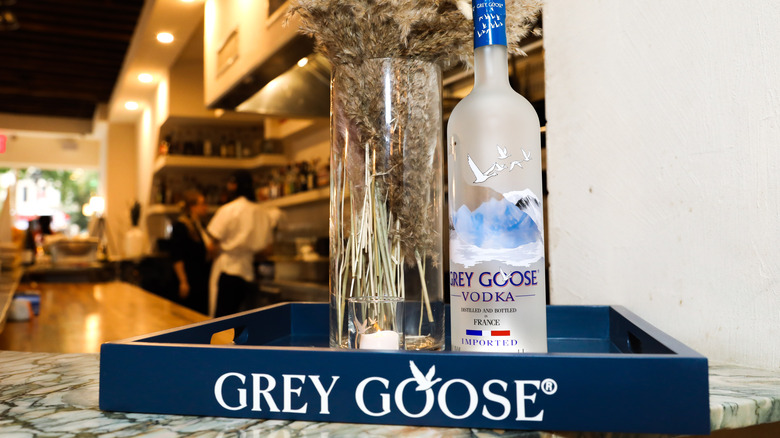
You may recall a time in the mid-2000s when rappers frequently wrote songs about Grey Goose as a status symbol of sorts, even showcasing it in music videos as props. It was also widely available at bottle service-type nightclubs, again serving as a status symbol for showboating party animals. But is it a vodka worth singing about? Not really. The French brand was founded in 1997 and developed as a high-end, luxury vodka made with pure French water and locally sourced wheat used to make bread. The creators wanted to add more flavor to the spirit to distinguish it from other tasteless, odorless brands on the market at the time. There's no question that the brand sold well and was quite popular, as the social lubricant to many a fun evening.
Mixologist Jack Jamieson thinks it's really nothing special. "Grey Goose [is] higher quality than Smirnoff undoubtedly, but feels like it's just a marketing move to sell cheap spirit in a fancy bottle," he says. "[It's] just a marketing ploy to put cheap vodka in a nice suit and pretend it's premium." If you want to time-travel to the Obama era and pretend it's 2011 with some Lil Jon playing in the background, sure, Grey Goose is fun. But if you're looking to imbibe a truly premium vodka straight up, or in a martini, you can find better-suited brands.
3. Absolut (standard version)
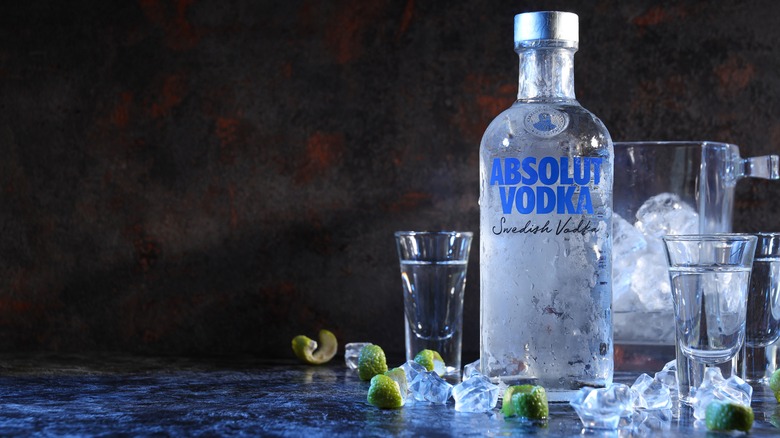
Absolut could be considered the king of vodka branding. With such advertising prowess, it has won the Effie and Kelly awards (top prizes in the U.S. ad industry) and been inducted into the American Marketing Association's Hall of Fame. We've all seen those ads at bus stops and on massive billboards, proof that the company spends a ton of cash on getting the word out. But is the Swedish vodka decent? Expert Jack Jamieson says the standard, entry-level version of the brand's pure, unflavoured vodka is sadly reminiscent of Smirnoff, which leaves a lot to be desired.
When we asked Kate Boushel whether brands like Absolut work for flavoured cocktails but not as well straight up, she wasn't so deferential. "With so many delightful vodkas from around the world that offer a reasonable price tag, are well-made, and fit as much for mixed cocktails, shots, and more serious stirred/straight service, why venture there?" she says. Fair enough. While some may opt to freeze inexpensive vodkas to soften those harsh edges, you'd be better off starting with a more refined product for a better experience, as Boushel points out. This mass-produced vodka is not likely to win any awards for its taste — if only Absolut were as good at making booze as they are at making cool ads!
4. Budget brands in plastic bottles
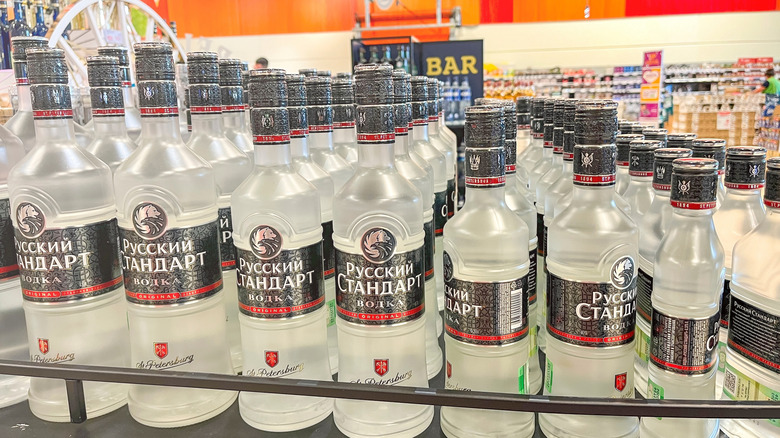
Some who aspire to craft cocktails at home may be split on martini bases, with some preferring vodka and others gin. While the cocktail's origins may not be crystal clear, most agree that the classic martini recipe includes gin. Either road you take, with a drink that is so naked, you need a quality base to start with. Budget vodka brands in plastic bottles like Karkov, Troika, Moskova, and Russian Prince are not going to set you up for success. "A good rule of thumb is to avoid spirits that are unreasonably cheap and sold in plastic bottles," Kate Boushel affirms.
When we asked both Boushel and Jack Jamieson about the potential for plastic to impart off-flavors, they cleared it up for us. "It all depends on the polymers used in the bottle production, but I find that higher proof spirit flavours are more easily affected by leaching chemicals over time," Boushel says. Jamieson is simpatico with her: "The high proof alcohol could bring in some undesirable medical or rubbery flavours. But if it's BPA-free, food-grade, HDPE or PET, clean, kept in a cold environment, and only used in a short-term capacity, I think it's fine," Jamieson stated. There are many ways to differentiate between cheap and expensive vodkas, but for the most part, unless housed in premium-quality plastic, it's usually a red flag.
5. Cîroc
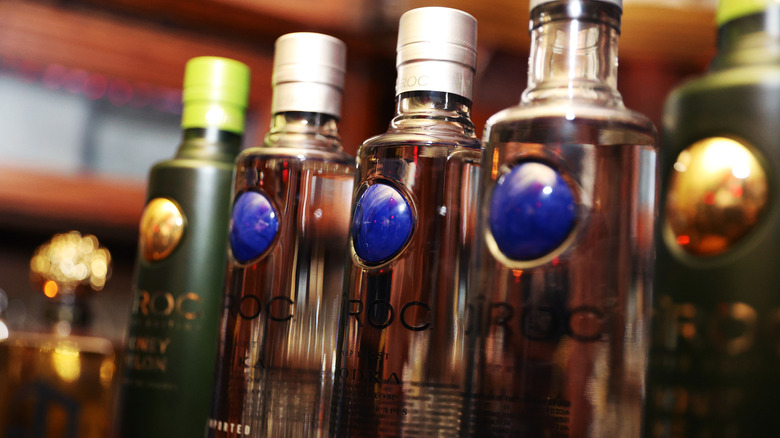
For the same reasons that Kate Boushel and Jack Jamieson's expert advice steers us away from Smirnoff, the same applies here with Cîroc. It is a different beast, though; perhaps what makes the French brand's alcohol unique is that, unlike many vodkas, which are distilled from grains, it is made from French grapes. In the South of France, a wine is first produced, then distilled four times in column stills, before undergoing a fifth and final distillation in proprietary copper stills. Despite all that seemingly hard work, Cîroc is not the brand you want to look to when trying to whip up the perfect Greyhound.
Jamieson advises us on how to choose a better spirit: "One of vodka's saving graces is that because of its simplicity, there are fewer places for unscrupulous manufacturers to hide," he says, adding, "However, points I look for in vodka [are the] number of times distilled, the grain/distillate origin, the filtration, and water source. These in themselves don't indicate a quality vodka per se, but the disclosure of them is a good sign and indicates attention to provenance." Boushel suggests using your nose to find good vodka. "I'm always wary of a vodka that presents off-putting aromas," she says. "This would be a hint of rubbing alcohol or a medicinal aroma, or perhaps a smell a bit like cheese or even wet dog — if these kinds of aromas are present, I don't even bother."
6. Ketel One
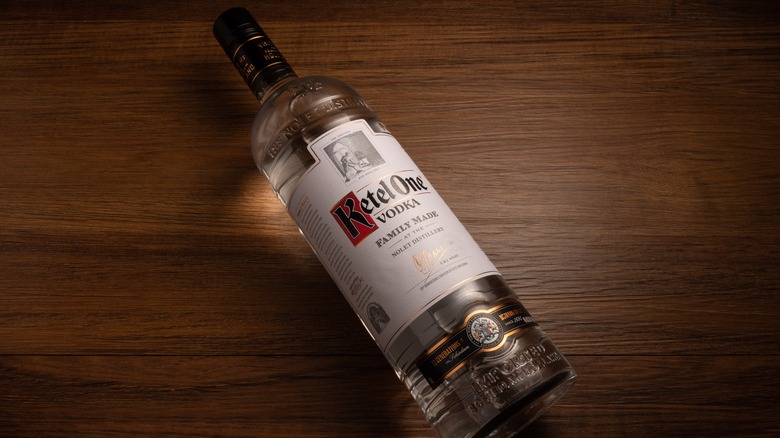
Ketel One is definitely one of the more widely available and recognizable vodka brands, but its mass production doesn't make it an exceptional product. As Jack Jamieson indicated, he avoids stocking his bar with any Diageo products, which has had a 50 percent stake in Ketel One sales since 2008. Diageo also pulls the strings of Smirnoff as a full parent company, and between the two, Jamieson tells us that there's no winner, really. "Ketel One quality is better, but I'd sooner choose other vodkas if available," he says. While this seemingly ubiquitous Dutch brand can be found at most bars, it's likely not on the shelves of those speakeasy-type, mixology bars — the kinds of places Kate Boushel and Jamieson both work at, where you're almost guaranteed to get a face-melting cocktail.
Ketel One offers a ready-to-drink espresso martini that's not so terrible, and if that's any indication of a non-artisan, mass-marketed brand, we don't know what is. We certainly don't want to yuck anyone's yum, but when it comes to a vodka brand most talented bartenders avoid, Ketel One ticks the box. It's just not a craft vodka with nuance and complexity to write home about. If you're looking for alternatives that won't break the bank, Boushel recommends brands like Moskovskaya, Stolichnaya (Stoli), and Sobieski. The bottom line is that both Boushel and Jamieson had to refine their palates over time, so trying different brands is part of the journey.
7. Flavoured and novelty vodkas
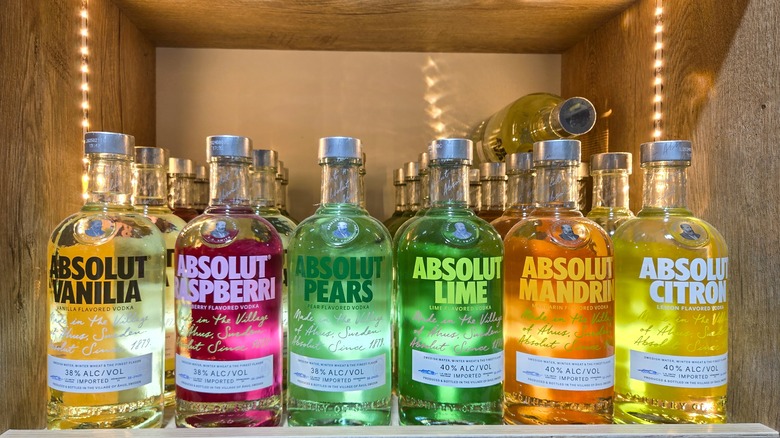
The job of a mixologist is to take the best ingredients and blend them in a balanced way to showcase the exciting flavors and complexities of the spirits and bitters. It's alchemy, really, magical stuff that keeps you sipping away when done well. But there's no shortcut here — it's an understanding of how to pair flavors together, starting with a solid base, like vodka. Artificially flavoured booze is usually not a mixologist's choice, as Jack Jamieson tells us. "I've not seen it, but I've heard some brands use ingredients like xanthan gum or glycerin as a thickener to improve the mouthfeel or hide the harshness of any ethanol burn. If this is the case, the brand should be avoided," he says.
Essentially, an artificially flavoured vodka is just a way to hide cheap attributes. Jamieson explained that trace amounts of honey, sugar, glycerin, and citric acid are often used in Western and Russian vodkas. "Polish law, however, requires that vodka cannot include any additives except water and that any flavourings added must be natural and not exceed 100 grams of sugar per litre," he says, adding, "Long story short, if the brand has spent more time designing the bottle than describing the liquid inside, I'd probably avoid it."