

Don't Swap Dutch-Processed For Natural Cocoa Powder In Cakes Without Reading This First
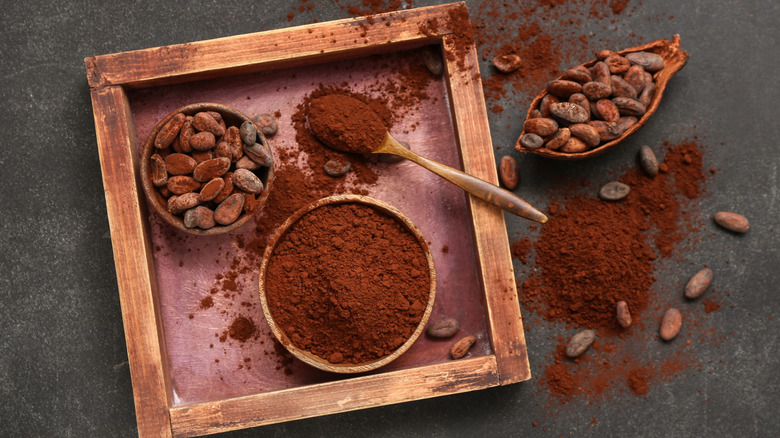
Every season can be considered "baking season" if that means more chocolate cake. Obviously, the core ingredient of any chocolate-based dessert is a cocoa powder of sorts, and the recommended type of cocoa powder may vary depending on the recipe. If the ingredients list calls for Dutch-processed cocoa powder, and you only have natural cocoa powder in your pantry, you may be inclined to use that instead. Before you do so, hold that thought. As it turns out, there is a difference between natural cocoa powder and Dutch cocoa powder. To further explain why you may not want to swap Dutch-processed for natural cocoa powder in your cake, Chowhound spoke with renowned chef and celebrity cake designer, Kristina Lavallee, owner at The Cake Girl.
"They're both cocoa powders, but they behave and taste very differently," she explains. "Dutch-processed cocoa is treated with an alkalizing agent to neutralize its natural acidity." Because of this process, Dutch-processed cocoa has a darker color and richer flavor that Lavallee describes as being reminiscent of European-style chocolate. No wonder it's Ina Garten's secret for a more luxurious chocolate tart and Martha Stewart's trick for amplifying the flavor of her chili. On the other hand, natural cocoa is visually on the lighter side and more acidic to taste.
So, if you're seeking a cake that, according to Lavallee, has a "deep, dark, sophisticated chocolate flavor," Dutch-processed cocoa is the way to go. Otherwise, for traditional chocolate cakes and other creations like muffins and brownies that could benefit from a subtle tang and brightness, natural cocoa ought to do.
How do different cocoa powders perform in baked goods?
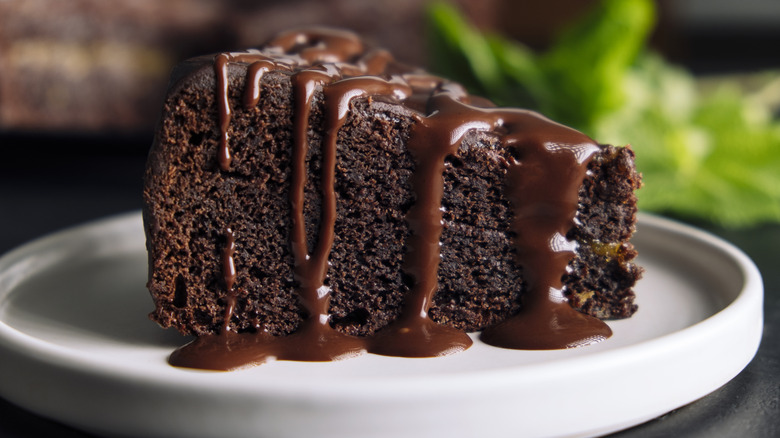
Beyond the color and flavor of the respective cocoa powders, we were also curious to know if there is a difference in how they affect the chemical process of baking, given the acidity of natural cocoa. As Kristina Lavallee explains, "Natural cocoa's acidity reacts with baking soda (a base), which helps your batter rise." This is because when baking soda, a popular leavening agent, reacts with an acid, carbon dioxide gas is released. This released gas is what helps the baked goods rise and yields a fluffier, more airy texture once fully cooked. Dutch-processed cocoa's acidity is neutralized from being washed in a solution of potassium or sodium bicarbonate, so it won't react that same way with a leavening agent like baking soda.
So, if you were to use Dutch-processed cocoa for a recipe that calls for natural cocoa, you're likely not going to have the desired rise and will end up with a dark, dense cake lacking that delicate tang. This is the reason why many recipes made with Dutch-processed cocoa tend to also require baking powder to achieve the desired rise. Just as there is a time and place for using baking powder or baking soda, both Dutch-processed and natural cocoa powder have their unique uses in decadent desserts. As a final word of advice, Lavallee says, "If a recipe calls for one type, try to stick with it — they're not always interchangeable. If you do swap, know that it can change both texture and flavor."