

The 8 Biggest Egg Recalls Of All Time
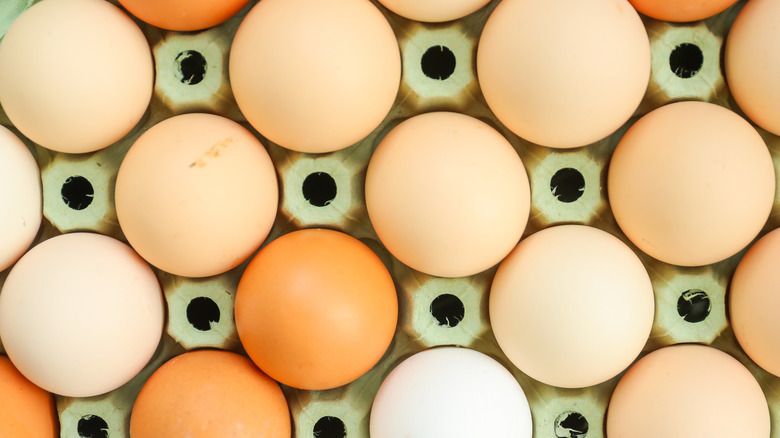
Eggs are a relatively affordable protein source, so much so that people rear chickens just to have fresh eggs in the morning. Whether making egg bakes or the best scrambled eggs, eggs are a staple in households across the country. Unfortunately, though, food recalls — and the consequences of consuming unsafe foods — are on the rise, and eggs are often a culprit.
This is a problem, given that Americans consume a considerable number of eggs each year — almost 300 per person annually, according to Statista. As with other foods, concern about salmonella is typically the driving factor behind these recalls. Why do eggs get salmonella? The truth is, they rarely do, but food health and safety are a priority, and rarity doesn't negate the need to use caution. Despite how inconvenient it can be when egg recalls take place, they serve an important purpose, and we're exploring 8 of the biggest egg recalls of all time.
1. More than 500 million eggs were recalled in 2010 due to salmonella

The year of Lady Gaga's infamous meat dress at the VMAs also brought a food safety concern — but it involved eggs. Hillandale Farms out of Iowa issued a voluntary egg recall a week after a neighboring farm, Wright County Egg, had recalled 380 million eggs. In total, both farms recalled almost half a billion eggs from restaurant and grocery shelves. The FDA was able to confirm that the same strain of salmonella was found at both farms.
A staggering number of people became ill from salmonella contamination in the eggs, with thousands of reported cases. Wright County Egg owner Jack DeCoster was said to have had multiple run-ins with the federal government before the 2010 recall for mishandling of livestock and animal cruelty charges, among other human resources violations. Years later, in 2014, DeCoster and his son were charged with a misdemeanor in the role they played in the salmonella outbreak.
2. In 2018, more than 205 million eggs were recalled from 9 states
Aldi is a home run of a store with affordable prices and safe, delicious food you can count on — except in 2018 when the primary provider of the grocery stores, Goldenhen Eggs, was at the center of a massive egg recall. Not only did Rose Acre Farms get caught mishandling livestock by the Humane World for Animals in 2010, but 2018 saw over 200 million eggs being pulled due to the potential for salmonella contamination.
The U.S. Food and Drug Administration (FDA) shared findings about the chicken farm that are, in short, startling. Rodents and poor worker hygiene (employees touched dirty floors and equipment without proper protective equipment) were among the factors that the FDA believed to have allowed pathogens, such as salmonella, to run rampant. As expected, Rose Acre Farms disagreed with the FDA's findings, but the recall affected almost twice as many states and highlighted the importance of a well-oiled regulator of food safety.
3. August Egg Co. recalls over 1.7 million brown cage free and certified organic eggs in 2025

Food trends come and go, and one that's stuck around in recent years is the prevalence of cage-free and organic eggs. To break it down, cage-free simply means the chickens have the freedom to move around in an indoor space. The issue is that those spaces are often relatively small and cramped, making true freedom of movement difficult. Organic eggs mean the chickens producing them are fed an organic diet and must be both free-range and cage-free. It's a big business, and August Egg Company found itself at the center of a recall that affected over 1.7 million eggs.
While not every recall is caused by people getting sick, in this case, people did. The salmonella outbreak in 2025, linked to August Egg Company eggs, caused 21 hospitalizations and sickened 79 people. Salmonella doesn't always cause severe illness, but certain populations are more susceptible to its effects, so always practice caution and stay up to date on recalls.
4. 6 million eggs recalled after FDA issues highest risk level
There are three risk levels for FDA food recalls: Class I, Class II, and Class III. A Class I recall is the most serious, meaning the FDA believes the potential for contamination and subsequent illness (or death) is exceptionally high. In early fall 2025, Black Sheep Company's egg processing facility was tested and found to be positive for over seven different strains of salmonella.
The Black Sheep Company's recall is hardly the first to be classified as a Class I recall. In fact, just last year, the FDA bumped up its recall classification for eggs from Milo's Poultry Farms LLC. And while companies can typically pull eggs from distributors before they make it to people's refrigerators, sometimes eggs are repackaged in new cartons with new company names, making it incredibly important for all recalls, especially Class I recalls, to be paid special attention to avoid illness.
5. In 2012, hard-boiled eggs were recalled from 34 states due to listeria concerns
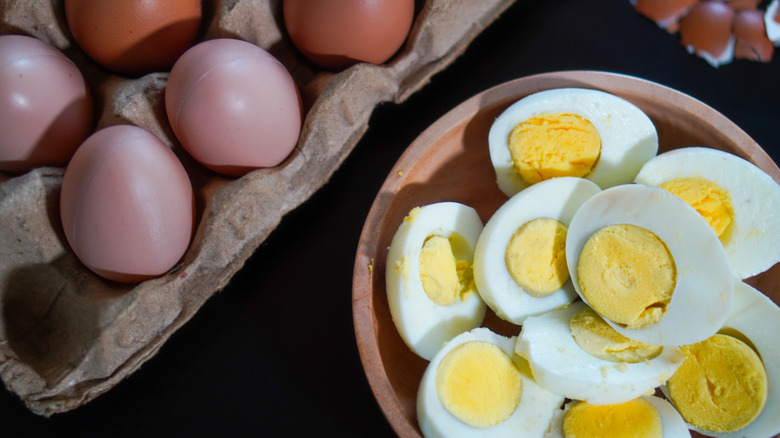
The best hard-boiled eggs ever can make a great snack or breakfast. For those on the go, this way of cooking eggs can be a total lifesaver, especially since hard-boiled eggs are also regularly available at restaurants and gas stations for a little protein pick-me-up. And while salmonella is a major food concern, so is listeria, which is what caused the Michael Foods hard-boiled egg recall in 2012, when tubs (10 and 25 pounds) were recalled from over 34 states.
Listeria can cause a range of health problems, including fever, headache, and diarrhea. Those who have weakened immune systems are especially susceptible to infection, which, if untreated, can lead to nervous system damage or even death. One good thing about the Michael Foods recall is that the eggs were sold to manufacturers and food distributors, not retailers, which perhaps made it easier to control and prevent outsized health impacts.
6. More than 226,000 pounds of dried eggs recalled in 2014

Not every egg recall involves eggs in shells or hard-boiled eggs. Sometimes, powdered and processed eggs are the culprit, as in the 2014 Nutriom LLC recall of about 226,000 pounds of product. Following the initial announcement, the U.S. Department of Agriculture's Food Safety and Inspection Service (FSIS) issued a public health alert after Nutriom LLC refused to expand the recall of an additional 118,000 pounds of product. With jurisdiction, FSIS was able to remove the products from commerce to protect consumers' health and well-being.
Powdered eggs can be used for baking and cooking at home — think homemade mayonnaise or omelettes — as well as at an industrial scale, in emergency preparedness kits, and in restaurants. In the case of Nutriom LLC, some of the tainted product was actually sent to military bases within the United States and Canada, as well as abroad.
7. In 2024, nearly 260,000 eggs were recalled from 25 Costco stores
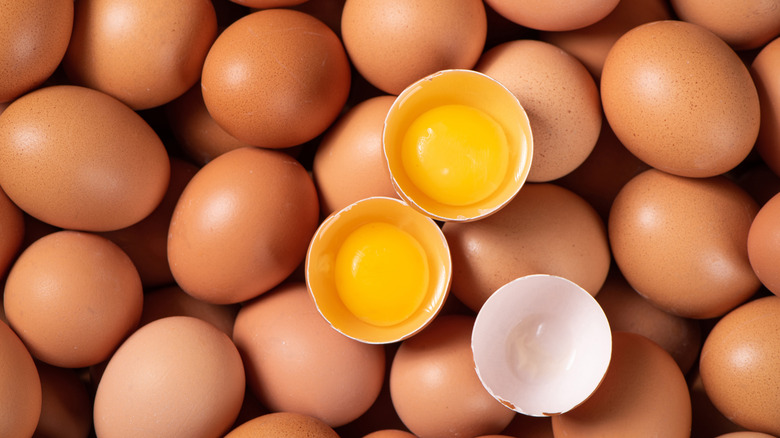
Costco has almost 137 million members as of 2024, which requires its warehouses to maintain incredible product quality control. But sometimes things can slip through the cracks, which is precisely what happened in 2024. The FDA set its highest risk level over salmonella fears, and the recall ended up being one of the largest food recalls in its history.
The eggs from Handsome Brook Farms were potentially contaminated with salmonella and sold at 25 stores across the American South. The recall came after Handsome Brook Farms realized that the eggs in question — which were not intended for retail distribution — had been packaged for retail sale, leading to testing that flagged them as dangerous. Not to mention that the recall occurred in late November, just ahead of the start of holiday baking and cooking. In total, 260,000 eggs were recalled, though no major illnesses were reported.
8. More than 210,000 pounds of liquid eggs were recalled in 2025 due to cleaning solution contamination
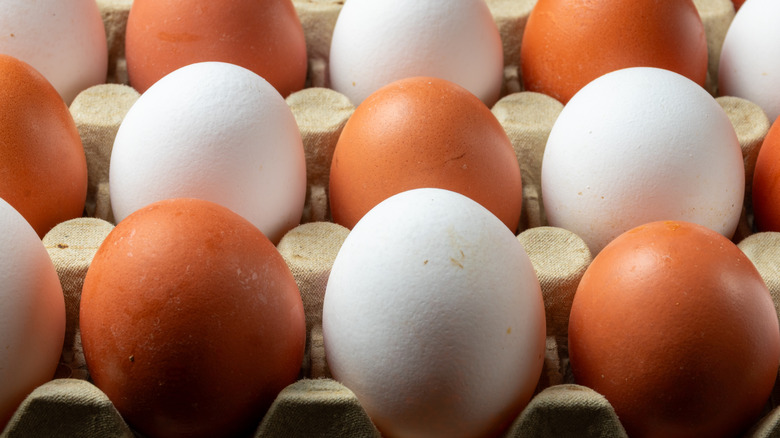
This recall is a little different from the rest on the list. Instead of listeria or salmonella concerns, Cargill Kitchen Solutions recalled over 210,000 pounds of its liquid egg substitutes due to the potential contamination with sodium hypochlorite. In case you didn't know, that's the active ingredient most commonly found in bleach.
The products were shipped to multiple states, and despite the recall, Cargill Kitchen Solutions stated that it was not due to genuine safety concerns but rather out of an abundance of caution. The FSIS announced that "use of this product should not cause adverse health consequences, or the risk is negligible," which earned the recall a Class III (the lowest) risk designation. Still, hearing about the potential risk of ingesting compounds found in bleach doesn't inspire great confidence. At the end of the day, though, the governmental departments that protect consumers are necessary and appreciated in keeping the food on our tables delicious, nutritious, and safe to eat.