

The Kitchen Surface You Should Never Clean With Lemon
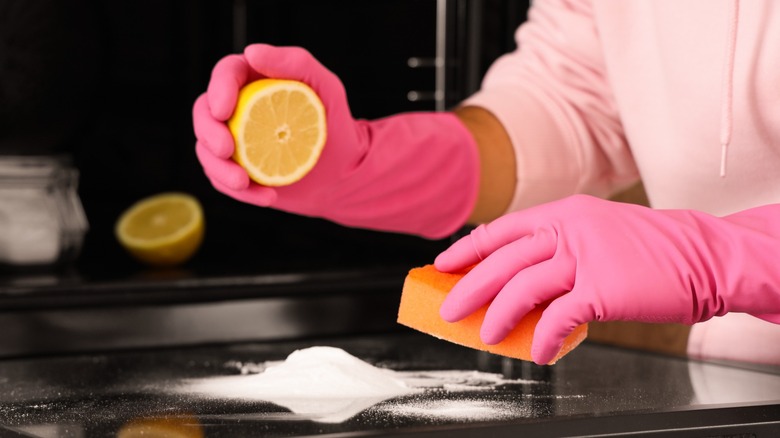
Of all the wonderful smells to come from a kitchen during cooking, they may all be topped by the refreshing, uplifting scent of a fresh, clean kitchen. That smell scratches a certain itch in the brain, and the kitchen doesn't look half bad either. But with so many appliances and surfaces made from different materials, you should be aware of the cleaners you're using and where you're using them. When it comes to your kitchen counter surfaces, you don't want any unnecessary damage. This is why the pros tell you to never, ever use lemon to clean marble and other stone surfaces.
Jill Koch is one such pro. The cleaning specialist and creator of Jill Comes Clean recently spoke exclusively with Chowhound. Though she's aware of the many ways to naturally clean your kitchen with lemons, she told us to keep them far away from marble, granite, and other similar stones. "Lemon juice is an acid that, when used on marble and other natural stones, can etch the surface and/or stain it and make it look dull or ruined over time," she explained. "Yes, the acid is the issue, but it's also the chemical reaction that occurs when the acid of the lemon juice (or vinegar) combines with the material of natural stone. It becomes corrosive and can start to break down the stone." So while lemon may be great for effortlessly cleaning old oven grime, you should definitely find other means to clean your stone counters.
What you should use instead of lemon
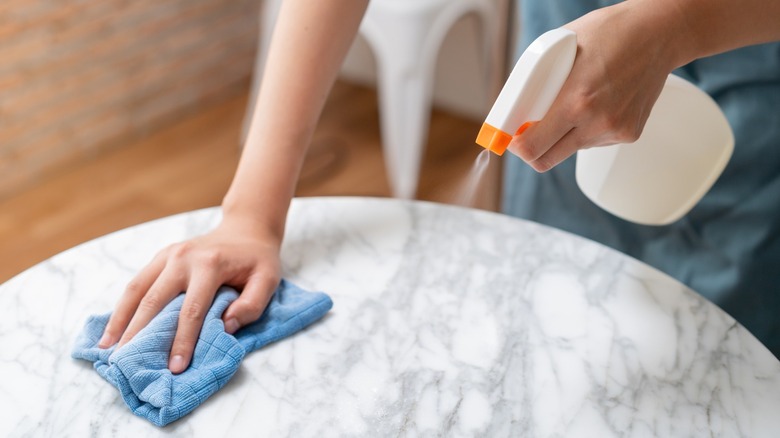
Corrosion and cracking are just some of the issues that you may run into with marble countertops, but going easy on the acid can help you avoid these problems easier. Yes, lemon juice and vinegar are both great cleaners, especially for more stubborn spots, but Jill Koch recommended using a softer, less harsh cleaning solution for marble. When asked what she uses, Koch responded, "I tend to just stick with soap and water or a gentle all-purpose spray that's pH neutral or a spray specifically designed for that stone type." This way, you can have that satisfying cleanliness without compromising your surface.
It should be noted, however, that not all stone surfaces are susceptible to acid as much as marble is. "It comes down to how porous the material is and how it's sealed," Koch explained. She pointed out that travertine and limestone are also porous like marble and should be treated similarly. She also advised that, even if you have a stronger stone, you should only use acidic cleaners infrequently. "Stones like granite are tougher and can handle mild acidic solutions," she said. "However, they aren't completely immune to it, and their seal can break down over time from acidic solutions, so I would still avoid them or use them sparingly." Alas, you may not have that lemony fresh scent everywhere in your kitchen, but we'd say it's a fair compromise for the look of your kitchen counters.