

The Depression-Era Thrift Find That Adds Color To Your Glass Collection
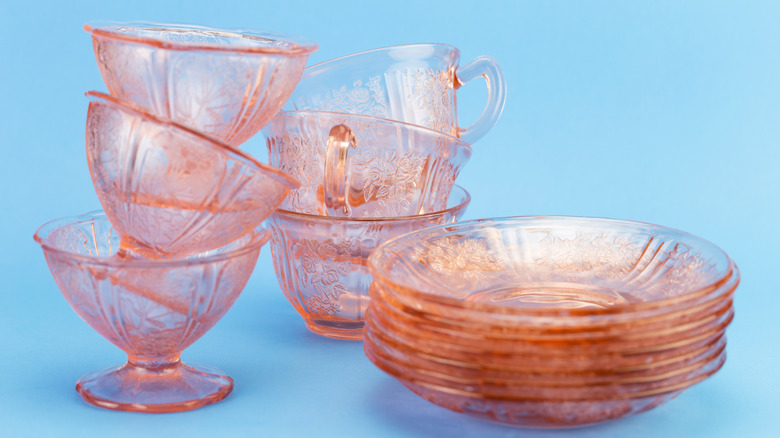
These days, many luxury kitchens tend to follow a neutral color scheme. However, recent design trends are starting to embrace pops of color in a way that would suit the dreamy kitchen of a 2000s rom-com flick. Quite a ways back through the decades of trends, the Great Depression era introduced a range of candy-hued glassware, which makes for stylish home decor. Regular thrift and antique shoppers will be no strangers to racks of colorful translucent cups, sherbet bowls, stemware, decanters, and pitchers, which are definitely things to look out for when thrifting cookware and glasses.
Depression glass, as it's known, became popular during a time when money was tight for most families. In response, more ornate, crystal-cut glass took a backseat, and manufacturers churned out inexpensive, mass-produced glasses that the typical family could afford. Cheap as it was, Depression glass remains beautiful in shades of amber, lavender, jade green, sky blue, black, and clear. It was often stamped with raised patterns, and given away at some points inside cereal boxes and such as prizes. Although much of this production halted in the 1950s, you can still find Depression glass on many thrift store shelves today, if not in your grandparents' glassware cabinet.
Inspect your vintage glassware before using it
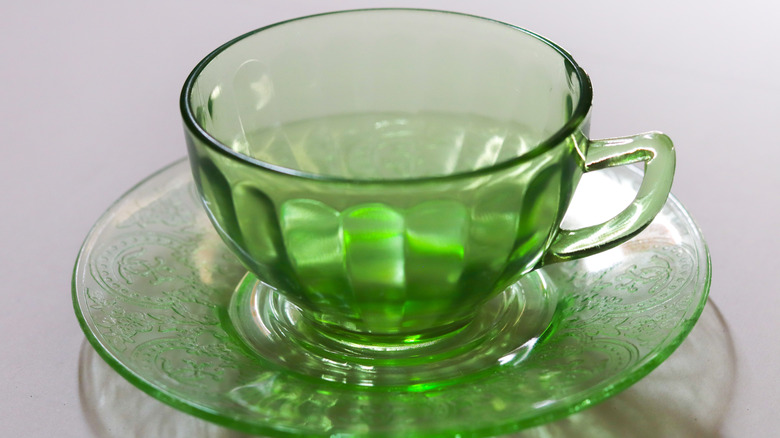
Amidst the racks of kitchenware and old sets of glasses and mugs at your local thrift store, you'll find a hodgepodge of brands, lines, and eras represented on the cluttered shelves. The chance to discover old Pyrex patterns, cast-iron skillets, and durable Libby glasses is why you should never pass up these thrift store dishware finds. As you start to learn what's what among the shelves, you'll see Depression, uranium Glass, Vaseline Glass, or canary glass — all often used interchangeably. In fact, all refer to similar-looking delicate vintage glassware in a rainbow of hues, but they're not one and the same.
Often confused, uranium and Vaseline glass were also popular from the 1880s to the end of the Great Depression. Unlike Depression glass, the uranium glasses themselves actually contain uranium, giving them a vibrant, glow-in-the-dark, and literally radioactive hue. Depression glass, on the other hand, shouldn't contain uranium, and it should be perfectly safe to eat and drink from. If you need to determine the type of glass you're dealing with, check it under an ultraviolet light (black light) — if it glows, don't use it. Other characteristics of Depression glass are the small bubbles and imperfections often found in the glass, since it was quickly produced on a mass scale. Although imperfect and still sold at a low price, Depression glass is a gorgeous way to add charm and character to your modern kitchen.