

The Aldi Quirk That First-Time Shoppers Never See Coming
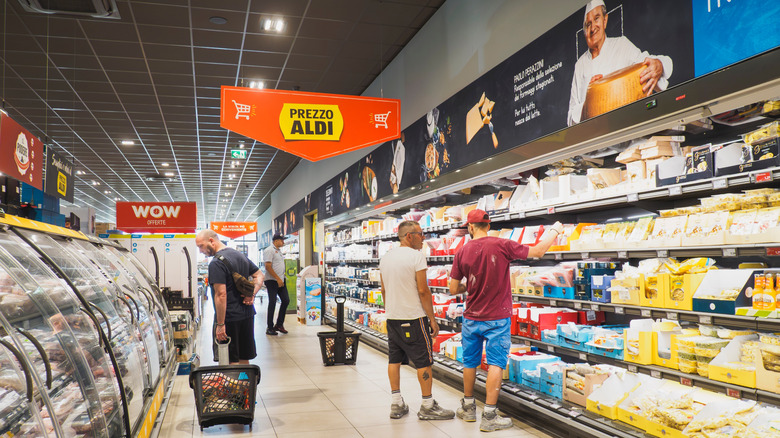
Most first-timers entering an Aldi store actually find it quite underwhelming — basic displays with products still in their pallets, minimalist signage, and a distinct lack of staff members and background music. Stay a little longer, and you'll realize why some shoppers dislike Aldi, while others swear by the German grocery chain. Shopping at one of its outlets is a distinctly different experience than most other grocery store chains, and the minimalistic approach has led to some buyers even getting creeped out. "Entering one you realize there's a weird ambience to it, the lack of music and people on the floor to help out. Just people silently going up and down the racks," observes one Redditor in the r/Perth subreddit.
While it may be one of the reasons some people avoid shopping at Aldi, the store's lack of "frills" is a conscious choice, just like its 25-cent shopping cart system (here's a solution to the cart dilemma that actually works). Most quirks at an Aldi store go towards cost savings, which in turn helps keep prices down for customers. Many fans of the chain enjoy the efficiency this minimalist approach brings — you can buy what you need, save money, and be on your way. The store isn't trying to lure or lull you into lingering longer with soft music and never-ending choices, nor grab your attention with flashy signs and free samples. Of course, the fresh produce does get mixed reviews, but don't knock it till you try it, and don't let the Aldi myths floating around dissuade you. Give your local Aldi outlet a shot, and you might just become a fan of the store's purely efficient way of functioning (and the savings it brings).
Aldi's strategy is all about keeping costs and overhead down
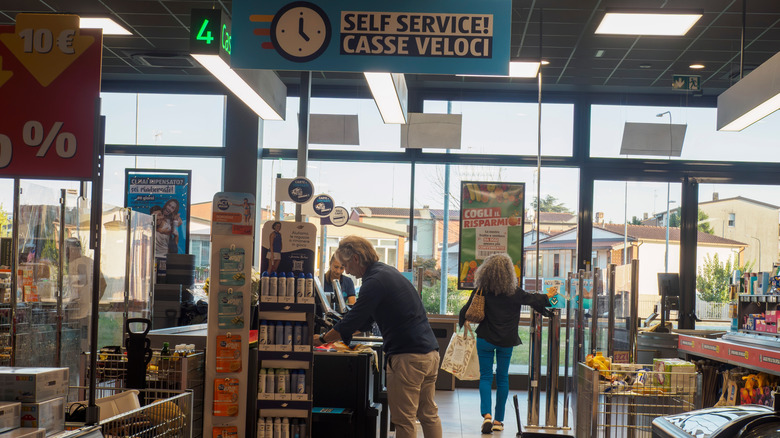
Whenever you notice a quirk at an Aldi outlet, chances are it stems from the chain's objective of cost savings. The packaged items are often seen in their crates instead of being displayed individually on shelves, and even when you get to the checkout line, you'll find you have to bag your own groceries.
Walking through the store also feels more dreary when compared to other chains because Aldi outlets try and keep a smaller footprint. This means a store may be less spacious and have simpler lighting in order to save on utilities. Then, of course, there are the in-house brands. The German chain saves significant costs by using its own brands, which makes warehousing, logistics, and stocking easier. On a broader level, this helps the company avoid middlemen and simplify its global supply chains. And they're not just to save on expense, lots of Aldi dupes actually taste like the real deal.
One of the most apparent ways that Aldi's minimalistic approach is perceptible is in the lack of music. Supermarkets play music to make shoppers shop longer, feel happier, and even to distinguish themselves from other chains — all of which translates to better sales. You must have noticed how song selections change at most supermarkets during the festive season, too. Aldi's no music policy is to save on licensing fees that the company would have to pay in order to have tunes wafting while you shop. While one may not pay attention to the background music, its absence can feel strange. However, is it strange enough that you'll pay more for your groceries for it?
Aldi's minimalistic approach has a fan following
While there are those who clearly don't like the utilitarian approach that Aldi outlets take, and there are others who are indifferent and put up with it in order to enjoy the money they save on groceries in return, there is a significant group of shoppers who actually prefer it to other chains. "Most normal grocery stores are too bright, big, and busy. Plus, there are too many options. I'm able to go to Aldi quickly, pick up what I want, and get out," says one Redditor in a post on the r/EatCheapandHealthy subreddit weighing the pros and cons of Aldi's minimalist approach.
The narrow range of options is actually a boon for many shoppers who appreciate that they are able to finish their grocery trip faster. The efficiency of stocking fewer choices also has other benefits — most of the options are high quality. Aldi's in-house brands are some of the fastest-growing private labels, beating out the likes of Trader Joe's and Costco's Kirkland Signature (via Supermarket News). Plus, because of the limited shelf space, even external brands that Aldi stocks are carefully selected and generally of a high quality (but without the high prices).
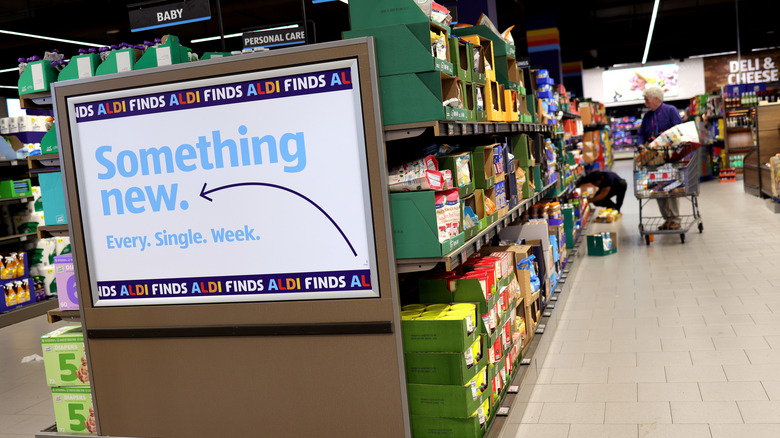
Ultimately, not investing in flashy displays and signage doesn't mean Aldi doesn't care about attracting and retaining customers. The company just has its own way of doing it. The in-house brands, available nowhere else, keep customers coming back. Plus, a significant number also visit regularly to make the best of Aldi Finds — a range of constantly rotating discounted products in the store's famed middle aisle.