

Don't Store Spinach In The Fridge Before Doing This Quick Check
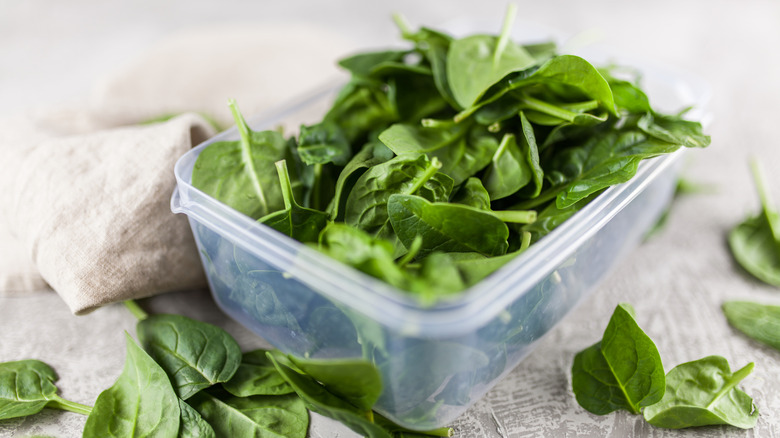
Spinach is a literal superfood. Packed with antioxidants, vitamins, minerals, and fiber, this heart-, gut-, brain-, and overall health-boosting veggie is hard to beat. Plus, it is tasty to boot. Whether used as the base of a lunchtime salad topped with chicken, avocado, and some craisins for texture, or sautéed with nuts for a pleasant crunch and served with a juicy piece of salmon, spinach is an easy crowd pleaser. What isn't a crowd pleaser, is if the spinach has gone mushy. To avoid this common problem, make sure to thoroughly inspect your bag or plastic container of spinach as you unpack your groceries for errant leaves that appear to be rotting or stems that are wilted and remove them promptly before storing.
Better yet, if Popeye's favorite vegetable is on your grocery list, consider tips for buying the best spinach, which chiefly come down to using your eyes. Make sure to choose spinach leaves that look crisp and sturdy and are bright green, as opposed to yellow or brown ones that indicate they may be past their prime, and certainly avoid any containers that have noticeably soggy-looking leaves from the outset. Side note: Selecting baby spinach is ideal for leaves that are headed for a salad, while firmer and larger leaves work well for cooked preparations.
Dry spinach is happy spinach
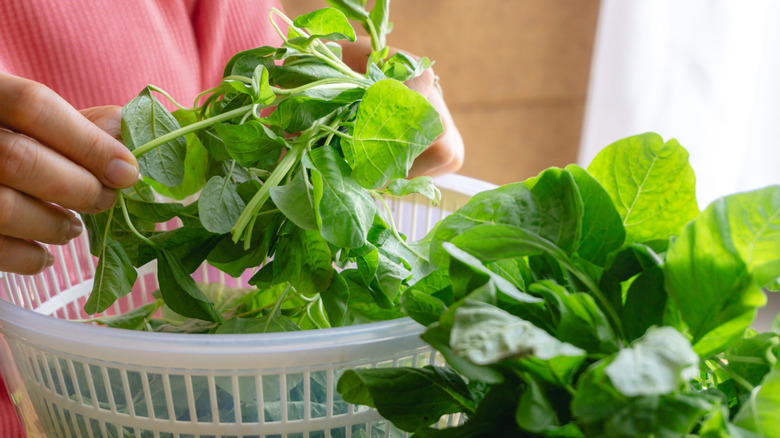
Moisture is the main culprit that leads to a dreaded pile of decaying spinach and by removing any subpar leaves and stems, you are well on your way to keeping your bounty crisp and enticing. If you don't remove those pesky slimy bits, you create somewhat of a domino effect, saturating nearby leaves with excess moisture and causing the whole container to become an unappealing mess that ends up headed straight for the trash can instead of a stir-fry. Once you've picked out any wilting and soggy offenders, another hack is to move your primo spinach to an airtight container lined with paper towels to absorb any excess moisture and keep your crop super fresh in the fridge for as long as possible.
This extra bit of attention on the front end ensures that the spinach that ultimately ends up on your table looks like it just came from the farmers market. If you'd like to keep those bright notes going and are cooking the leafy veg, consider blanching your spinach (a quick steam or boil in hot water followed by a plunge in an ice water bath) to seal in that desirable emerald green color, maintain vitamin and mineral integrity, and yield a tender and pleasing bite. For the final touch, don't forget an all important squeeze of lemon juice over the top of cooked spinach to lift the flavors and add a refreshing zing.