

10 Rare Ingredients You Should Try At Least Once
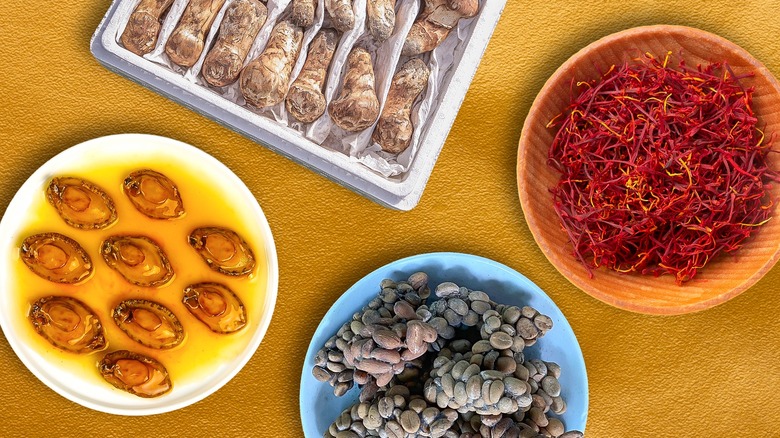
If you have watched your fair share of cooking shows or culinary travel programs on television, you have likely witnessed the host indulging in a plethora of unusual food items that you won't often find on traditional grocery store shelves. From exotic spices and unique cuts of meat to odd-looking fruits and seafood delicacies, many of these rare ingredients can spark curiosity or even fear in people who aren't familiar with them.
As a professional chef with a background in cultural anthropology, I have sampled a fair share of unusual and rare foods from across the globe that most would look at questionably. I consider it a window into the culinary traditions of a particular culture and a chance to expand my tastes beyond those foods I grew up with or that I am able to find locally.
While some of these foods may be overhyped or even dangerous to consume, such as durian fruit or fugu, other rare ingredients may actually be worth sampling at least once in your lifetime. If you can get your hands on them, these are the rare food items that make it onto my chef-approved "must eat" list.
1. Saffron
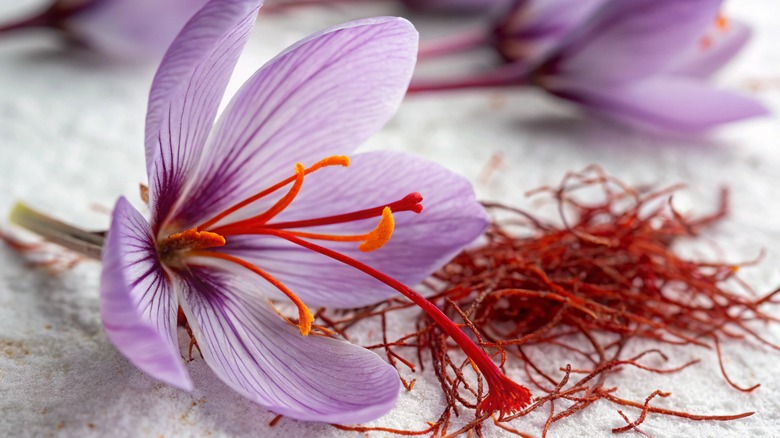
Among my favorite rare ingredients that I make a point to keep on hand at all times is saffron. Saffron is a spice that is sourced from the Crocus sativus flower. Though perhaps best recognized for the distinctive flavor and hue it lends to a traditional Spanish paella recipe, saffron can be found in the cuisines of countries across the Mediterranean, North Africa, the Middle East, and beyond. A majority of the saffron used globally hails from Iran, and its cultivation is both complex and labor-intensive.
Saffron threads are the stigma of the Crocus sativus flower. Each flower typically only yields three of these strands, and they need to be harvested by hand with tweezers owing to their delicacy. One pound of saffron may be constituted from upward of 75,000 flowers, which puts its rarity into perspective. What's more, the Crocus sativus cannot reproduce in the wild and requires cloning to be cultivated, making it even more unique.
All of this equals high prices. A pound of saffron might retail for anywhere between $1,500 to $10,000 depending on the grade, which means it isn't likely to be a common household item. That said, it is typically sold in much smaller amounts (think grams) and gets used sparingly. What it lends to recipes is nothing short of luxurious. Beyond its bright crimson hue, saffron has a subtle, yet complex, flavor redolent of floral, fruity, and even sweet notes. It can completely transform rice, soup, and meat dishes, and it is a unique addition to many baked goods and dessert recipes.
2. White truffles
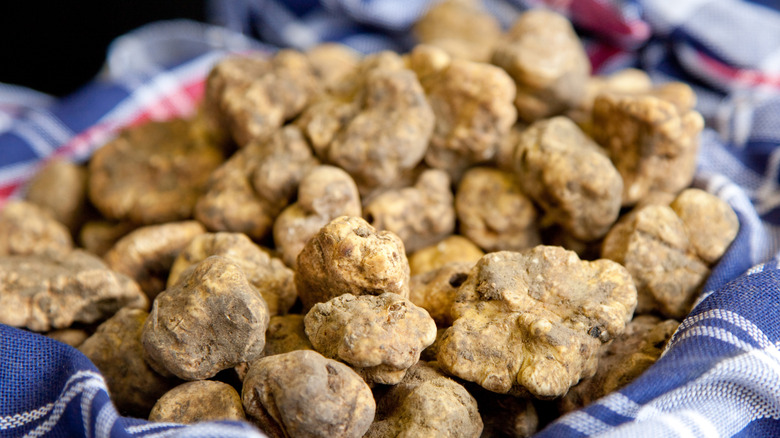
Because of the sudden popularity of truffle-infused or flavored oils, butters, and more, it may seem that this delicacy is more readily available than it is. In fact, truffles, the white ones in particular, are a rare luxury item that can set you back a pretty penny. Often dubbed "edible gold," white truffles may set you back $5,000 or more for a pound. But why?
Unlike black truffles, white truffles cannot be cultivated. These fungi are only found in small pockets in forests across southern Europe. The fruiting body of a type of fungus, white truffles can be incredibly difficult to locate. They typically spring up in the autumn underneath oak trees. They require the well-trained nostrils of pigs or dogs to be located.
Unlike truffle-infused or flavored oils and foods, which are often produced using synthetic chemicals that mimic the aroma of truffles, the real deal is a delicacy that cannot be replicated. It has flavors that are distinctly garlicky, cheesy, and delicately spicy. Just a few tiny shavings of these fungi are certain to elevate any pasta or risotto dish. It can also transform eggs and even potatoes from something mundane into an almost religious experience.
3. Kobe beef
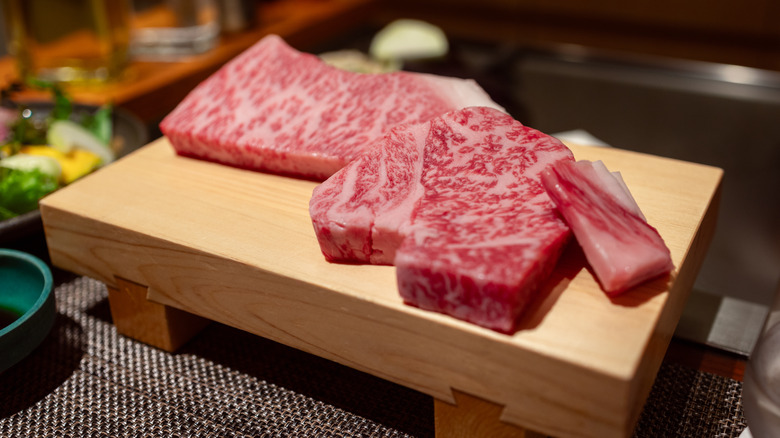
Among the rarest and most delicious types of beef on the planet is Kobe. Hailing from the Hyogo Prefecture of Japan, Kobe beef is a type of Wagyu that is sourced from a distinct black breed of cattle known as Tajima. This type of beef is prized for its extensive marbling, which ranks at 6 or above in terms of its beef marbling score (BMS). Because of its limited availability, Kobe beef is exceedingly expensive. A single pound of this type of beef can set you back between $200 and $500.
Like all Wagyu beef, Kobe is subject to a rigorous grading system established by the Japan Meat Grading Association in accordance with the Japanese government. Wagyu is evaluated for its meat quality score and yield score. Its quality is graded on a scale of 1 to 5, from worst to best, and is based on criteria including marbling, meat color, fat color, brightness, and texture. Yield is established based on the ratio of meat to overall weight and is graded on an alphabetical scale from A to C, from lowest to highest yield. All Kobe beef should have a minimum meat quality score of 4 and a yield score of no less than B.
Because of its abundant marbling, Kobe beef is extremely rich and supple. Its flavor is decidedly sweet, rather than beefy, and a little of this meat goes a long way, making its price tag somewhat less daunting.
4. Almas caviar
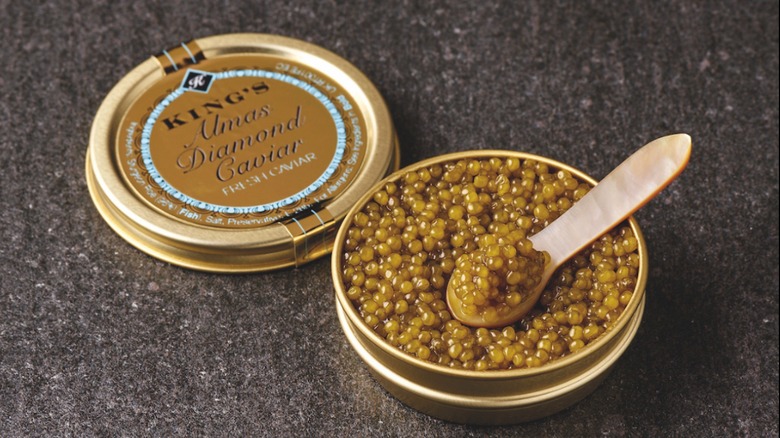
When it comes to luxury foods, few conjure images of dining in royal style more than caviar. Among the most elite types of this gourmet delicacy that you can obtain is Almas caviar. Sourced from the Iranian Beluga sturgeon, this caviar variety is considered to be the most expensive in the world, with its price as of this writing listed at $23,765 per kilogram (about 2.2 pounds).
Often called "white gold caviar," the roe obtained from the Iranian Beluga sturgeon carries such a high price tag because this species is endangered due to overfishing, climate change, and habitat destruction. Additionally, it can take up to 25 years or longer for a female Beluga sturgeon to attain maturity. Purists believe that the highest quality Almas caviar can only be obtained from albino sturgeon that are between 60 and 100 years of age, making it even more of a rarity.
What makes this type of caviar so enticing is its sophisticated flavor and texture. Almas caviar is known for its larger size and luxurious texture. Its flavor differs from other types of caviar in that it lacks some of the brininess for which this delicacy is typically known. It is far more subtle with strong nutty notes. It is best enjoyed as is, scooped onto toast points with a mother-of-pearl spoon and washed down with some fine champagne.
5. Matsutake mushrooms
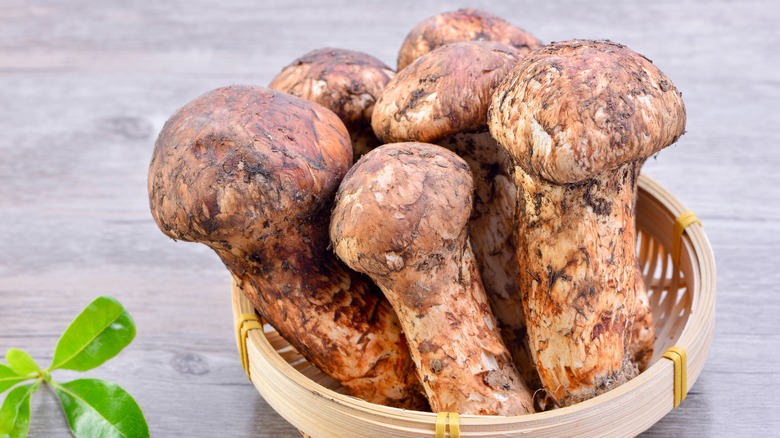
Another uncommon but still fantastic fungi that you won't often find at a grocery store in the United States is the matsutake or pine mushroom. These mushrooms are indigenous to Japan, Korea, and some areas of the Pacific Northwest and cannot be farmed. They are typically found growing underneath pine trees and coniferous fir trees in the autumn.
Many of the forests in which these mushrooms grow have been decimated by deforestation and climate change, which has resulted in this type of mushroom being classified as vulnerable by the International Union for Conservation of Nature (IUCN) as of 2019. For this reason, these mushrooms are among the most expensive in the world. At the first auction of the season in early October in Japan, eight matsutake mushrooms sold for 850,000 yen, which translated to about $5,559 for 263.5 grams, according to EurasiaTimes. Those harvested from the Pacific Northwest are more reasonably priced.
What makes these mushrooms so desirable is their unexpected aroma and taste. Unlike other mushrooms, matsutakes give off an almost sweet, spicy, cinnamon-like scent. Their flavor, though rich in umami notes, is distinctly resin-y, woodsy, and spicy. These mushrooms are best enjoyed when prepared simply, such as grilled or stir-fried, where their inherent aroma and flavor can be appreciated.
6. 100% Jamón Ibérico de Bellota
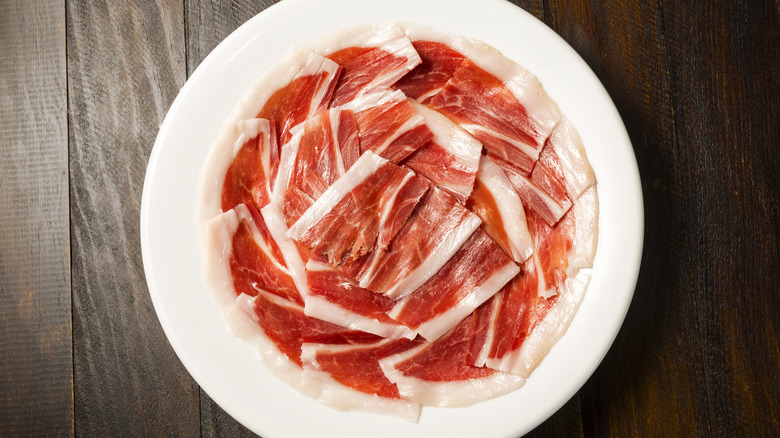
Among the greatest delicacies from Spain is a type of ham known as Jamón Ibérico de Bellota. Ham or jamón of all kinds is a staple in the diets of Spaniards, but only a few get to indulge in the rarity that is Jamón Ibérico de Bellota. This ham is produced from black Ibérico pigs that roam freely in the countryside of the Southwestern provinces of Andalusia, Extremadura, and Salamanca.
What sets these pigs aside from more traditional white breeds, like the Landrace or Duroc, from which serrano ham is produced, is what they eat. Ibérico pigs graze exclusively off of acorns, or bellotas, which contribute to an increase in marbling of the meat once the pigs reach full maturity. This additional intramuscular fat produces a flavor and texture that is second to none, with robust nuttiness and a lingering sweetness that makes this type of ham succulent.
When searching for Jamón Ibérico de Bellota, it is important to look for specimens that are made from purebred Ibérico pigs. The flesh of the ham should be a rich, almost purple hue, and the intramuscular fat should be visible. Additionally, when sliced, the ham should yield to the warmth of your fingers, melting gently from your body heat. This ham is best enjoyed thinly sliced and served with a glass of dry Oloroso sherry, a dry Palomino wine, or a young Garnacha.
7. Densuke watermelon
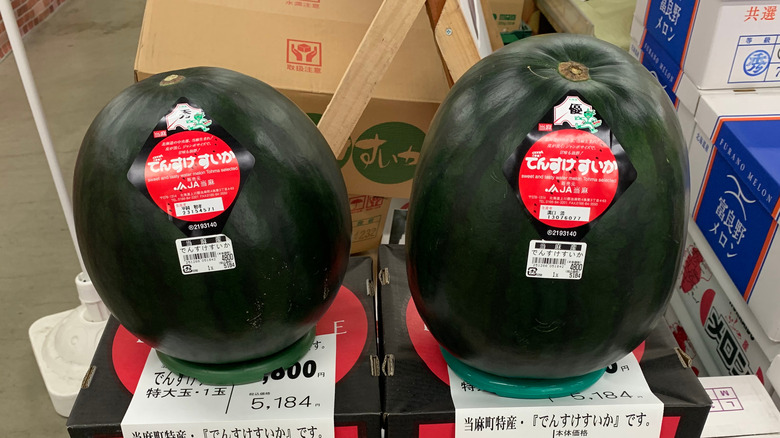
Watermelon is among the most hydrating and refreshing fruits in the world. But one particular variety will set you back more than the average mortgage payment. In June 2025, a single Densuke watermelon was auctioned for 700,000 yen ($4,800), according to DotDotNews, making it the most expensive variety of this fruit in the world.
What makes this watermelon so unique and rare is its limited supply. It only grows on the island of Hokkaido in northern Japan, where it has been cultivated despite the fact that the climate there is less than hospitable to agriculture. The fruit is so highly revered in Japan that it is often sold at auction, where bidding wars frequently drive the cost even higher. Obtaining one of these watermelons is perceived to be a status symbol.
As for what sets Densuke watermelons apart in terms of taste and appearance, these fruits sport jet black skin and crimson flesh that is known for its exceedingly sweet flavor. It is seldom eaten sliced, but rather transformed into culinary masterpieces of all kinds, from cocktails to sorbets to salads and more.
8. Edible bird's nest
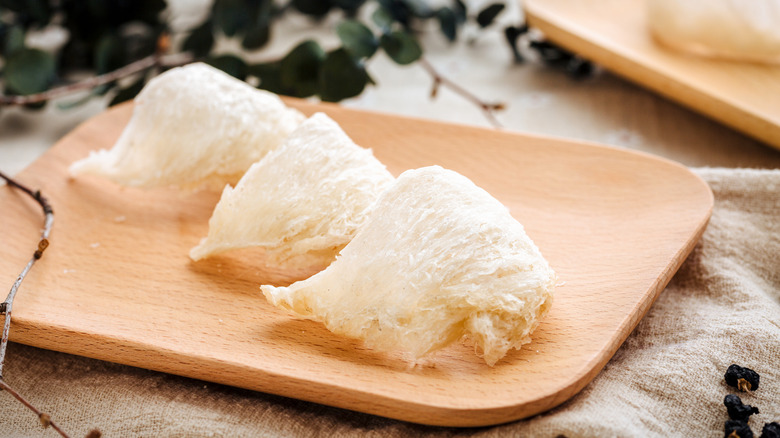
Called the "caviar of the East," edible bird's nests have been considered a delicacy in China for centuries. These tiny tufts of hardened bird saliva are consumed both for medicinal and culinary purposes, and they can come with a hefty price tag. One pound of bird's nests can run upwards of $3,000, making it a luxury item that is seldom seen in conventional markets.
The excessive price tag of bird's nests has to do with their relative scarcity. Only nests produced by swiftlets, in particular white-nest and black-nest swiftlets, are used. The bulk of edible bird's nests on the market hail from Indonesia and Malaysia, and the harvesting process is quite laborious. In Malaysia, edible bird's nests are safeguarded by the Wildlife Conservation Enactment of 1997, which means their harvest is strictly controlled. They can only be obtained by permit twice annually, during the months of February and from July to September, and doing so requires a dangerous hike up to limestone caves where they are located.
Bird's nests have a unique flavor that is almost oceany and rich in umami notes, owing to the fact that swiftlets consume predominantly saltwater fish. When rehydrated, this delicacy develops a viscous texture that can thicken soups, desserts, and more. Perhaps the most common recipe you will find them in is bird's nest soup, which is made by slow-cooking the bird's nests with rock sugar. The resulting soup has often been likened to the consistency of egg whites and is considered a luxury item.
9. Kopi luwak
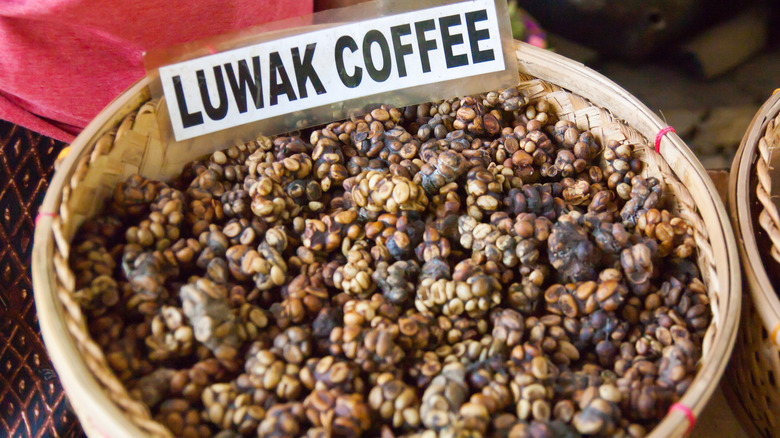
When it comes to coffee, many of us are accustomed to paying an arm and a leg for a cup of joe. That said, hundreds of dollars a pound might convince even the most coffee-addicted among us to convert to a different caffeinated beverage. The coffee in question here is a delicacy found across Southeastern Asia, particularly in Indonesia. Its name — kopi luwak.
Kopi luwak is coffee that has been made from beans sourced from the poop of the civet. Historically, these medium-sized mammals foraged beans in the wild, selecting only the most premium of coffee cherries to consume. After the civets defecated, the beans were collected by locals, allowed to dry, and then fermented, roasted, and transformed into a brew. The result was nothing short of magical.
As the coffee beans passed through the digestive track of the civet, stomach acids aided in breaking down the cherry, eliminating some of the inherent bitterness of the bean and leaving behind a distinctly citrusy flavor profile. And, because civets have such discerning palates, only the finest beans made it into the brew, further enhancing the coffee-drinking experience. Unfortunately, more and more of this type of coffee is being produced by civets who have been held in captivity, raising serious ethical concerns as to its production.
10. Abalone
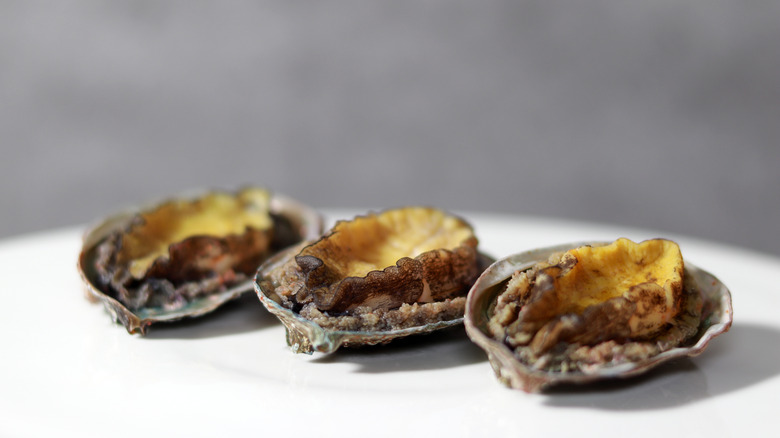
If you are a fan of shellfish, this delicacy is something you may want to keep an eye out for at a five-star restaurant. Abalone is a unique mollusk that is native to the waters along the coast of California, where you can find seven distinctive species — red, white, black, green, pink, flat, and pinto. These shellfish have been a part of the diets of North Americans for centuries. Unfortunately, this is no longer the case.
Every species of abalone has been listed as endangered by the International Union for Conservation of Nature. This means bans exist preventing the wild harvest of these creatures, whose populations have been decimated by overfishing, climate change, and disease over the past century. Today, the only type of abalone you might find on a restaurant menu has been farmed, and it will likely come with a high price, upwards of $50 per pound.
What makes abalone so desirable is its spectacular flavor and texture. When prepared properly, the otherwise rubbery mollusk can be rendered decidedly melt-in-your-mouth tender. Its taste ranges from assertively briny to sweet, depending on the species and growing conditions. Some have likened it to the foie gras of the ocean, which is a perfect analogy. If you do find it on a menu, you will want to verify that the meat has been farm-raised by a sustainable purveyor.