

7 Types Of Rice Explained
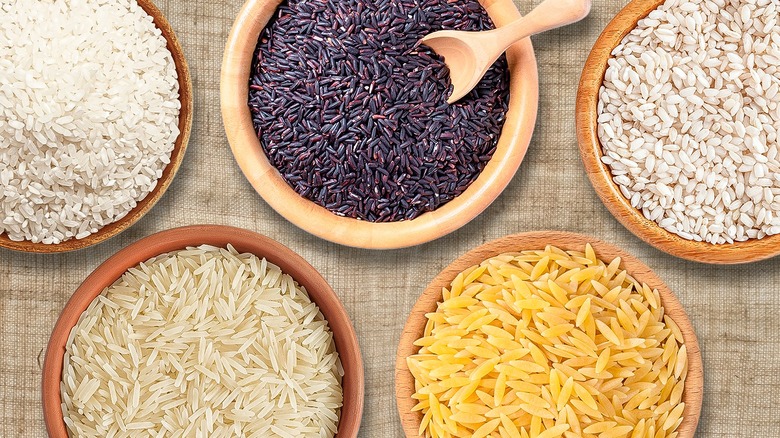
Growing up in an Asian-American household, rice had a constant presence at every meal, from breakfast and lunch to dinner and even snacks. Steamed short-grain Japanese rice was always on the dining table. With our Japanese rice steamer perpetually set to "keep warm," throughout the day, my siblings and I would devour a whole pot of rice, following our grandmother Rumi's rule: Never leave behind a single grain.
Now, to get one thing straight for anyone who didn't grow up eating much rice, there's a difference between short-grain and long-grain rice. Long-grain rice is fluffy and separated when cooked, and short-grain rice is sticky and clumped together. This is because long-grain rice contains less starch and amylose, which results in a drier consistency; short-grain rice has much more starch, which causes it to stick.
Looking back on my decade-long career as a chef, I've recognized how my rice-centered upbringing has profoundly shaped both my approach to cooking and my overall philosophy toward food. I gravitate toward cuisines that center around rice, and whenever I'm traveling far away from home, a bag of white rice is always in my suitcase — just in case of emergencies. So, whether you're a rice connoisseur like me or haven't even tried a single grain before, here are seven types of rice that I think you should know about.
1. Basmati rice
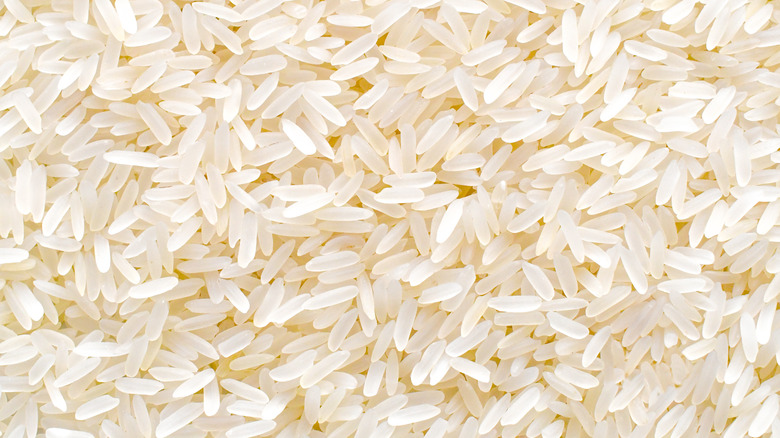
Basmati is a fragrant, long-grain rice that's native to the Indian subcontinent. It's commonly used in Indian, Pakistani, Persian, and Middle Eastern cuisines, often appearing in popular dishes such as biryani, kebabs, pilafs, and curries. Occasionally, it's used in South Asian, Afghan, and Caribbean cooking as well as some Mediterranean and Indo-Chinese dishes.
The rice is known for its slender, elongated shape. It has a delicate, nutty, floral aroma when cooked and has a slightly sticky texture while maintaining individual grains, making it perfect for stir-fries and curries. It has a lower to medium glycemic index compared to short-grain white rice, making it a slightly better option for those with high blood sugar. The rice also comes in both white and brown varieties. Brown basmati rice is a whole grain with the bran and germ still intact, giving it a much nuttier flavor, chewier texture, and longer cooking time. White basmati rice is a more processed version that's been milled to remove the bran and germ, resulting in a less fibrous and nutritious grain.
2. Jasmine rice
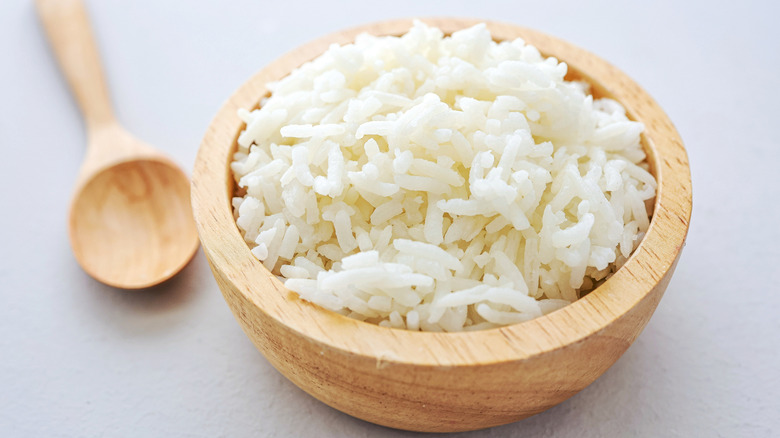
Commonly confused with basmati, jasmine rice is a long-grain rice from Southeast Asia, primarily originating from Thailand, where it's known as "hom mali." If you've ever been to the countryside of Thailand, you've probably noticed the endless fields of rice paddies that paint the landscape in shades of green and gold. The fertile fields in Thailand, specifically in the Northeastern region, are ideal conditions for growth due to the humid climate and rich soil. This rice has a buttery taste with a subtly sweet and nutty flavor. Many people compare its flavor to buttered popcorn or fragrant flowers.
It's a staple in Southeast Asian cuisine, especially in Thai, Laos, Vietnamese, and Cambodian cuisine, and is often served alongside curries, braised meats, seafood, and other savory dishes. It can also be used for desserts such as Thai sticky rice with mango or sweet rice pudding. Compared to basmati rice, jasmine rice has a much higher level of amylopectin, which gives it a soft and slightly sticky texture when cooked.
3. Arborio rice
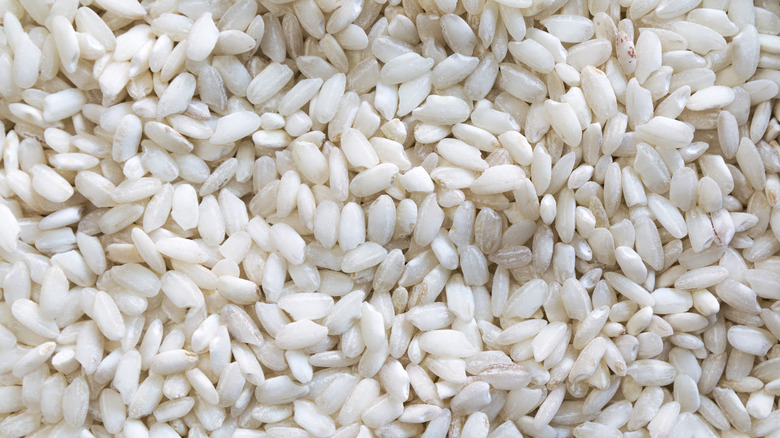
Ever heard of the delicious Italian dish called "risotto?" If so, then you've probably had this short, round rice called arborio. This Italian white rice has a very high starch content, which makes it ideal for creating that signature creamy consistency that risotto is known for. During the cooking process, the rice absorbs liquid gradually while releasing starch, with the interior of the grain remaining firm and tender — or as Italians like to call it, "al dente." The grain has a short, plump appearance with a slightly opaque color and can be found at most grocery stores and Italian specialty markets.
The rice is named after the Northern Italian town of Arborio, where it's grown and cultivated in the country's famous Po Valley, which is the base for 35% of Italy's agricultural products. According to Italy Segreta, Italy is Europe's leading producer of rice, cultivating 50% of the EU's total rice production. So, the next time you're visiting one of the vibrant cities lying in the Po Valley, like Milan, Bologna, or Turin, be sure to pick up a bag of arborio rice!
4. Short-grain Japanese rice
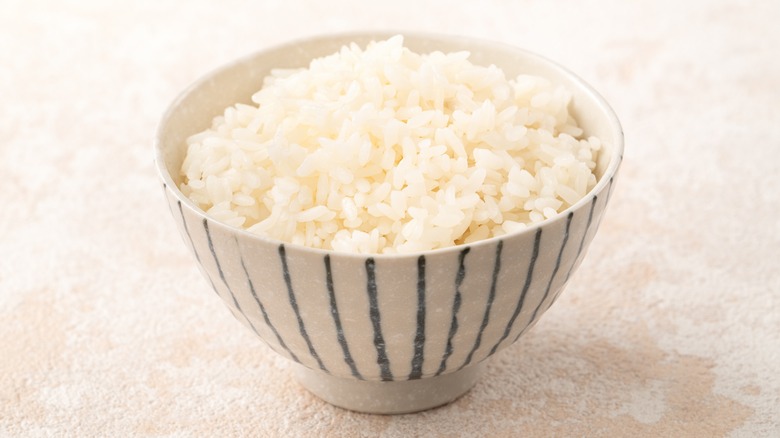
One of the most recognizable varieties of rice out there, short-grain Japanese rice is a sticky, glutinous rice with high starch content that becomes soft and cohesive when cooked. The rice has a fairly mild taste with notes of sweetness, which allows it to absorb flavors of the sauces, seafood, meats, and ingredients it's cooked or paired with. Its high content of amylopectin allows the grains to cling together or "stick" while remaining firm, allowing the rice to easily be eaten with chopsticks or rolled into balls for onigiri, which is the perfect lunch, especially if you're tired of making boring deli sandwiches.
The rice's unique texture makes it great for sushi, nigiri, rice bowls, and other traditional Japanese dishes. It's consumed with almost every meal in Japanese cuisine as well as Korean and Northern Chinese cooking, with each region developing its own unique varieties and cooking methods.
5. Brown rice
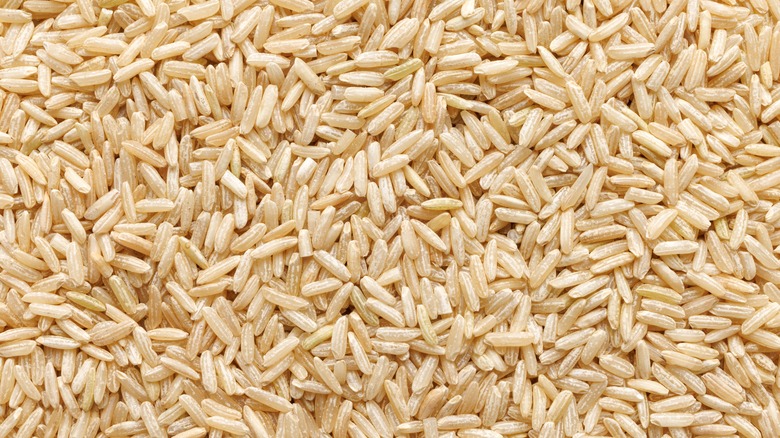
Brown rice is a whole-grain rice that contains all parts of the grain — the endosperm, bran, and germ are all intact — offering a more nutritious alternative to white rice. For those of you who don't know, white rice is processed to remove these layers. That means brown rice contains much more fiber, vitamins, minerals, and antioxidants.
When cooked, brown rice has a delightful, chewy texture with an earthy taste and slightly nutty flavor. It does take a bit longer to cook compared to white rice, but it provides greater nutritional benefits. It can serve as a side dish, as the base of salads and grain bowls, or as a filling for burritos and wraps. Its nutty flavor pairs exceptionally well with a wide range of different dishes, from grilled chicken thighs and kimchi stew to braised short ribs. You can even use it in dessert applications like sweet rice pudding or in the Latin American sweet rice drink, horchata.
6. Black rice
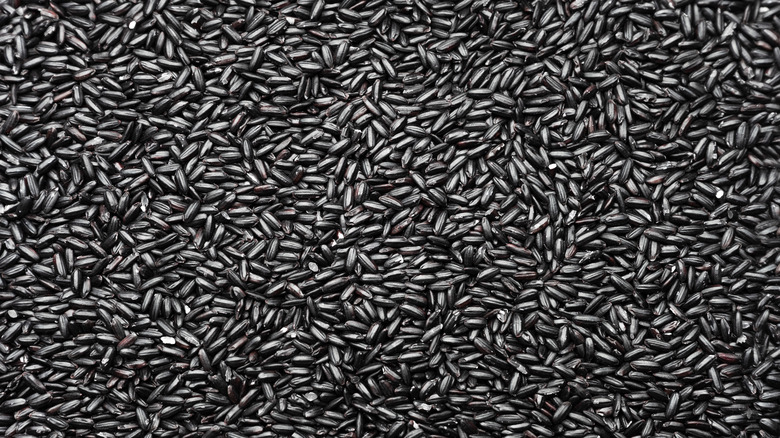
Black rice is a type of heirloom rice that gets its deep purple color from a high concentration of the antioxidant anthocyanin. For the uninformed, heirloom rice refers to ancient grains that have been passed down through generations. Unlike modern, genetically modified rice, heirloom rice grains are open-pollinated, meaning they are not hybrids, and their characteristics are consistent from one generation to the next.
Historically, this rice was strictly reserved for ancient Chinese royalty, hence why it's also referred to as "forbidden rice." Its exclusivity was due to its rarity, its high cost, and the belief in its powerful healing and life-extending properties, making members of the Imperial Court want to keep its precious benefits for themselves. If you haven't tried it before, the rice has a nutty flavor with a slightly sweet and dense texture. You can use it in a variety of different ways, from adding it to salads and rice bowls to mixing it into stir-fries.
7. Sticky rice
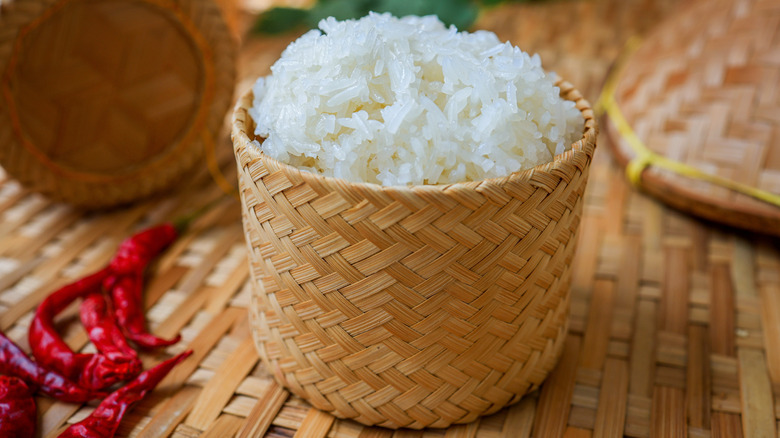
Last but not least, sticky rice, also known as glutinous rice or sweet rice, is a type of short-grain rice with high starch content that becomes extremely sticky when cooked. Like many short-grain rice varieties, it has a high concentration of amylopectin, making the grains stick together when cooked. Despite its name, the rice doesn't have a sugary taste at all; however, you've probably seen it being used in desserts like Thai sticky rice or mochi. Its sticky, chewy texture makes it hold up well with other ingredients, and it absorbs liquids like coconut milk and fruit juice perfectly.
This rice is a staple in Southeast Asian cuisine, particularly in Laos and Thailand. Sticky rice is deeply ingrained in Laotian cuisine, culture, and religious practices. According to Smithsonian Magazine, Laos has the world's highest per-capita consumption of sticky rice. It is used both in savory dishes and dessert preparations and is often steamed as opposed to boiled in water.