

Why Homemade Pizza Never Tastes As Good As The Restaurants
We may receive a commission on purchases made from links.
Pizza is one of those foods that's generally easy to be happy with. As the common saying goes, "Even a bad pizza is still pretty good." When making pizza at home, you could go the super-quick route and add a professional touch to your frozen pizza. And, although there is a store-bought frozen pizza hierarchy, it's not as good as homemade. But, then again, homemade pizza still isn't as good as pizzeria pizza, even if you're a good home chef who makes everything from scratch. To find out why homemade pizza never tastes as good as restaurant pizza, we reached out to an expert.
Fel Cassieli is the founder of Crispy Heaven Bakery in New York City's SoHo, and she says it's all about the oven. "I believe the only difference is the pizza oven and the temperature," she exclusively explains. "For my pizzas, I like to have my oven as hot as possible. Unfortunately, ovens at home won't get as hot as a professional pizza oven."
Most conventional home ovens only go to 500 degrees Fahrenheit, with the ultra high end being 550 degrees. Typical New York-style pizzas are usually cooked between 700 and 800 degrees, with other styles going even higher. Commercial pizza ovens are designed to cook hot and quick for crispy crust and perfectly browned cheese. Although that's just not something you can get with a conventional oven, there are some tricks you can do to improve on your homemade pizza.
Some expert advice on improving your homemade pizza
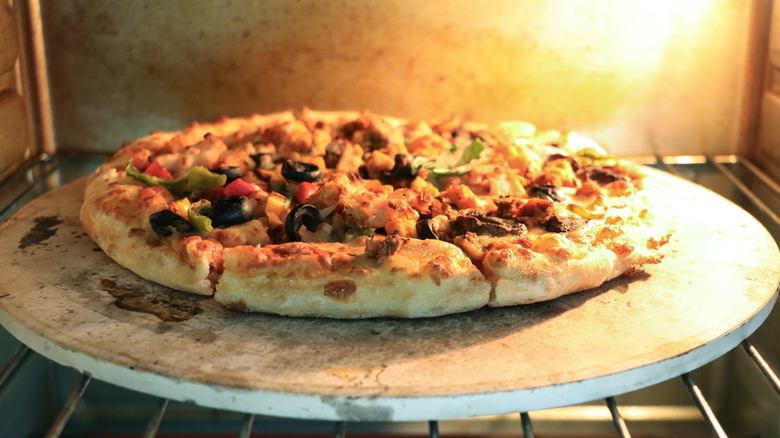
To get your homemade, from-scratch pizza to taste as close as possible to restaurant-style, Fel Cassieli says, "You can get a pizza stone for your oven, and that will help. Slowly heat the oven with the stone, putting the temperature up to its maximum. Once the stone is heated, you can bake." Pizza stones, like this Old Stone round pizza stone, get your homemade pizza closer to restaurant-quality because they simulate the cooking surface of conventional pizza ovens by radiating heat from below. They can also reduce the amount of time your pizza needs to stay in the oven.
There are some great tips for making homemade pizza. Cassieli advises sticking with hand-kneaded dough and learning how to shape it properly. Beyond her advice, you can try par-baking your crust first to get it nice and crispy. Keep the sauce simple, so it's easier to work with and will blend easily with the toppings. And don't overload the crust with too many ingredients (especially things like raw tomatoes) because it won't cook evenly and could end up a soggy mess. Beyond the pizza stone, there are some other important tools for homemade pizza. It may seem obvious, but a good-quality pizza cutter, for example, will save you time and frustration.
And despite the fact that you may not achieve pizzeria greatness, Cassieli says you can still make some wonderfully delicious pizza at home. She concludes, "I started to bake at home and learned everything myself before opening Crispy Heaven, so for me, it's still the same — from home baking to baking for customers. Just put in some love and passion, sometimes burn the dough, and learn from mistakes. It's worth it."