

8 Types Of Peppercorns Explained
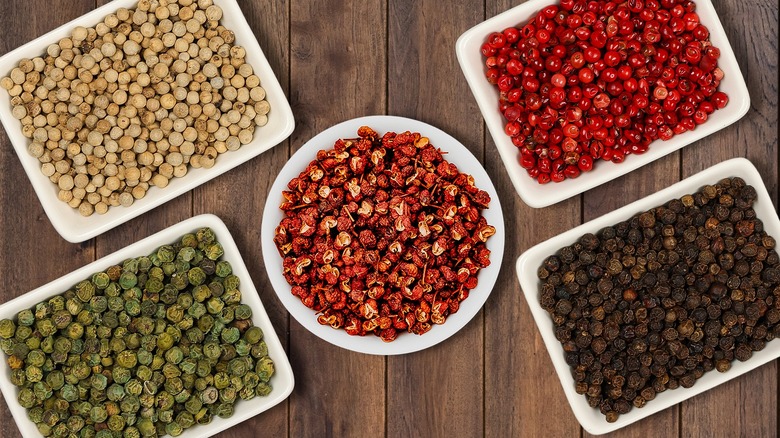
The spice aisle can be a treasure trove for a home cook, but it can also be somewhat intimidating because of how many options there are to choose from — and how little the labels tell you about how to use them. On one end of the spectrum, you have your essentials, like cinnamon, salt, and dried herbs, and on the other end, you have your more niche spices. One ingredient that takes up real estate on both ends of this familiarity spectrum is pepper. Novices may only be familiar with black pepper, or whatever colorful peppercorns come in a plastic grinder at the grocery store. But in reality, there are a whole lot more peppercorns than meet the eye.
While there are many different types of peppercorns under the pepper umbrella (some of which aren't true "peppercorns" at all), they have unique origins, processing methods, and flavors that make them stand out and make them better suited for some recipes than others. In order to help you streamline your understanding of the different types of peppercorns and how to use them, we've created a guide to some of the most popular and widely available peppercorn varieties that should be on your radar.
1. Black peppercorns
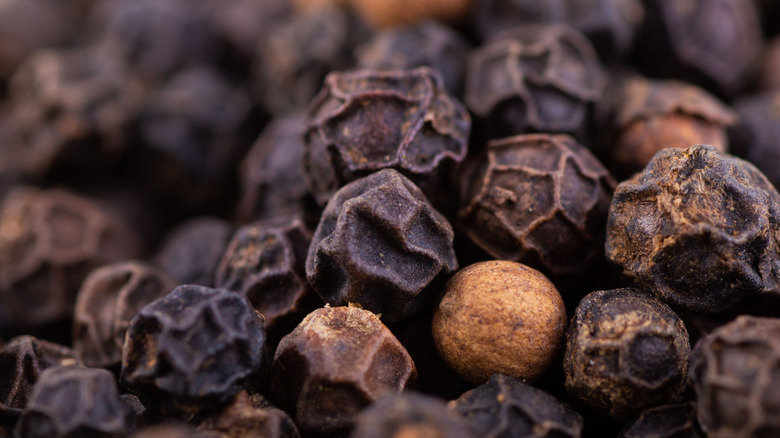
If there was one pepper on this list that you have in your pantry right now, it's probably black pepper. This ubiquitous spice is found in many different savory recipes, and it's one of the staples that people use for seasoning food. The McCormick Science Institute even points to black pepper being the most widely consumed spice globally.
Black pepper is endemic to Southern India. Currently, its largest producers are Vietnam, Indonesia, Brazil, Burkina Faso, and Malaysia. The berries are picked from the plant when they're still green, then are left to ferment and sun-dry to create the shriveled black peppercorns most home cooks are familiar with. Underneath the wrinkled exterior, also known as the pericarp, is a lighter-colored seed. Its flavor is often described as soapy, bitter, and/or woody, though regional variations can create differences in flavor and aroma.
Black pepper's somewhat harsh flavor is what makes it so popular and common in cuisines around the world. It's a mainstay in spice blends from the Indian subcontinent, including garam masala, as well as Arabic and Middle Eastern spice blends like berbere and zhoug. Black peppercorns can be used whole, cracked, or ground, and it isn't uncommon to see dishes like salads and pasta sprinkled with ground pepper right before serving. It's also a foundational ingredient in many dishes, including cacio e pepe, where the crushed peppercorns are mixed with butter to create a sauce, and on the exterior of a peppercorn-crusted steak (aka steak au poivre).
2. White peppercorns
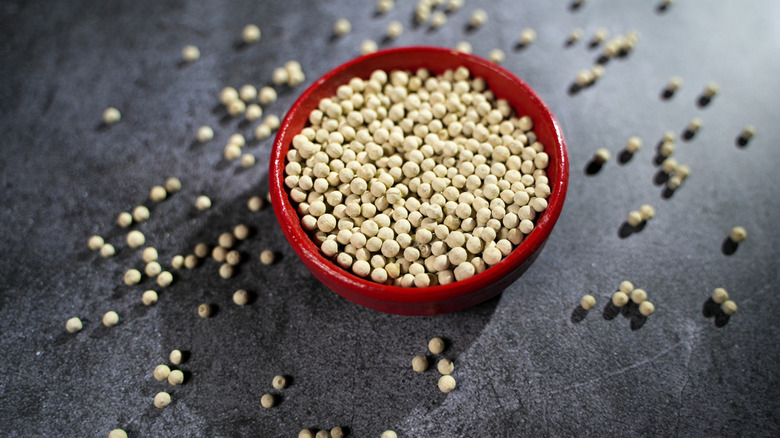
White pepper has started getting more and more attention in recent years, thanks to its complex flavor. It pops up mostly in European and Asian-inspired dishes, like congee, pommes purée, and béchamel.
You may be surprised to know that white and black pepper come from the same plant: Piper nigrum. While black peppercorns are pulled from the plants, fermented, and dried, white pepper is first soaked so the exterior skin comes off. The white seed underneath is the white pepper. Depending on how it's packaged, white pepper can take on an array of different flavors, including piney and herbaceous, and tends to be brighter than black pepper.
One of the benefits of using white pepper over black pepper is that its color blends better into lighter dishes, including the aforementioned soups and sauces. Since the exterior of the pepper seed is removed, along with the piperine that gives it its biting flavor, it won't give you as harsh a bite. If you're just experimenting with it for the first time, you may want to try using it as a substitute for black pepper and seeing if you like its slightly different and more complex flavor profile. You can even use it in sweet recipes alongside ginger and cinnamon for a delectably warm, full-flavored bite.
3. Pink peppercorns
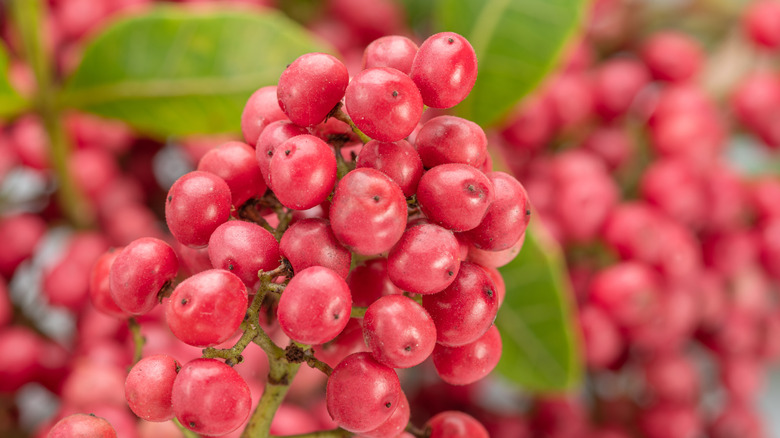
You might think that we're on to something here; the same plant with the berries dried a different way creates the different kinds of peppercorns, right? Well, pink peppercorns are different from all the rest because they are derived from a different plant — from either Brazilian pepper trees or Peruvian pepper trees. So interestingly enough, this actually makes them more closely related to mangos and cashews than peppercorns. They're essentially berries – not true peppercorns – but they bear the name because of their resemblance to the flavor and appearance of true peppercorns. Pink peppercorns taste like black ones, but with more sweetness, fruitiness, and with far less pronounced bitterness. The reason for this difference is that black peppercorns contain piperine, while pink peppercorns do not.
Pink peppercorns are also different from other varieties because they're very soft and don't take well to being ground. You'll most often see them mixed with other peppercorn varieties, like green and white, so that they can be properly ground. Pink peppercorns can also be used whole or crushed, and if you want to increase their flavor even more, you may want to try toasting them briefly before using them. Pink peppercorns are typically sold whole, as their oils can degrade over time and diminish their freshness.
These faux peppercorns are excellent in dishes where their fruitiness can shine, like in Thai soups, spice rubs, and curries. If you're looking to add a pop of color to your dish, add your peppercorns at the end of the cooking process rather than at the beginning.
4. Red peppercorns
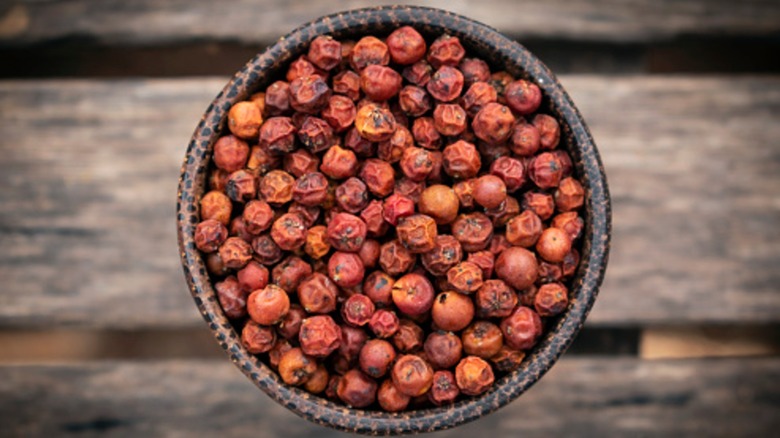
Okay, okay, back to the true peppercorns after our brief intermission. While red peppercorns may have the same color as pink peppercorns, the former is a true peppercorn — sourced from the Piper nigrum plant. Unlike black peppercorns, which are picked before they're ripe, the red ones are left to ripen fully on the branch. This extra time results in a very tart, floral flavor and much less piquancy than black pepper. You may even hear the red peppercorn's flavor described as similar to other fruits, including cherries and cranberries.
There are numerous ways to use the red peppercorn's flavor to its fullest potential. Always grind it right before using, and keep it stored in an airtight container to limit its exposure to moisture and air. You can try its flavor in a salad dressing or atop roasted vegetables to add a delectably sweet and tangy contrast. You can also add it to your favorite blend of other peppercorns, or even add it to desserts that crave a little bit of that sweet flavor. Chocolate, which can be both bitter and rich, would be an excellent match for this floral and fruity peppercorn.
5. Long pepper
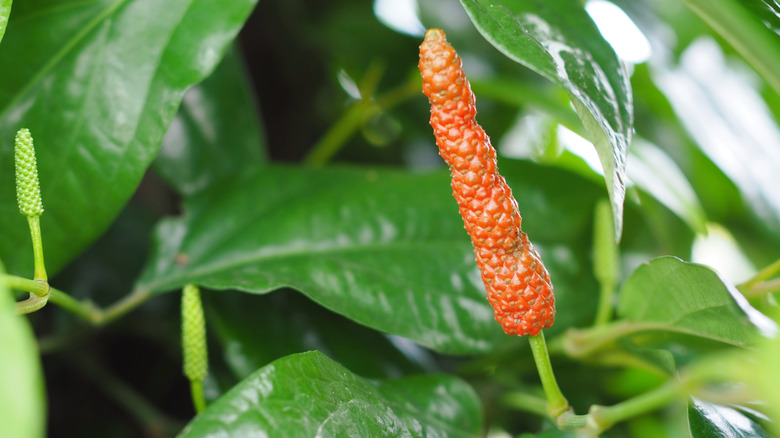
C'mon now, another faux peppercorn? Technically it has the same genus, Piper, but is a different species: longum. It looks very, very different from the other types of peppercorns we've covered thus far. It grows as one long pepper, which can be upwards of an inch long, with an armor-like coating — kind of like a pinecone. The individual scales are their own fruits, stuck onto the spike-like base of the flower.
Long pepper is dried the same way as black pepper, giving it a similar piquant flavor profile. However, it also has some menthol-y, cinnamon-like undertones, making its flavor much more complex. Some people have also described its flavor as buttery and earthy, brimming with nutmeg undertones.
If you haven't seen long pepper in your grocery store, chances are you're not the only one. This peppercorn is only available at niche grocery stores and ethnic markets. Another important thing to note is that, due to its awkward shape, it's not really conducive to being processed with a traditional pepper mill. You're better off taking a mortar and pestle to it. It's commonly found in Indian dishes, so it works well in things like curry, flavorful chutneys, and the like.
6. Green peppercorns
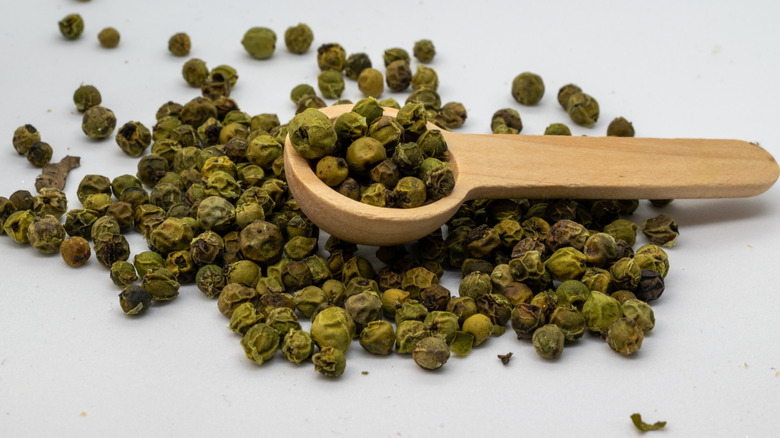
Green peppercorns are both funky looking and funky tasting. They're picked from the Piper nigrum vine before black pepper is, which gives them their zesty and tart flavor. Since they aren't dried and oxidized like black pepper, they have a little more heat.
Green peppercorns are often stored in brine or freeze-dried to preserve their flavor. The brine can also influence their flavor, imparting tart notes that complement the peppercorn's piquancy. You'll see them used in some Thai recipes, as well as French recipes and pan sauces. They're an excellent complement to heavy and flavorful proteins, including chicken and steak, because of their fresh bite. Green peppercorns are also an integral ingredient in Thai jungle curry, a coconut milk-free recipe that is quite spicy — thanks in part to ingredients like green peppercorns.
You may also be able to find fresh green peppercorns in Asian markets. Look for green peppercorns that are clustered together tightly and have a shiny exterior. Though, if you're after something a little more shelf-stable, you may want to opt for preserved green peppercorns instead.
7. Szechuan peppercorns
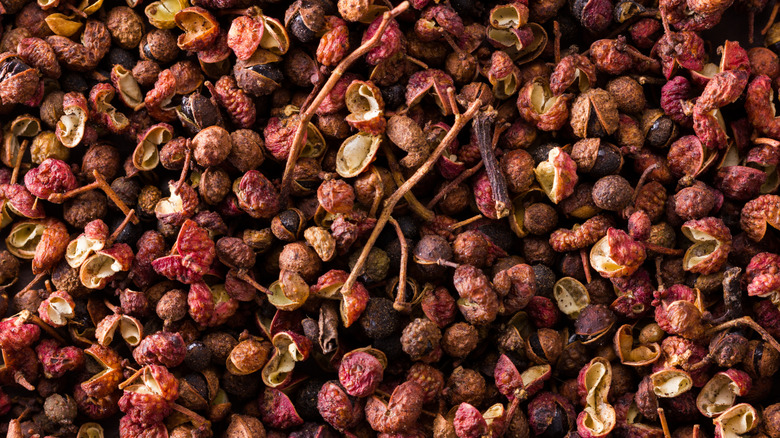
Szechuan (also spelled "Sichuan") peppercorns are kind of having a moment, and we couldn't be happier for them. They'll give your snack mixes a blast of spicy, numbing heat and complement Asian-inspired sauces and recipes. Like the pink peppercorn, Szechuan peppercorns aren't sourced from the same plant as true peppercorn varieties. They are the berries of the prickly ash tree — which is not a member of the pepper family, but the citrus family. Once the berries have been picked from the tree, they are sun-dried. This process causes the berries to open up, like flowers, and expose the hard, inedible seeds within them. The seeds have to be removed, along with any leftover inedible plant residue, before the husks can be used.
The two varieties of Szechuan peppercorns, green and red, taste different. The more common red variety has a more organic, earthy flavor, while the more hard-to-come-by green peppercorns offer more herbaceous undertones, Both peppercorns, though, offer a flavor that is very unique from other types of peppercorns included on this list. They contain a compound called hydroxy-alpha sanshool, which causes the tongue to tingle. This sensory numbing effect makes Szechuan peppercorns a key component of the Chinese regional cuisine, as it can counteract some of the flaming heat from spicier ingredients, like chiles.
As Szechuan cuisine has grown in popularity in America, foods containing Szechuan peppercorns have become more widely known. Mapo tofu, dan dan noodles, and other dishes use Szechuan peppercorns for their sensory and flavorful properties. They're also an integral ingredient in Chinese five-spice powder.
8. Timut peppercorns
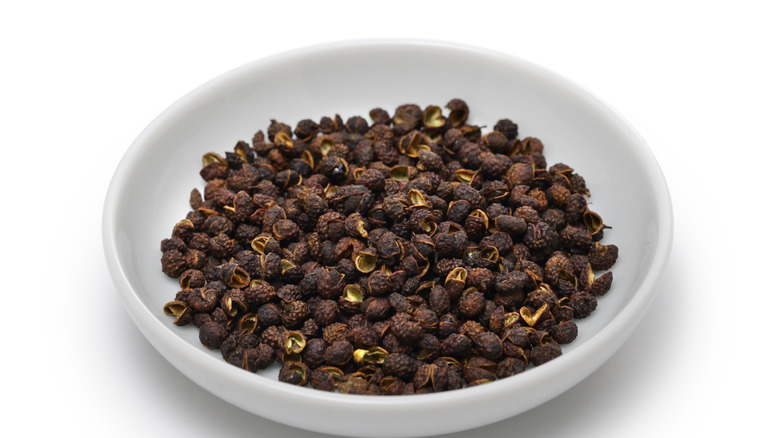
At first glance, it's easy to confuse timut peppercorns with similarly colored black peppercorns. However, they are more closely related to Szechuan peppercorns and are endemic to Nepal. Their flavor is more citrusy, bright, and floral than bitter black pepper; some folks have even described it as grapefruit-like.
The husks from the Zanthoxylum armatum plant are harvested like Szechuan peppercorns, and they offer a similar tingling Pop Rocks-like sensation on the tongue. As such, the timut peppercorn is less about a raw, unadulterated heat and more about a sensory experience; though it delivers less of a tongue-numbing sensation than Szechuan peppercorns. As such, it's used in many Nepalese dishes like chutneys and curries for both this property and its bright, citrusy flavor.
Timut peppercorns aren't easy to find in grocery stores, but you can find some online retailers that carry them (like McCormick). Their zingy and bright flavor makes them an excellent pairing for seafood or addition to a marinade for chicken or pork. You could even use them in a salad dressing to complement other slightly sweet or acidic flavors.