

11 Old-School Salad Dressings Hardly Anyone Eats Anymore
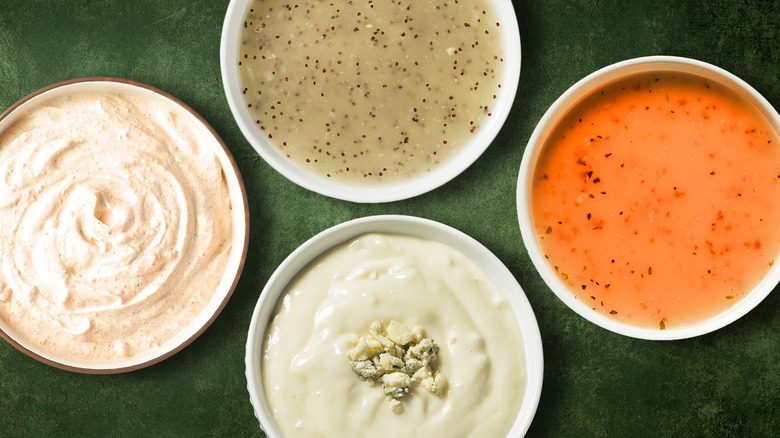
What's a salad without dressing? Sad. A bunch of undressed leaves, some herbs, and maybe a few nuts or seeds is simply incomplete. In reality, you can hardly call a salad a salad without dressing, as the two are inextricably linked, like pancakes and syrup. Salads need dressing to tie everything together and to make eating what could otherwise be overly bitter and earthy greens more palatable. The acidity in a good vinaigrette makes the sides of your mouth pucker and keeps you coming back for more, bite after bite, as a dress rehearsal for the main course. A flavorful dressing with the ideal ratio balances the fat and salt, lifting bitter greens, with subtle sweetness playing against earthy flavors.
With enough protein thrown in, a good salad with tasty dressing can also serve as a meal. The bottom line is that few foodies would disagree about the importance of salad dressing, in all its variations. What makes it even more fun is the notion of nostalgia, as we often forget about how certain dressings from the past have seemingly disappeared from supermarket shelves and restaurant menus. Dressings like Catalina and Dorothy Lynch used to coat our lettuce, but now they almost feel retro. And while many food lovers out there likely still use forgotten dressings to brighten their greens and grain bowls, many rarely eat them these days. Let's take a trip down memory lane and revisit the old-school dressings that used to hold space in our fridges and in our hearts.
1. Poppy Seed Dressing
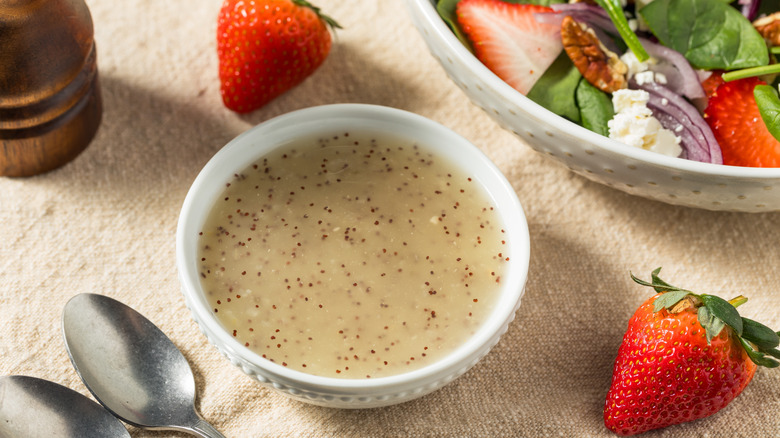
When was the last time you went to a restaurant, ordered a salad, and had it come with poppyseed dressing? It seems so '90s and 2000s, like a dressing option that is rather rare these days. Or, it's the type of dressing found in those salad kits from the grocery store. But that's not to say it's a bad one — quite the opposite! A poppyseed dressing, often paired with spinach, goat cheese, walnuts, and some strawberries, comes together as a delicious salad by any stretch. Though it was (and still is, to a degree) available in supermarkets as a pre-made option, the dressing is actually quite simple to whip up. All you need is – surprise, surprise — some poppy seeds, in addition to some sugar or honey, mustard or mustard powder, salt and pepper, lemon juice or vinegar, a shallot or onion, and some oil of your choice.
The ingredients are gently heated to round off those rough edges and harmonize the flavors before blitzing them in a blender to emulsify, creating a creamy texture. It has that classic sweet and sour balance of flavor, with a luscious mouthfeel combined with subtle texture from the seeds themselves, which taste nutty and earthy. And if you weren't alive in the 20th century and are wondering why this dressing is characterized as old-school, it's because of poppy seed dressing's origins. The dressing has American roots dating back to the 1950s, with a mention by Texas author Helen Corbitt, who penned cookbooks.
2. Catalina Dressing
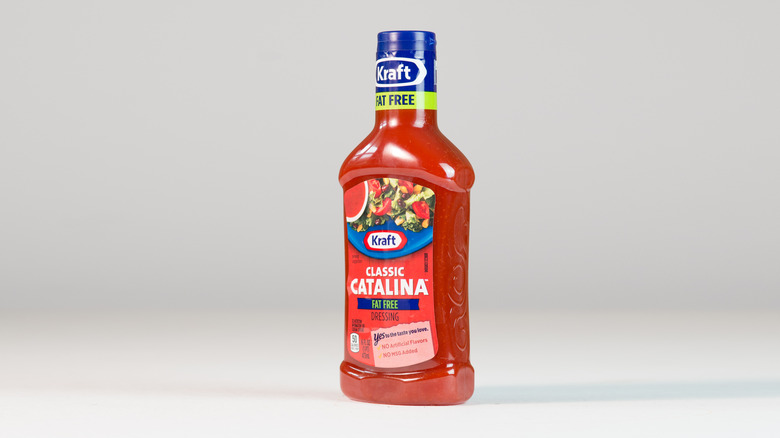
According to our research, Catalina dressing doesn't have any link to, or origin story from, Catalina Island, off the coast of Los Angeles. But it is decidedly old-school, with a trademark name dating back to 1962. The Kraft Heinz Company owns that trademark and actually still makes Catalina salad dressing. Fittingly, it has branded it as Classic Catalina, falling into the silo of Kraft's ubiquitous bottled salad dressings. According to Kraft, it "adds tangy, zesty flavor to almost anything," and we'd be inclined to agree. But for those who might not be familiar, let's start with appearances. The sauce is distinctly reddish-orange, which is no surprise given that it's made with a tomato purée base, and as such, pairs very well with slices of raw tomato.
Many a white shirt has fallen victim to Catalina dressing in the form of red splotches, thanks to feckless and inattentive salad eaters. But why was the dressing popular in the first place? The taste, of course. It is indeed tangy, with a signature zip that is undoubtedly tomatoey, amped up by punchy vinegar that's balanced with sugar. Kraft's recipe also includes some dried onions and garlic to give it a savory note, combined with oil to bind it all together. For a cleaner dressing, ambitious foodies out there may opt to make their own version, devoid of additives and binders. Others may dunk a slice of pizza into it. Either way, Catalina dressing will always remain in our hearts.
3. Roquefort Dressing
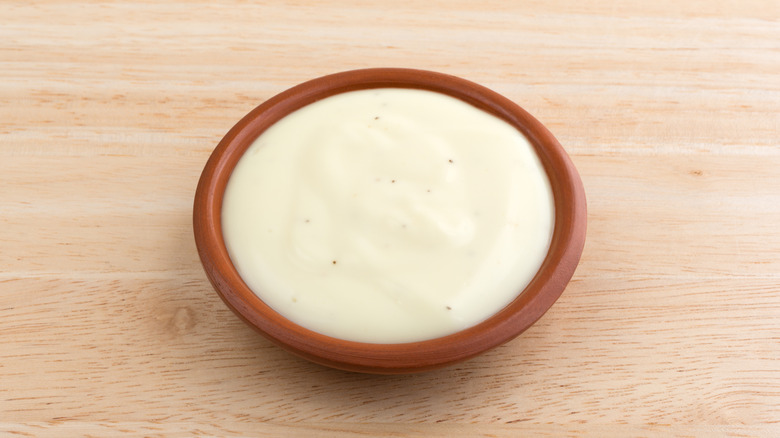
This one's for all the cheese lovers out there, with Roquefort dressing being made from super-rich blue cheese. If you're unfamiliar, you could call it ranch-adjacent, or perhaps you've even had a watered-down version before with Buffalo chicken. The renowned and potent-smelling Roquefort cheese has been crafted by artisans for centuries but wasn't commonly found in salad dressings until much later, around the late 19th to early 20th century. One of the first mentions of it, making it unquestionably old-school, was in 1926 in Chicago's Edgewater Beach Hotel Salad Book. Roquefort dressing would have been whipped up in kitchens back then, later becoming commercially available after ending up in bottles as the country moved towards factory-made canned and jarred goods.
To get technical, there are different types of blue cheeses, and Roquefort blue cheese is named after the Roquefort-sur-Soulzon region of France. It has a registered trademark with the USPTO dating back to 1953 to ensure authenticity by essentially branding the cheese. So, true Roquefort dressing would have to be made with the real deal French cheese, though you could whip up a similar version with other blue cheeses. A typical Roquefort cheese dressing from yesteryear might have consisted of mayonnaise, French dressing, Worcestershire sauce, and, of course, some crumbled up Roquefort. But that's not to say that it isn't used or made in modern kitchens; rather, its foundations span two continents with a deep culinary past. This dressing is rich in flavor and history!
4. Sour Cream Dressing
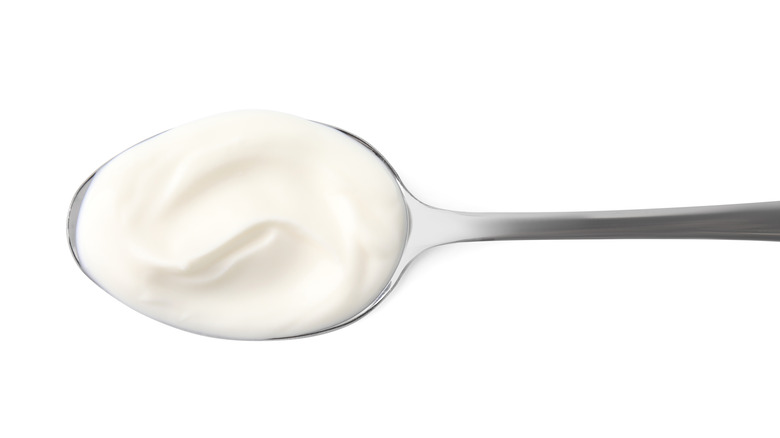
Sour cream has an interesting history behind it, and it usually ends up on potatoes rather than on salads. The condiment dates back many, many years ago, with origins in Central Asia, later spilling into modern-day Russia and Central and Eastern Europe. This is why sour cream ends up in borscht or alongside pierogi, adding a velvety mouthfeel and tangy bite that elevates simple dishes into symphonies of flavor. But if you're wondering about sour cream as a dressing, it isn't simply taking a tub of it and dumping it over some greens. This old-school way of dressing a salad is more involved and requires some work to get the right balance of flavor and consistency — like any proper salad dressing.
Here, home cooks chasing nostalgia would dilute the sour cream with some lemon juice or vinegar, combined with Dijon mustard, to turn the flavors up high and allow it to properly dress a big bowl of potatoes. It's creamy, tart, and rather rich, providing a satisfying backbone to a potato and boiled egg salad, as just one example of how you could use it. Enterprising home cooks can, of course, always make their own sour cream at home using heavy cream, which can then be modified into a million different dressing styles, with assertive spices like paprika and herbs like dill pairing well. Have fun and embrace this creamy condiment-turned-dressing for a taste of the past made present!
5. Louis Dressing
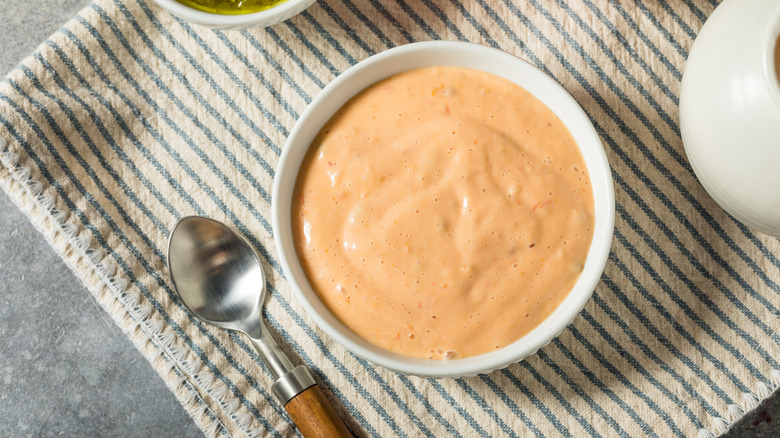
You'd be forgiven for mistaking Louis dressing for Thousand Island dressing, as it falls into that canon of pink-hued and creamy sauces, which also includes Russian dressing. It might be lesser known than its pink cousins, though, left to the imaginations of culinary practitioners and the pages of obscure cookbooks. However, residents of the Pacific Northwest might be familiar with this old-school dressing, as it was associated with the locally appreciated Crab Louis dish, served with succulent Dungeness crabs. Its origins dovetail into the history and availability of fresh crab in the Northwest region, where it became popular in the Seattle area in the 1930s.
Predating this, some of the first publicized mentions of Crab Louis date back to 1912 via the Portland Council of Jewish Women's Neighborhood Cookbook. In it, the recipe lists lettuce, hard-boiled eggs, crab meat, and, of course, the Louis dressing. Back then, it was made with a three-to-one ratio of oil to vinegar, ketchup, Worcestershire sauce, and paprika and further seasoned with salt and English mustard. The dish and dressing have also been said to allegedly have origins and menu features in San Francisco and Portland, as well as Spokane, back in the early 20th century. But what's not contested is the fact that Louis dressing sounds delicious, and it would probably pair very well with crab meat. Just do yourself a favor: If you can afford it, spring for the real deal over mysterious imitation crab meat.
6. Mayfair Dressing
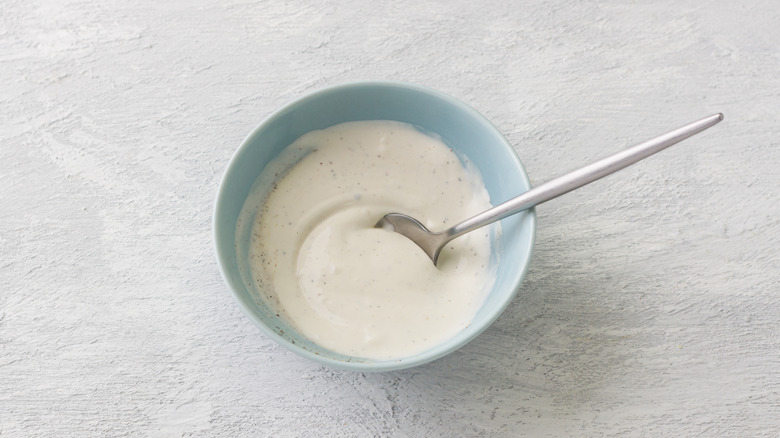
Mayfair dressing sounds regal, doesn't it? It has a certain ring to it, like what you'd imagine being served at a royal wedding. It is undoubtedly old-school, and we're betting, like some of the other dressings in our list, you may not have heard of it. The dressing has roots going back to the 1904 St. Louis World's Fair, where attendees of the exhibition could sample it. It was later a menu staple at the eponymous Mayfair Hotel. In more modern times, the rare dressing has been championed by retired pastry chef Helen Fletcher, who says that it could be considered a better version of Caesar dressing in a blog entry. Fletcher would allegedly buy a pint of the dressing every week back in the day before cracking the code on her own version of the sauce.
The exact recipe of this old-school dressing is hard to pin down, but if you're wondering about Fletcher's take on it, we got you. To make some Mayfair dressing for your next dinner party and give your guests something to talk about, you'll need to blend celery, garlic, onion, anchovies, Dijon mustard, lemon juice, black pepper, and mayonnaise in a food processor or stick mixer. The consistency is achieved by reserving some of the mayo and folding it in at the end after all the other ingredients have been emulsified to find your desired thickness and creaminess. The salad for which it's named consisted of romaine, julienned ham, julienned Swiss cheese, croutons, and the dressing. Sounds delish, right?
7. Boiled Dressing
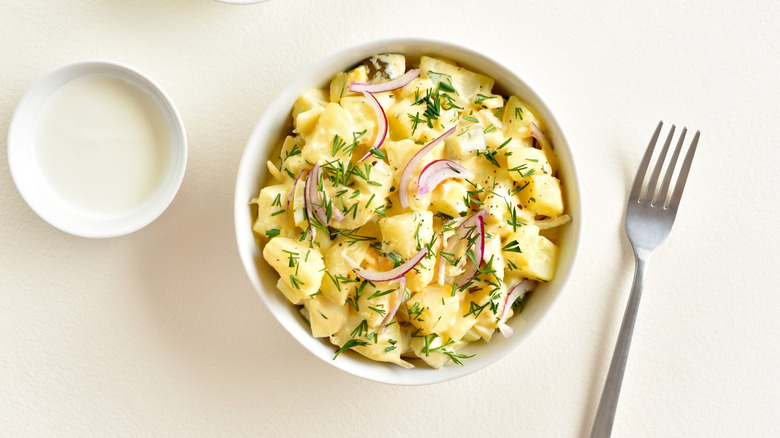
Boiled dressing doesn't sound so enticing. It sounds very unimaginative and matter-of-fact, presumably christened as such by a tired and weary chef. However, it was a kitchen staple in both Britain and North America throughout the 1800s, as salads began to proliferate in these regions. Its popularity was attributed to the lack of consumer vegetable oils in the 19th Century. Stateside, cooks made do without readily available oil in every grocery store, and boiled dressing took on prominence.
These dressings are essentially a Hollandaise-type sauce used for veggies, with a base layer of eggs, vinegar, and cream (or sometimes milk and water instead of cream). They were gussied up with seasonings like sugar, mustard, and salt and thickened up with flour or cornstarch in small quantities. Unlike what its namesake suggests in a literal sense, though, the dressing wasn't actually boiled but rather brought together via a double boiler. Once it emulsifies, it offers a tangy kick due to the vinegar and mustard and a luscious mouthfeel thanks to the eggs and cream. Folks who want to further season it might add some paprika. For those who'd like to attempt creating this recipe but aren't confident in their double-boiler skills, perhaps watch a tutorial on YouTube first.
8. Hot Bacon Dressing
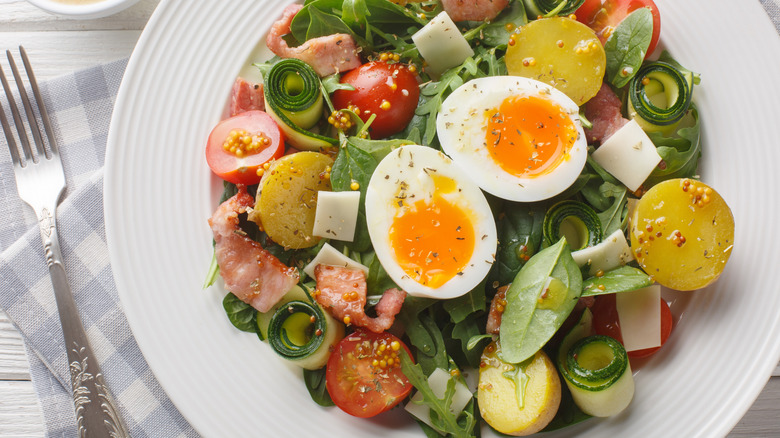
The Amish community might not come to mind when you think of salad dressings, but their food is certainly renowned for being hearty and delicious. Hot bacon dressing is thought to have originated in Germany, and like so many recipes, through migration and tradition, it remained intact and upheld by progenitors through the generations. The dressing is a simple combination of bacon grease and vinegar — how can it not be good? The American Amish community kept the tradition alive as home cooks used the dressing on potatoes and salads. And if you're wondering about how to use it yourself, just think of anywhere bacon might go well, and the dressing will surely hit. A spinach salad with boiled eggs, doused in hot bacon dressing, is one such example.
There are some fun variations here, too, like thickening the dressing with eggs, thinning it out with milk, or even combining both. It all gets balanced out with the usual choice of sugar, while cornstarch can further thicken it if it seems too watery. Whisking the ingredients together should create the typical emulsion needed for a nice dressing to properly coat your veggies or salad. This one is for the bacon lovers, giving you another reason to save the pan drippings and to try out a lesser-known dressing you didn't know you needed in your life until now.
9. Celery Seed Dressing
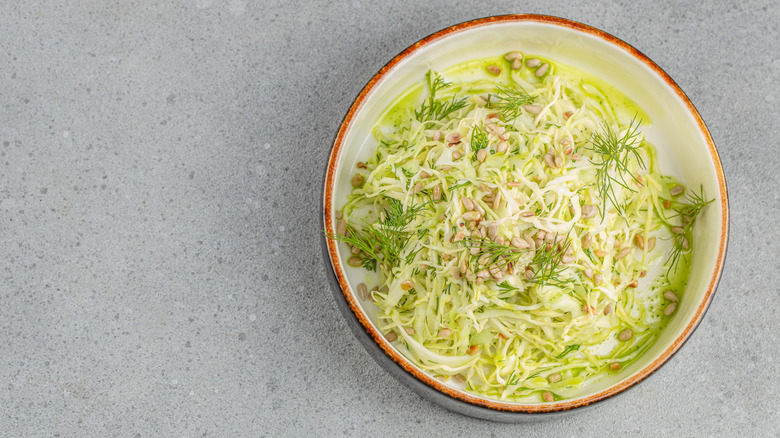
Celery-seed dressing, much like poppyseed dressing, is named after the seeds it features rather than a place or hotel. It's not a dressing that you'll likely come across at your favorite lunch spot anytime soon. Though it can't be attributed to a specific chef or exact place, the Baltimore Sun reported on its use dating back to the 1960s, but who exactly can lay claim to its creation is anyone's guess.
Recipes online are affectionately called "Grandma's Secret Celery Seed Dressing" and "Vintage Celery Seed Dressing," lending credence to its distinctly old-school origins. The list of ingredients required to make this dressing is sugar, mustard, salt, onion, vinegar, olive oil (or a natural oil), and those potent and aromatic celery seeds. Once whisked together, the dressing can be used on greens, pairing especially well with, you guessed it — celery. And if you've never had celery seeds before, they actually do indeed taste like the stalky green vegetable, with a slight bitterness that plays off the deep savory notes. All in all, this one is for the celery lovers out there; if you don't like the taste of those humble green veggies, you might not be into this dressing.
10. Dorothy Lynch Dressing
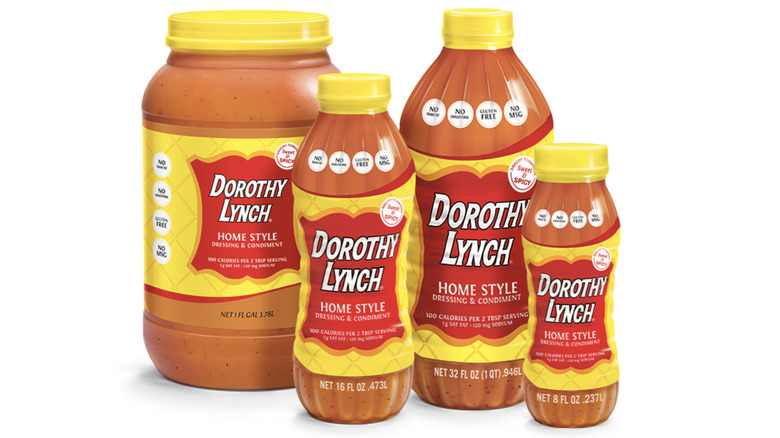
Dorothy Lynch was a real person, hailing from Nebraska, where in the 1940s she first created her eponymous dressing for club members of the St. Paul legion. This homestyle dressing and condiment is actually still produced in 2025. The sauce comes in two versions: Home Style and Light & Lean, with the latter geared towards calorie-conscious folks. It's marketed as a one-of-a-kind dressing that millions have come to love, according to the company's website. If you're not counted among those millions, it is quite possible that you may not be familiar with the dressing.
It has tomato soup listed as the first ingredient — yes, you read that right. The list of other items in the recipe includes the usual suspects of oil, sugar, and seasonings, but because it comes from a bottle and is mass-produced, it has some preservatives and gums in it for long-term shelf stability. While in appearance it may resemble French dressing, the makers claim it is fundamentally different in that it is not oil-based, with tomatoes used instead. The condiment is still made in the state of Nebraska (where it originates) and is shipped to retailers around the country — perhaps even to your local grocery store. If that's the case, then maybe you've tried it. If it's not available in your region, know that, according to the website, it tastes sweet and spicy with a thick and creamy texture, suitable for picky eaters and dads alike.
11. Buccaneer Dressing
Buccaneer dressing might be the most fun-sounding name in our list here, eliciting images of pirates and messy tables covered in spilled beer. Did pirates even eat salad? In any case, this one is a curiosity, dating back to 1954 when the Louis Milani Foods Company first filed for the trademark protection of the name. That trademark has since expired, and the dressing is sadly no longer mass-produced for American consumers, relegated to the past.
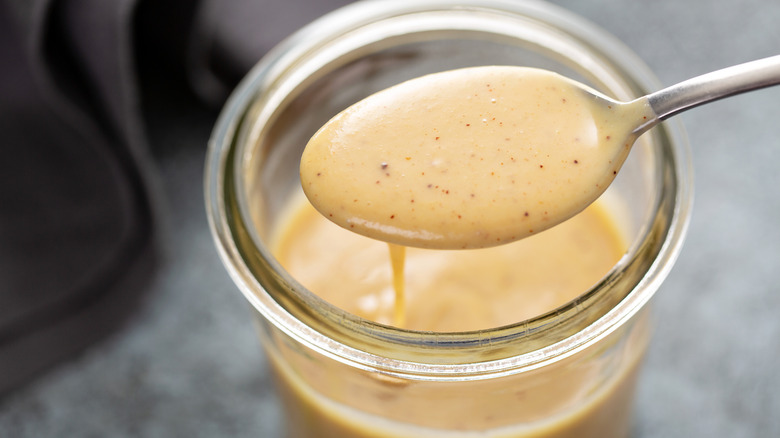
Buccaneer dressing fit within Milani's silo of consumer dressings, marketed as an "exciting dressing [that] adds the touch of adventure to salads, sandwiches, [and] hot vegetables." The exact flavor profile and original recipe are almost impossible to find online, but it is said to have included mayo mixed with honey mustard, garlic powder, and some paprika, as speculated by enthusiasts. It could be suitable for dressing greens, on sandwiches, or with meat for those who endeavor to make copycat versions, though without an original recipe to reference against, you'll never know how close it is. Out of all the dressings in our list, this mid-century throwback from Milani might be the most mysterious, and one for the food historians out there to ponder.