

The Case For Sheet Pan Pizzas
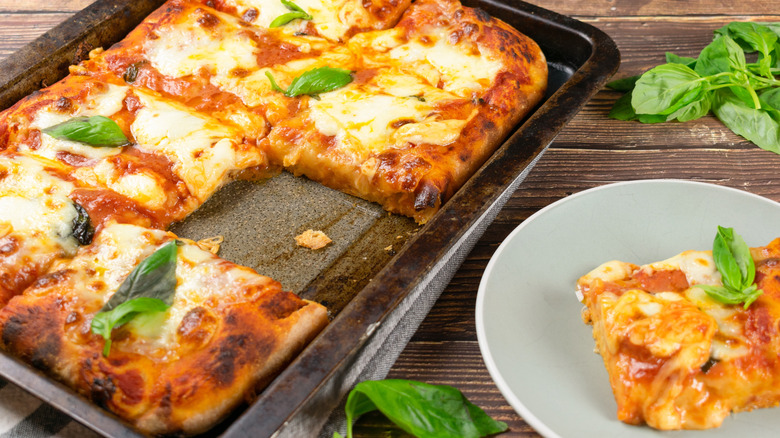
For as broadly beloved as it is — the easily cited favorite of children, college kids, and people in beer commercials alike — there sure are a lot of different kinds of pizza. Unless you happen to be a genre savant, those options most likely dwindle when you're considering what kind of pie to make at home. And sheet pan pizzas are among the most easily replicable, whether you're an expert dough-thrower or new to the DIY-mingling of crust, sauce, and cheese.
The crucial element that sets sheet pan pizza apart from its regional and simply architecturally distinct peers is that you can — brace yourself — assemble and bake it on a sheet pan. So, not only can you (somewhat) crisp the thing up in any old conventional oven, you can eschew the pizza stone, saddle the paddle, and forget about cooking temperatures that approximate the surface of the sun. You're also typically going to aim for a more pillowy base for peak structural integrity absent the more intense, flour-fortifying fire, so this one is for those thick crust lovers. And there are some best practices that will ensure that this offshoot of the more basic, easy sheet pan dinners is a hit, every time.
Making sheet pan pizza at home
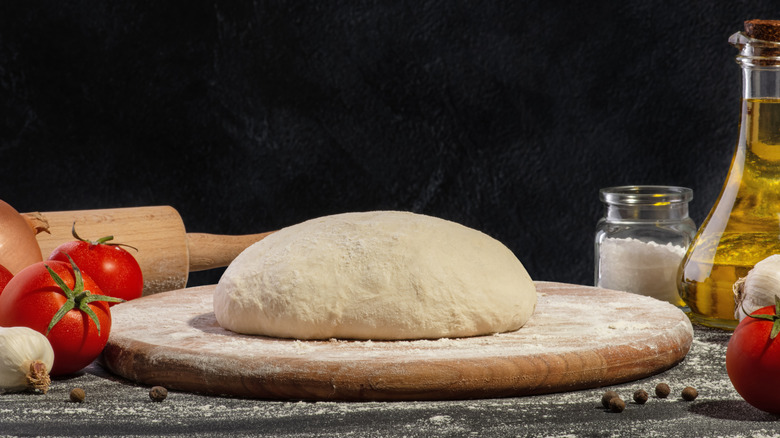
While you can theoretically use any number of dough recipes for your sheet pan pizza, a thicker, focaccia-adjacent variety is best for this preparation's less-direct heat. It also creates a decently sturdy handheld final product. A readymade blend speeds up the deal in any case, and you can turn store-bought pizza dough into focaccia with relative ease.
Once you've got your crust foundation evenly blanketed across an oiled pan, paint it with a few spoonfuls of an easy, three-ingredient pizza sauce, or the elaborate creation anchoring your recipe box. A light touch is best to keep it all from turning soggy. This will all turn out terrifically with little more than a crown of thinly sliced, fresh mozzarella circles, but you can also introduce some prosciutto, chorizo, or pre-crumbled and cooked Italian sausage. You can begin checking for golden doneness after about 20 minutes in a 450-degree oven. Being that few folks will aim for a pasty pizza landscape, plan to tack a little extra time on to the end to really imbue that hue, as well as the little bit of crunch that the color can also invite. Just make sure to peek at your sheet pan pizza every couple of minutes or so to avoid an unwanted char. A bit of fresh basil on top is just the closing statement you may need to convince any Neapolitan purists that this sheet pan adaptation is a great addition to the world's vast and varied pizza canon.