

Lychee Vs Rambutan: The Difference Between The Tropical Fruits
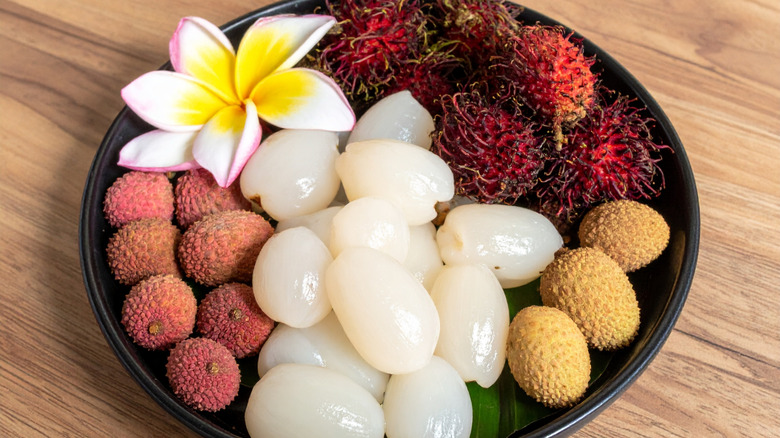
Both lychees and rambutans are tropical fruits hailing from Asia, and on occasion, may grace your local grocery stores with their presence depending on the season. Both fruits share some similarities, given that they both are members of the soapberry family. This includes the pinkish-red color of their skin, and the off-white juicy flesh on the inside that encases a round seed. Flavor-wise, the fruits are often described as having a subtle floral flavor that accompanies the sweetness.
There are evidently some similarities both visually and flavor-wise, but there are also distinct properties that set these two tropical fruits apart, so they can shine in their own unique ways. Lychees grow on evergreen lychee trees that are native to southern China, but other cultivars are also grown in regions across the world. Their outer skin is scaly to the touch, and it's relatively easy to peel to expose a juicy, sweet, and slightly tart flesh. Lychees are also described as having more floral notes than rambutan. You can usually find lychees at most Asian markets and, if you're lucky, your neighborhood grocery store.
Rambutans, also a tropical fruit, grow on the rambutan tree, which is native to the tropics of Southeast Asia. Size-wise, they are larger than lychees, and they have notable prickly hair-like growths covering the exterior skin. Frequent Costco shoppers may have noticed the spiky rambutans in the fresh produce section, which are among the best produce to buy at Costco. Texture-wise, rambutans offer a creamier mouthfeel and can be and less juicy than their lychee cousins. Both fruits are enjoyable in a variety of ways and deliver similar superfood nutritional benefits.
Ways to prepare and serve both fruits
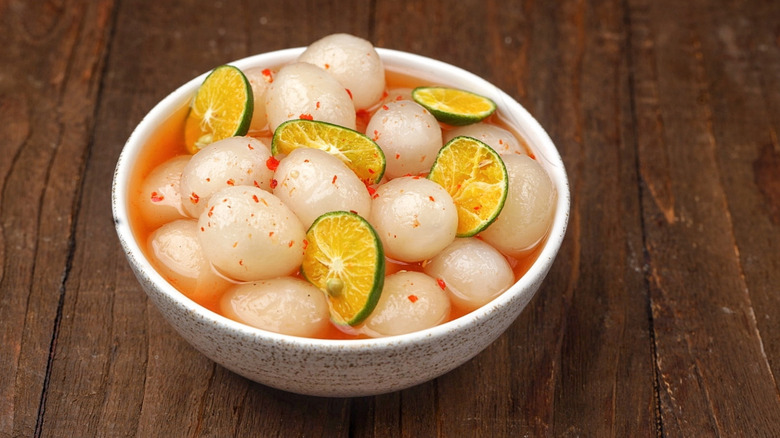
Whether you want to add an Asian-inspired tropical flare to your recipes, or you're simply looking to discover novel ways to incorporate new fruits into your creations, you can't really go wrong with your choice of lychee, rambutan, or even a combination of both if you're feeling extra adventurous. When ready to feast, there is an effective way to peel and serve lychees. For optimal flavor, enjoy them as a snack by allowing them to chill over ice.
Similarly, ripe rambutans are a fantastic sweet treat that is easy to open without a knife – by simply squeezing the outside till it pops open. For those who don't shop at Costco to get their hands on fresh rambutans or can't find fresh lychees at any market, don't hesitate to go for canned varieties.
Despite the adage that fresh is best, there are some canned fruits that we think deserve a spot in your pantry, and canned lychees are among them. Taking a useful tip from chef Jet Tila on how he uses canned lychees, consider evoking your inner mixologist and shake up some inventive cocktails, like a lychee martini.
Owing to their balance of sweet, tart, and floral notes, both fruits are excellent additions to creamy desserts like a panna cotta, blended into a refreshing sorbet, or tossed into a vibrant fruit salad. They also lend themselves well to savory preparations like a Thai-style curry, where they bring a pop of juicy sweetness as a contrast to the other spices and aromatics in the mix. You can even put a tropical spin to a traditional salsa recipe by using chopped lychees or rambutans for a sweet undertone.