

The Top 7 Mistakes To Avoid When Cooking Prime Rib
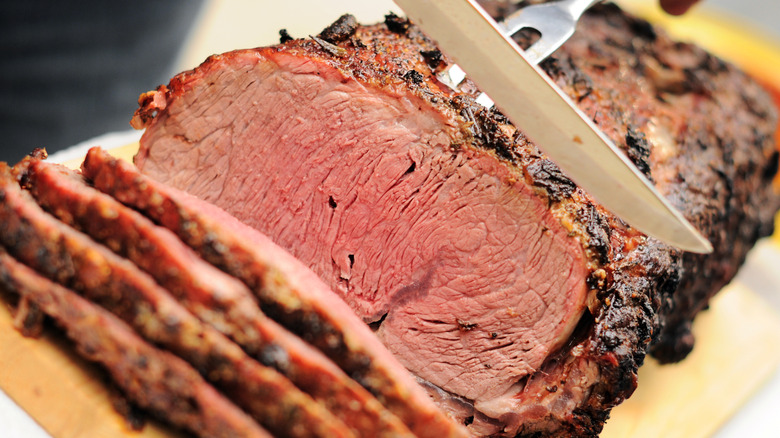
Prime rib brings to mind a few things: the holiday season, family gatherings, and a full belly. It's not uncommon for families to celebrate special occasions together over a main course of prime rib (served alongside some delicious side dishes), so knowing how to cook one properly is imperative.
Being the professional chef in the family meant that prime rib duty was always bestowed upon me, and let me tell you, I took that role very seriously. One of my first major chef roles was at a fine dining restaurant in Los Angeles, and in the days leading up to holidays, we made endless prime rib roasts. After a few years working in the meat department, I've become quite the expert on this particular cut of beef, as well as the mistakes people commonly make while preparing it. So, here are the top seven things you should avoid the next time you're cooking a prime rib.
1. Not bringing the meat to room temperature before cooking
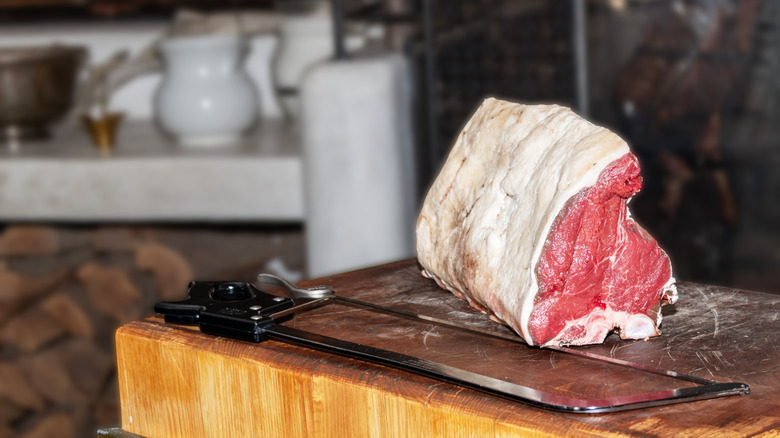
Arguably, one of the worst mistakes you can make when cooking a prime rib is not bringing the meat to room temperature before cooking. If you start with an ice-cold prime rib from the refrigerator, it will most likely cook unevenly, where the outside overcooks and burns before the center reaches the desired doneness. The last thing you want on your table this holiday season is prime rib with a burnt, tough outside with a chewy, practically raw center.
Before placing it in the oven, allow your prime rib to sit at room temperature for 1 to 2 hours before roasting. When bringing a prime rib to the proper temperature, some blood may be released from the meat, so be sure to use a dish with high sides and drain any accumulated juices before placing it in the oven.
2. Skipping the seasoning time
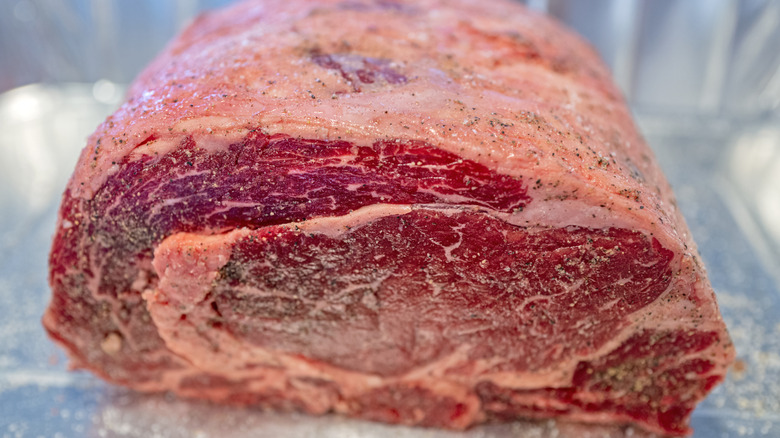
While you might have a bit of leeway when grilling a New York strip or a wagyu steak, prime rib benefits enormously from seasoning well in advance. Ideally, you should season your prime rib with coarse Kosher salt (over other varieties) and freshly ground black pepper at least 24 to 36 hours before cooking. This provides your seasonings with enough time to penetrate deep into the center of your cut of beef. If you season at the very last minute, you're only going to flavor the surface of the meat.
Beyond seasoning the prime rib early, let's get one thing straight: just like any cut of high-quality beef or meat in general, you don't need an intensely flavored marinade or complicated preparation. With prime rib in particular, the meat speaks for itself. It has a rich, beefy, buttery flavor with an incredible melt-in-your-mouth texture that doesn't need any herb salt or prepackaged seasoning mix to level it up. Salt and pepper will more than suffice.
3. Cooking at too high a temperature
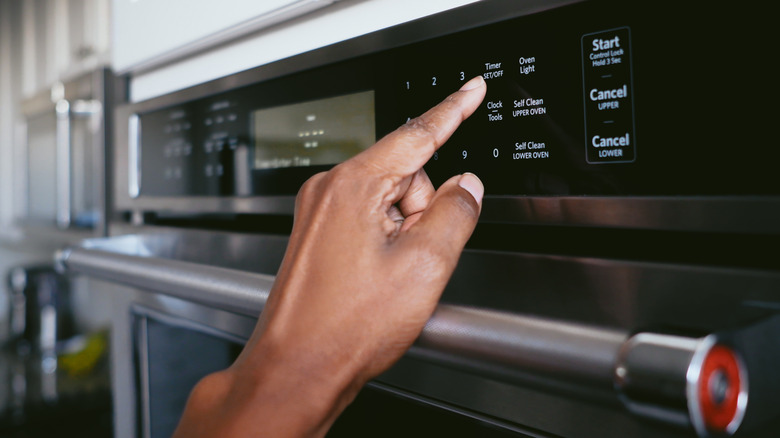
Another mistake to avoid when cooking a prime rib is cooking it at too high a temperature. Large cuts of meat like prime rib benefit from a low and slow cooking method. A high heat will create a tough, brittle, and overcooked exterior while leaving the interior completely raw or unevenly cooked. Most professional chefs will agree that cooking a prime between the range of 250 to 325 degrees Fahrenheit will guarantee even cooking throughout and a tender, succulent result — that won't make your dinner guests run for the hills.
On average, it takes about 5 ½ to 6 ½ hours to cook a prime rib at 250 degrees Fahrenheit, giving you plenty of time to whip up a few side dishes to pair alongside it and set your table with your finest plateware. The beauty of the prime rib is its long, slow cooking process. Let the delicious aroma perfume your kitchen, set your dining room up with a bit of flair, and invite a few good friends over to enjoy a delicious dinner.
4. Not using a meat thermometer
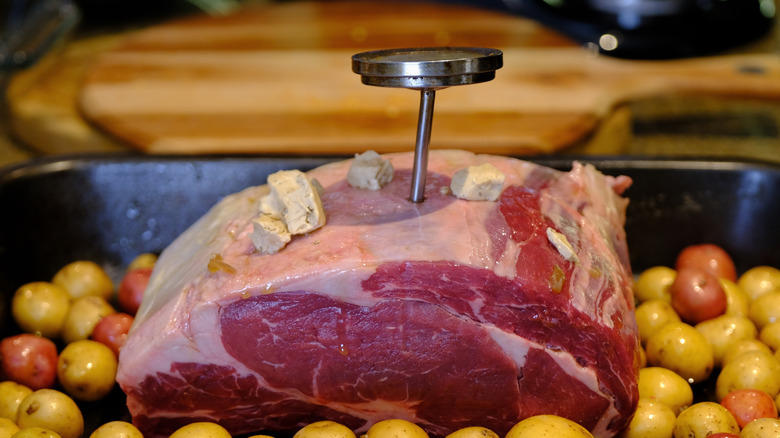
Most chefs will agree that using a perfectly calibrated meat thermometer when cooking an expensive cut of meat is the best move. One of the major reasons you should consider using this kitchen tool is that each cut of meat is a different size. This means that if you rely just on cooking time per pound, you could easily overcook or undercook your meat.
Another reason is that you can check to see if your prime rib is at your desired level of doneness, such as medium-rare or medium. The internal temperature will tell you just that, and a thermometer will let you hit these precise temperatures to ensure a moist and perfectly cooked roast. Last but not least, it's a food safety method that helps protect you and your loved ones against any unwanted bacteria. So, if you're planning to go through the effort to make a prime rib, do yourself a favor and use a meat thermometer.
5. Cutting into the meat immediately after cooking
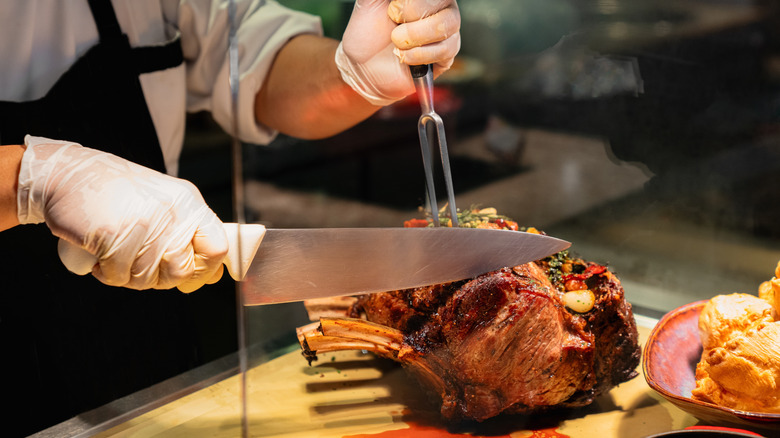
Just like most cuts of meat, prime rib needs to rest for at least 15 to 20 minutes after cooking to allow the juices to redistribute throughout the meat before carving. If you cut it too soon, you risk all those flavorful juices running out onto the cutting board instead of staying in the meat.
For those who don't know, when meat is cooked, its muscle fibers tighten, squeezing out moisture. A short resting period after cooking will allow those fibers to relax and the juices to redistribute throughout the meat, giving you a more succulent, juicy, and tender result. Not only will it stay moist, but it will also be easier for you to carve. Once the prime rib comes out of the oven, it's going to be piping hot. So, to avoid the risk of burning yourself and serving a prime rib that's as dry as a bone, make sure to take that resting period!
6. Not planning for carryover cooking
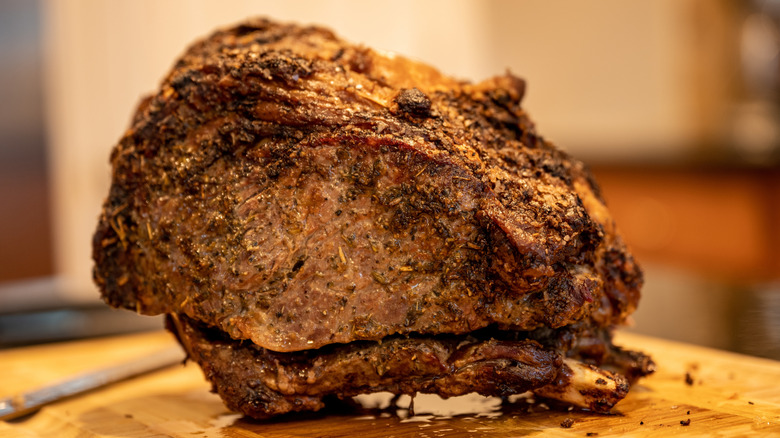
Another point to keep in mind when cooking a prime rib is the carryover cooking period. For the uniformed, carryover cooking is the continued internal cooking that occurs after the roast is removed from the heat source. The residual heat from the exterior layer (and the roasting pan) will continue to cook the center of the prime rib.
On average, a prime rib could rise anywhere from 5 to 10 degrees Fahrenheit in internal temperature during this time. The resting and carryover cooking periods occur simultaneously, so don't get nervous and break the resting period in fear of overcooking your meat. Just be sure to remove the prime rib from the oven when it's at least 5 to 10 degrees below your target temperature to avoid overcooking. Your perfectly medium-rare roast could turn into medium-well in a matter of minutes if you're not accounting for it — so be cautious!
7. Choosing the wrong grade
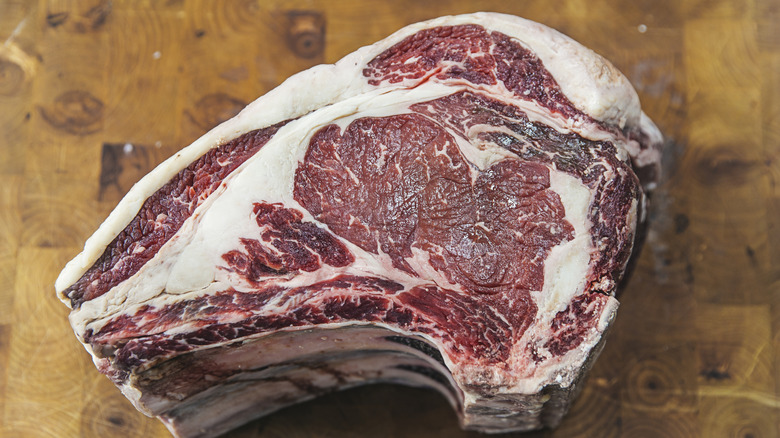
News flash! Not all prime rib cuts are equal. If you want the best-looking and, of course, the best-tasting prime rib around town, then purchasing a high-quality cut of prime rib from a reliable butcher will serve you well.
When shopping, you should know that the term prime rib refers to the cut of meat from the rib section of the cow, not one of the top USDA quality grades. That being said, a select or choice grade will have a completely different texture and taste profile than a prime grade. For best results, prime grade is going to be your best bet for the tastiest prime rib. Lower grades have less intermuscular fat, also referred to as marbling. The more marbling, the richer and juicier your roast will be. A lack of marbling can lead to a tougher texture, and with less fat, you'll be left with barely any liquid to baste your prime rib during the cooking process.