

The Regional Texas Taco Style That's Resourceful And Delicious
We may receive a commission on purchases made from links.
Tacos are practically a food group in and of themselves. Universally appealing and almost always delicious no matter what style you're eating, they prove that all you need is a tortilla and fillings to create culinary magic. Due in part to their versatility, tacos are also a dish that inspire countless regional variations, both within their native country of Mexico and in other areas with Mexican influence. From grilled Tijuana-style tacos to Texan breakfast versions, you could travel entire continents and still have more styles to try. One of chef Hank Shaw's favorite unique regional tacos originated in El Paso, Texas.
Shaw, author of "Borderlands," a cookbook centered on cuisine from the Mexico-U.S. border, spoke exclusively with Chowhound and told us that a colitas de pavo taco is a must-try for anyone visiting the city. The name means "turkey tails" in Spanish, and this under-appreciated protein is exactly what the dish is made from. "It's braised turkey tails that are deboned, then crisped on the plancha," Shaw said. "It's ⅓ fat, ⅓ meat, ⅓ crispy skin." Most of us outside of the region only think of turkey as a Thanksgiving centerpiece or a sandwich cold cut, and disregard their tales entirely. But, once seasoned, grilled or fried, and cradled in a tortilla with restaurant-worthy salsa, this lesser-used cut of meat shines. Shaw describes the experience of eating the dish as "heaven, from something most people throw away."
Why regional taco styles emerge
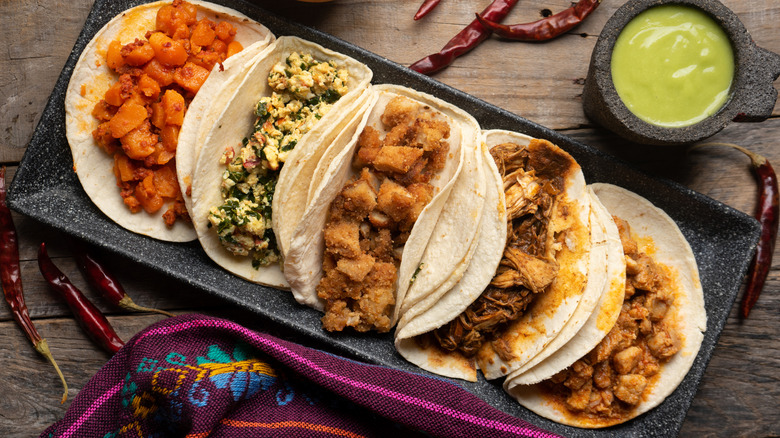
It's easy to take for granted that fish tacos come from Baja California, or that birria originated in the Western Mexican state of Jalisco, but we're less likely to consider how these dishes resulted from their environment. "Tacos reflect culture and place," said Hank Shaw. The ingredients used in each style of taco indicate what has historically been widely available in its region, as well as its cultural influences. Colitas de pavo, for example, emerged in the late 20th century in border towns as an ingenious way to use an ingredient discarded by most Americans and sold to local merchants for cheap. Other regionally rooted Mexican tacos tell a longer history of traditional cooking methods and cultural exchange, including Yucatán's achiote-heavy cochinita pibil, which came out of Mayan cooking techniques and subsequent Spanish influence.
Because of the regional specificity of some particular tacos, Shaw is picky about what he eats where. "I wouldn't eat a fish taco in El Paso," he said. "I wouldn't eat a carne asada taco in Oaxaca," where stews are more prevalent. Discada, a type of taco filling made from mixed meats on a plow disc cooker, is another style "deeply rooted in a very specific area of South Texas, Chihuahua, Coahuila, and Nuevo Leon," Shaw told Chowhound. However, just because taco styles often emerge regionally doesn't mean there is no overlap. "Taquitos in South Texas, rolled tacos in San Diego, and tacos dorados and flautas in Tamaulipas and Nuevo Leon are all basically the same," Shaw said.